
ᐅ Single-family house (2 floors + finished basement + converted attic), approximately 200 sqm – modifications
Created on: 20 Oct 2019 21:50
G
grericht
Hello,
We are currently working with an architect on the design of our single-family home. Since we have three children, the house should accommodate several future scenarios. These include:
Plot:
Since the plot already has a building, and we want to keep the rear building (it is fully shaded by the apartment building, is in reasonable condition, and might provide future expansion potential—at least suitable for workshops and storage), and since the plot is not very large, we decided on a tall house with a small footprint.
About the house
We have already developed a fairly comfortable floor plan with our chosen architect. Our biggest concern is accidentally planning a wall or something else 5 cm (2 inches) too far to the left or right and then being unable to fit our furniture. I would appreciate it if you would be interested in looking over the current design and giving feedback.
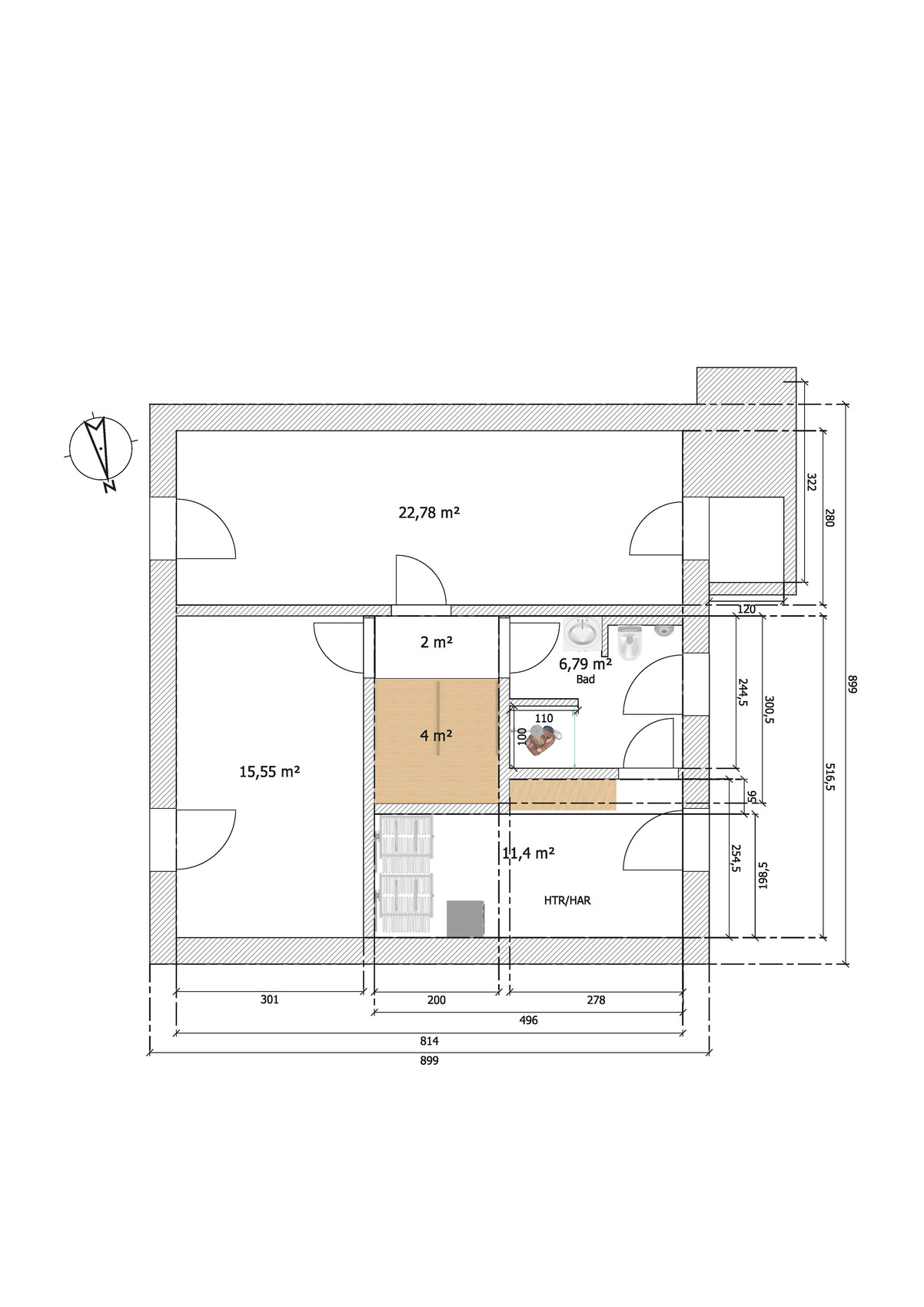
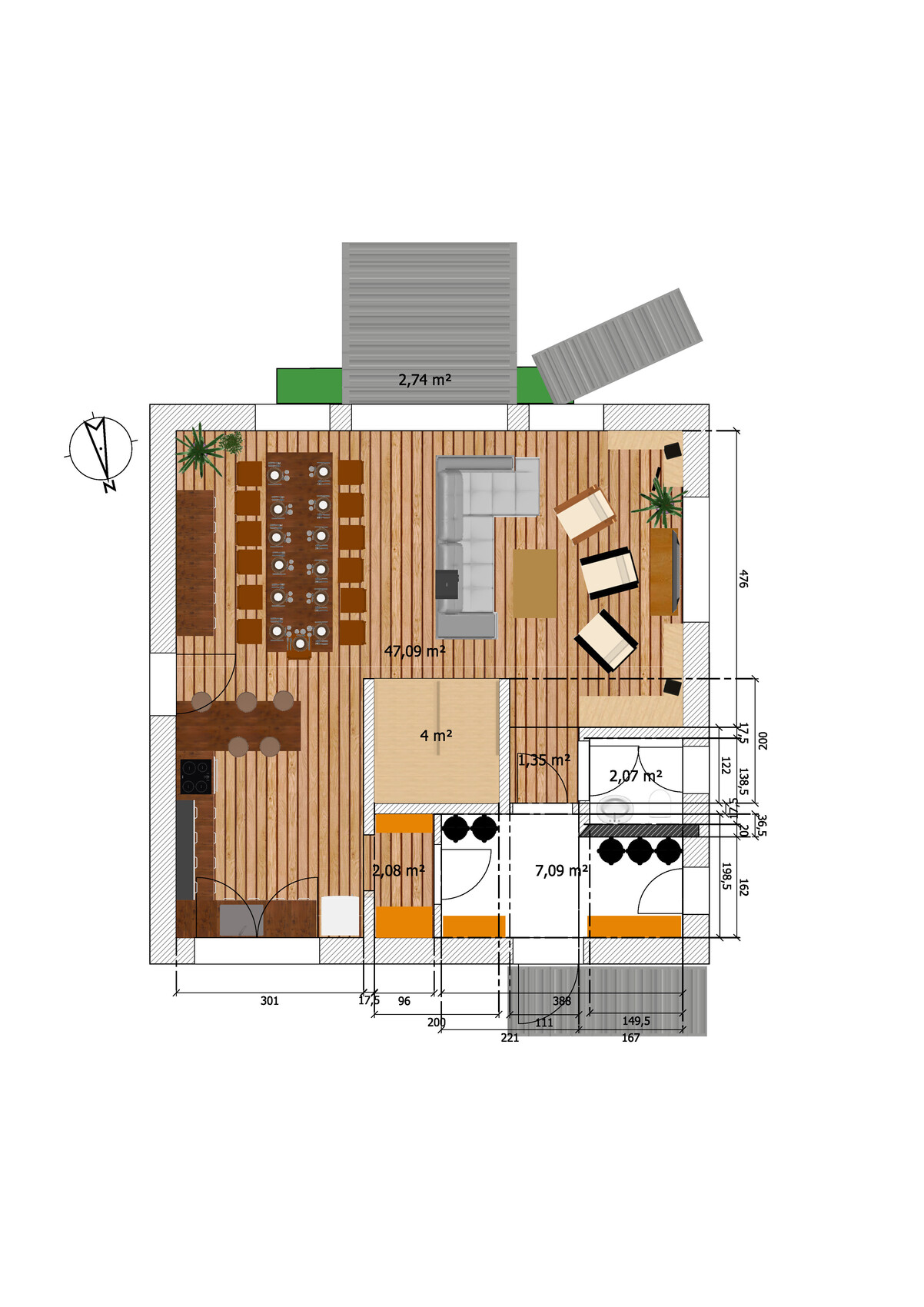
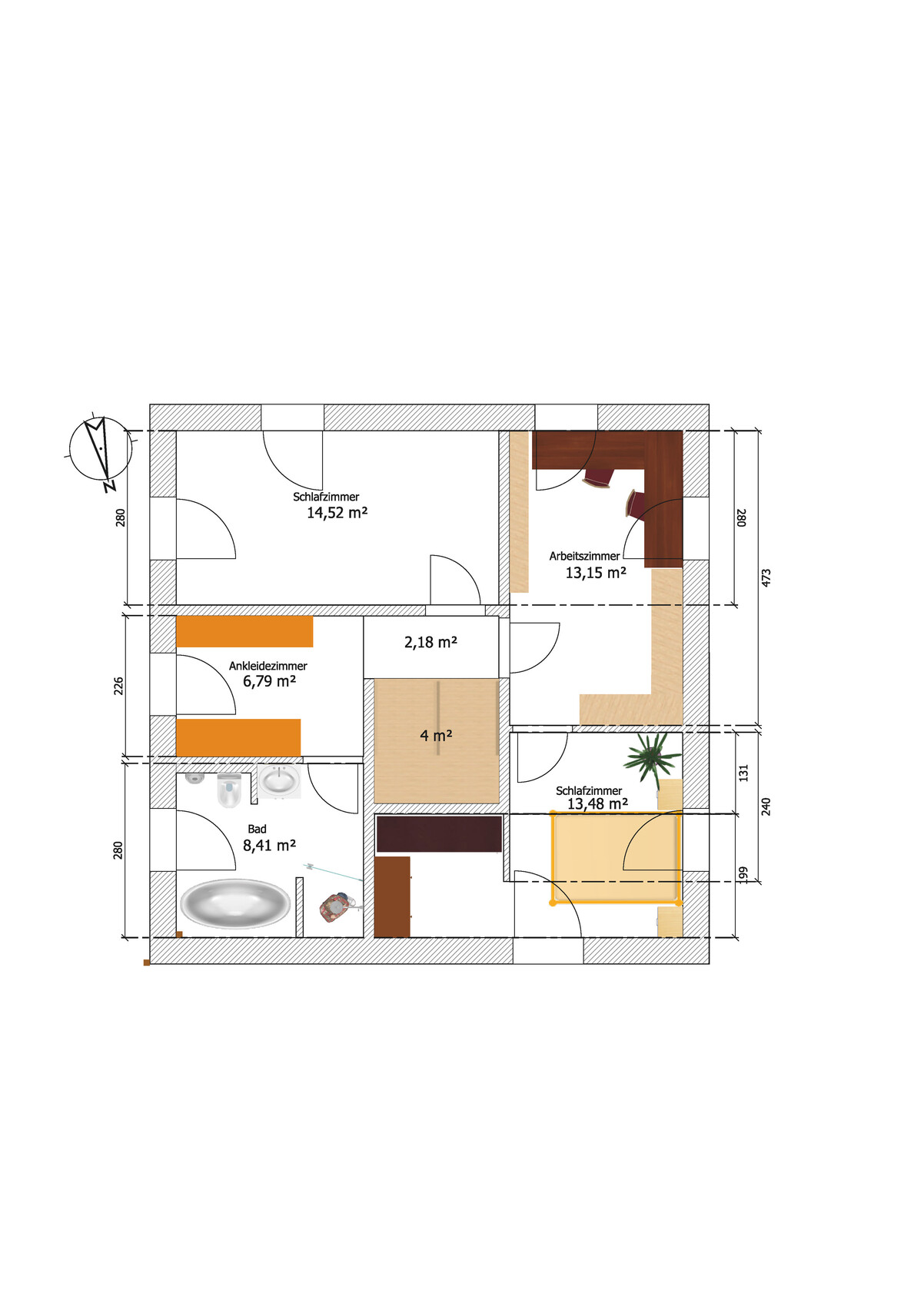
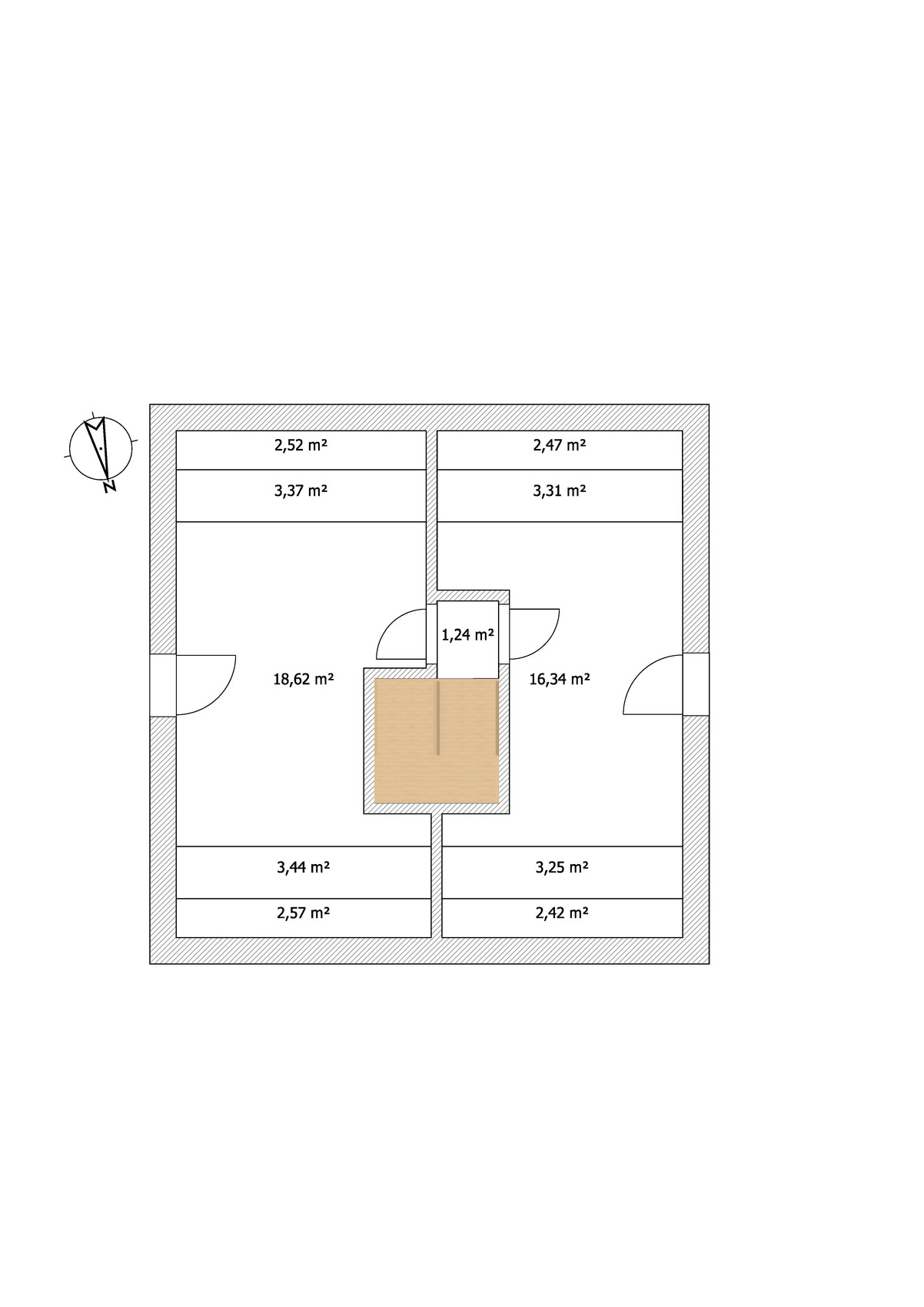
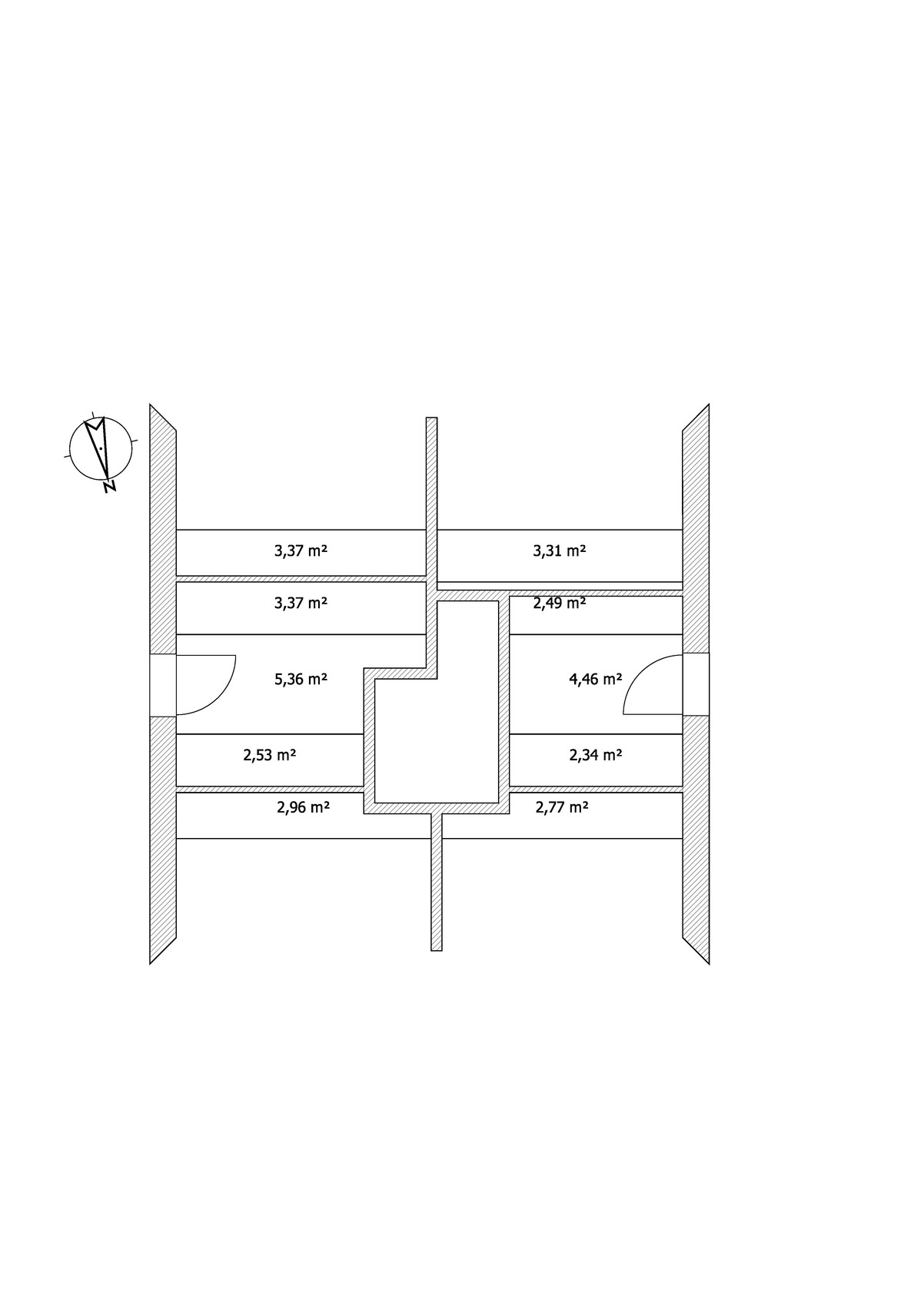
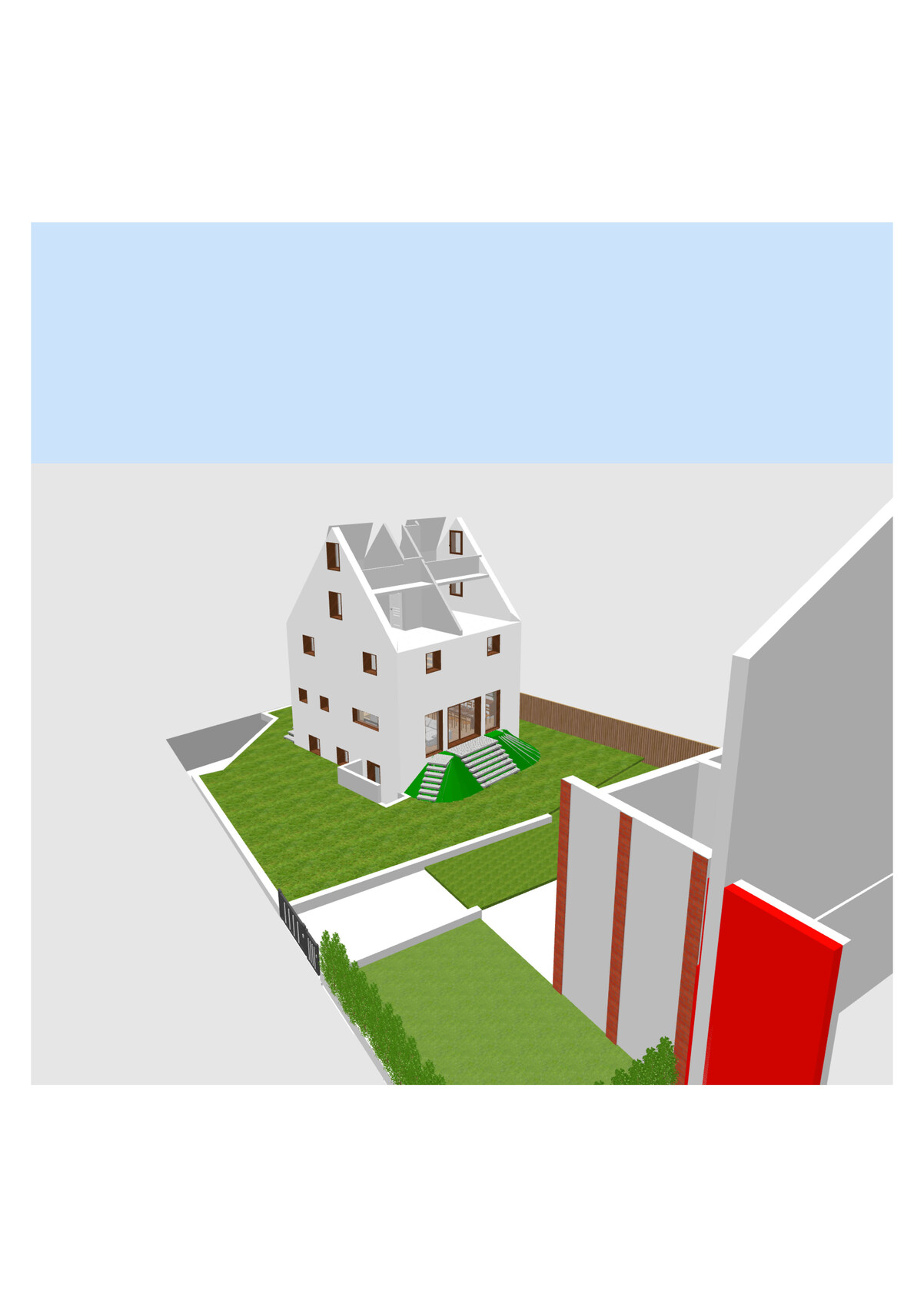
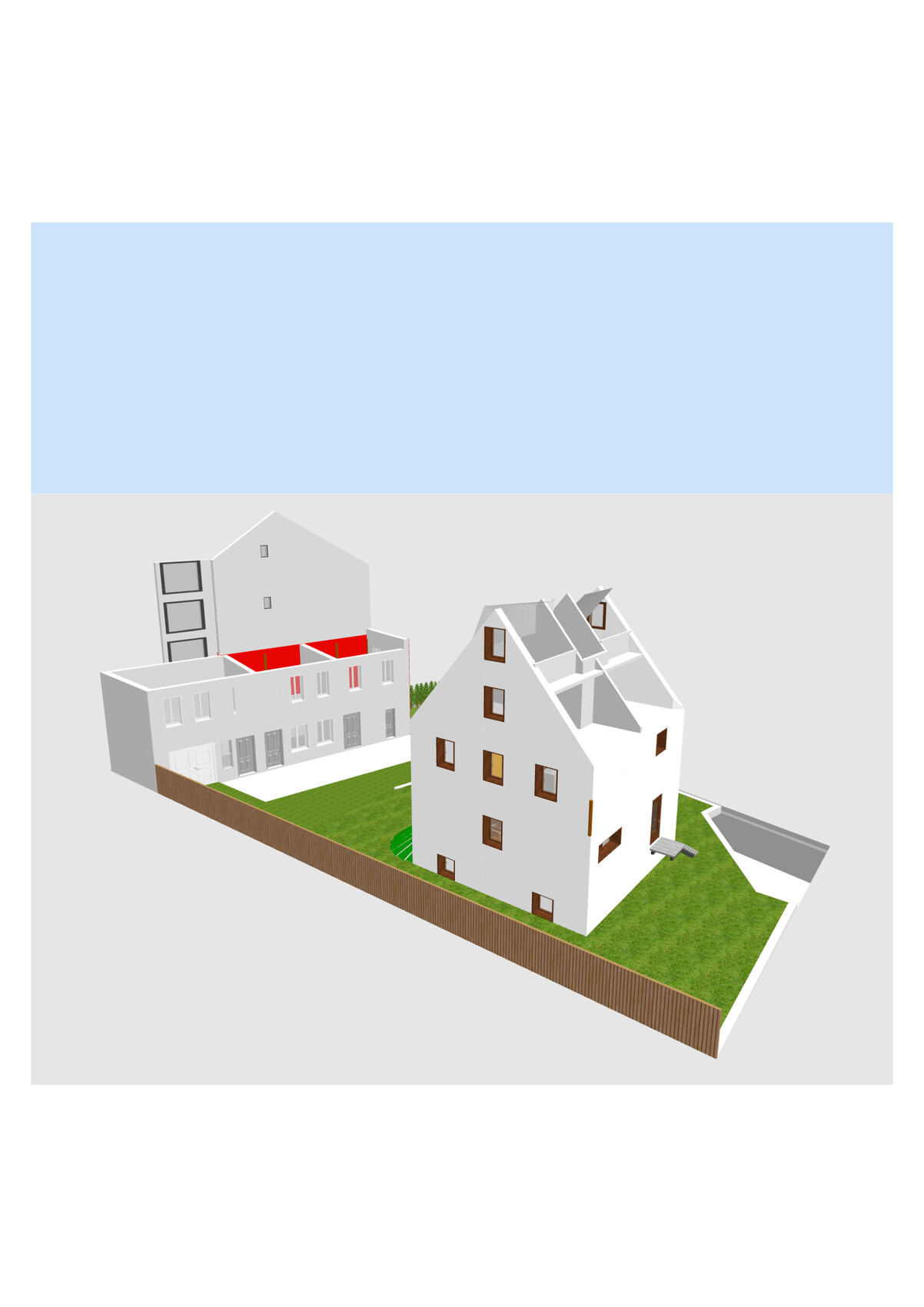
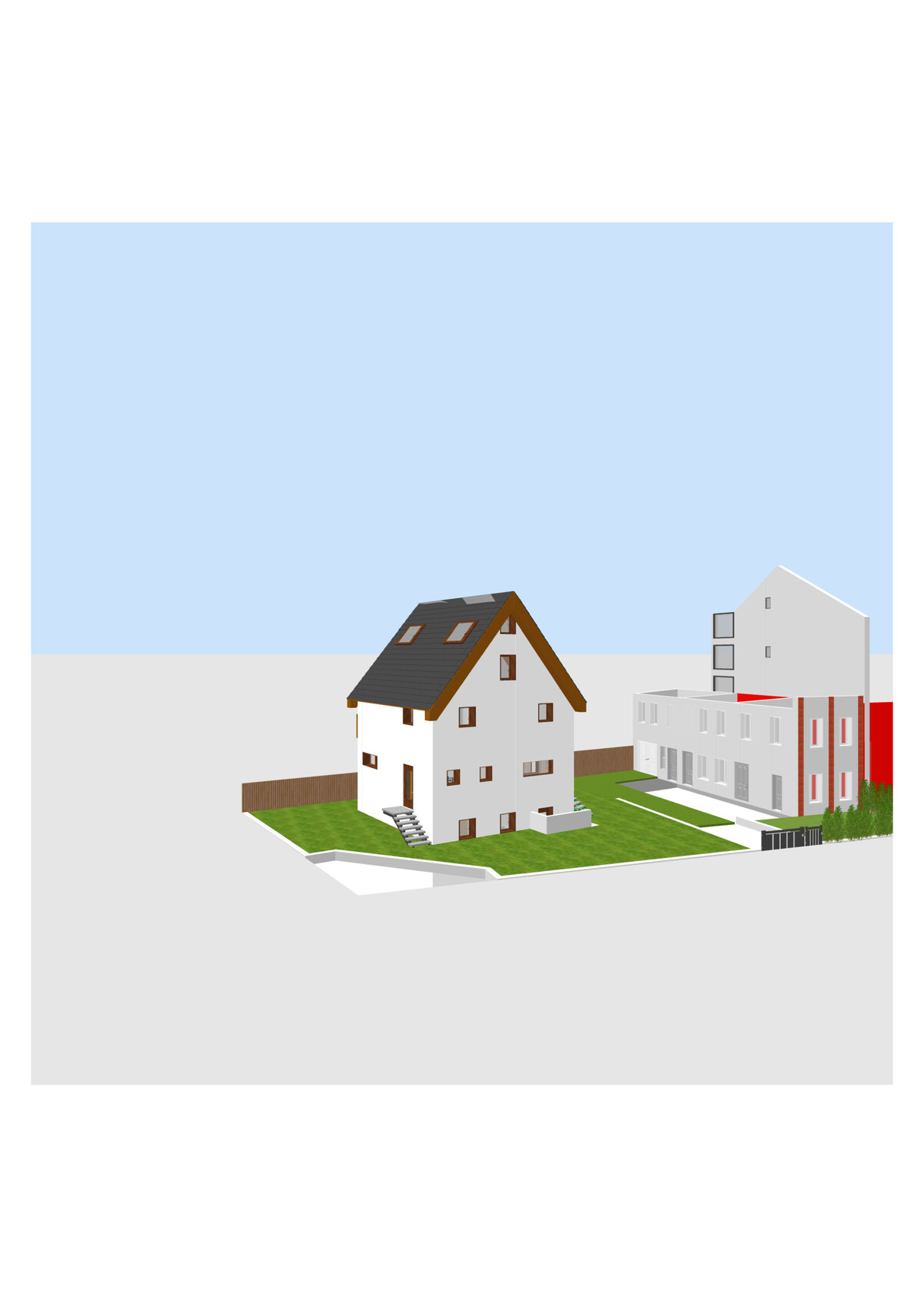
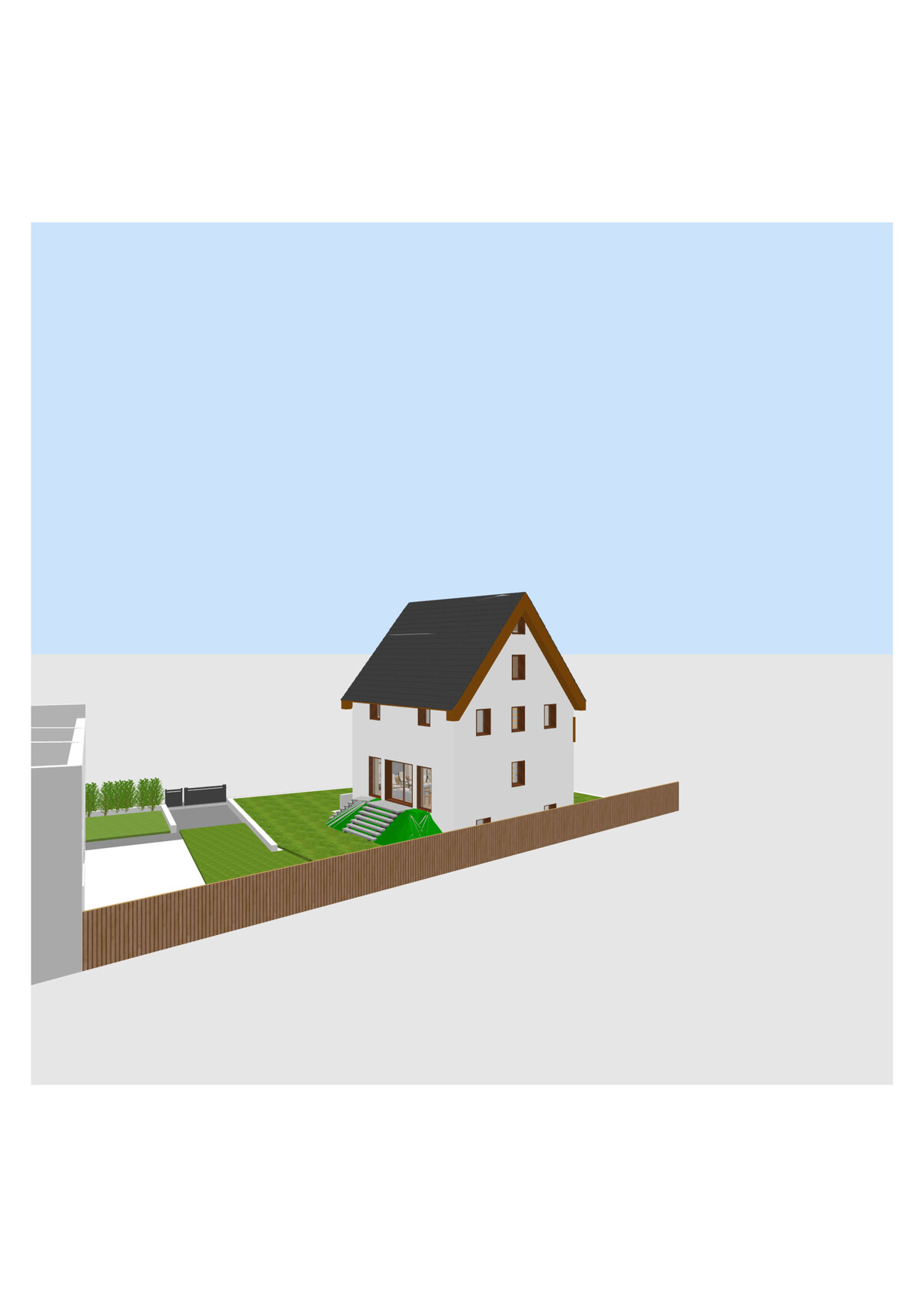
We are currently working with an architect on the design of our single-family home. Since we have three children, the house should accommodate several future scenarios. These include:
- Enough space for everyone
- At some point, the children will move out, and we will downsize to the living basement while renting out the rest
- One or two children might continue living with us (multi-generational living) – possibly in the basement with a separate entrance
- Possibly one child even starts a family in the house, and we move to the basement
Plot:
- 710 sqm (8,000 sq ft) close to the city center
- To the south is our rear building (two stories) attached to a 3.5-story apartment building (boundary development)
- To the north and west are the streets (a corner plot)
- Behind to the west is a large green plot with a single-family house
- To the north beyond the street are apartment buildings
- To the east there is a narrow parking lot followed by a green recreational garden area
- We have to keep a 6 m (20 ft) setback to the streets and the usual 3 m (10 ft) to the parking lot
Since the plot already has a building, and we want to keep the rear building (it is fully shaded by the apartment building, is in reasonable condition, and might provide future expansion potential—at least suitable for workshops and storage), and since the plot is not very large, we decided on a tall house with a small footprint.
About the house
- Eder XP9 or 10 (timber frame) in 42.5 or 49 cm (17 or 19 inches) thickness
- Living basement (150 cm (5 ft) below ground / 100 cm (3 ft) above ground) – if affordable (this allows for the utility room in the basement and more space on the ground floor for a large open-plan living/dining/kitchen area as the main living space)
- Knee wall either 150 cm (5 ft) or, if not much more expensive, a dormer wall above the full upper floor (both options allow the roof space to be used for two rooms; with the dormer, these rooms are very large and could even accommodate an attic instead of bunk beds)
- 50-degree roof pitch (for solar energy efficiency in winter)
- The basement should be designed to eventually allow for a small separate living unit
- Both bathrooms should have a standing toilet or urinal
- We definitely want a windbreak/entry vestibule
- The terrace should be raised with fill
- Underfloor heating with geothermal energy
- Solar energy planned for the future
We have already developed a fairly comfortable floor plan with our chosen architect. Our biggest concern is accidentally planning a wall or something else 5 cm (2 inches) too far to the left or right and then being unable to fit our furniture. I would appreciate it if you would be interested in looking over the current design and giving feedback.

Two things caught my attention in your descriptions:
- Front door opening outward: does that even exist? Do you want that to have more space in the hallway? You’ll basically be hitting guests, delivery people, etc. in the face with the door every time.
- Solar: you always have to be careful with the terms. Did you plan solar thermal systems? Those are no longer worthwhile. Photovoltaic systems, however, definitely are.
- Front door opening outward: does that even exist? Do you want that to have more space in the hallway? You’ll basically be hitting guests, delivery people, etc. in the face with the door every time.
- Solar: you always have to be careful with the terms. Did you plan solar thermal systems? Those are no longer worthwhile. Photovoltaic systems, however, definitely are.
hanse987 schrieb:
It is always important to clarify which measurement you are referring to regarding ceiling heights: structural height or finished room height. The offer is divided into sections specifying what services are explicitly included, what are explicitly excluded, the general construction description, and the floor plans. The general section lists a basement height of 2.25 m (7 ft 5 in), ground floor 2.635 m (8 ft 8 in), and attic 2.57 m (8 ft 5 in) as clear structural heights. It was discussed with the architect that the basement should definitely have living height (so 2.50 m (8 ft 2 in) masonry - insulation - flooring → over 2.30 m (7 ft 7 in)). The floor plan also suggests a 2.50 m (8 ft 2 in) masonry height. I believe this has actually been calculated but is not explicitly mentioned in the service description – I urgently need to clarify this. There is no information about the thickness of the basement insulation.
Since the insulation is in the basement and not below the ground floor, the clear structural height there should also be higher/correct. So around 2.75 m (9 ft) masonry. The upper floor/attic measurements seem fine.
kaho674 schrieb:
Your concern about hallways seems almost neurotic. A good floor plan is not defined by minimizing hallway space. What matters is that the usable rooms are optimal for their intended use. A staircase opening into a chill-out room ruins that space because it becomes a thoroughfare for everyone going up or down (and who has to). Just as an example.
"Okay" and "not so bad" are hardly adjectives you’d use to describe your dream home, right?
Regarding costs – there are experts who can advise you better. It only makes sense when the construction service description is available for comparison. So far, the general contractor planned the basement as unfinished. If you think this is just a misunderstanding, you’re mistaken. They know very well that this is insufficient. It’s not that we are afraid of hallways. We simply do not need them if everything in the rooms has its place. I know that nowadays, rooms tend to be more open and hallways larger. We don’t like that at all. We’d rather have one more room, even if it is a bit harder to reach, and put everything there. And with our small floor area and interior staircase, hallways are the biggest factor. I want to emphasize that on the ground floor there is essentially no hallway, just a very small one in front of the WC. We (the parents) will spend most of our time there, except for sleeping and craft activities in one of the other rooms. Maybe also in the office, which is reached by a staircase and a short, relaxed hallway. The children will also eat mostly in the living room or often in their rooms with interruptions. Basically, we plan almost the entire house around this living area. That’s also why the basement is designated for the technical room (HAR), because having it upstairs is too limiting. That is rather unusual for the upper floors/attic.
Regarding the dream home: We spent about five years looking for our dream home with friends. It ended with no party feeling totally fulfilled. We never expected to live in a dream house. We want to be self-sufficient and independent from noisy neighbors in a sensible environment with a shared outdoor area to enjoy peace and quiet. That led us to build our own home. We are not just satisfied with this – so not a dream house, but the best solution we could come up with, and preferably as soon as possible.
The only thing we’re somewhat mindful of is resale value, and our floor plan certainly doesn’t improve that much. Maybe with equipment, location, and size, but not because of the layout.
danixf schrieb:
It’s just unfortunate if there are pages of tips here and then the realization comes that it’s not affordable. That’s why a brief mention of the topic is good. Apparently, you don’t have to watch every $ closely and the list is well calculated. That’s true, and honestly, it made me a bit suspicious and annoyed, as if we want to build castles in the air. We’ve actually been working on this for a while, and not every dollar needs to be turned over. There are good subsidies for families with three children, we both earn reasonably, and thanks to our hallway neuroticism—which also affects other expenses we considered unnecessary—we managed to save up quite a bit. The plot is already paid off, and we still have some own funds left.
Thanks for the compliment on the good calculation. That encourages me that we aren’t really overextending ourselves somehow.
danixf schrieb:
Pay close attention to the exact wording. What does 2.50 m (8 ft 2 in) actually refer to in the end? From top edge of finished floor to ceiling? 2.50 m (8 ft 2 in) masonry could mean that ceiling plus floor build-up is still added, so you'd be down to 2 m (6 ft 7 in). I already mentioned that earlier.
danixf schrieb:
Price breakdown for the staircase? Probably standard beech wood… Not everyone likes that. If the steps are brushed and maybe oiled, that could add another $2,000 to $3,000.
Sanitary fixtures and electrical work seem basic and will also add some costs. Yes, standard beech. We prefer rustic and solid. The oak planks we have on the property would suffice for me.
I hope to get sanitary fixtures reasonably priced and that the architect okays that. No elaborate electrical planning currently. Ideally, there would be a decent conduit through the house so I could handle the tech stuff myself.
danixf schrieb:
There will be fewer connections. Removal of excavated material is always a big question… Watch out that the earthworks contractor doesn’t charge suspicious extra fees later. Thanks for the tip. I am afraid suddenly another $20,000 might get added.
danixf schrieb:
“Colors”? Is that for painting work? If so, $15,000 is way off. If a company is doing that, it would probably be more like $20,000 plus $10,000 for flooring.
Somehow the tiler is missing. These are interior paints (we want paint on plaster only) plus flooring (hoped to source inexpensive boards for the living area and mostly PVC in other rooms. Bathrooms will be tiled). All self-done, including tiling. That will be the challenge. I have never done it before but have a lot of craft talent and, if necessary, some friends who can help. Time will have to be found.
danixf schrieb:
Outdoor area at $15,000 is also very tight. Possible in the east German federal states but still tight. I would have kept a mid five-figure reserve for that. The outdoor area is flat and doesn’t require much. Fence, bushes around the sides. A gate for the driveway and one for the entrance. We plan to pile some topsoil in front of the terrace and build a proper staircase from old bricks. All self-done, and everything else will come with time. We do not expect to move into a finished garden right away.
In emergencies, then additional loans and private loans from in-laws/parents will come into play. Our hope was to manage with about $400,000, but now we are at $450,000. That is still manageable but we don’t want to go above that because WE would consider it unreasonable (banks probably see it differently).
THANK YOU FOR THE HELPFUL CONTRIBUTIONS!
Pinky0301 schrieb:
Two things caught my attention in your descriptions:
- Front door opening outwards: does that even exist? Are you planning this to create more space in the hallway? You’ll basically be hitting visitors or delivery people in the face with the door every time.
- Solar: you always have to be careful with terminology. Did you plan solar thermal? That’s no longer worthwhile. Photovoltaics, on the other hand, definitely are. Having the front door open outwards is our idea. The architect has it opening inwards, which is the usual way. I know it’s unusual. The question is whether it’s allowed. It’s good for emergency escape, but the fire department wouldn’t be able to kick the door in. Although there is enough glass for that.
At my in-laws’ place the door opens outwards, and I don’t get the impression it can be forced open easily. Especially since you approach directly onto the doorstep there. In our case, coming from the street side, I would hope that whoever approaches would pause before the door anyway. You can usually see which way the door swings. There will be a doorbell at the gate, and we expect invited guests to wait there first.
We are planning photovoltaics and want to wait a bit before installing. With geothermal heating, solar thermal doesn’t really make sense anyway, does it? Did I mistakenly say solar thermal somewhere?
grericht schrieb:
We are planning photovoltaic systems but want to wait a bit longer. Using geothermal heat makes solar thermal systems pointless anyway, right?! I have… What are you waiting for? Feed-in tariffs have decreased in recent years—do you expect that to change?
I wasn’t sure whether you meant photovoltaic or solar thermal systems, so I just wanted to clarify the terms.
Pinky0301 schrieb:
What are you waiting for? The feed-in tariff has decreased in recent years—is that going to change?
I wasn’t sure if you planned photovoltaic panels or solar thermal systems, so I just wanted to clarify the terms again To be honest, I thought feed-in tariffs were no longer available? We are assuming very low operating costs anyway. We simply live frugally. The goal is rather to eventually not have to buy any electricity at all, so that heating and household electricity pay off through the photovoltaic system. We were advised to hope for better quality (although there may not be much room for improvement) and especially for falling prices.
Similar topics