
ᐅ Unifi NanoHD on a Concrete Ceiling – What Type of Junction Box Should Be Used?
Created on: 6 Nov 2020 13:32
B
BananaJoe
Hello everyone,
I’m wondering what type of mounting box would be best to install in a precast concrete ceiling to easily mount a Wi-Fi access point (the plan is to use a Unifi NanoHD, or possibly the already available Access Point AC Pro for now) without a suspended ceiling.
The architect suggests a HaloX 180, but that seems a bit excessive to me. Especially if, at least in the longer term, the NanoHD is going to be mounted on the ceiling. It only has a diameter of 16cm (6.3 inches) and therefore might not fully cover the HaloX or its mineral fiber panel.
Is it possible to install a standard flush-mounted box in such a precast concrete ceiling (apparently from Dennert, if that’s relevant)? I imagine it could be used to house the CAT cable, keystone jack, and a short patch cable, with the access point then installed on top. Would there be enough space for that?
Are there any better solutions?
Thanks in advance!
I’m wondering what type of mounting box would be best to install in a precast concrete ceiling to easily mount a Wi-Fi access point (the plan is to use a Unifi NanoHD, or possibly the already available Access Point AC Pro for now) without a suspended ceiling.
The architect suggests a HaloX 180, but that seems a bit excessive to me. Especially if, at least in the longer term, the NanoHD is going to be mounted on the ceiling. It only has a diameter of 16cm (6.3 inches) and therefore might not fully cover the HaloX or its mineral fiber panel.
Is it possible to install a standard flush-mounted box in such a precast concrete ceiling (apparently from Dennert, if that’s relevant)? I imagine it could be used to house the CAT cable, keystone jack, and a short patch cable, with the access point then installed on top. Would there be enough space for that?
Are there any better solutions?
Thanks in advance!

I don’t understand why there’s so much effort involved. Just have a 180mm (7-inch) electrical box installed, then drill the appropriate hole later and conveniently store everything inside the box.
This even has an advantage: you can use it as a mini safe to hide things 😉.
If not, Golfi’s solution is also okay.
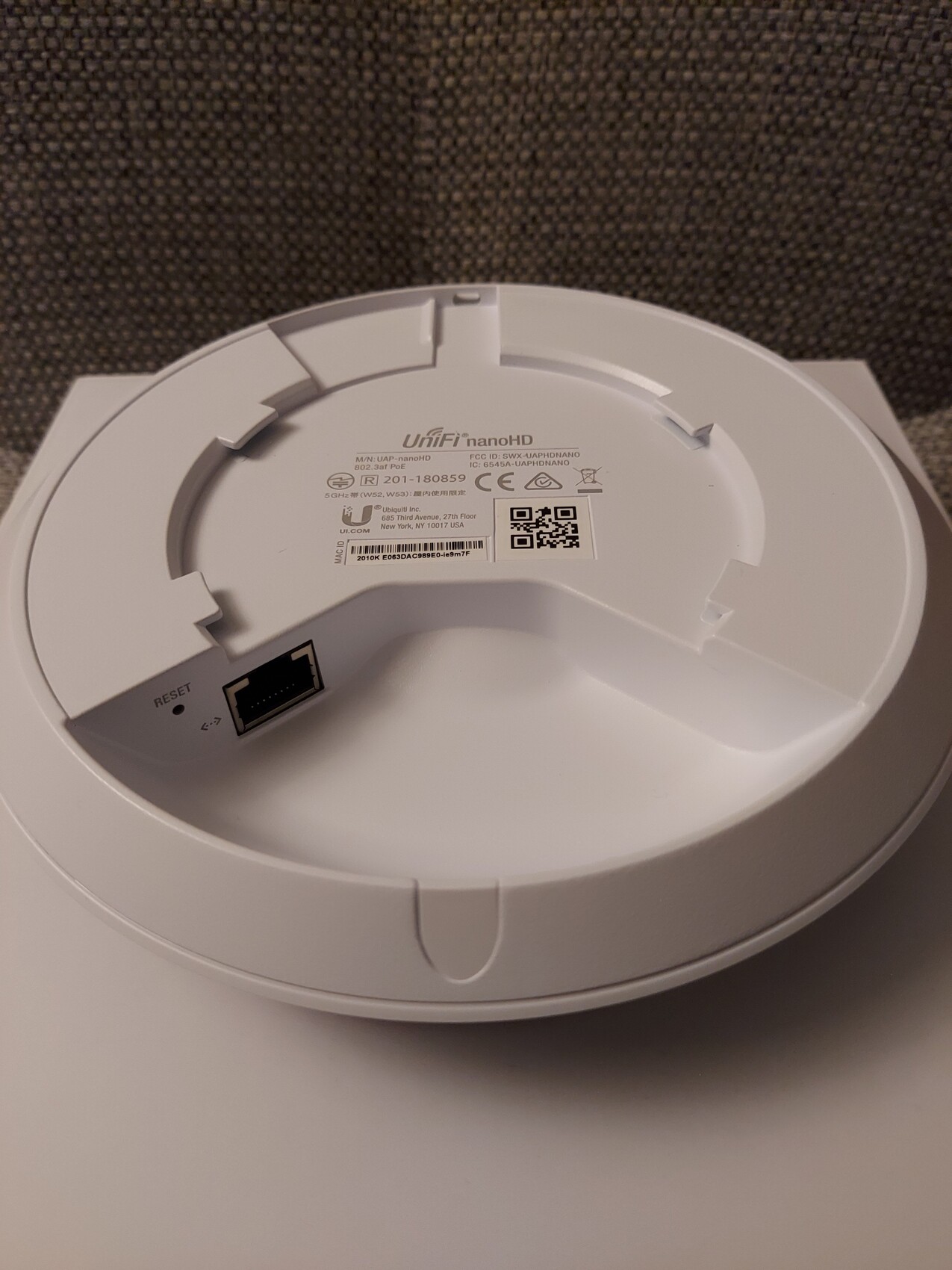
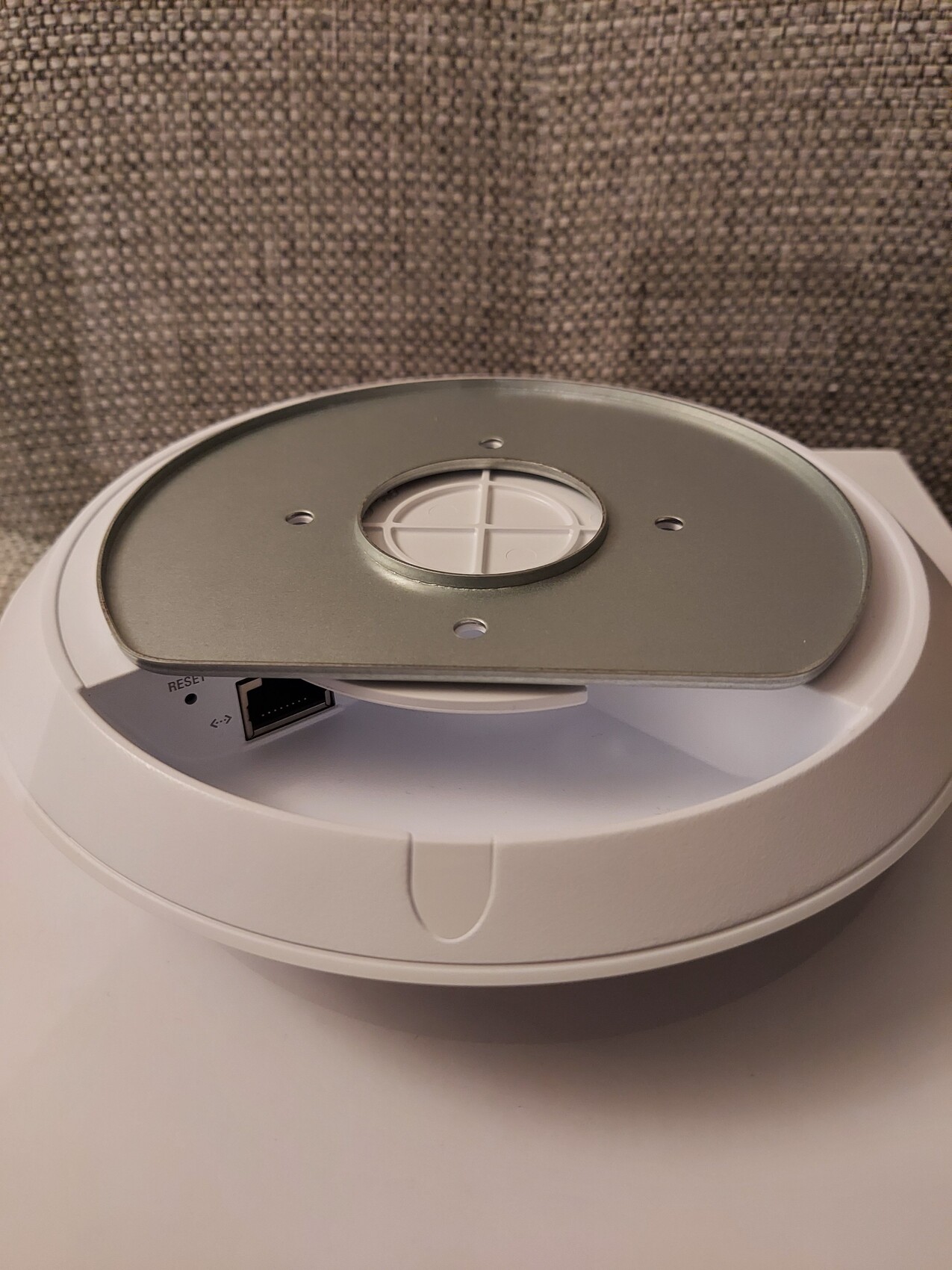
This is how the NanoHD looks from the back.

This even has an advantage: you can use it as a mini safe to hide things 😉.
If not, Golfi’s solution is also okay.
This is how the NanoHD looks from the back.

hanse987 schrieb:
Even if the NanoHD works now without a back box, eventually it will reach its end of life, and a new model might not have this cavity. Then, in a few years, you could be in a difficult position looking for solutions or facing very limited options.Well. You can’t prepare for every possible future scenario in life.
In the end, it’s a matter of cost.
M
MBPassion10 Nov 2020 19:42We are currently facing the same challenge, and drilling a deep hole into the concrete ceiling was no fun for the electrician (actually, no fun three times over). However, I believe the best solution is to install a deep flush-mounted box to allow for more flexibility. It currently looks like this:
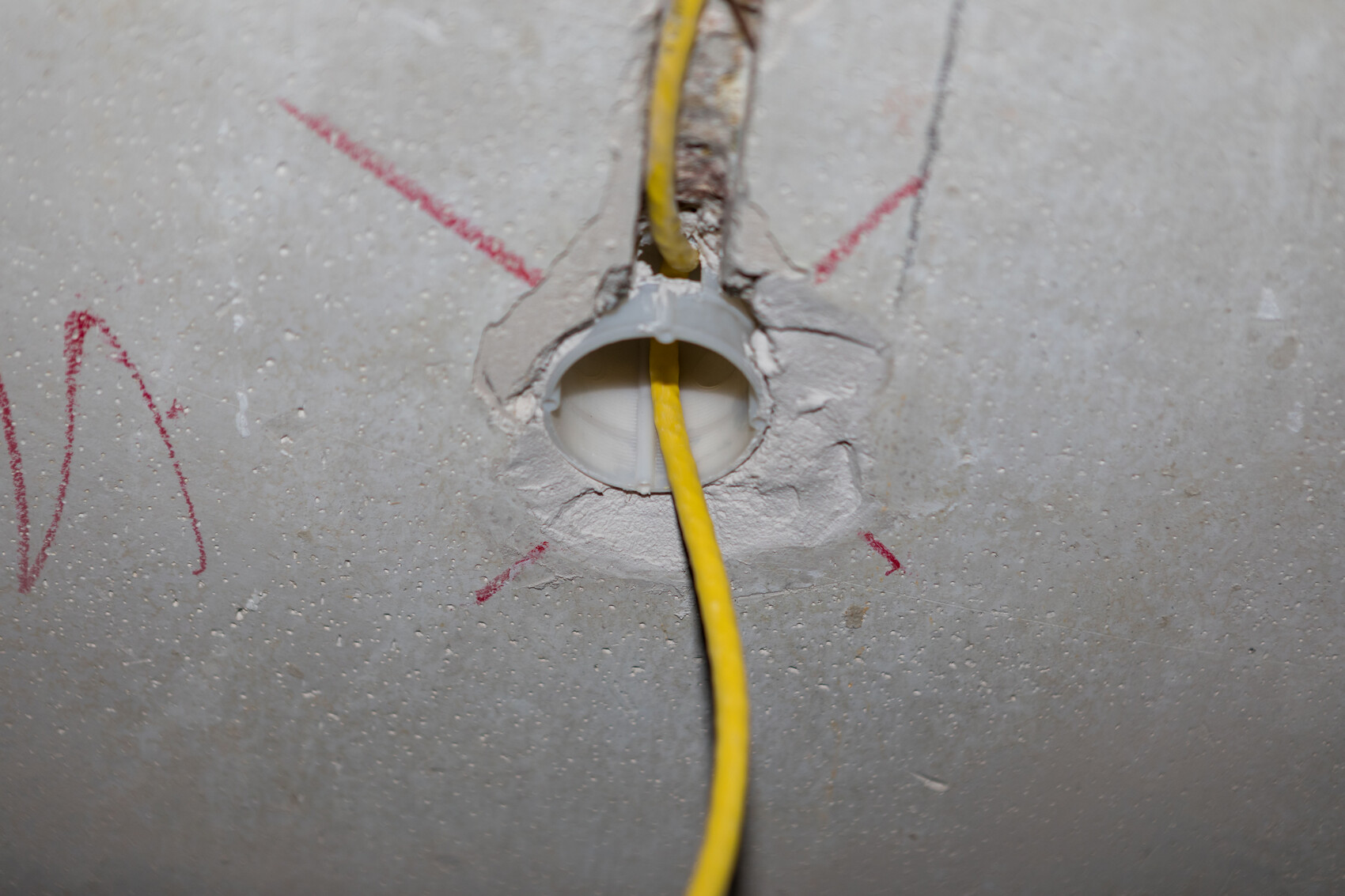
The box has a depth of 8cm (3 inches). I have also already sourced both angled keystones and patch cables with one angled end. But I suspect it should also work fine with a normal keystone and a short patch cable.
The box has a depth of 8cm (3 inches). I have also already sourced both angled keystones and patch cables with one angled end. But I suspect it should also work fine with a normal keystone and a short patch cable.