
ᐅ Waterproofing on Extruded Polystyrene (XPS) Insulation?
Created on: 21 Jul 2016 23:21
G
GerdBuchholz
Hello everyone,
Our shell builder installed the perimeter insulation (Styrodur) directly into the formwork (see photos), which caused the concrete and Styrodur to bond.
Now we are about to start plastering (exterior), and I’m hearing from different sources that this might cause issues with waterproofing. Normally, the concrete is waterproofed with bitumen first, and then the Styrodur is applied afterward. Bitumen reportedly does not adhere well to the outside of Styrodur.
Another plasterer suggests that using a waterproof slurry (WeberSuperflex D2) would be the correct solution here.
Since I couldn’t find any information about this online, I’m wondering if you might have some advice. Does anyone have experience with this?
How do people handle this, for example, when using prefabricated formwork from manufacturers like Lohrelemente?
Details: slab foundation with strip footings, no basement. No water pressure. Masonry made of Ytong.
Best regards, Gerd
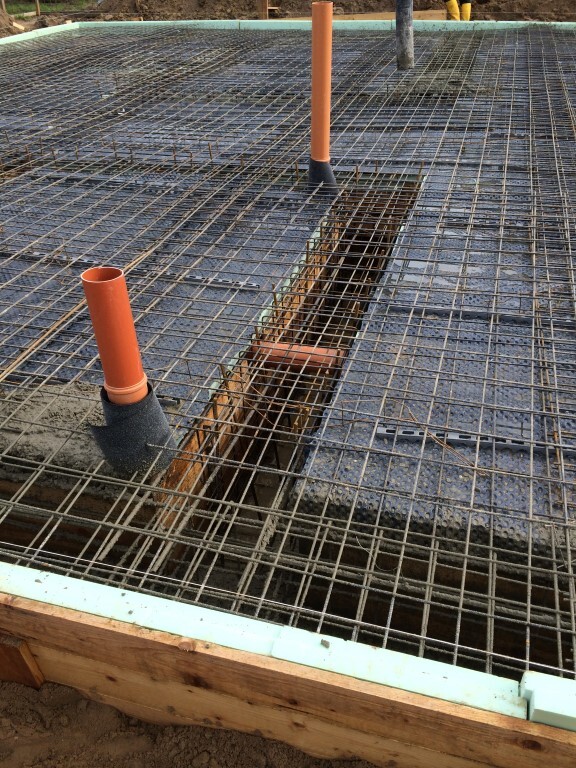
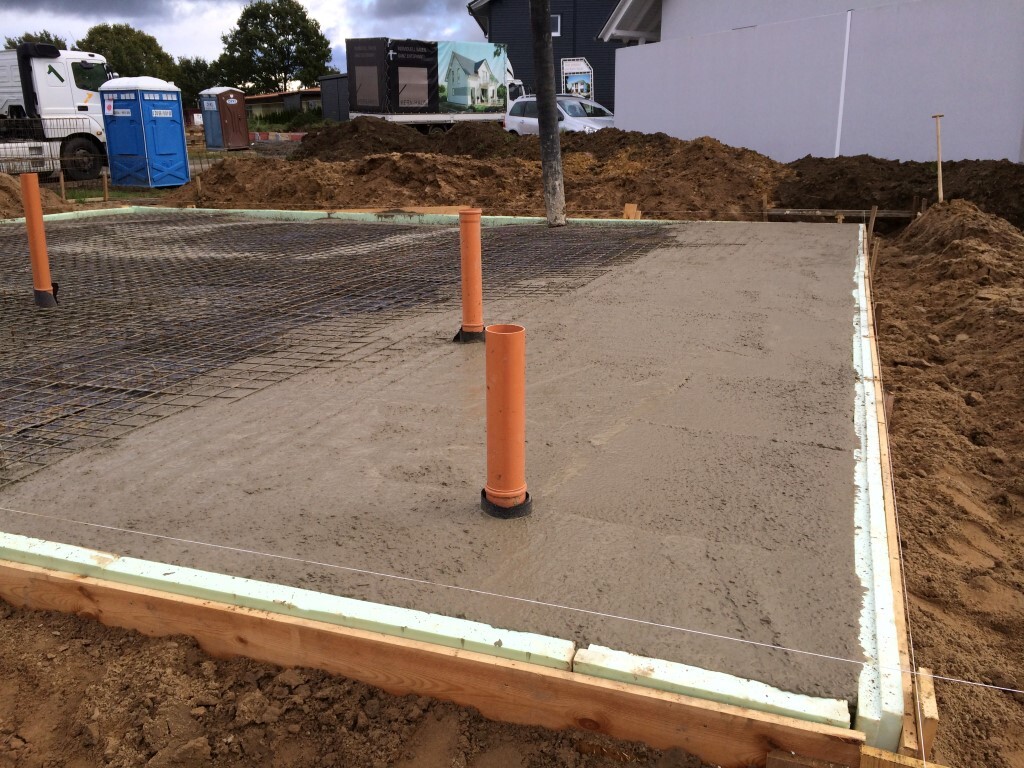
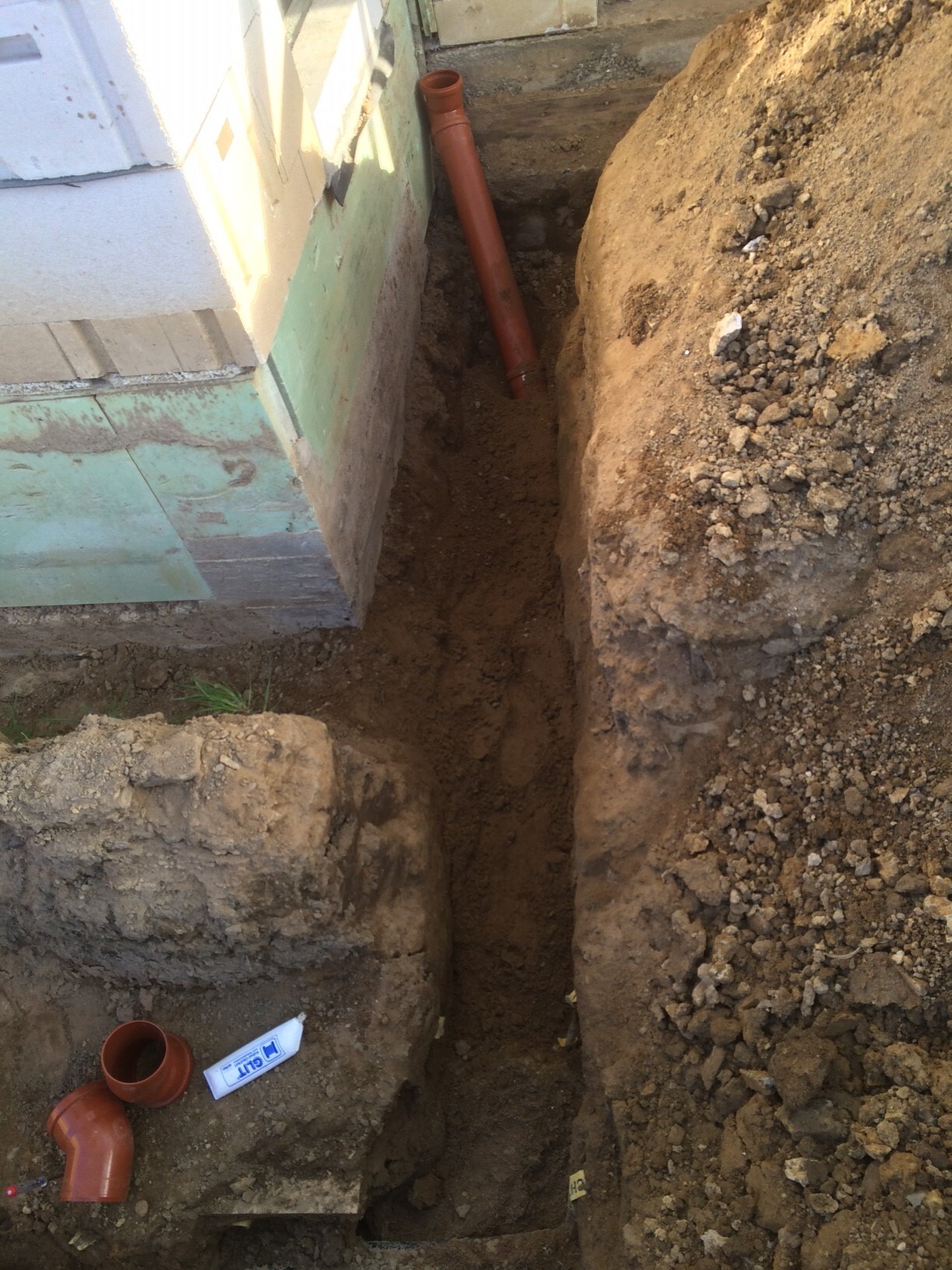
Our shell builder installed the perimeter insulation (Styrodur) directly into the formwork (see photos), which caused the concrete and Styrodur to bond.
Now we are about to start plastering (exterior), and I’m hearing from different sources that this might cause issues with waterproofing. Normally, the concrete is waterproofed with bitumen first, and then the Styrodur is applied afterward. Bitumen reportedly does not adhere well to the outside of Styrodur.
Another plasterer suggests that using a waterproof slurry (WeberSuperflex D2) would be the correct solution here.
Since I couldn’t find any information about this online, I’m wondering if you might have some advice. Does anyone have experience with this?
How do people handle this, for example, when using prefabricated formwork from manufacturers like Lohrelemente?
Details: slab foundation with strip footings, no basement. No water pressure. Masonry made of Ytong.
Best regards, Gerd
U
Ulrich Fuckert23 Jul 2016 10:52@Tom1607: 1.) In the area of ceilings, using Styrodur strips often does not cause any issues. Generally, the compressive strength limits of the masonry are not reached in the upper floors. However, the situation can be completely different in the floor below. Especially in areas such as masonry pillars (between two large terrace windows), the maximum compressive stresses of the masonry are often reached. If a part of the stone’s bearing surface is missing there, failure can occur.
2.) The fact that more and more new buildings use Styrodur for insulating the ground slab does not make this error any more acceptable. In the event of damage, this issue will seriously affect the designer and/or contractor. Besides the fact that this method does not comply with DIN standards, manufacturers of waterproofing materials specify mineral substrates as a requirement. Styrodur is not mineral-based and therefore does not meet the manufacturers’ requirements nor the building authority approval for the material. If it is still used in this way and damage occurs, an expert will classify the execution as non-compliant or defective.
2.) The fact that more and more new buildings use Styrodur for insulating the ground slab does not make this error any more acceptable. In the event of damage, this issue will seriously affect the designer and/or contractor. Besides the fact that this method does not comply with DIN standards, manufacturers of waterproofing materials specify mineral substrates as a requirement. Styrodur is not mineral-based and therefore does not meet the manufacturers’ requirements nor the building authority approval for the material. If it is still used in this way and damage occurs, an expert will classify the execution as non-compliant or defective.
I would like to activate this thread because I have a similar question regarding an item in my shell construction quote. We are building with a basement, and the quote includes...
Item 5.14: Insulation of the basement exterior walls using 120mm (5 inches) Styrodur up to the top edge of the basement ceiling.
Optional item:
Additional charge to item 5.14 for full-surface adhesion of the Styrodur panels to the basement exterior walls using a bituminous thick coating.
This optional item would cost me 2800€ net.
Both the shell builder and the architect say that this item is included only based on manufacturer recommendations, and they want to cover themselves with this recommendation.
From experience, sealing with a thick slurry would be sufficient here. But the decision is up to me.
Since I have no idea, I wanted to ask how this has been done in your projects?
Item 5.14: Insulation of the basement exterior walls using 120mm (5 inches) Styrodur up to the top edge of the basement ceiling.
Optional item:
Additional charge to item 5.14 for full-surface adhesion of the Styrodur panels to the basement exterior walls using a bituminous thick coating.
This optional item would cost me 2800€ net.
Both the shell builder and the architect say that this item is included only based on manufacturer recommendations, and they want to cover themselves with this recommendation.
From experience, sealing with a thick slurry would be sufficient here. But the decision is up to me.
Since I have no idea, I wanted to ask how this has been done in your projects?
Similar topics