
B
Baumensch19807 Mar 2016 13:26Hello everyone,
I’m new here and hope to receive plenty of answers.
As part of my volunteer work at my daughter’s kindergarten, I have been asked to address the following issue:
We have a playroom in the attic of about 150 m² (1,615 sq ft). There are two wooden skylight windows (Velux?), which are locked for safety reasons. It is therefore assumed that ventilation has been rare or almost nonexistent.
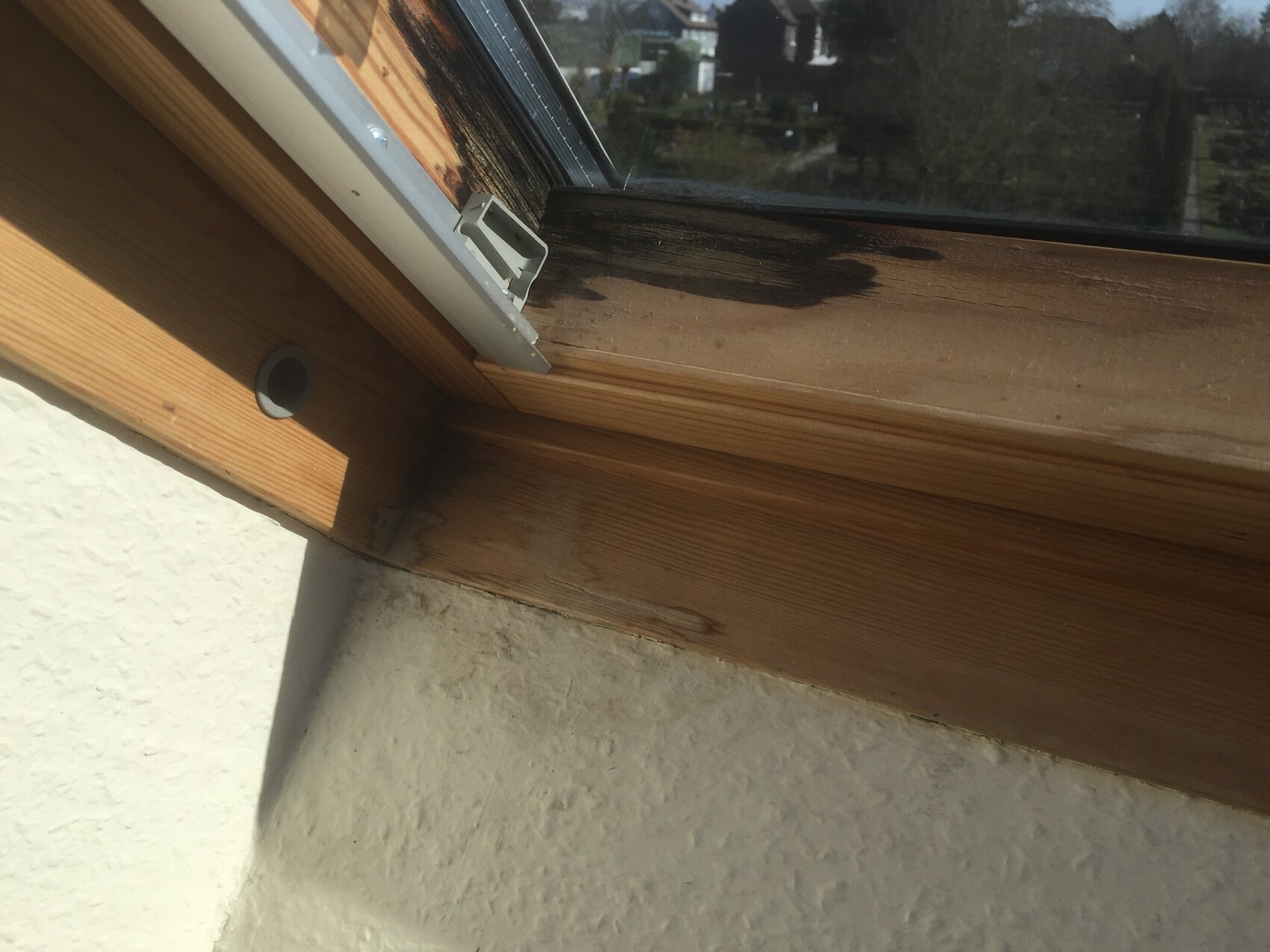
Attached are a few example photos of the windows. To me, it looks like mold, but I would like to get an expert opinion. The windows are dry inside and feel dry to the touch.
Here are the main questions:
I look forward to helpful feedback.
Best regards,
Baumensch1980


I’m new here and hope to receive plenty of answers.
As part of my volunteer work at my daughter’s kindergarten, I have been asked to address the following issue:
We have a playroom in the attic of about 150 m² (1,615 sq ft). There are two wooden skylight windows (Velux?), which are locked for safety reasons. It is therefore assumed that ventilation has been rare or almost nonexistent.
Attached are a few example photos of the windows. To me, it looks like mold, but I would like to get an expert opinion. The windows are dry inside and feel dry to the touch.
Here are the main questions:
- Is it actually mold?
- If yes, what should be done?
- Is this the landlord’s responsibility?
I look forward to helpful feedback.
Best regards,
Baumensch1980
 blockhauspower7 Mar 2016 15:35
Hi, it’s hard to say from here, of course. To me, it looks like old water damage, so maybe someone left the window open or something similar.
I would measure the wood moisture; if it’s dry, sand it and refinish with paint, oil, or wax. If it’s wet, investigate the cause.
I can’t really judge the black area, but it doesn’t look like mold to me.
Regards
I would measure the wood moisture; if it’s dry, sand it and refinish with paint, oil, or wax. If it’s wet, investigate the cause.
I can’t really judge the black area, but it doesn’t look like mold to me.
Regards

This looks more like moisture damage. If the window is not leaking, it could be condensation from indoor humidity forming on the cold surface of the window. This indicates that the window has a very low thermal insulation value. It would be helpful to know the manufacturing year of the window and its thermal transmittance value (Uw-value). For Velux windows, the rating plate is located at the top right or left of the frame, above the handle strip. Visually, the window could be from the 1990s. If it is condensation and there is no window leakage, this suggests an unusually high indoor humidity combined with low heating output and inadequate ventilation. It might also be worth checking if the roof insulation is insufficient in this context.
Hello, we have almost the same situation with our roof window (from the year 2000), though not quite as dark. In the past, I often dried laundry in that room... that was not a good idea. As wpic already mentioned, moisture forms on the glass during frost (and only then), which then runs down onto the wood. The indoor humidity today is 36 percent. Room temperature is about 20 degrees Celsius (68°F). The roof is well insulated. I now always place a small silent fan under the window during frost. This helps a lot. The window's label says: Velux GGL 206 3059B, 15 AH 10D. Where can I find the Uw value on this? After sanding, should I paint or rather oil the wood? What else could I do as a preventive measure? Any thermal films for the glass? Best regards, Steffi
B
Baumensch19809 Mar 2016 06:59Hello everyone,
Thanks so far for the responses.
Can I hold the landlord accountable for this, or is it the tenant's responsibility? As mentioned at the beginning, we are a daycare center (parent initiative).
Best regards,
Baumensch1980
Thanks so far for the responses.
Can I hold the landlord accountable for this, or is it the tenant's responsibility? As mentioned at the beginning, we are a daycare center (parent initiative).
Best regards,
Baumensch1980
Similar topics