
Hello,
we are building a semi-detached house with a developer.
We have to do the painting work ourselves afterward
(we can no longer afford a professional painter).
We only imagined plastered walls
(which we find visually appealing).
Either just filling until the surface is smooth (e.g., Q3 level) and then painting the wall, or applying textured paint or roll-on render over the filled surface.
The developer has now expressed concerns and told us that in new builds there can be a very large number of small cracks.
We are building brick by brick with sand-lime brick (or rather, the developer is) and some walls are gypsum concrete, but about 90% are sand-lime brick.
How are your walls in new builds with only plastered surfaces, especially with sand-lime brick?
Some acquaintances who built with Ytong have so far only had minor cracks after 1.5 years (but only at the top of the wall, at the connection to the ceiling, with large cracks).
But not like the developer said, that there would be small cracks everywhere.
The developer recommends using painting fleece so that the cracks remain under the fleece.
I know that cracks can occur in new walls during the drying process, but we only know of occasional larger cracks, not many small or medium cracks everywhere.
I hope you can help me.
we are building a semi-detached house with a developer.
We have to do the painting work ourselves afterward
(we can no longer afford a professional painter).
We only imagined plastered walls
(which we find visually appealing).
Either just filling until the surface is smooth (e.g., Q3 level) and then painting the wall, or applying textured paint or roll-on render over the filled surface.
The developer has now expressed concerns and told us that in new builds there can be a very large number of small cracks.
We are building brick by brick with sand-lime brick (or rather, the developer is) and some walls are gypsum concrete, but about 90% are sand-lime brick.
How are your walls in new builds with only plastered surfaces, especially with sand-lime brick?
Some acquaintances who built with Ytong have so far only had minor cracks after 1.5 years (but only at the top of the wall, at the connection to the ceiling, with large cracks).
But not like the developer said, that there would be small cracks everywhere.
The developer recommends using painting fleece so that the cracks remain under the fleece.
I know that cracks can occur in new walls during the drying process, but we only know of occasional larger cracks, not many small or medium cracks everywhere.
I hope you can help me.
ypg schrieb:
No, the original poster used spray-on plaster, @driver55, whom I asked to show me the cotton plaster, actually used cotton plaster. However, to my knowledge, he did not upload a photo of it.
Just read for yourself
https://www.hausbau-forum.de/threads/rollputz-im-treppenhaus-wie-auftragen.43640/page-2#post-582265 I must have overlooked that. I will catch up. 😉
Pwnage619 schrieb:
We didn’t like the appearance of the cotton plaster.Huh? You don’t even know it (mine). 🙄N
Neubau20221 Jul 2022 21:11Pwnage619 schrieb:
Hello,
we are building a semi-detached house from a developer.
We have to do the painting work ourselves afterwards
(we can no longer afford a professional painter).
We had imagined just plastered walls (which we like the look of).
Either just filling and smoothing until the surface is even (e.g., Q3 quality level) and then painting the wall, or applying textured paint or decorative plaster on top of the smoothed wall.
The developer has now expressed concerns and told us that there could be many very small cracks in a new build.
We are building brick by brick with calcium silicate blocks (or the developer is), and a few walls are made of gypsum concrete, but about 90% are calcium silicate blocks.
How are your walls in new builds with just plastered surfaces, especially with calcium silicate blocks?
Some acquaintances had almost no cracks after 1.5 years (but they built with Ytong blocks), and they only had large cracks at the top of the wall, where it connects to the ceiling.
But not like the developer said, that there would be small cracks everywhere.
The developer recommends using painting fleece (paintable fiberglass mesh) to keep the cracks beneath the surface.
I know that cracks can form during the drying process in new builds, but we are only aware of isolated larger cracks, not small and medium cracks everywhere.
I hope you can help me.Cracks can appear but don’t necessarily have to. If your budget is already stretched, painting directly on the plaster is recommended, as long as the plaster quality is good. Otherwise, some light sanding should be done.
H
Hutchinson1231 Jul 2022 21:27We wallpapered and painted our terraced house from 2000, which has sand-lime brick walls, using paintable fleece wallpaper. We started upstairs, and the result was just average.
We hoped it would be better on the ground floor. And in my opinion, it turned out almost perfect. You can’t see any seams – it looks like a smooth plastered surface. I honestly don’t know how a professional painter could do better than this…
The difference compared to upstairs:
Upstairs, two of us worked together on the wallpapering, downstairs I did it entirely on my own. When working with two people, you can never line up the strips seam-to-seam perfectly. When working alone, gravity does the job for you 😉
One more important tip:
Use plenty of wallpaper paste and don’t be too cautious when applying paste along the edge of the previous wallpaper strip, otherwise the edges will start to peel off. I deliberately spread the paste about 2–3 cm (1 inch) onto the previous strip to avoid dry spots. Press the joins with a damp sponge while removing the excess paste. It doesn’t cause any problems—feel free to use plenty of paste 🙂
The ready-mixed wallpaper paste from Metylan is quite expensive but also works better than the homemade paste. Spending an extra 100–150 € (around $110–165) is definitely worth it.
On our ground floor, you can look from any angle and you won’t notice any seams at all. We painted all the walls with Alpina white paint.
For practice, start in less important rooms, such as the office. If the result isn’t perfect there, it’s less noticeable. But in the living room, kitchen, and other main areas, you want it to be perfect 😉
Oh, and I’ve always hated wallpapering, especially with textured wallpaper and the annoying soaking of the strips beforehand — so frustrating! I’m still amazed and impressed at how well I managed this time. Even the opening between the kitchen and living room turned out flawless.
We used the top-rated paintable fleece according to Stiftung Warentest. I would definitely use it again. Don’t skimp on the materials.
Good luck!
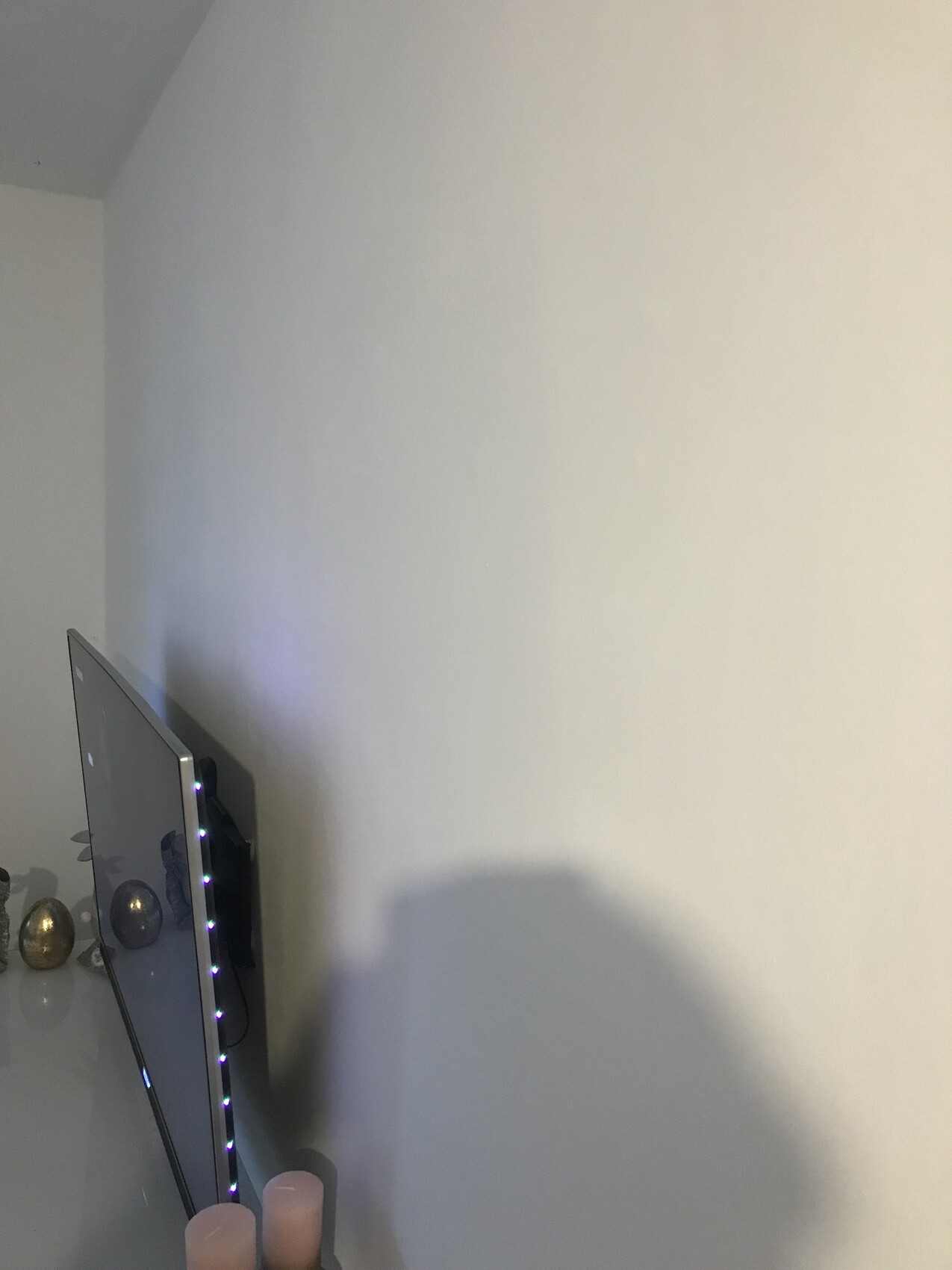
We hoped it would be better on the ground floor. And in my opinion, it turned out almost perfect. You can’t see any seams – it looks like a smooth plastered surface. I honestly don’t know how a professional painter could do better than this…
The difference compared to upstairs:
Upstairs, two of us worked together on the wallpapering, downstairs I did it entirely on my own. When working with two people, you can never line up the strips seam-to-seam perfectly. When working alone, gravity does the job for you 😉
One more important tip:
Use plenty of wallpaper paste and don’t be too cautious when applying paste along the edge of the previous wallpaper strip, otherwise the edges will start to peel off. I deliberately spread the paste about 2–3 cm (1 inch) onto the previous strip to avoid dry spots. Press the joins with a damp sponge while removing the excess paste. It doesn’t cause any problems—feel free to use plenty of paste 🙂
The ready-mixed wallpaper paste from Metylan is quite expensive but also works better than the homemade paste. Spending an extra 100–150 € (around $110–165) is definitely worth it.
On our ground floor, you can look from any angle and you won’t notice any seams at all. We painted all the walls with Alpina white paint.
For practice, start in less important rooms, such as the office. If the result isn’t perfect there, it’s less noticeable. But in the living room, kitchen, and other main areas, you want it to be perfect 😉
Oh, and I’ve always hated wallpapering, especially with textured wallpaper and the annoying soaking of the strips beforehand — so frustrating! I’m still amazed and impressed at how well I managed this time. Even the opening between the kitchen and living room turned out flawless.
We used the top-rated paintable fleece according to Stiftung Warentest. I would definitely use it again. Don’t skimp on the materials.
Good luck!
Similar topics