
Hello everyone,
In 2024, we had a house built using 36.5cm (14 inch) Poroton bricks, with plaster applied both outside and inside. The windows are triple-glazed uPVC from Kömmerling. The panes apparently aren’t the best; according to the supplier, they offer 30-32dB sound insulation. However, in the bedroom we upgraded to 46dB panes already, but unfortunately without significant improvement.
The windows are equipped with external blinds (raffstores) that are installed in cassette boxes directly mounted on the windows. These boxes are so thick that they are flush with the brick facade and were plastered both inside and outside. According to the datasheet, the boxes can provide up to 46dB sound insulation (tested using “pink noise”). No specific sound insulation class was agreed upon in the building contract.
When I hold a sound level meter to the open window, I measure about 38dB of outside noise. With the window closed, this drops to about 25dB (which is roughly the threshold at which traffic noise from the nearby federal road becomes noticeable).
Some rooms have corner windows that are insulated on the corners with polystyrene blocks. Since we also hear the noise—just slightly quieter—with normal windows, I wouldn’t identify those corners as the only weak points.
Unfortunately, we hear almost all noises from outside: passing cars (it’s a dead-end street with a 30 km/h (19 mph) speed limit), people talking in front of the house, birdsong, the neighbor’s front door across the street... We are about 600 meters (0.37 miles) from a federal road where the background noise is clearly audible depending on wind direction.
We have 23 window units and in some rooms there are four windows with a total area of about 1.5 square meters (16 square feet). This makes it very stressful and frustrating because we really can’t escape the noise.
We are already in talks with the construction company, and an expert will be called in soon. Now I need some input for my arguments and would like to collect some comparisons:
Do you hear such outside noises as well? What level of outdoor noise do you consider “normal” and what is definitely excessive?
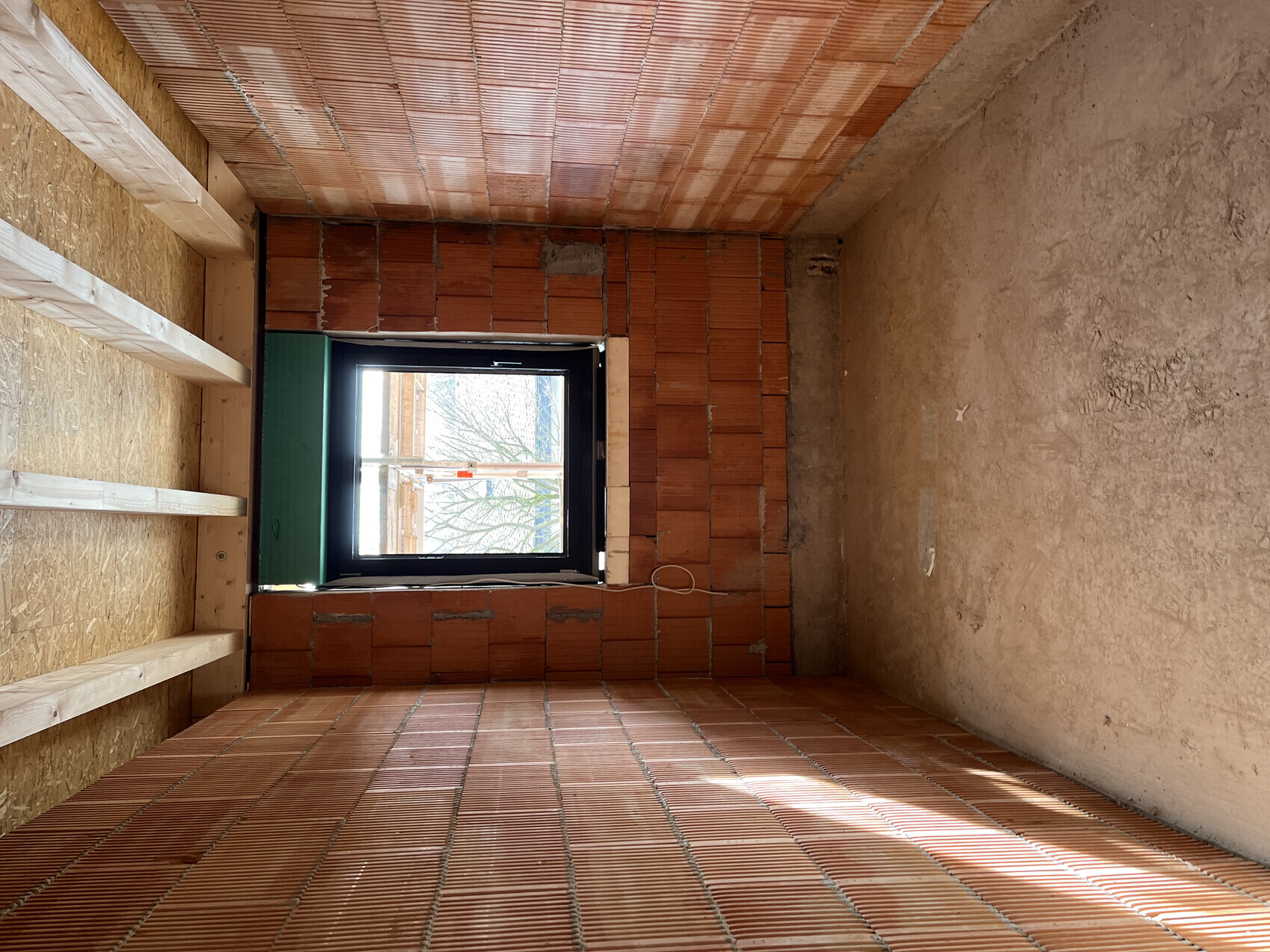
A few photos of the shell construction attached.
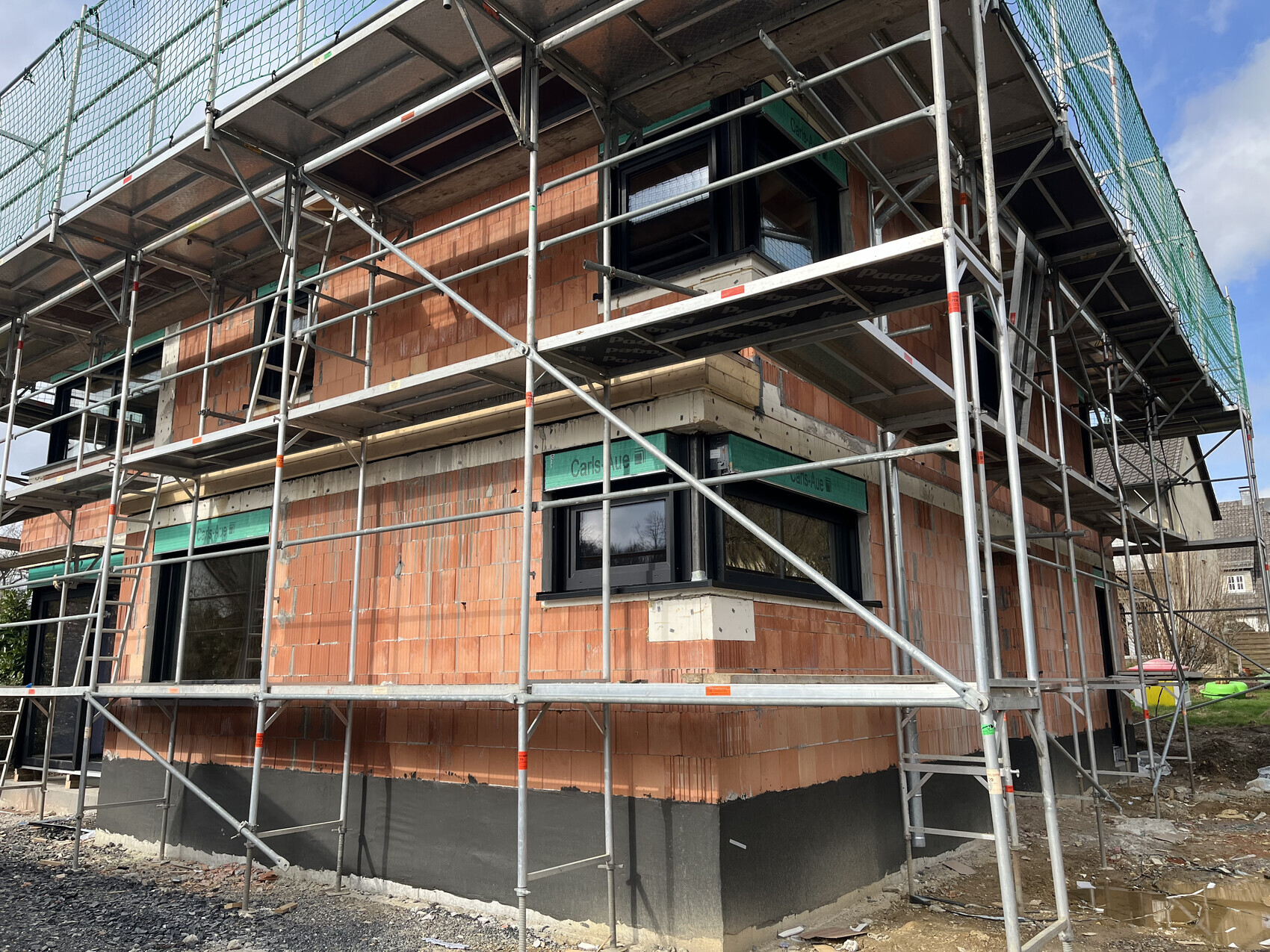
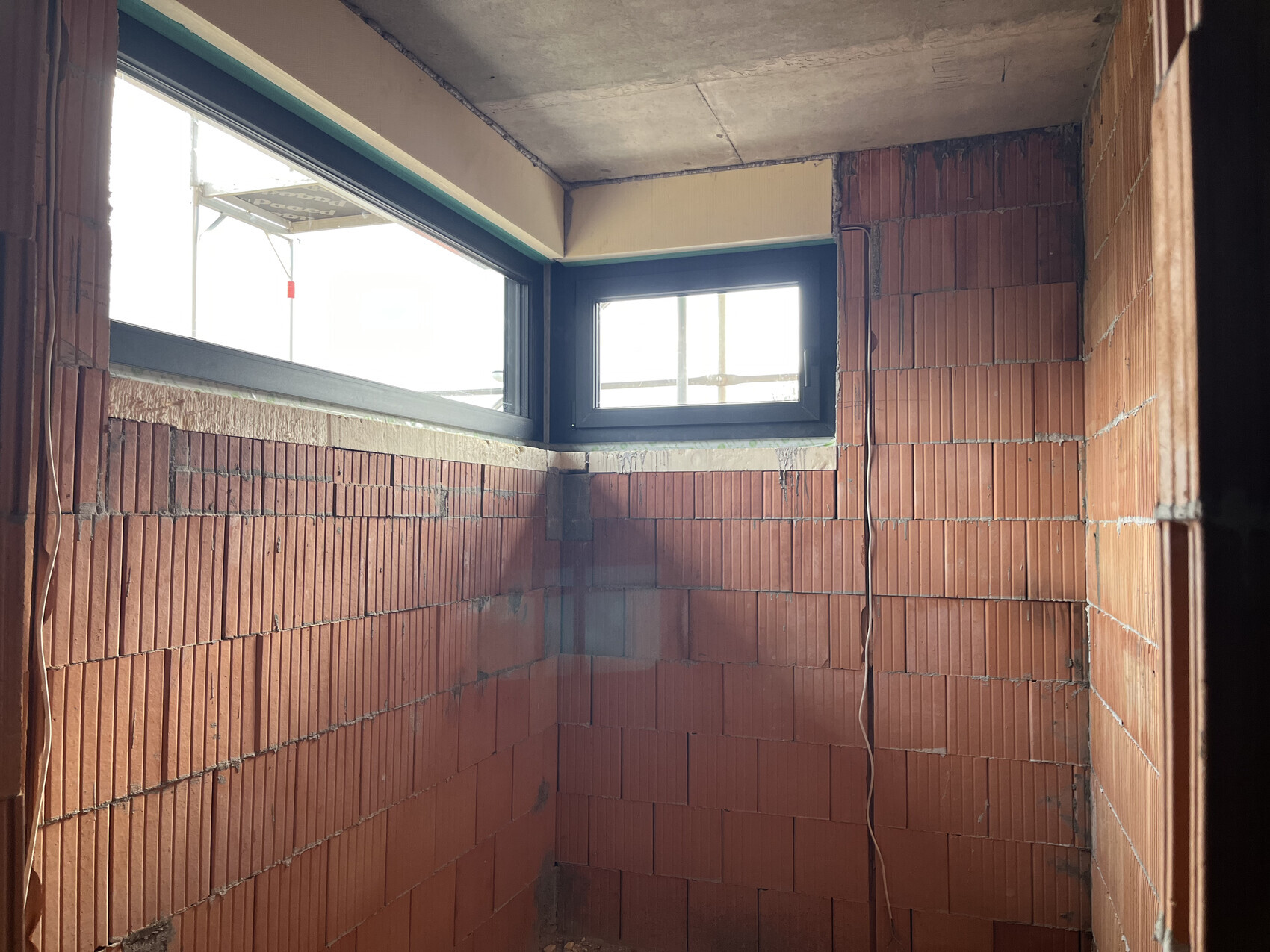
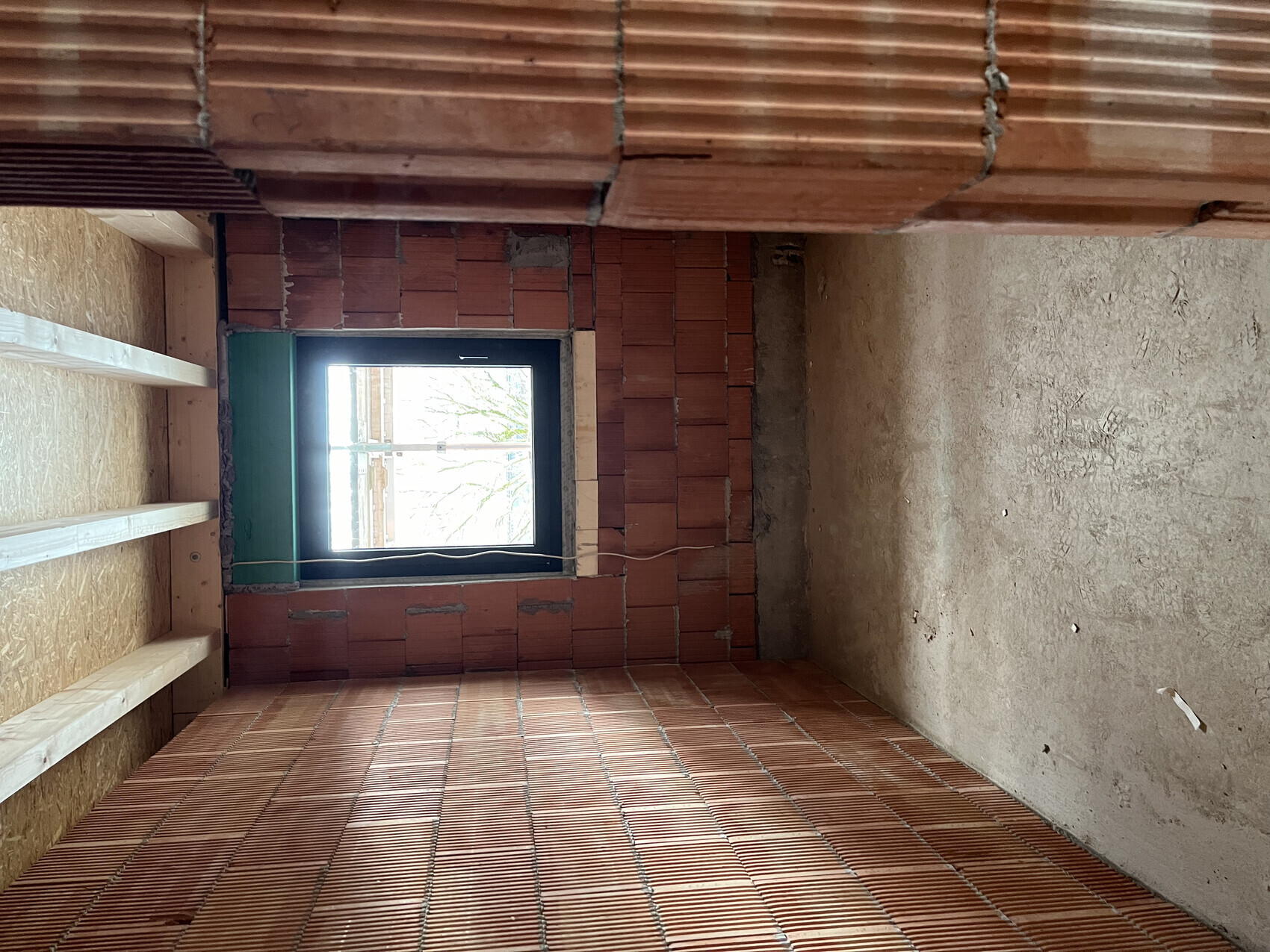
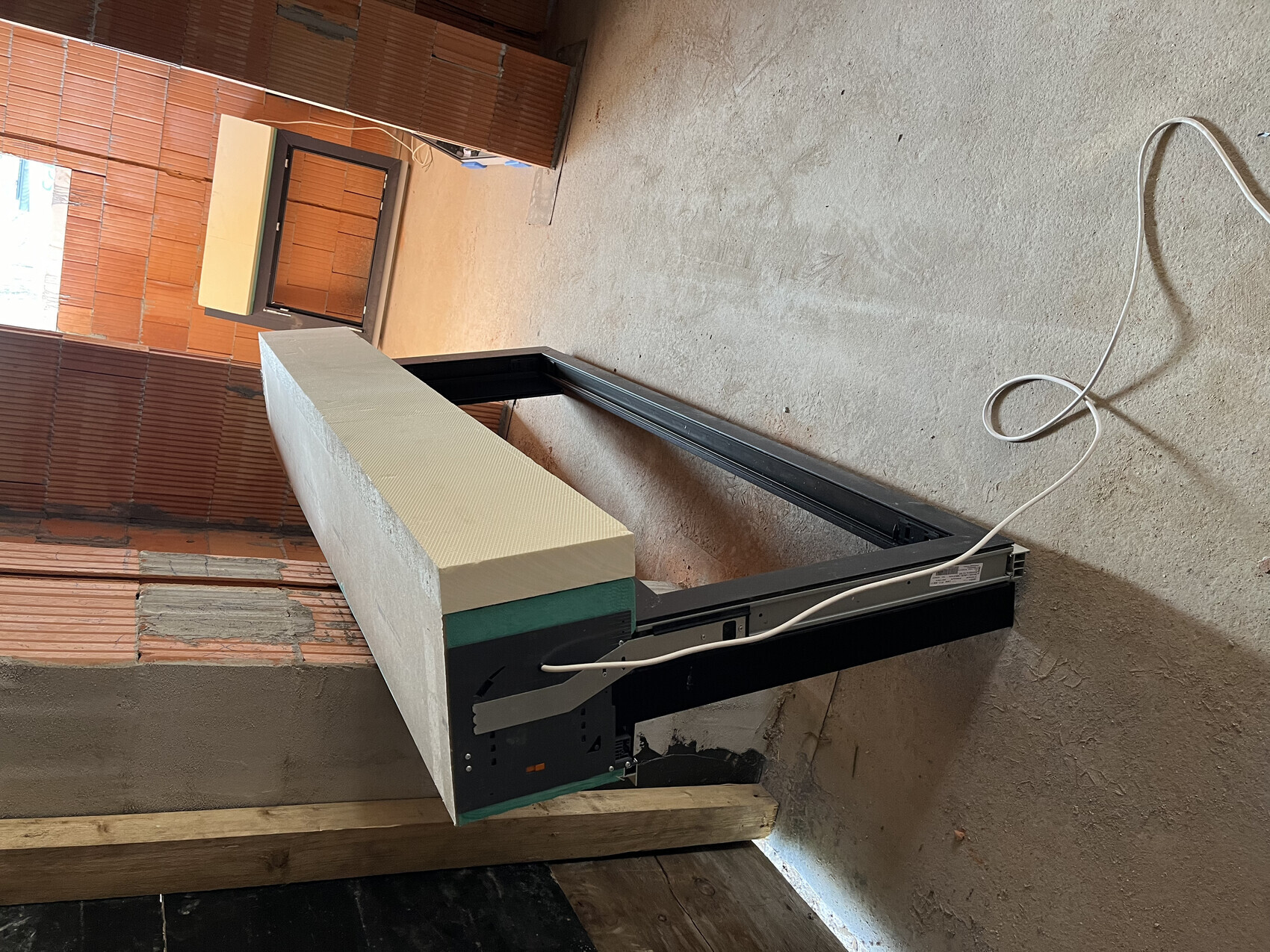
In 2024, we had a house built using 36.5cm (14 inch) Poroton bricks, with plaster applied both outside and inside. The windows are triple-glazed uPVC from Kömmerling. The panes apparently aren’t the best; according to the supplier, they offer 30-32dB sound insulation. However, in the bedroom we upgraded to 46dB panes already, but unfortunately without significant improvement.
The windows are equipped with external blinds (raffstores) that are installed in cassette boxes directly mounted on the windows. These boxes are so thick that they are flush with the brick facade and were plastered both inside and outside. According to the datasheet, the boxes can provide up to 46dB sound insulation (tested using “pink noise”). No specific sound insulation class was agreed upon in the building contract.
When I hold a sound level meter to the open window, I measure about 38dB of outside noise. With the window closed, this drops to about 25dB (which is roughly the threshold at which traffic noise from the nearby federal road becomes noticeable).
Some rooms have corner windows that are insulated on the corners with polystyrene blocks. Since we also hear the noise—just slightly quieter—with normal windows, I wouldn’t identify those corners as the only weak points.
Unfortunately, we hear almost all noises from outside: passing cars (it’s a dead-end street with a 30 km/h (19 mph) speed limit), people talking in front of the house, birdsong, the neighbor’s front door across the street... We are about 600 meters (0.37 miles) from a federal road where the background noise is clearly audible depending on wind direction.
We have 23 window units and in some rooms there are four windows with a total area of about 1.5 square meters (16 square feet). This makes it very stressful and frustrating because we really can’t escape the noise.
We are already in talks with the construction company, and an expert will be called in soon. Now I need some input for my arguments and would like to collect some comparisons:
Do you hear such outside noises as well? What level of outdoor noise do you consider “normal” and what is definitely excessive?
A few photos of the shell construction attached.
W
wiltshire1 Sep 2025 23:26There is nothing wrong with your house based on the measurements you described. Of course, Pink House is suitable for measuring, but it does not reflect the impulsiveness of natural or mechanical sounds.
As @ypg writes: hearing is subjective. It is normal to perceive outdoor noise in houses located in residential areas. I am very glad to have a keen sense of hearing. Through either concentration or relaxation, I can choose to block out noises or accept them in a way that they do not bother me.
Tip: Check out soundproofing options or in-ear monitors from Hörluchs. I had the latter custom-fitted to my ears and love the music experience through them. They seal very effectively and are comfortable to wear. Silence instead of active noise cancellation.
AndBruNRW schrieb:
Do you also hear such outdoor noises? What outdoor noise is considered "normal," and what definitely is not?
As @ypg writes: hearing is subjective. It is normal to perceive outdoor noise in houses located in residential areas. I am very glad to have a keen sense of hearing. Through either concentration or relaxation, I can choose to block out noises or accept them in a way that they do not bother me.
Tip: Check out soundproofing options or in-ear monitors from Hörluchs. I had the latter custom-fitted to my ears and love the music experience through them. They seal very effectively and are comfortable to wear. Silence instead of active noise cancellation.

But the house is plastered? Have the windows been adjusted?
In the beginning, it was the same for us. I was very sensitive to noise back then, especially with a newborn—I could hear every car.
By now, it’s better, but we have trees, hedges, grasses, and so on. All of that is still missing at your place.
In the beginning, it was the same for us. I was very sensitive to noise back then, especially with a newborn—I could hear every car.
By now, it’s better, but we have trees, hedges, grasses, and so on. All of that is still missing at your place.
M
MachsSelbst2 Sep 2025 11:31Well, with the noise from the main road, the roof of the upper floor could also be a contributing factor. If sound insulation is very important to you, it’s best to have a concrete ceiling on the upper floor. Your large window areas, especially those that wrap around corners, are also not ideal if you want maximum soundproofing. And the Poroton bricks would have been better filled if your goal was to achieve the highest level of sound insulation.
Your neighbors probably have different wall constructions or are simply less sensitive to noise than you are.
Even at the highest setting of my decentralized ventilation system, I can still sleep very well; that level is about 50 dB. More sensitive people can’t sleep even at the lowest level, around 30 dB...
But honestly, I don’t understand why you would build next to a main road and then complain about the noise? If you’re sitting in the garden on a Saturday and trucks roar by on the highway 600 m (650 yards) away, you’re going to go crazy. This is going to be quite a challenge...
Your neighbors probably have different wall constructions or are simply less sensitive to noise than you are.
Even at the highest setting of my decentralized ventilation system, I can still sleep very well; that level is about 50 dB. More sensitive people can’t sleep even at the lowest level, around 30 dB...
But honestly, I don’t understand why you would build next to a main road and then complain about the noise? If you’re sitting in the garden on a Saturday and trucks roar by on the highway 600 m (650 yards) away, you’re going to go crazy. This is going to be quite a challenge...
A
Allthewayup2 Sep 2025 12:45Were those unfilled Poroton bricks?
At the time, we deliberately chose filled 36.5cm (14.4 inches) bricks, partly because of the slightly better sound insulation that comes with the filling.
I believe an expert would not find any issues if the trades were carried out according to standards. At least the masonry looks very neat in the photos. I can’t see any compression tape around the window in the installed state, but I also think that using foam during installation ends up providing similar acoustic performance in the end.
At the time, we deliberately chose filled 36.5cm (14.4 inches) bricks, partly because of the slightly better sound insulation that comes with the filling.
I believe an expert would not find any issues if the trades were carried out according to standards. At least the masonry looks very neat in the photos. I can’t see any compression tape around the window in the installed state, but I also think that using foam during installation ends up providing similar acoustic performance in the end.
S
Siedler342 Sep 2025 13:15With us, noises pass through the Poroton wall. They are simply not ideal for soundproofing.
N
nordanney2 Sep 2025 13:35AndBruNRW schrieb:
Now I need some material for my argument, please For which argument? That there is a construction defect?
It reads like “built normally” and without any special agreements in the building contract. If the expert inspector doesn’t find any significant defects, you can’t really hold the construction company responsible.
You can only:
- Get used to the “noise”
- For example, add extra insulation to the top wooden ceiling from above
- Move out
- Consider adding a brick veneer (if you’re already sensitive to noise and live near a main road, more thought should have gone into the wall construction choice ==> sand-lime bricks with a brick facing would have been more expensive, but also quieter)
- Play the radio quietly in the background at home to maintain a constant noise level and mask outside sounds
AndBruNRW schrieb:
In the bedroom, we have already upgraded to 46dB (decibel) glass panes. Unfortunately, without any noticeable improvement. Glass panes are just one part of the equation. Proper installation of the entire window and possibly a different method for mounting the blinds (not as an overlay type, but completely separated from the window frame) are also important.
Similar topics