
Hello everyone,
In 2024, we had a house built using 36.5cm (14 inch) Poroton bricks, with plaster applied both outside and inside. The windows are triple-glazed uPVC from Kömmerling. The panes apparently aren’t the best; according to the supplier, they offer 30-32dB sound insulation. However, in the bedroom we upgraded to 46dB panes already, but unfortunately without significant improvement.
The windows are equipped with external blinds (raffstores) that are installed in cassette boxes directly mounted on the windows. These boxes are so thick that they are flush with the brick facade and were plastered both inside and outside. According to the datasheet, the boxes can provide up to 46dB sound insulation (tested using “pink noise”). No specific sound insulation class was agreed upon in the building contract.
When I hold a sound level meter to the open window, I measure about 38dB of outside noise. With the window closed, this drops to about 25dB (which is roughly the threshold at which traffic noise from the nearby federal road becomes noticeable).
Some rooms have corner windows that are insulated on the corners with polystyrene blocks. Since we also hear the noise—just slightly quieter—with normal windows, I wouldn’t identify those corners as the only weak points.
Unfortunately, we hear almost all noises from outside: passing cars (it’s a dead-end street with a 30 km/h (19 mph) speed limit), people talking in front of the house, birdsong, the neighbor’s front door across the street... We are about 600 meters (0.37 miles) from a federal road where the background noise is clearly audible depending on wind direction.
We have 23 window units and in some rooms there are four windows with a total area of about 1.5 square meters (16 square feet). This makes it very stressful and frustrating because we really can’t escape the noise.
We are already in talks with the construction company, and an expert will be called in soon. Now I need some input for my arguments and would like to collect some comparisons:
Do you hear such outside noises as well? What level of outdoor noise do you consider “normal” and what is definitely excessive?
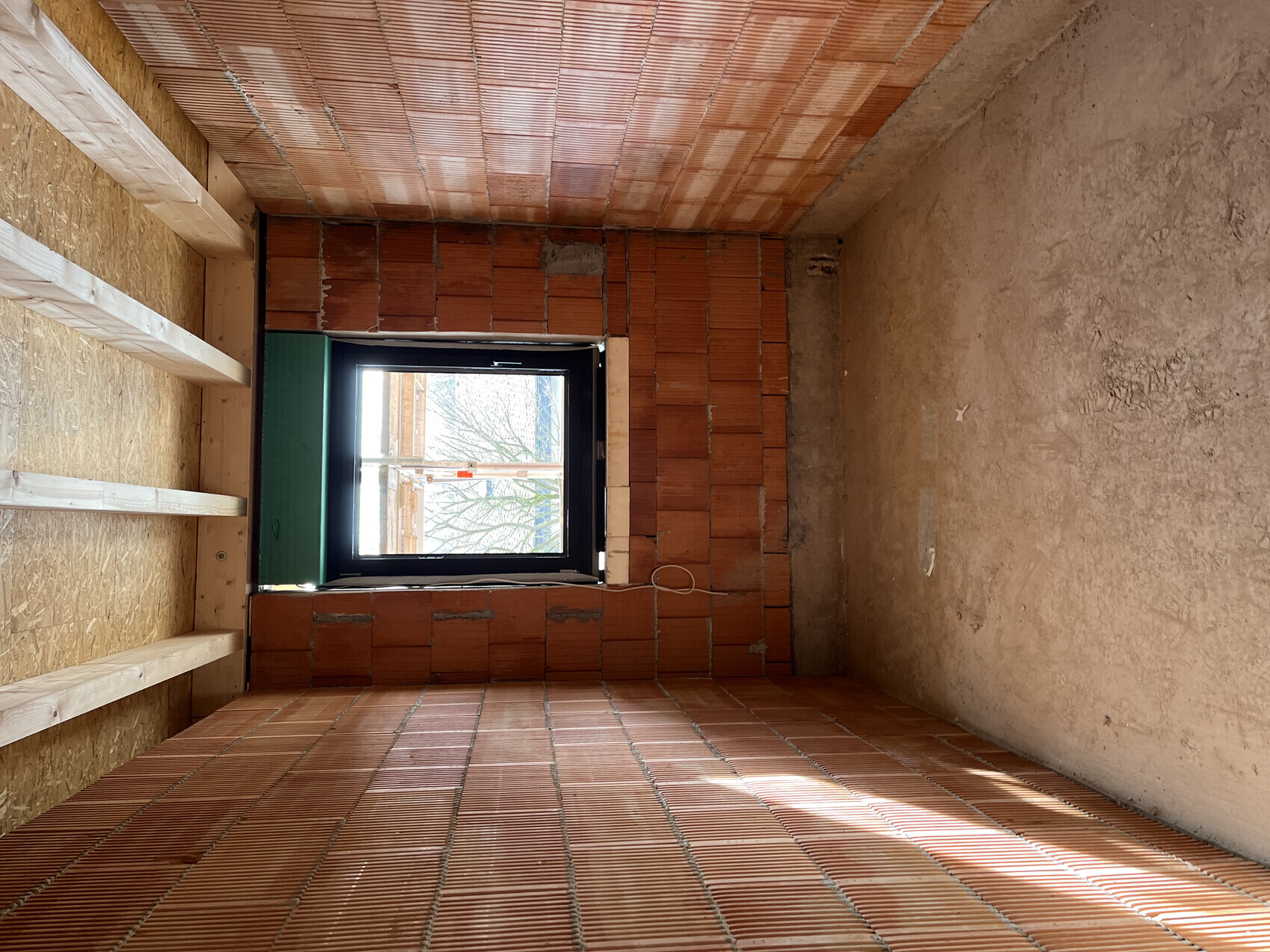
A few photos of the shell construction attached.
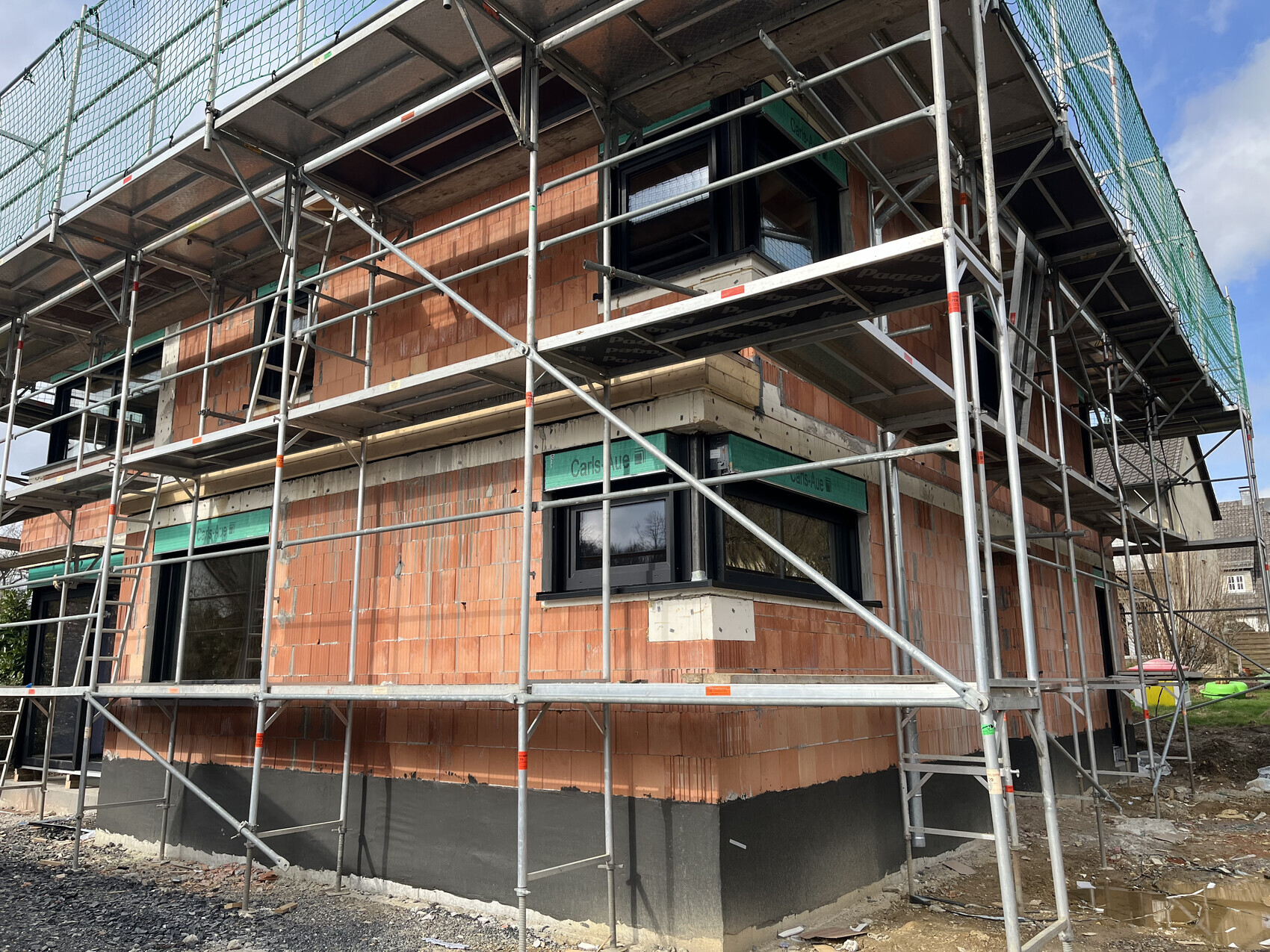
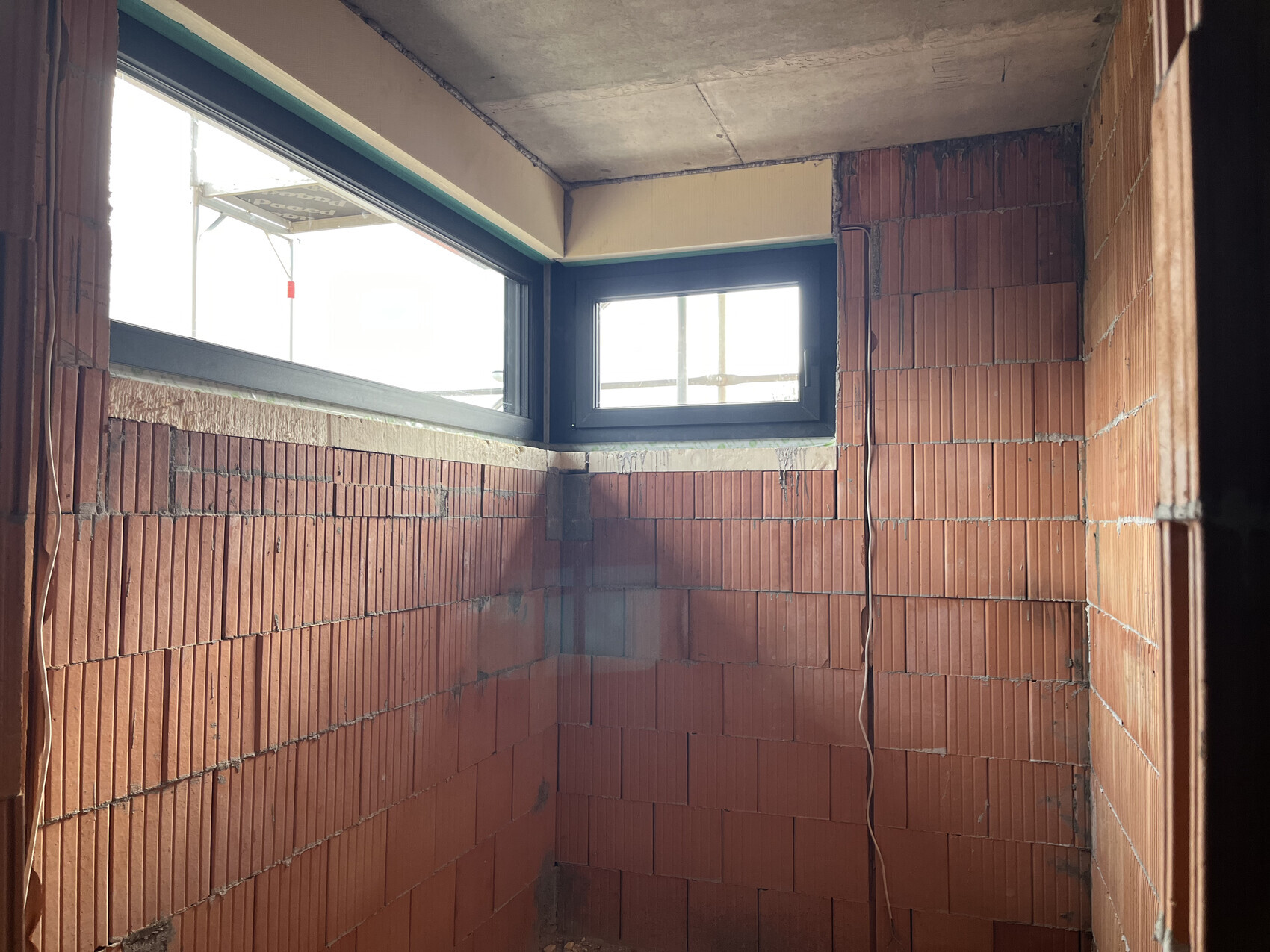
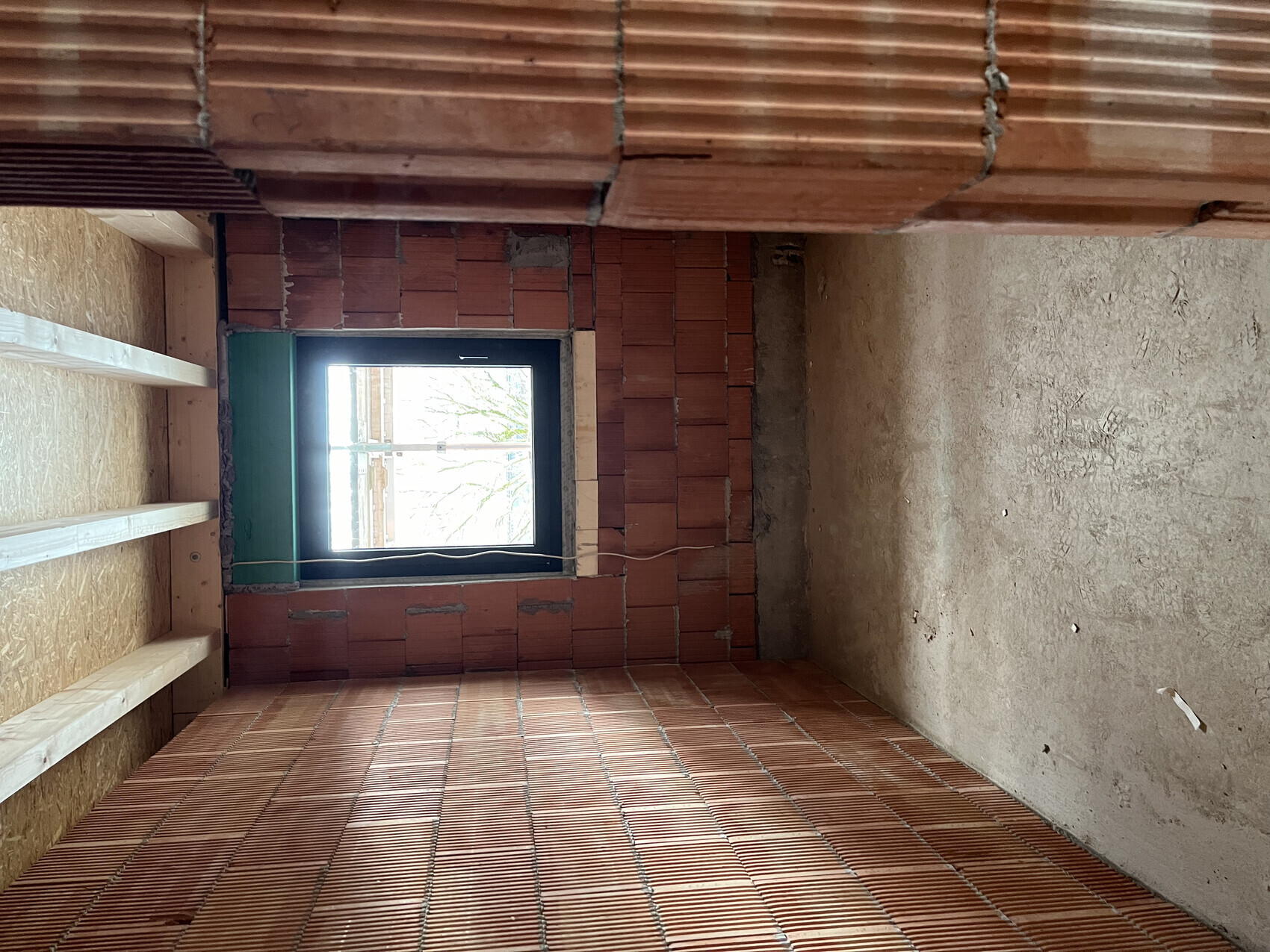
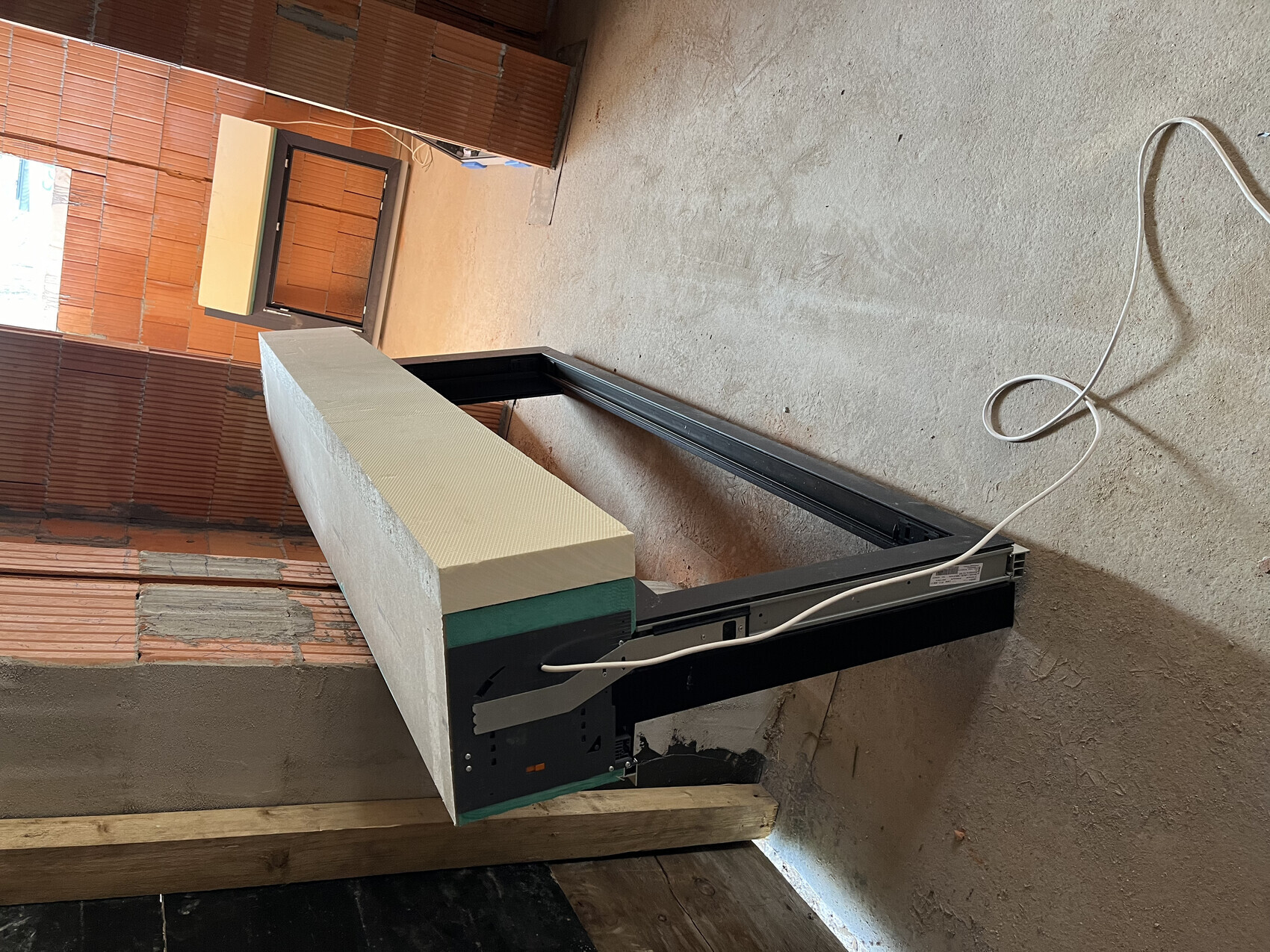
In 2024, we had a house built using 36.5cm (14 inch) Poroton bricks, with plaster applied both outside and inside. The windows are triple-glazed uPVC from Kömmerling. The panes apparently aren’t the best; according to the supplier, they offer 30-32dB sound insulation. However, in the bedroom we upgraded to 46dB panes already, but unfortunately without significant improvement.
The windows are equipped with external blinds (raffstores) that are installed in cassette boxes directly mounted on the windows. These boxes are so thick that they are flush with the brick facade and were plastered both inside and outside. According to the datasheet, the boxes can provide up to 46dB sound insulation (tested using “pink noise”). No specific sound insulation class was agreed upon in the building contract.
When I hold a sound level meter to the open window, I measure about 38dB of outside noise. With the window closed, this drops to about 25dB (which is roughly the threshold at which traffic noise from the nearby federal road becomes noticeable).
Some rooms have corner windows that are insulated on the corners with polystyrene blocks. Since we also hear the noise—just slightly quieter—with normal windows, I wouldn’t identify those corners as the only weak points.
Unfortunately, we hear almost all noises from outside: passing cars (it’s a dead-end street with a 30 km/h (19 mph) speed limit), people talking in front of the house, birdsong, the neighbor’s front door across the street... We are about 600 meters (0.37 miles) from a federal road where the background noise is clearly audible depending on wind direction.
We have 23 window units and in some rooms there are four windows with a total area of about 1.5 square meters (16 square feet). This makes it very stressful and frustrating because we really can’t escape the noise.
We are already in talks with the construction company, and an expert will be called in soon. Now I need some input for my arguments and would like to collect some comparisons:
Do you hear such outside noises as well? What level of outdoor noise do you consider “normal” and what is definitely excessive?
A few photos of the shell construction attached.
A
AndBruNRW10 Nov 2025 20:36I would like to speak up once again! We had several appointments with the builder. The corner elements of the corner windows were previously made of 3-layer Styrodur insulation and a metal trim. This has now been replaced with a suitable window profile (I believe it has 5 chambers). Unfortunately, the replacement did not improve the situation.
On Saturday, I was able to take a very accurate measurement: There was a leaf blower running in the neighbor’s garden. It measured 60 dB at an open window. With the window closed, about 44 dB still reached the inside. This was in the room where the 47 dB soundproof glazing was installed. So, the problem definitely does not lie solely with the glass.
The larger the proportion of windows per room, the louder the outside noise inside. In the room without any windows (pantry), I hear absolutely nothing from outside. The bricks block approximately 38 dB outside noise.
We live about 600 meters (0.37 miles) as the crow flies from a federal road, so we did not build right next to it.
My measurements also show a level of about 38 dB for revving engines. I hear this noise throughout the entire house. Sometimes there is no significant difference between windows open or closed (except for the 60 dB leaf blower, of course). But for regular traffic noise around 38 dB, it can sound just as loud indoors as outside.
By now, I suspect our roller shutter boxes. The surface-mounted boxes are made solely from PUR rigid foam and sound hollow when tapped—very lightweight material. The manufacturer claims 46 dB insulation, but I don’t really trust this value with such a soft material.
Has anyone had similar experiences with surface-mounted roller shutter boxes? You can see how these are constructed in the photos in the first post. After installation, they were plastered only from the inside and outside, meaning if I tap from either side, you basically hear the Styrofoam (rigid foam).
Here is an updated summary that I posted elsewhere (I was advised to speak up here again 🙂 )
On Saturday, I was able to take a very accurate measurement: There was a leaf blower running in the neighbor’s garden. It measured 60 dB at an open window. With the window closed, about 44 dB still reached the inside. This was in the room where the 47 dB soundproof glazing was installed. So, the problem definitely does not lie solely with the glass.
The larger the proportion of windows per room, the louder the outside noise inside. In the room without any windows (pantry), I hear absolutely nothing from outside. The bricks block approximately 38 dB outside noise.
We live about 600 meters (0.37 miles) as the crow flies from a federal road, so we did not build right next to it.
My measurements also show a level of about 38 dB for revving engines. I hear this noise throughout the entire house. Sometimes there is no significant difference between windows open or closed (except for the 60 dB leaf blower, of course). But for regular traffic noise around 38 dB, it can sound just as loud indoors as outside.
By now, I suspect our roller shutter boxes. The surface-mounted boxes are made solely from PUR rigid foam and sound hollow when tapped—very lightweight material. The manufacturer claims 46 dB insulation, but I don’t really trust this value with such a soft material.
Has anyone had similar experiences with surface-mounted roller shutter boxes? You can see how these are constructed in the photos in the first post. After installation, they were plastered only from the inside and outside, meaning if I tap from either side, you basically hear the Styrofoam (rigid foam).
Here is an updated summary that I posted elsewhere (I was advised to speak up here again 🙂 )
Hello everyone,
Unfortunately, even after 12 months since moving in, we have not made any progress. Here is a brief summary:
On Saturday, I conducted a test with a running leaf blower:
- Severe noise issues in our newly built home (built in 2024)
- The noise definitely comes from the windows
- Installed windows: Kömmerling 76 profiles with triple glazing (4/14/4/14/4) – manufacturer states 32 dB sound reduction
- Surface-mounted roller shutter boxes: Roma Puro 2.XR-RS (claimed approx. 46 dB)
- Boxes are plastered inside and outside but otherwise not further insulated
- A soundproof glazing (47 dB) was retrofitted in the bedroom
This test was at the window with the soundproof glazing! In the adjacent room with the “normal” glass panes, the results were almost identical. For me, this means the glazing is not the main issue.
- Window open: 58 dB
- Window closed: 44 dB
The noise is clearly noticeable in all rooms. Two things all windows have in common:
In rooms with a large proportion of window or shutter box area, the noise is particularly strong – for example, in the office with a 4 m (13 feet) wide and 1 m (3 feet) high window front.
- The glazing
- The surface-mounted roller shutter box
What makes me suspicious: When I hold my ear to the regular glass, I can feel the noise and vibrations. With the soundproof glazing, I feel nothing – even though measurements (e.g., during the leaf blower test) do not show significantly better insulation. At the same time, I do not “hear” anything when I put my ear against the shutter box.
By now, I suspect the surface-mounted box. Although the test certificate states 46 dB insulation, it is made from PUR foam and sounds very hollow when tapped—almost like a resonance chamber or amplifier.
Does anyone have any ideas what else it could be? We are honestly at a loss by now…
M
MachsSelbst10 Nov 2025 21:15Get a professional who makes a living doing this. There are "acoustic cameras" that can pinpoint where the sound is coming from. Everything else is just guesswork, nobody knows the exact construction of your walls, ceiling, windows, etc. Even if you upload the plans, no one can be sure they were actually built that way.
C
chand198611 Nov 2025 04:19A good test would also be to visit immediate neighbors who claim not to have any such issues. If you listen there yourself (subjectively) and are allowed to measure (objectively), you gain clues about how sensitive you are, whether your building allows more noise inside, or, in the worst case, both combined: you are sensitive in a noisier house.
Similar topics