
ᐅ New hardwood flooring has small holes – woodworm beetles? Hardwood flooring in a new building
Created on: 23 Apr 2018 00:49
K
Khullx1Hi,
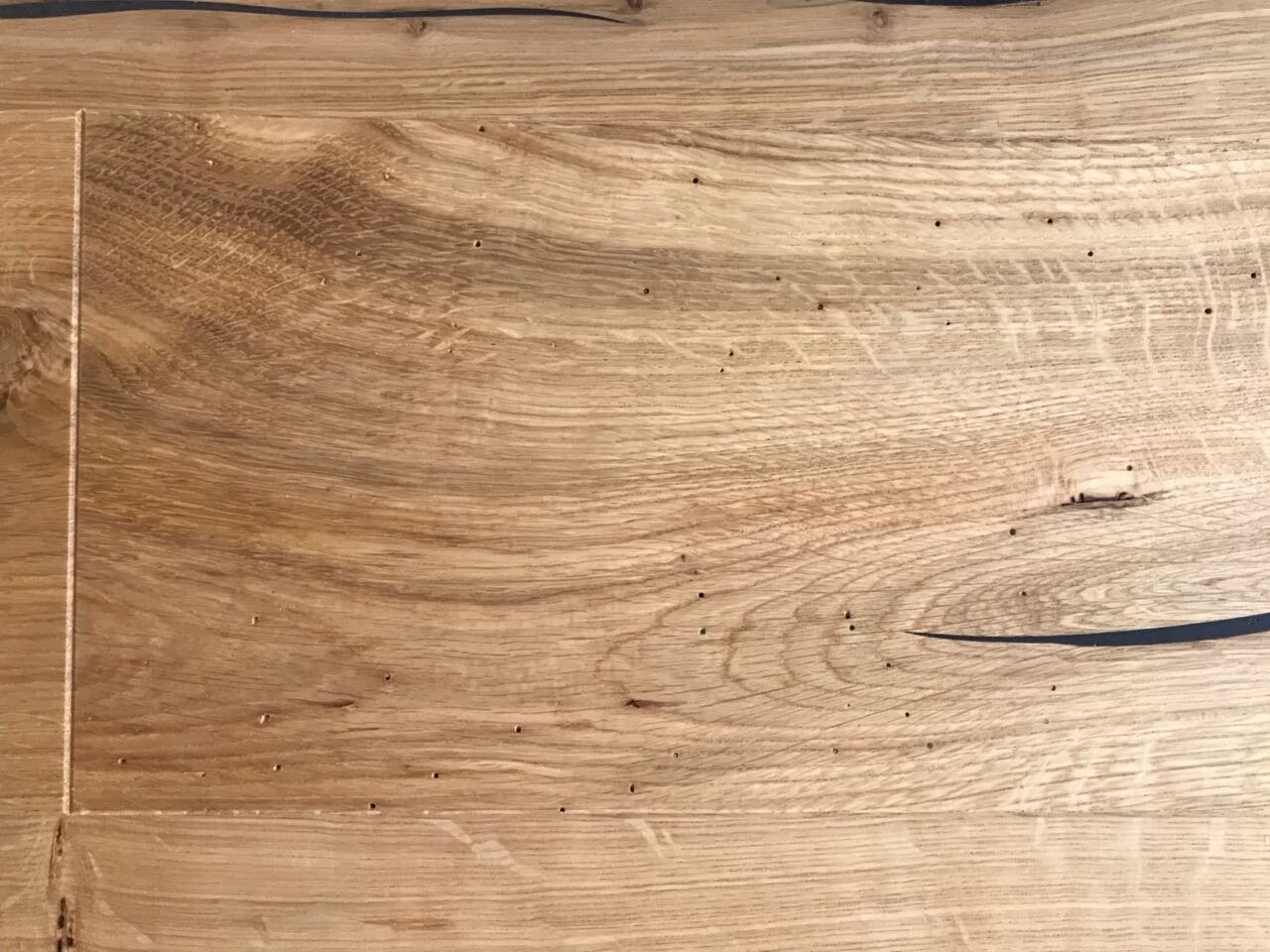
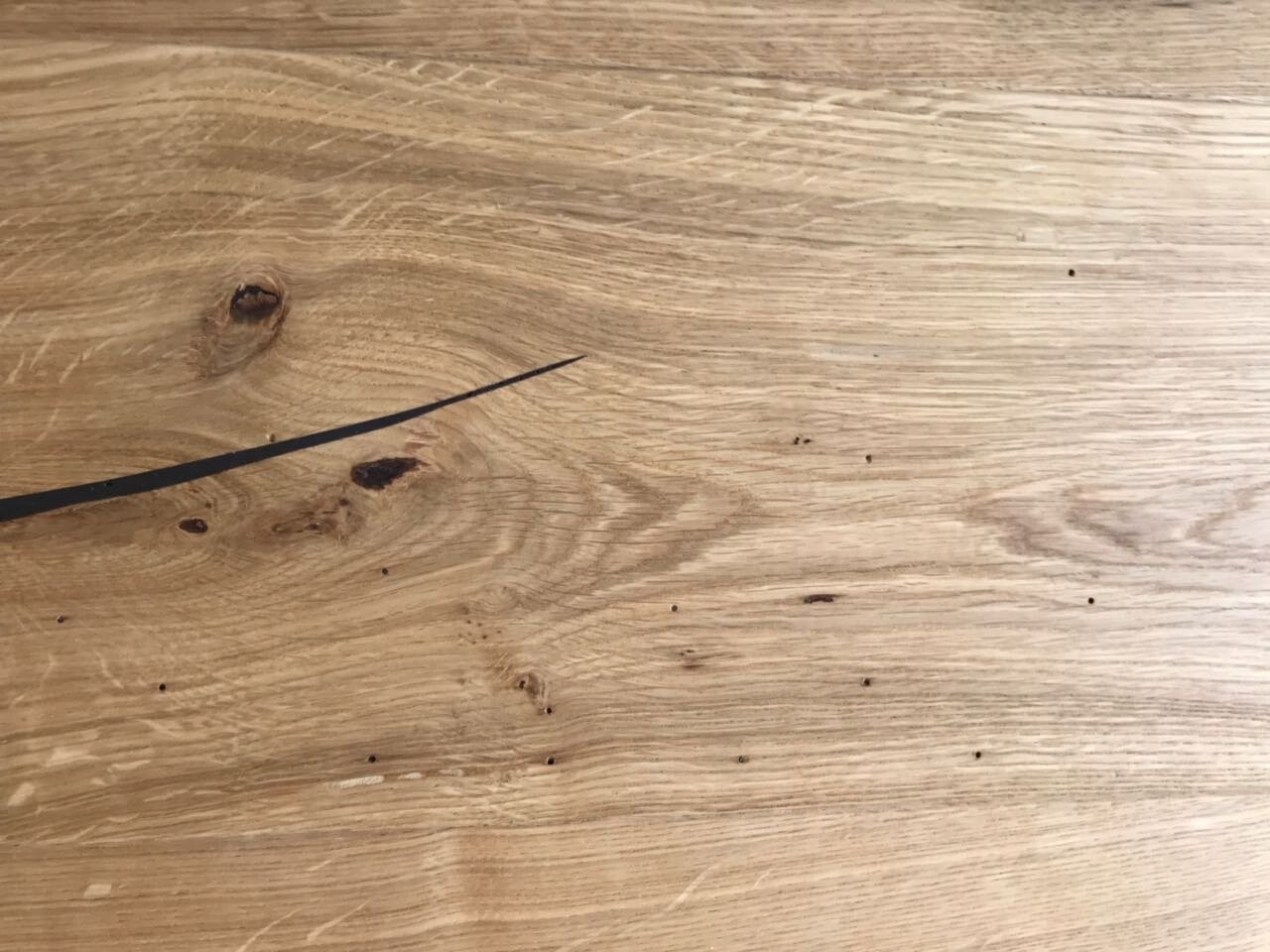
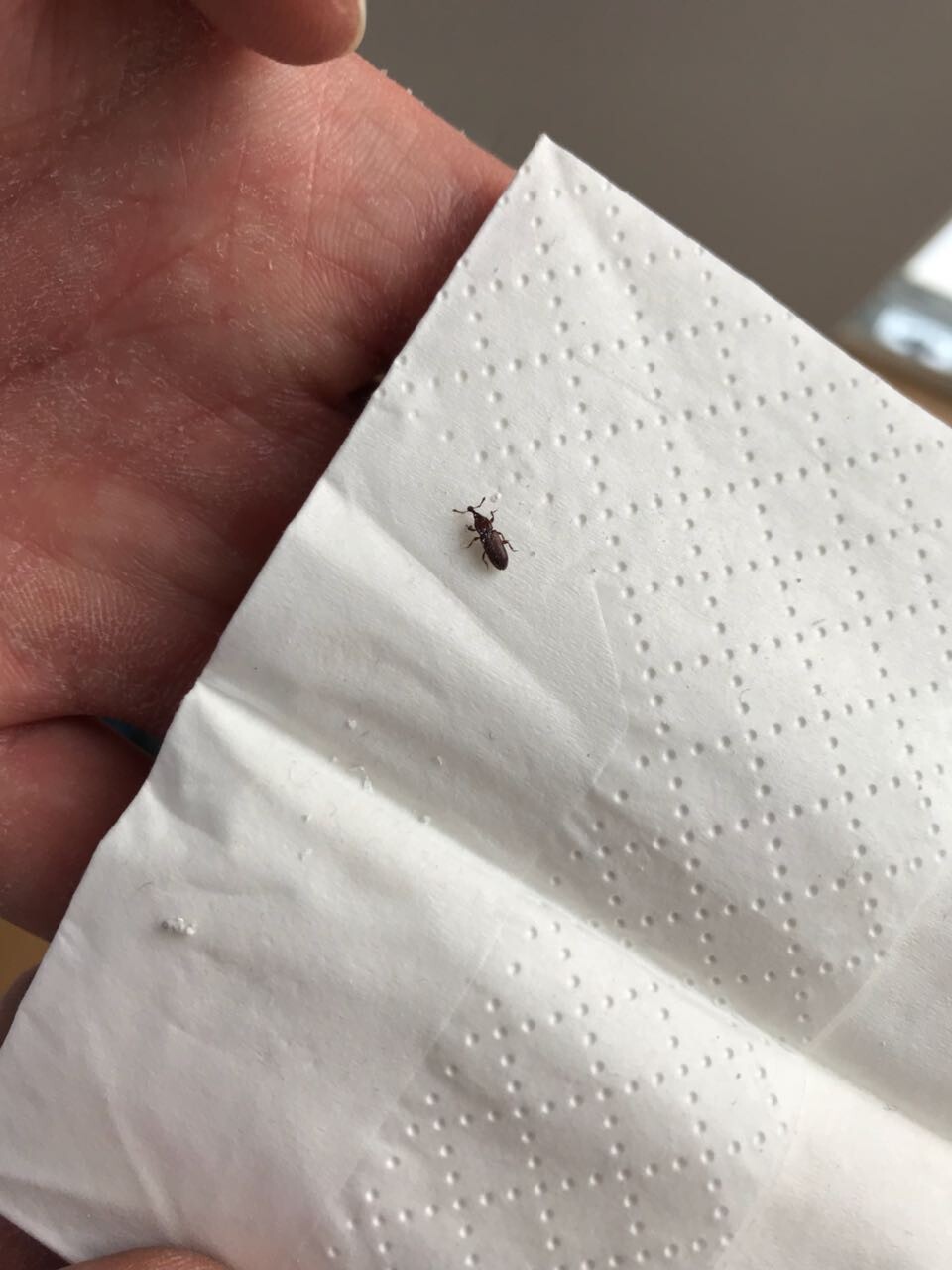
about two months ago (at the end of February 2018), the flooring installer laid parquet flooring (Haro country oak planks, oiled) in our new apartment. Everything was covered with a very thin fleece to protect it from scratches or damage by other tradespeople. Most of the work is finally finished, and the move-in should take place in the next few days. However, after removing the fleece from most rooms today, we discovered some "strange" holes in one plank while vacuuming and cleaning. After a brief online search, we found a "suspicious" beetle in another room.
We have two pictures of the plank and one of the beetle. Can anyone help us and tell if we might have a problem or what exactly these images could show?
From what I found online, it seems similar to a "parquet beetle," and visually the holes look like that, and the beetle could match as well. But as laypersons, we can’t be sure.
If it is this type of beetle, does that basically mean we have to remove and replace the entire floor?
Here are the mentioned pictures (click to enlarge):
Plank Part 1
Plank Part 2
Beetle
Thank you very much for any help and best regards!
about two months ago (at the end of February 2018), the flooring installer laid parquet flooring (Haro country oak planks, oiled) in our new apartment. Everything was covered with a very thin fleece to protect it from scratches or damage by other tradespeople. Most of the work is finally finished, and the move-in should take place in the next few days. However, after removing the fleece from most rooms today, we discovered some "strange" holes in one plank while vacuuming and cleaning. After a brief online search, we found a "suspicious" beetle in another room.
We have two pictures of the plank and one of the beetle. Can anyone help us and tell if we might have a problem or what exactly these images could show?
From what I found online, it seems similar to a "parquet beetle," and visually the holes look like that, and the beetle could match as well. But as laypersons, we can’t be sure.
If it is this type of beetle, does that basically mean we have to remove and replace the entire floor?
Here are the mentioned pictures (click to enlarge):
Plank Part 1
Plank Part 2
Beetle
Thank you very much for any help and best regards!

This is a bark beetle, more specifically a sapwood beetle, commonly known as a parquet beetle. It is often found in wood storage areas and lays its larvae inside the wood. So, it is likely that your entire floor is affected.
The best way to treat this in occupied buildings is using a heat treatment method.
It would be best to discuss this with your flooring installer. Did you get the parquet from them? I would also recommend insisting on replacing the entire floor.
The best way to treat this in occupied buildings is using a heat treatment method.
It would be best to discuss this with your flooring installer. Did you get the parquet from them? I would also recommend insisting on replacing the entire floor.
Thanks for your assessment. Yes, we also got the parquet flooring from the floor installer.
How sure are you that it’s the sapwood beetle? Do you perhaps have specific expertise in this area? Today, we only checked 40 sqm (430 sq ft) out of about 100 sqm (1,080 sq ft) of wooden flooring.
That would really be a disaster… The move-in is scheduled for the weekend. We have to move out of the current apartment because the next tenant is moving in on May 1st. So far, nothing is set up in the new apartment except the kitchen, which also has this same parquet flooring throughout. Does the beetle also infest the kitchen furniture? The kitchen would have to be dismantled again if the floor really needs to be replaced, but can the kitchen be put back afterwards, or will the beetle crawl from the kitchen furniture back onto the new, freshly installed parquet?
The new furniture (wardrobes, dressers) is supposed to be delivered this Tuesday… I guess I’ll have to cancel that directly, right!?
And who is actually responsible for covering the damage and everything related? The floor installer???
I honestly don’t know where we’re supposed to put all the furniture from the current apartment… not to mention daily living.
How sure are you that it’s the sapwood beetle? Do you perhaps have specific expertise in this area? Today, we only checked 40 sqm (430 sq ft) out of about 100 sqm (1,080 sq ft) of wooden flooring.
That would really be a disaster… The move-in is scheduled for the weekend. We have to move out of the current apartment because the next tenant is moving in on May 1st. So far, nothing is set up in the new apartment except the kitchen, which also has this same parquet flooring throughout. Does the beetle also infest the kitchen furniture? The kitchen would have to be dismantled again if the floor really needs to be replaced, but can the kitchen be put back afterwards, or will the beetle crawl from the kitchen furniture back onto the new, freshly installed parquet?
The new furniture (wardrobes, dressers) is supposed to be delivered this Tuesday… I guess I’ll have to cancel that directly, right!?
And who is actually responsible for covering the damage and everything related? The floor installer???
I honestly don’t know where we’re supposed to put all the furniture from the current apartment… not to mention daily living.
So, coated wood is difficult for them to infest, but basically, it’s not possible to give a definitive answer. The larvae can survive even with 15 percent moisture content in the wood, so they are quite resilient.
Yes, I'm sure it’s a sapwood beetle, although I don’t know the exact species.
In principle, I would keep anything made of hardwood away from them. Also, as long as there is no furniture inside, there is still the option of heat treatment or even chemical treatment.
Who is responsible for the costs should be discussed with the flooring installer, and if they refuse, with a lawyer.
It’s a difficult issue, especially with the planned move.
The flooring installer will probably say it’s not their problem or claim that the beetles were already in your house or that you brought them in.
No, I’m not an expert. A colleague with a carpentry business had to close it for a few weeks because of these beetles; I helped him clear out the workshop.
PS: Autocorrect — I didn’t mean bark beetle but powderpost beetle.
Yes, I'm sure it’s a sapwood beetle, although I don’t know the exact species.
In principle, I would keep anything made of hardwood away from them. Also, as long as there is no furniture inside, there is still the option of heat treatment or even chemical treatment.
Who is responsible for the costs should be discussed with the flooring installer, and if they refuse, with a lawyer.
It’s a difficult issue, especially with the planned move.
The flooring installer will probably say it’s not their problem or claim that the beetles were already in your house or that you brought them in.
No, I’m not an expert. A colleague with a carpentry business had to close it for a few weeks because of these beetles; I helped him clear out the workshop.
PS: Autocorrect — I didn’t mean bark beetle but powderpost beetle.
saar2and schrieb:
Basically, I would keep everything that is made of solid wood away from this.What exactly is "aholz," or did you mean "made of wood"? The kitchen furniture is also made of wood... though I'm not sure what type—maybe particleboard or something like that? Also, items like the interior doors and door frames are made of wood.
saar2and schrieb:
Since there is no furniture or anything inside yet, there is still the option of heat treatment or even chemical treatment.Chemical treatment is not an option for me because I doubt it completely eliminates the issue. Regarding heat treatment, I have read that it is not very effective for hardwood flooring, as the required core temperature cannot be reached.
saar2and schrieb:
Who covers the costs should be discussed with the floor installer, and if rejected, with a lawyer.
This is a difficult issue, especially with the planned move.
The floor installer will probably say it’s not their responsibility or that the beetles were already in your house or that you brought them in.It’s practically impossible that we brought in the beetles ourselves. There is nothing in the apartment—really nothing except the kitchen. As far as I know, the kitchen isn’t made of solid wood, but standard material—so I suspect particleboard. Or could the beetle be present there as well? The kitchen was installed on April 4th, so just 19 days ago. These beetles don’t nest in the hardwood floor that quickly and definitely don’t emerge through these “flight holes,” as shown in my pictures, right? If I understand correctly, the time span from installing the flooring until now isn’t even enough to explain an infestation or that we brought them in. Am I misunderstanding something?
Aholz is a typo on my part; I am online using my phone. It actually means wood.
Basically, beetles prefer the sapwood, which is underrepresented in the heartwood. That’s why the heartwood does not need to be heat-treated. I’m not familiar with the exact composition of the chipboard, and I don’t know whether these chips have ever been in a drying kiln, but I could imagine they might have been.
It’s best to clarify everything further with the flooring installer and to consult an expert.
If necessary, then consult a lawyer.
The expert should be involved regarding the kitchen door frames, and so on.
But for liability, especially given your situation with relocating the flooring during the move, you should definitely get a lawyer if the flooring installer does not rule in your favor. Of course, it also depends on what the expert says.
If the expert now says that relocating the flooring during the move is nonsense, and the flooring can be treated with heat and everything will be fine, and compensation for the damage will come from the installer or their supplier, then that’s how it is.
I would wait with moving in until after the expert’s assessment and then see how to proceed.
Basically, beetles prefer the sapwood, which is underrepresented in the heartwood. That’s why the heartwood does not need to be heat-treated. I’m not familiar with the exact composition of the chipboard, and I don’t know whether these chips have ever been in a drying kiln, but I could imagine they might have been.
It’s best to clarify everything further with the flooring installer and to consult an expert.
If necessary, then consult a lawyer.
The expert should be involved regarding the kitchen door frames, and so on.
But for liability, especially given your situation with relocating the flooring during the move, you should definitely get a lawyer if the flooring installer does not rule in your favor. Of course, it also depends on what the expert says.
If the expert now says that relocating the flooring during the move is nonsense, and the flooring can be treated with heat and everything will be fine, and compensation for the damage will come from the installer or their supplier, then that’s how it is.
I would wait with moving in until after the expert’s assessment and then see how to proceed.
Similar topics