
ᐅ New hardwood flooring has small holes – woodworm beetles? Hardwood flooring in a new building
Created on: 23 Apr 2018 00:49
K
Khullx1
Hi,
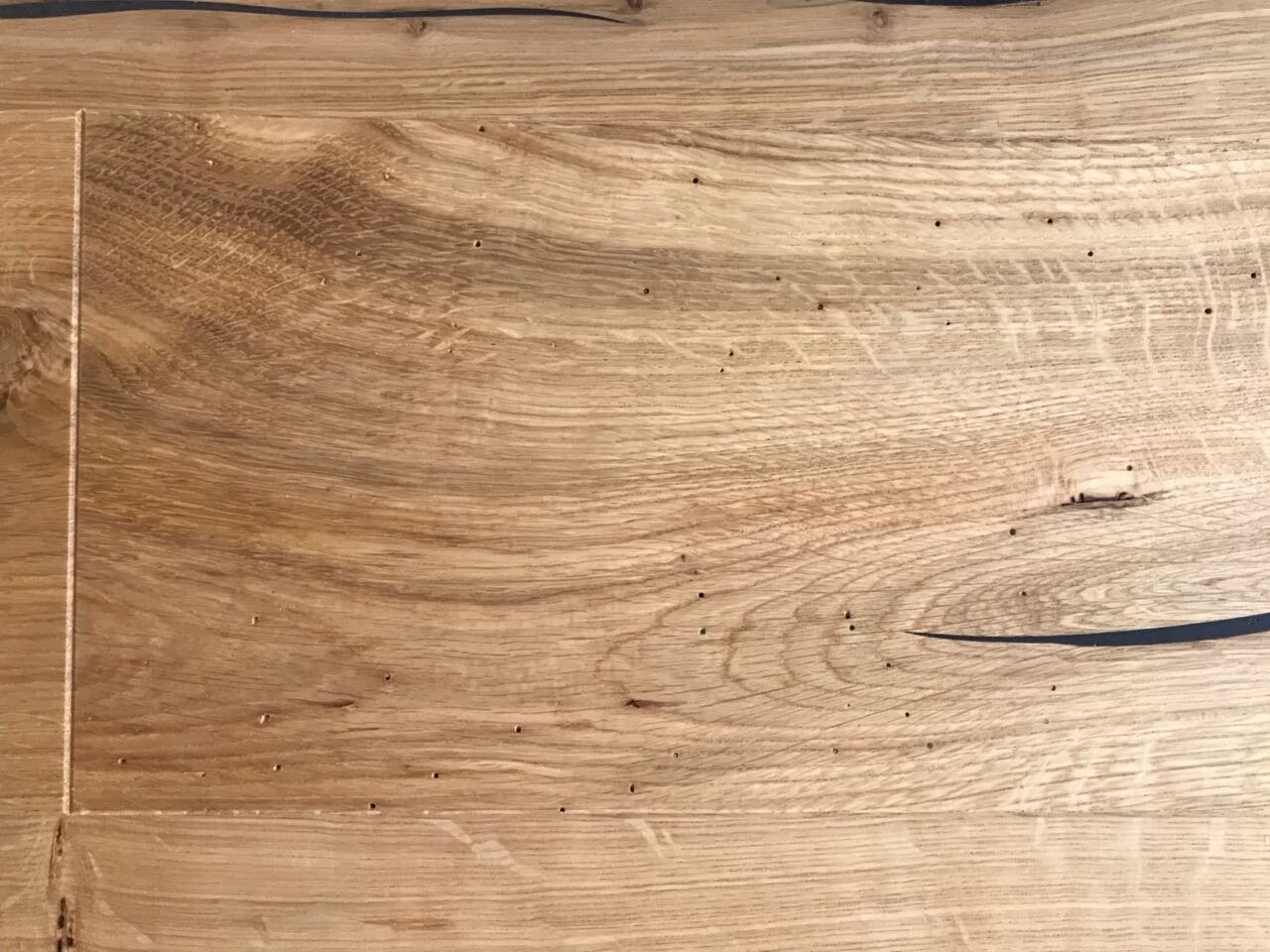
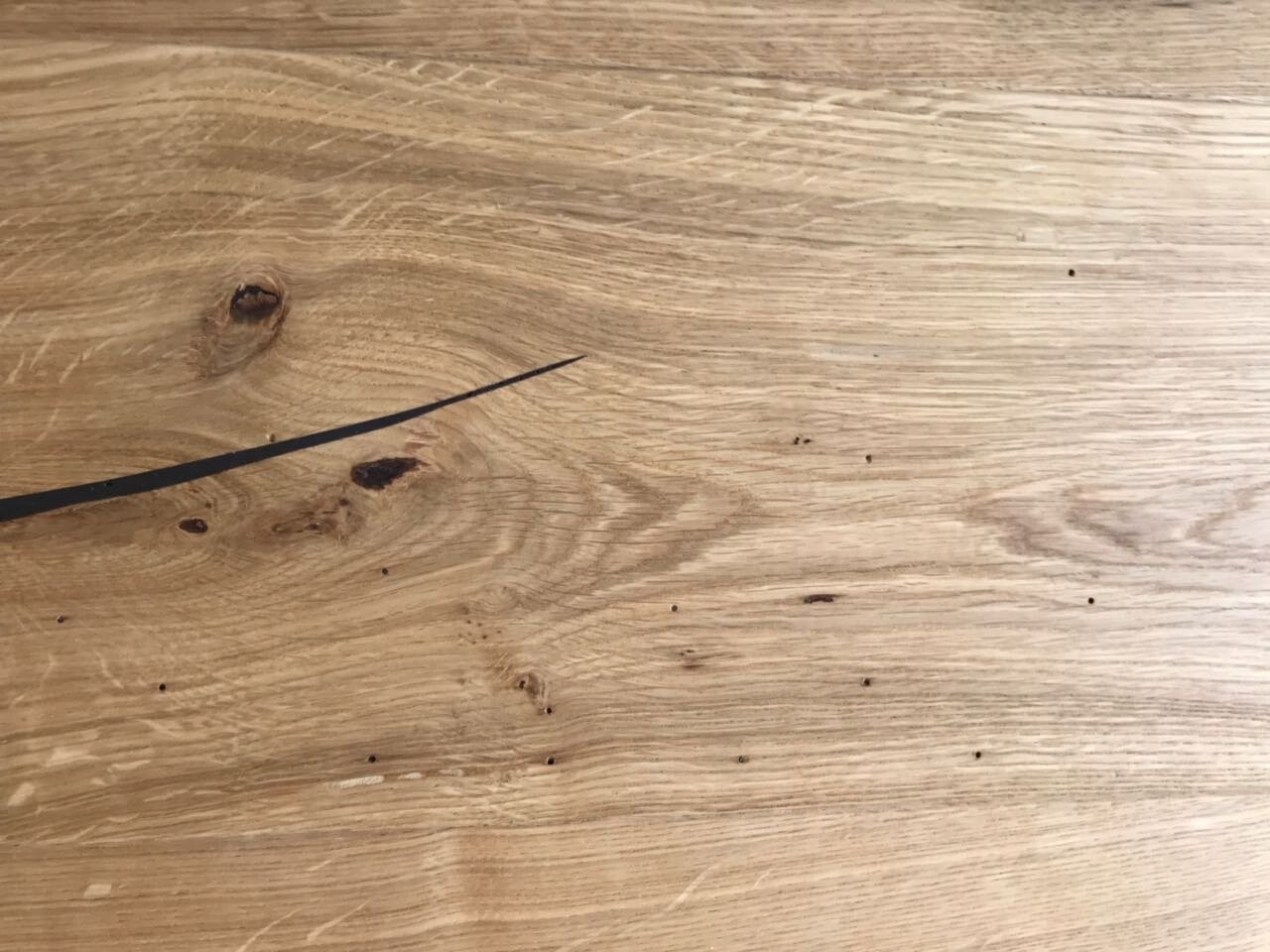
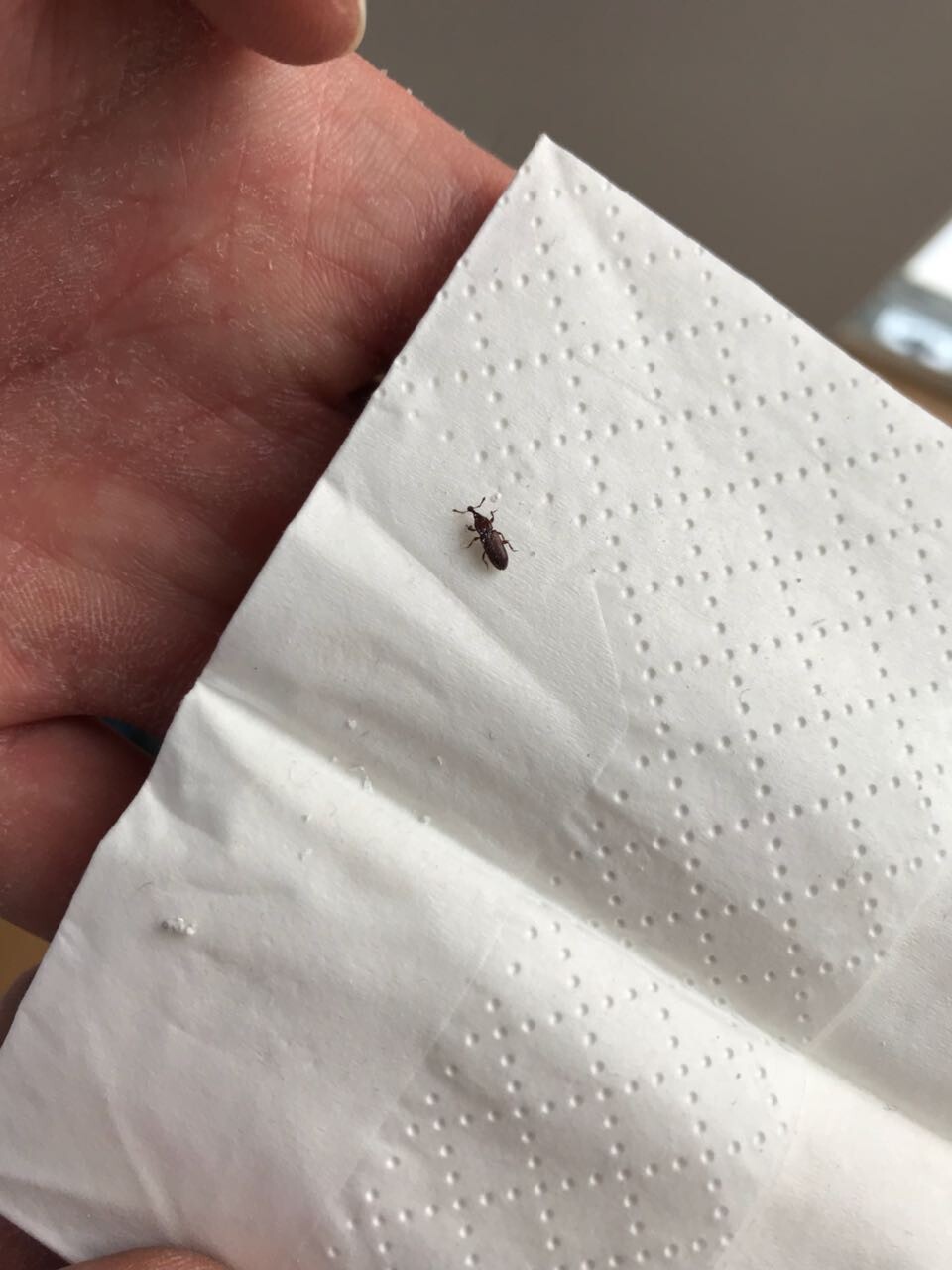
about two months ago (at the end of February 2018), the flooring installer laid parquet flooring (Haro country oak planks, oiled) in our new apartment. Everything was covered with a very thin fleece to protect it from scratches or damage by other tradespeople. Most of the work is finally finished, and the move-in should take place in the next few days. However, after removing the fleece from most rooms today, we discovered some "strange" holes in one plank while vacuuming and cleaning. After a brief online search, we found a "suspicious" beetle in another room.
We have two pictures of the plank and one of the beetle. Can anyone help us and tell if we might have a problem or what exactly these images could show?
From what I found online, it seems similar to a "parquet beetle," and visually the holes look like that, and the beetle could match as well. But as laypersons, we can’t be sure.
If it is this type of beetle, does that basically mean we have to remove and replace the entire floor?
Here are the mentioned pictures (click to enlarge):
Plank Part 1
Plank Part 2
Beetle
Thank you very much for any help and best regards!
about two months ago (at the end of February 2018), the flooring installer laid parquet flooring (Haro country oak planks, oiled) in our new apartment. Everything was covered with a very thin fleece to protect it from scratches or damage by other tradespeople. Most of the work is finally finished, and the move-in should take place in the next few days. However, after removing the fleece from most rooms today, we discovered some "strange" holes in one plank while vacuuming and cleaning. After a brief online search, we found a "suspicious" beetle in another room.
We have two pictures of the plank and one of the beetle. Can anyone help us and tell if we might have a problem or what exactly these images could show?
From what I found online, it seems similar to a "parquet beetle," and visually the holes look like that, and the beetle could match as well. But as laypersons, we can’t be sure.
If it is this type of beetle, does that basically mean we have to remove and replace the entire floor?
Here are the mentioned pictures (click to enlarge):
Plank Part 1
Plank Part 2
Beetle
Thank you very much for any help and best regards!
HilfeHilfe schrieb:
Oh man How am I supposed to understand this?
The floor installer has apparently spoken by phone with a technician from Haro (manufacturer), who said it’s impossible for there to be live beetles or larvae inside because the wood is somehow heat-treated and impregnated before being vacuum-sealed. The floor installer also explained that the planks are made from “reclaimed wood,” and the situation is somewhat similar to knots in the wood. It all seems a bit strange to me...
However, I also know for sure that the planks were stored at the installer’s warehouse for at least two months because he ordered them well in advance. I’m not sure if anything could have infested them during that time...
We’re now a bit desperate and don’t know what to do. The furniture is supposed to be delivered tomorrow, and the move is scheduled for Saturday. We have to be out of our current apartment by Monday at the latest.
However, I also know for sure that the planks were stored at the installer’s warehouse for at least two months because he ordered them well in advance. I’m not sure if anything could have infested them during that time...
We’re now a bit desperate and don’t know what to do. The furniture is supposed to be delivered tomorrow, and the move is scheduled for Saturday. We have to be out of our current apartment by Monday at the latest.
C
chand198623 Apr 2018 15:21I don’t see how you can manage a temporary solution quickly under the circumstances.
I would move in and, above all, keep an eye out for the beetles, document them, and then eliminate them if noticeable. The pests spread through the beetles; the larvae don’t move far. It’s also possible that only two floorboards are affected.
The manufacturer’s treatment is correct. The installer’s storage is likely the source of the infestation. However, you will probably never be able to prove that.
Since you need replacements, patience is the only option.
I would take the risk that furniture might be infested, as it can be treated individually and infestation is not certain. The stress of not being able to move in now is even greater.
Wishing you good luck; this is really unfortunate.
I would move in and, above all, keep an eye out for the beetles, document them, and then eliminate them if noticeable. The pests spread through the beetles; the larvae don’t move far. It’s also possible that only two floorboards are affected.
The manufacturer’s treatment is correct. The installer’s storage is likely the source of the infestation. However, you will probably never be able to prove that.
Since you need replacements, patience is the only option.
I would take the risk that furniture might be infested, as it can be treated individually and infestation is not certain. The stress of not being able to move in now is even greater.
Wishing you good luck; this is really unfortunate.
H
HilfeHilfe23 Apr 2018 15:23Unbelievable... even because of the small holes.
Why don’t you go to the hardware store where Haro flooring is sold and check if there are also such small holes there?
Why don’t you go to the hardware store where Haro flooring is sold and check if there are also such small holes there?
K
Knallkörper23 Apr 2018 15:26If it helps to ease your mind a bit: We also had some holes in our oak floorboards but no pests.
Similar topics