
Hello. Maybe someone here has already dealt with a similar problem.
For our single-family house on a slope, we followed the foundation recommendations according to the geotechnical report.
There is 40cm (16 inches) of recycled gravel laid in two layers and compacted on rocky ground. The structural engineer requested a plate bearing test at two points, which failed on the first try. The recommendation was to moisten and compact further. That was done. The second test also narrowly failed.
We moistened and compacted again. Unfortunately, the third test failed as well.
Here are the values from the plate bearing tests:
First attempt:
EV1: 99.2 MN/m²
EV2: 36.1 MN/m²
EV2/EV1 = 2.75
Second attempt:
EV1: 45.1 MN/m²
EV2: 118.4 MN/m²
EV2/EV1 = 2.61
Third attempt:
EV1: 45.3 MN/m²
EV2: 118.4 MN/m²
EV2/EV1 = 2.61
The value EV2/EV1 must be less than or equal to 2.5 to meet the requirements.
The compactor used is a 500kg (1,100 lbs) Wacker DPU. Is this generally sufficient, or do we need to bring in heavier equipment?
What was your experience, and what can we do?
For our single-family house on a slope, we followed the foundation recommendations according to the geotechnical report.
There is 40cm (16 inches) of recycled gravel laid in two layers and compacted on rocky ground. The structural engineer requested a plate bearing test at two points, which failed on the first try. The recommendation was to moisten and compact further. That was done. The second test also narrowly failed.
We moistened and compacted again. Unfortunately, the third test failed as well.
Here are the values from the plate bearing tests:
First attempt:
EV1: 99.2 MN/m²
EV2: 36.1 MN/m²
EV2/EV1 = 2.75
Second attempt:
EV1: 45.1 MN/m²
EV2: 118.4 MN/m²
EV2/EV1 = 2.61
Third attempt:
EV1: 45.3 MN/m²
EV2: 118.4 MN/m²
EV2/EV1 = 2.61
The value EV2/EV1 must be less than or equal to 2.5 to meet the requirements.
The compactor used is a 500kg (1,100 lbs) Wacker DPU. Is this generally sufficient, or do we need to bring in heavier equipment?
What was your experience, and what can we do?

That might be the case, but it doesn’t seem logical to me. For road bases that support 40-ton loads (yes, a lower weight than a house but concentrated on a much smaller area), recycled crushed stone (RC) is used.
So, in my opinion, either the subsoil is so poor that a deeper gravel base is necessary, or there is something wrong with the gravel itself (as someone mentioned further up).
So, in my opinion, either the subsoil is so poor that a deeper gravel base is necessary, or there is something wrong with the gravel itself (as someone mentioned further up).

Basically, the recycled concrete (RC) aggregate must be approved by the local water authority if the area is classified as a “affected zone.” Furthermore, this must of course be coordinated with the structural engineer, who ultimately performs the calculations and must use appropriate values that can differ significantly between RC and natural gravel (or other types). The earthworks or concrete contractor also needs to cooperate, as not every contractor works with every type of material. RC aggregate generally has certification, but I have seen RC aggregate of varying quality—sometimes containing a lot of contaminants (organic materials, plastics, etc.) and sometimes quite clean. Just nearby, someone built exclusively with RC aggregate, and this is one of the most expensive designer homes in the development (Nelskamp solar roof tiles, “designer” garden shed, and more).
If the original poster does not respond any further, there is not much more to add here. From the initial text, I also gathered that the OP might have done the work themselves (without coordinating with the other contractors?).
If the original poster does not respond any further, there is not much more to add here. From the initial text, I also gathered that the OP might have done the work themselves (without coordinating with the other contractors?).
Hello,
Under certain conditions, RC material is suitable for use as a base layer. Personally, I think RC material is actually quite good. I’ll list a few points that should be considered.
- Grain size distribution must be appropriate (which applies to all materials)
- Often, RC material is not suitable as frost protection (but with a 40 cm (16 inch) build-up, this is usually not relevant, since either a basement or frost guards are planned)
- May require approval, as the components classify it as LAGA class Z1.1 or Z1.2. For example, Z1.2 is only allowed in hydrologically favorable areas (clayey soil layers and a groundwater distance of more than 2 m (6.5 ft)). Since bedrock is present here, this should not be an issue.
As mentioned before, the material should be sufficiently watered during installation. However, water must not pool on the bedding layer.
Overall, the values don’t look bad. A consistent EV2 greater than 100 MN is more than sufficient. The question is what was required; 80 MN/m² (12 psi) is common for a single-family house.
The EV2/EV1 value indicates the ratio between the two loadings during the plate load test. EV1 is the initial loading and EV2 the second loading. The soil is compressed by the load plate, then the load is released and the plate lifts slightly. Then the second loading is applied. This value shows how well the material was compacted and whether there is theoretically any settling potential.
Now to the problem:
My personal opinion: it will hold... 40 cm (16 inches), and then the bedrock. Where should harmful settlement occur? The bedding layer essentially just serves as a blinding layer... (of course, this also depends on the condition of the bedrock, whether it is actually rock... I have seen earthworks where they called it rock, but I could press the probe in by hand).
But unfortunately, it’s about warranty in case of damage... whatever the cause.
So, what could the problem be... actually, as the previous commenter mentioned, the build-up may be too thin (the plate load test reaches about 60 cm (24 inches) into the soil) and is measuring the "rock" as well. Incorrect grain size distribution (values are good, compaction is not). Poor compaction (for whatever reason... wrong equipment, incorrect operation, too little water, too much water).
I would call the geotechnical engineer and ask for their opinion. They recommended the build-up and know the soil conditions.
Regards
Under certain conditions, RC material is suitable for use as a base layer. Personally, I think RC material is actually quite good. I’ll list a few points that should be considered.
- Grain size distribution must be appropriate (which applies to all materials)
- Often, RC material is not suitable as frost protection (but with a 40 cm (16 inch) build-up, this is usually not relevant, since either a basement or frost guards are planned)
- May require approval, as the components classify it as LAGA class Z1.1 or Z1.2. For example, Z1.2 is only allowed in hydrologically favorable areas (clayey soil layers and a groundwater distance of more than 2 m (6.5 ft)). Since bedrock is present here, this should not be an issue.
As mentioned before, the material should be sufficiently watered during installation. However, water must not pool on the bedding layer.
Overall, the values don’t look bad. A consistent EV2 greater than 100 MN is more than sufficient. The question is what was required; 80 MN/m² (12 psi) is common for a single-family house.
The EV2/EV1 value indicates the ratio between the two loadings during the plate load test. EV1 is the initial loading and EV2 the second loading. The soil is compressed by the load plate, then the load is released and the plate lifts slightly. Then the second loading is applied. This value shows how well the material was compacted and whether there is theoretically any settling potential.
Now to the problem:
My personal opinion: it will hold... 40 cm (16 inches), and then the bedrock. Where should harmful settlement occur? The bedding layer essentially just serves as a blinding layer... (of course, this also depends on the condition of the bedrock, whether it is actually rock... I have seen earthworks where they called it rock, but I could press the probe in by hand).
But unfortunately, it’s about warranty in case of damage... whatever the cause.
So, what could the problem be... actually, as the previous commenter mentioned, the build-up may be too thin (the plate load test reaches about 60 cm (24 inches) into the soil) and is measuring the "rock" as well. Incorrect grain size distribution (values are good, compaction is not). Poor compaction (for whatever reason... wrong equipment, incorrect operation, too little water, too much water).
I would call the geotechnical engineer and ask for their opinion. They recommended the build-up and know the soil conditions.
Regards
P
Pitiglianio29 Jul 2022 14:24First of all, thank you to everyone.
Photo attached.
The soil expert was here today and mentioned that the RC gravel we installed has a very high sand content. He suspects it might be too high. He took a bucket full for analysis. Feedback is still pending.
The specifications for 40cm (16 inches) of RC gravel, installed and compacted in two layers, come from the soil expert.
I’m not exactly sure what you mean by that?!
Yes, the 80 MN/m² is required, as well as a value of <2.5 EV2/EV1.
Yes, understandably, the structural contractor won’t begin work as long as the values required by the general contractor are not met.
Grain size distribution 0–32mm (0–1.25 inches), as mentioned above, possibly with too high a sand content?
The vibratory plate is a Wacker DPU weighing around 550kg (1,210 lbs). The civil engineer says it is definitely sufficient. This week, as a precaution, they even used a 1.2 t (2,645 lbs) roller afterwards—without success.
What counts as too little or too much water? Both layers were watered and compacted, possibly with too little water. Unfortunately, there has been no rain at all in the last two weeks, and hardly any before that.
Yes, we are still waiting for their response.
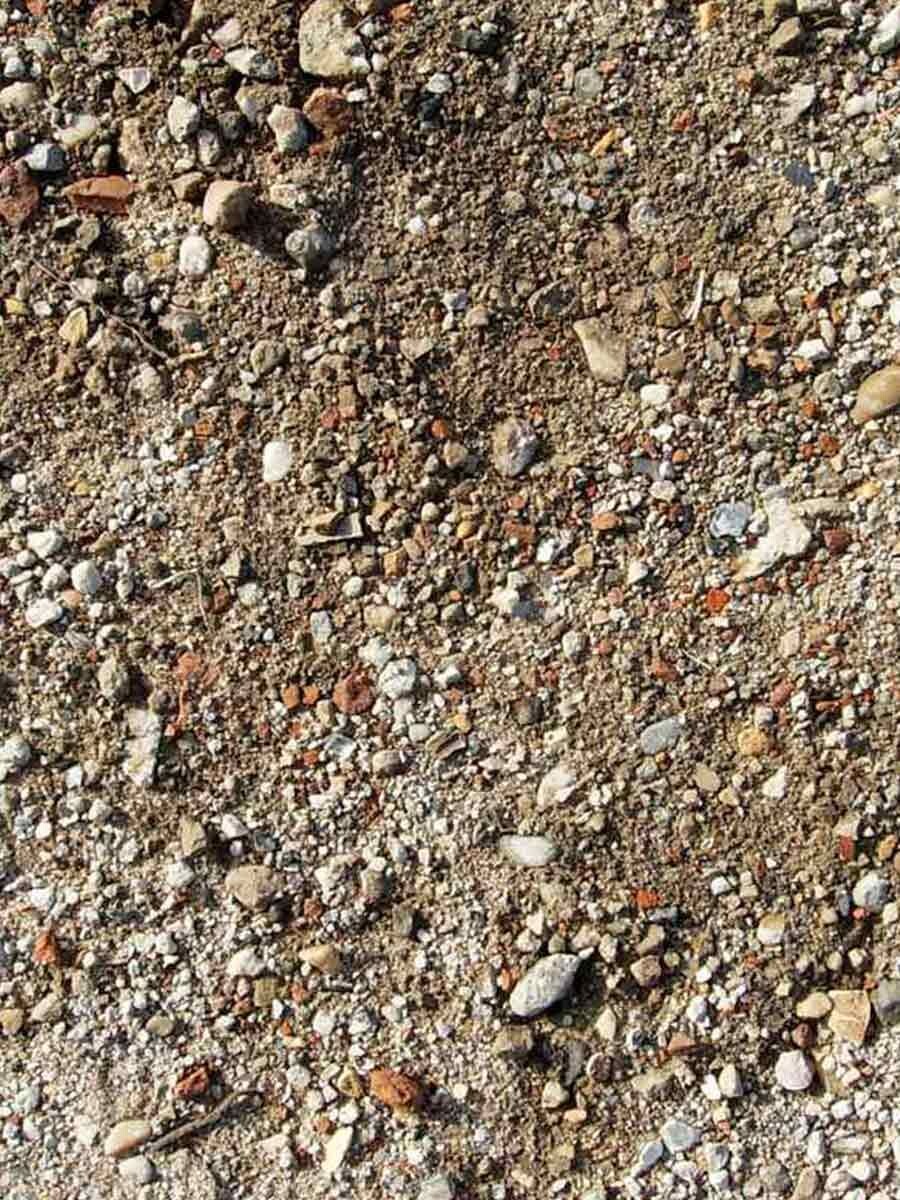
i_b_n_a_n schrieb:
detailed photos of the RC gravel (close-up, overall, high resolution)
Photo attached.
The soil expert was here today and mentioned that the RC gravel we installed has a very high sand content. He suspects it might be too high. He took a bucket full for analysis. Feedback is still pending.
The specifications for 40cm (16 inches) of RC gravel, installed and compacted in two layers, come from the soil expert.
i_b_n_a_n schrieb:
Does the vibratory plate "float" on the ground during compaction?
I’m not exactly sure what you mean by that?!
Cronos86 schrieb:
The question is what was required. 80 MN/m² is common for a single-family house.
Yes, the 80 MN/m² is required, as well as a value of <2.5 EV2/EV1.
Cronos86 schrieb:
But it’s unfortunately about the warranty regarding any damage that may occur… whatever causes it.
Yes, understandably, the structural contractor won’t begin work as long as the values required by the general contractor are not met.
Cronos86 schrieb:
So, what might the problem be…
Incorrect grain size distribution (values are good, compaction is not).
Grain size distribution 0–32mm (0–1.25 inches), as mentioned above, possibly with too high a sand content?
Cronos86 schrieb:
Wrong equipment, incorrect operation, too little water, too much water)
The vibratory plate is a Wacker DPU weighing around 550kg (1,210 lbs). The civil engineer says it is definitely sufficient. This week, as a precaution, they even used a 1.2 t (2,645 lbs) roller afterwards—without success.
What counts as too little or too much water? Both layers were watered and compacted, possibly with too little water. Unfortunately, there has been no rain at all in the last two weeks, and hardly any before that.
Cronos86 schrieb:
I would call the soil expert and ask for their opinion. They recommended this build-up and know the subsoil.
Yes, we are still waiting for their response.
In the photo, I noticed the proportion of brick. Brick behaves relatively elastically and has some “give,” which loosens the cushioning effect.
The same could happen with the “rock” layer. What type of rock is present there?
If the sand fraction is too large, a smaller device with a smaller contact area would be more suitable.
Actually, the “worst” thing that can happen in this case (assuming actual rock) is that the building settles evenly by 0.3 to 0.5 cm (0.1 to 0.2 inches). The values are consistent throughout. Such settlement is generally not a problem for a single-family house (with clay soils, settlement of up to 2 cm (0.8 inches) is typically expected).
Is the foundation formed by a slab-on-grade, or are strip footings still being excavated?
The same could happen with the “rock” layer. What type of rock is present there?
If the sand fraction is too large, a smaller device with a smaller contact area would be more suitable.
Actually, the “worst” thing that can happen in this case (assuming actual rock) is that the building settles evenly by 0.3 to 0.5 cm (0.1 to 0.2 inches). The values are consistent throughout. Such settlement is generally not a problem for a single-family house (with clay soils, settlement of up to 2 cm (0.8 inches) is typically expected).
Is the foundation formed by a slab-on-grade, or are strip footings still being excavated?
P
Pitiglianio29 Jul 2022 20:08@Cronos86
Thanks for the information.
I’ve attached a photo.
The rock on the right side is clearly visible. Further back, the rock is more crumbly and fragmented.
The foundation will be a waterproof concrete slab without strip footings.
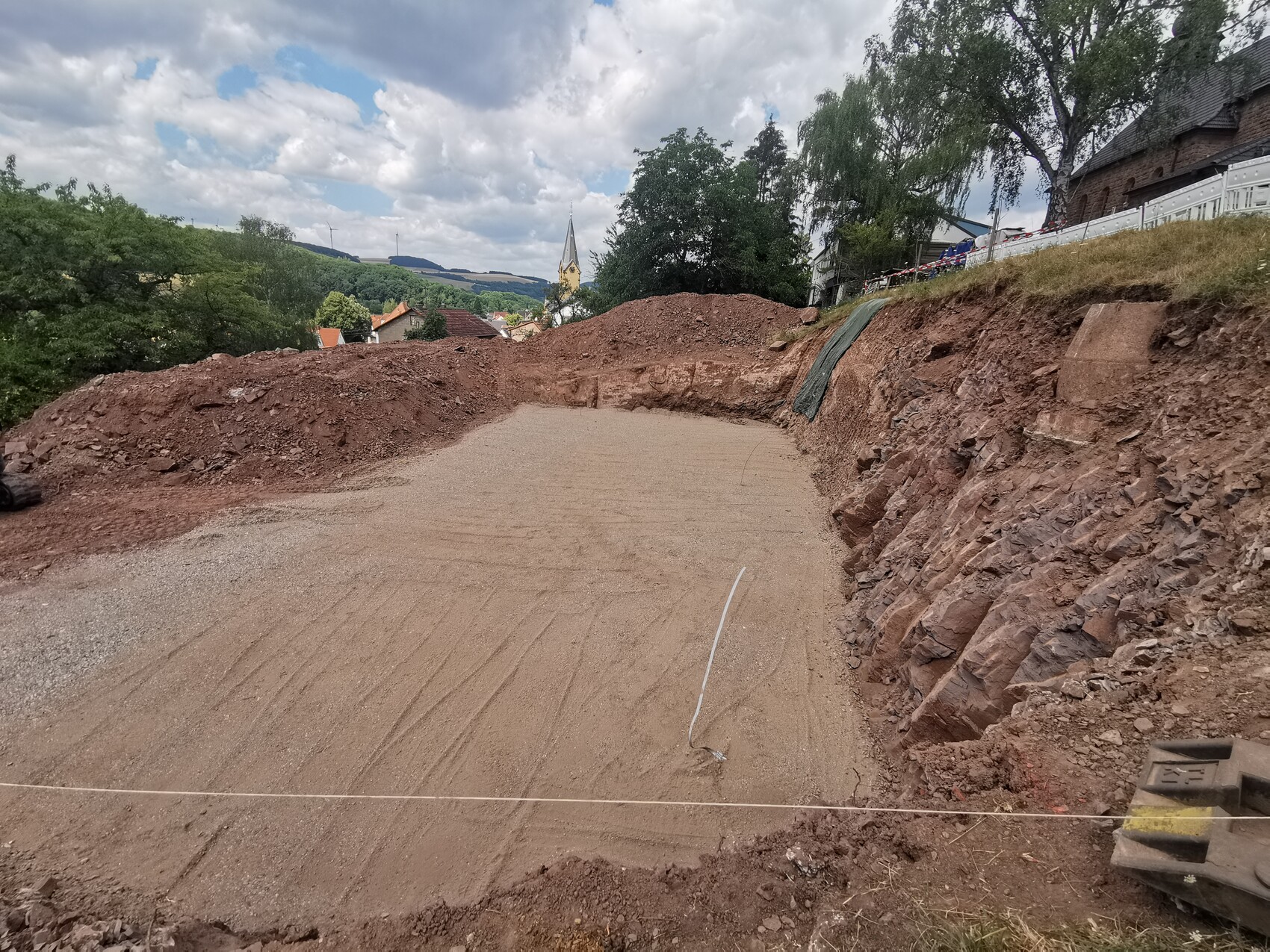
Thanks for the information.
I’ve attached a photo.
The rock on the right side is clearly visible. Further back, the rock is more crumbly and fragmented.
The foundation will be a waterproof concrete slab without strip footings.
Similar topics