
T
Trautes Heim19 Mar 2023 09:10Hello everyone,
We moved into a house in the middle of last year and took over a garden that had essentially been kept with low mowing of weeds and wild plants over the past few years. It’s a mix of various weed species, wild plants, grasses, lots of moss, some fungi, only a few patches of lawn, and a handful of trees and shrubs.
Because of the large number of roots and seeds in the soil, weeds will sprout again this year. Additionally, the dense moss growth suggests nutrient problems to me.
What steps should I take to turn this mess into a nicely designed garden with flower beds and lawn areas, where only the desired plants grow and not what is currently there?
Can I still till everything up with a motorized tiller/cultivator, pull out all the weeds I find, then add some sand and fresh soil along with plenty of fertilizer? If yes: how often would I need to do this until most of it is removed? Probably at least two growing seasons, right?
Or would it be more practical to remove the top 10-20 cm (4-8 inches) of soil once, or have it removed, and completely replace the topsoil because the soil is so "contaminated" with weeds and nutrient-poor?
I want to plant rhododendrons along one edge, and due to the conditions here (the soil is rather clayey, but rhododendrons need lighter and much more acidic soil), I would probably have to completely replace the top layers of soil in that area.
Do I have to or should I also do this in areas where "only" lawn is planned, or would tilling and adding soil be sufficient to achieve an acceptable result?
Attached are pictures showing the current condition.
Thank you very much for your feedback! You can tell I’m still a gardening novice but already have many plans 😉
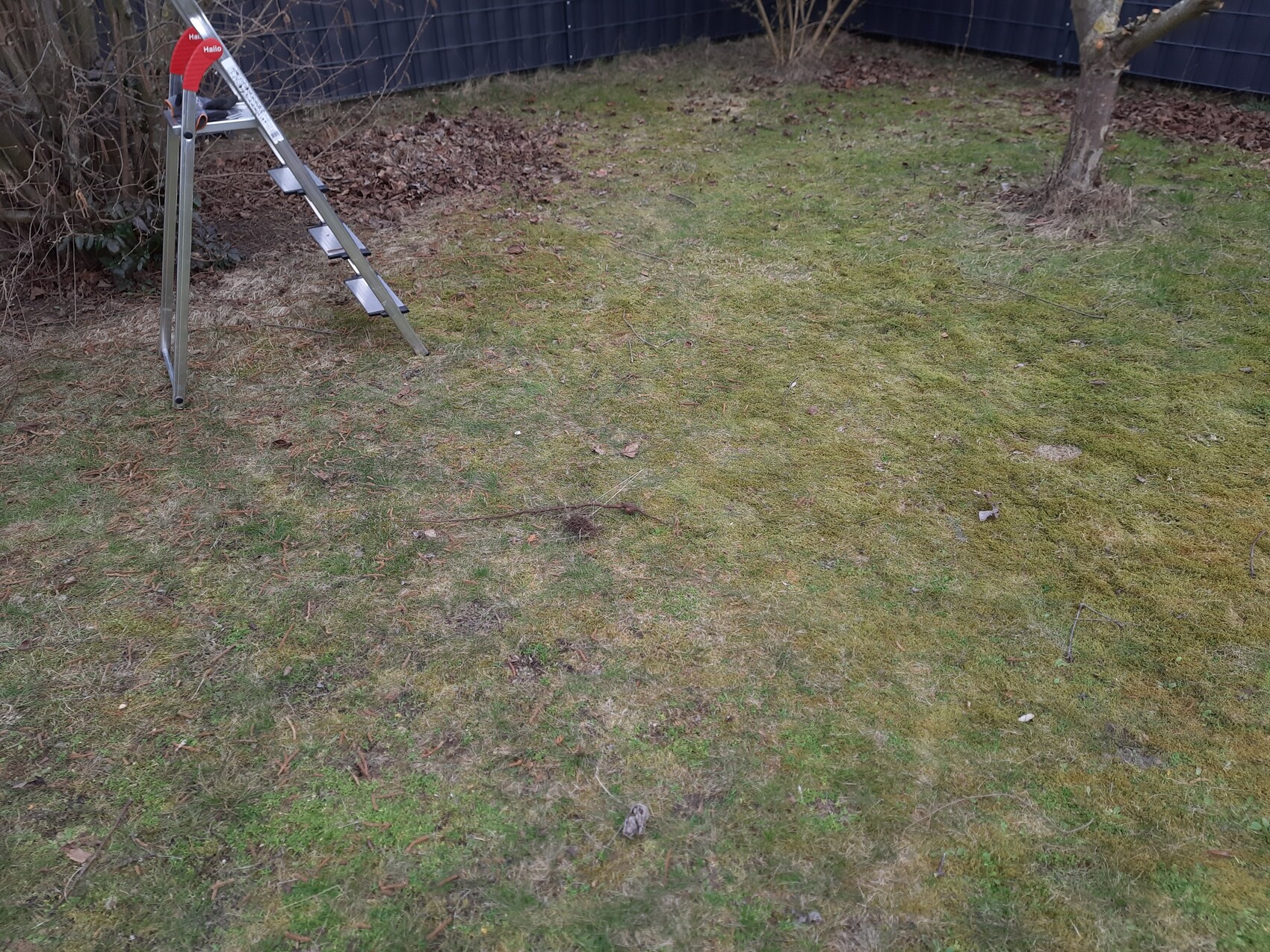
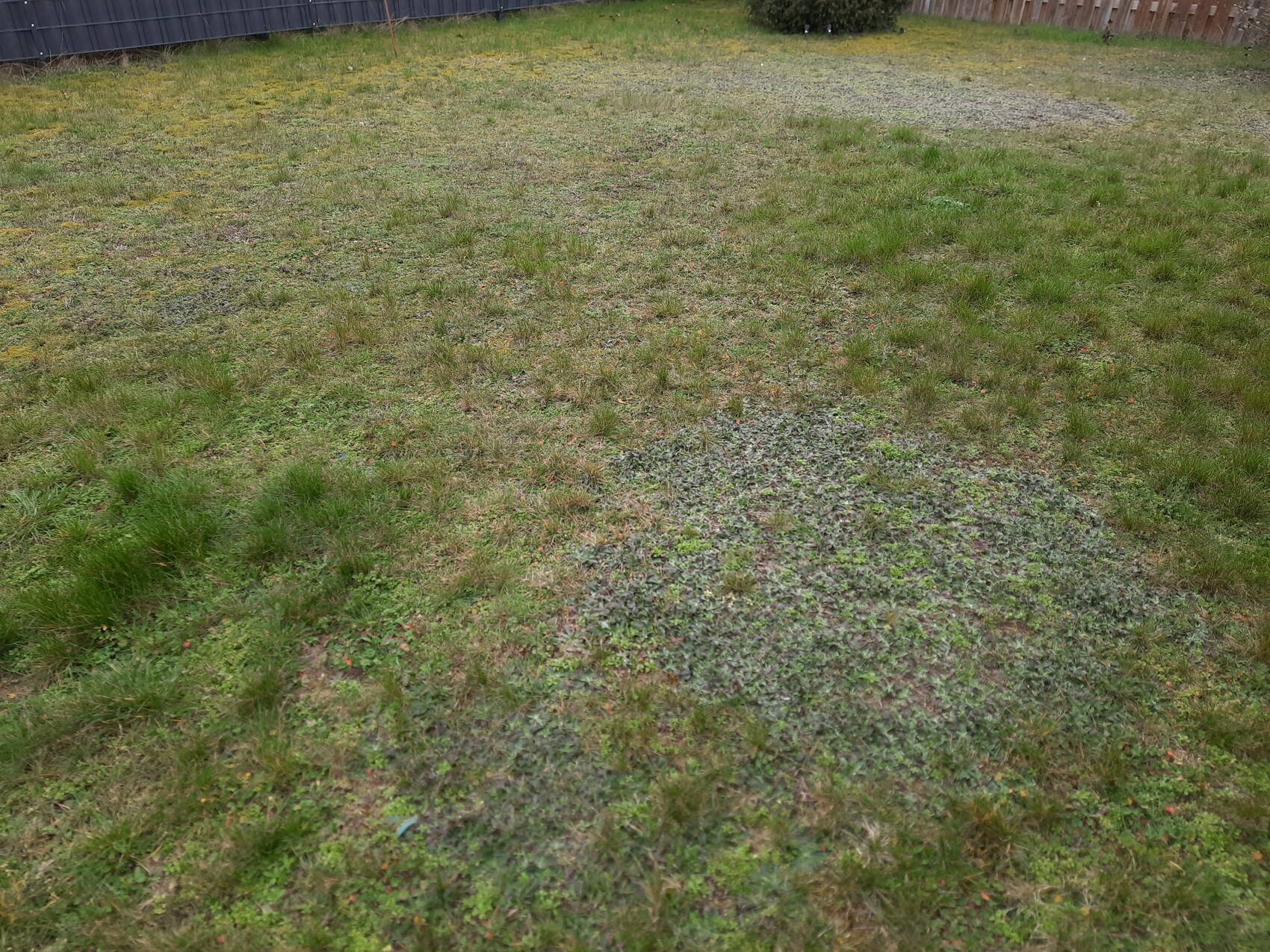
We moved into a house in the middle of last year and took over a garden that had essentially been kept with low mowing of weeds and wild plants over the past few years. It’s a mix of various weed species, wild plants, grasses, lots of moss, some fungi, only a few patches of lawn, and a handful of trees and shrubs.
Because of the large number of roots and seeds in the soil, weeds will sprout again this year. Additionally, the dense moss growth suggests nutrient problems to me.
What steps should I take to turn this mess into a nicely designed garden with flower beds and lawn areas, where only the desired plants grow and not what is currently there?
Can I still till everything up with a motorized tiller/cultivator, pull out all the weeds I find, then add some sand and fresh soil along with plenty of fertilizer? If yes: how often would I need to do this until most of it is removed? Probably at least two growing seasons, right?
Or would it be more practical to remove the top 10-20 cm (4-8 inches) of soil once, or have it removed, and completely replace the topsoil because the soil is so "contaminated" with weeds and nutrient-poor?
I want to plant rhododendrons along one edge, and due to the conditions here (the soil is rather clayey, but rhododendrons need lighter and much more acidic soil), I would probably have to completely replace the top layers of soil in that area.
Do I have to or should I also do this in areas where "only" lawn is planned, or would tilling and adding soil be sufficient to achieve an acceptable result?
Attached are pictures showing the current condition.
Thank you very much for your feedback! You can tell I’m still a gardening novice but already have many plans 😉

We also had this type of "meadow lawn" at the rental house and decided to start fresh with a new lawn at our new build, hoping for a nicer result. I had to realize, somewhat disappointingly, that an English-style lawn like in "my beautiful garden" requires much more than just a simple new installation.
We quickly encountered the same problem at our new build: self-seeding weeds appeared in such quantities that they quickly crowded out the grass.
You really have to keep on top of it continuously. Even with a new installation, you can make many mistakes, for example with the irrigation. And as you already said, the soil also plays a role. Even if you apply new topsoil, seeds from the surrounding area will find their way in again, so it’s difficult to completely avoid this.
I think the first step would be to use a scarifier thoroughly and then try to thicken the actual lawn with a lawn repair mixture. Where grass grows densely, weeds have less space.
We quickly encountered the same problem at our new build: self-seeding weeds appeared in such quantities that they quickly crowded out the grass.
You really have to keep on top of it continuously. Even with a new installation, you can make many mistakes, for example with the irrigation. And as you already said, the soil also plays a role. Even if you apply new topsoil, seeds from the surrounding area will find their way in again, so it’s difficult to completely avoid this.
I think the first step would be to use a scarifier thoroughly and then try to thicken the actual lawn with a lawn repair mixture. Where grass grows densely, weeds have less space.
W
WilderSueden19 Mar 2023 12:30You need to make some distinctions here. Regularly mowed areas are relatively unproblematic even if the soil contains weeds. Most plants do not tolerate frequent cutting well. The more often and lower you mow, the more likely it is that only grass will remain. However, this method can also be used for wildflower meadows and flower lawns, known as the Burri method.
With garden beds, the situation is different; neither vegetable beds nor perennial flower beds are mowed regularly. Here, you need to weed diligently. Alternatively, you can replace the soil with a grass surface and bring in sterile (weed-free) soil instead. However, this only makes sense if you can actually get truly weed-free soil. Most topsoils are also infested with weeds.
With garden beds, the situation is different; neither vegetable beds nor perennial flower beds are mowed regularly. Here, you need to weed diligently. Alternatively, you can replace the soil with a grass surface and bring in sterile (weed-free) soil instead. However, this only makes sense if you can actually get truly weed-free soil. Most topsoils are also infested with weeds.
Take a look at Wurzelwerk’s channel. I would create the perennial beds in a similar way to how they set up the compost beds. The soil and mulch need to match the plants. Rhododendrons can actually tolerate bark mulch.
Lawns—the lush green ones from magazines—require a lot of work. Do you really want that?
For a basic green lawn: soil analysis, digging out dandelions and sorrel, scarifying, fertilizing, and overseeding.
For magazine-quality green: at least the above steps plus laying sod (turf) and possibly replacing the soil.
Lawns—the lush green ones from magazines—require a lot of work. Do you really want that?
For a basic green lawn: soil analysis, digging out dandelions and sorrel, scarifying, fertilizing, and overseeding.
For magazine-quality green: at least the above steps plus laying sod (turf) and possibly replacing the soil.
Our “lawn” looks exactly the same, and we are very happy with it. In summer, even such a lawn turns nicely green. We don’t need to water it — it grows just as it is. And the “weeds” can only be seen up close. I have also created flower beds like Marie (from Wurzelwerk) — so without digging. It works perfectly.
Here are different views from one spot:
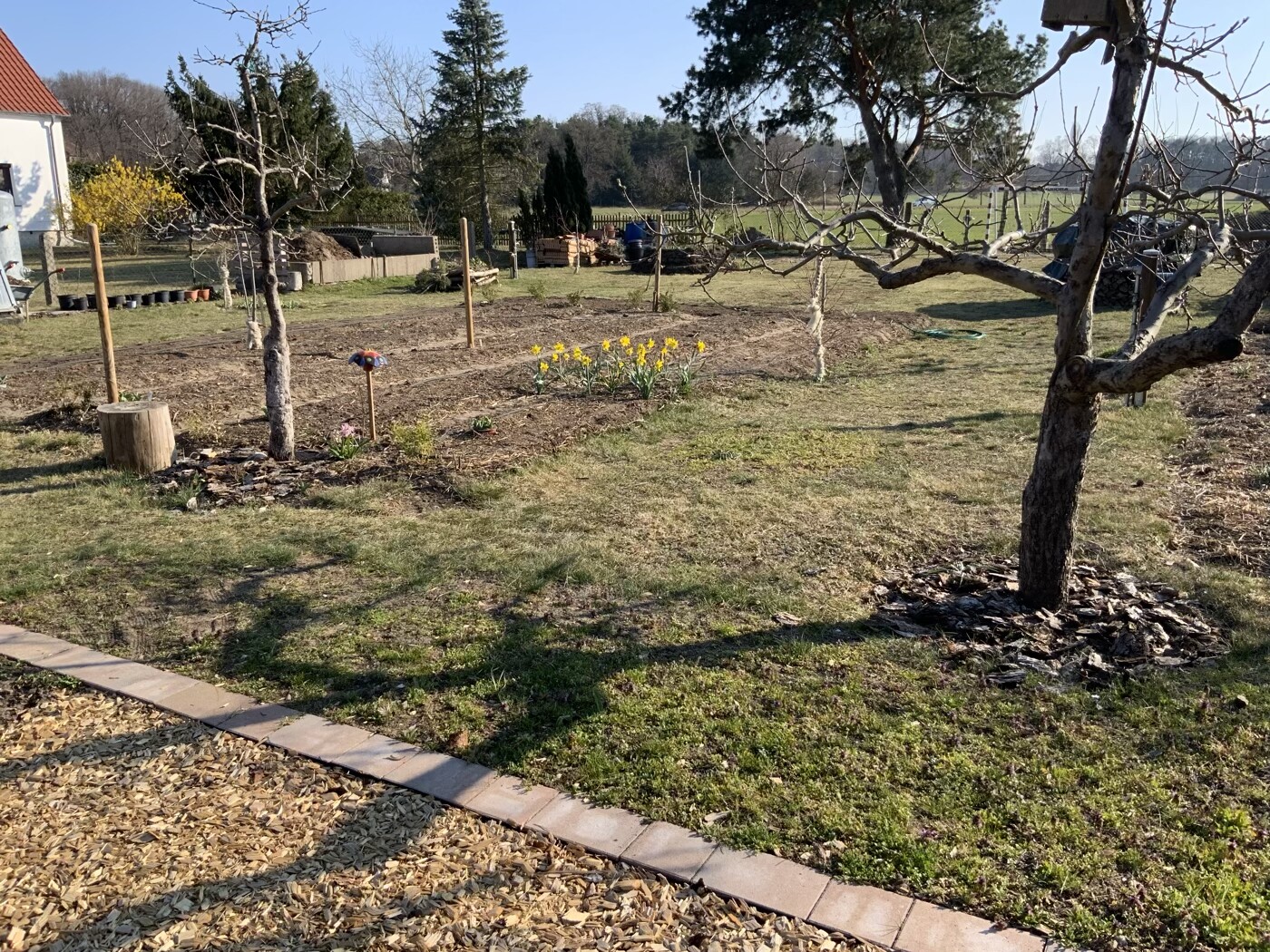
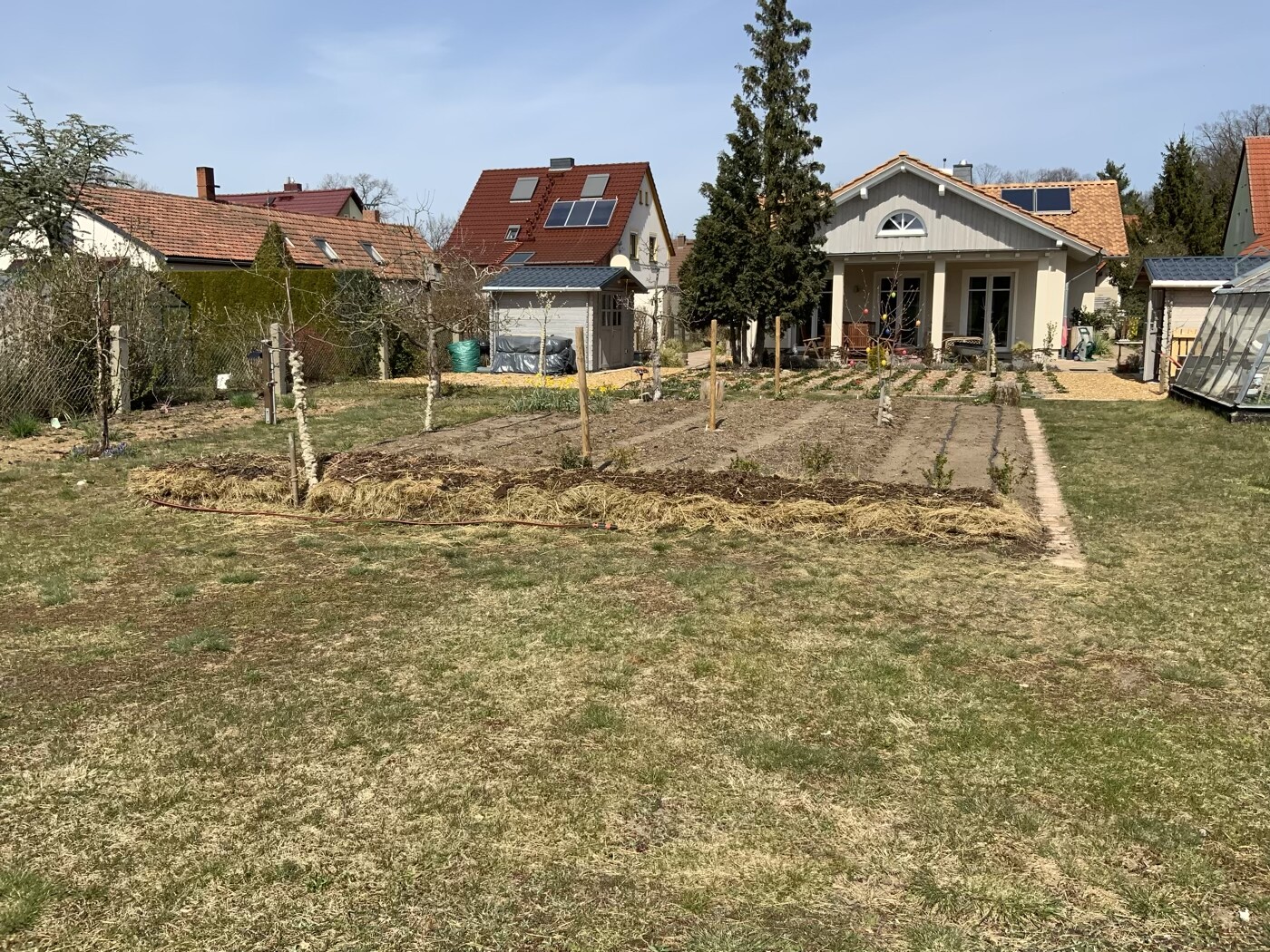
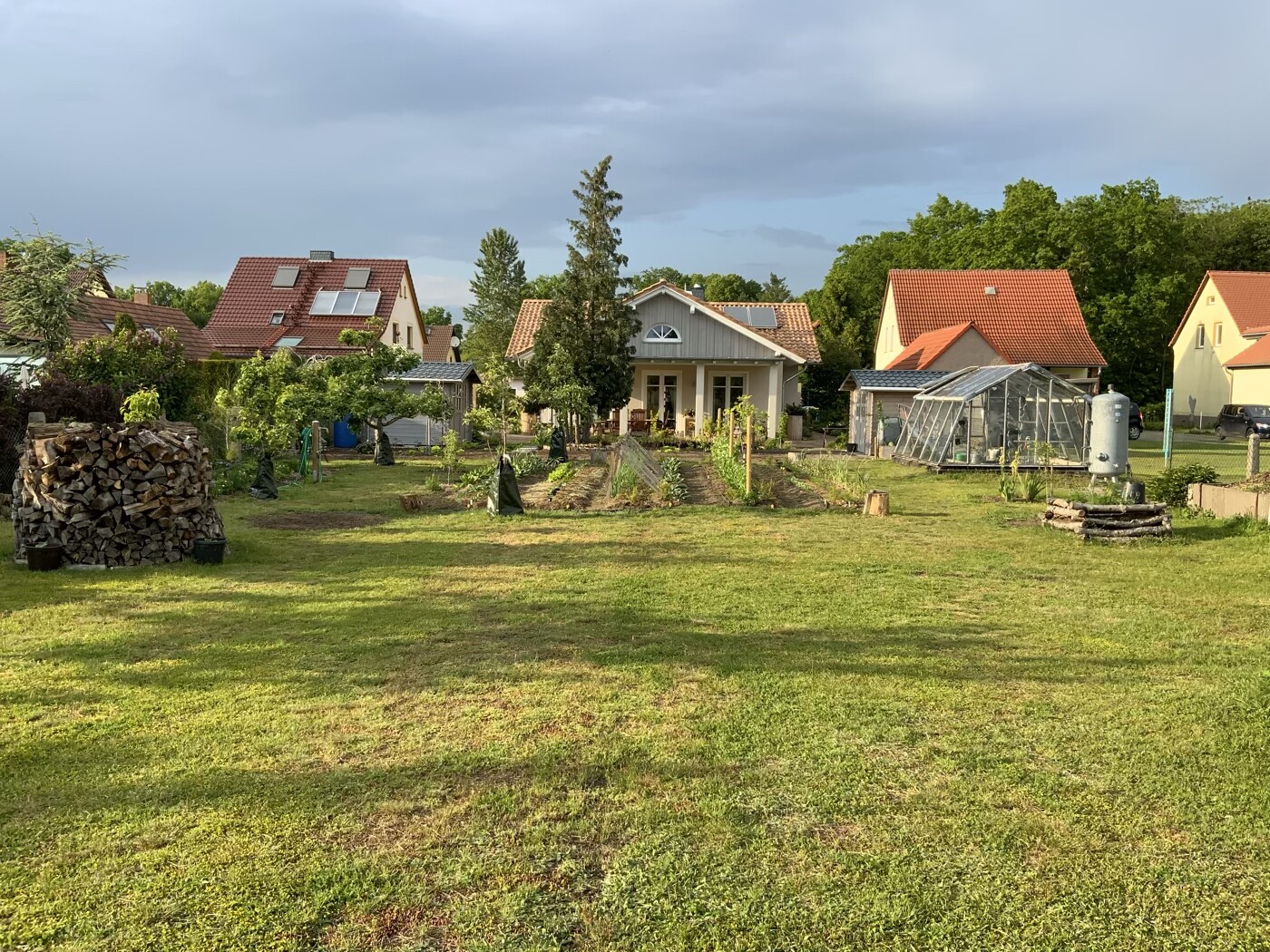
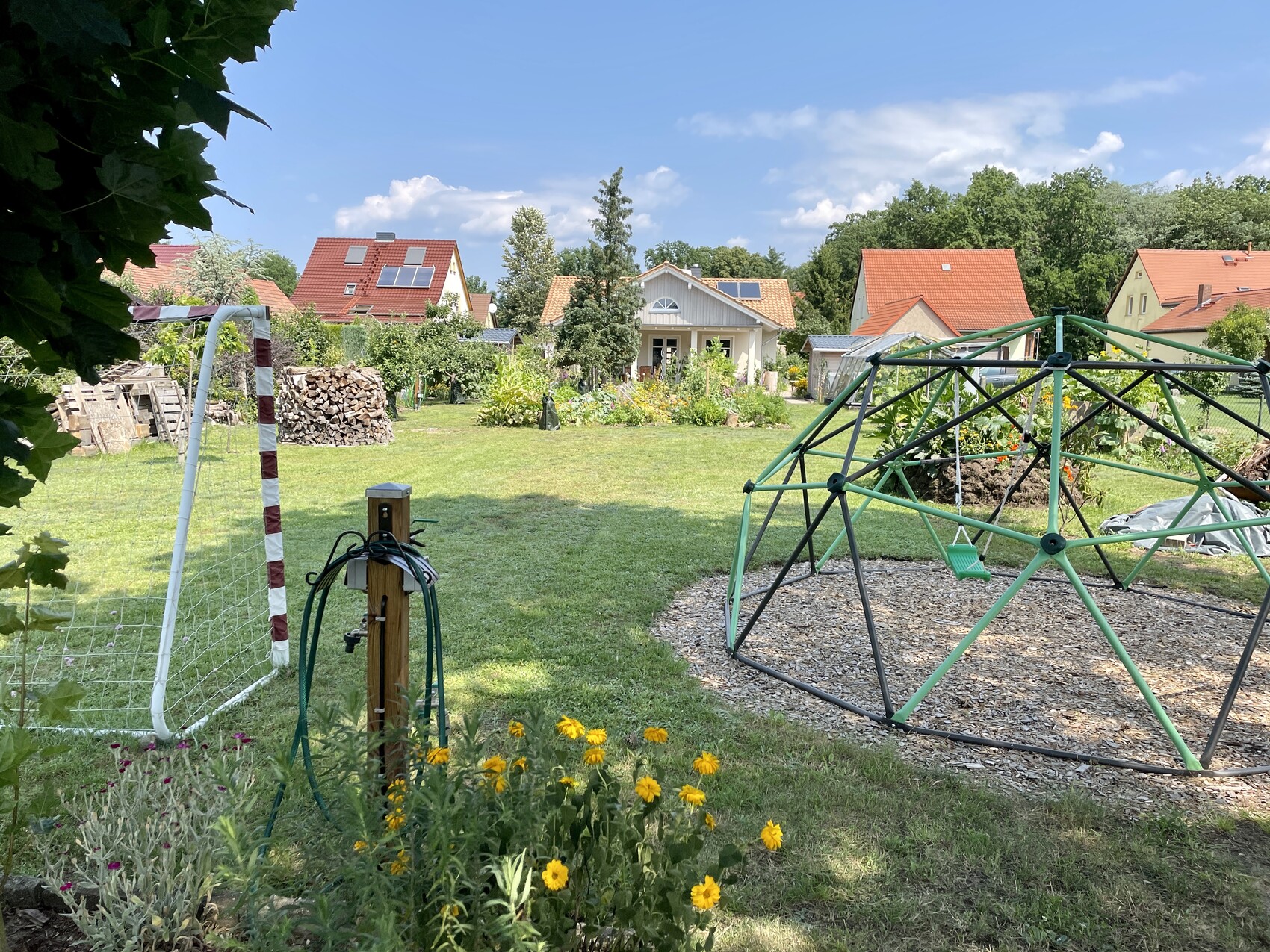
Here are different views from one spot:
S
Schorsch_baut20 Mar 2023 17:06There are also rhododendron cultivars that can tolerate less acidic soils.
Similar topics