
Good morning dear community,
I have the following concern and would be extremely grateful if someone could help me with their expertise.
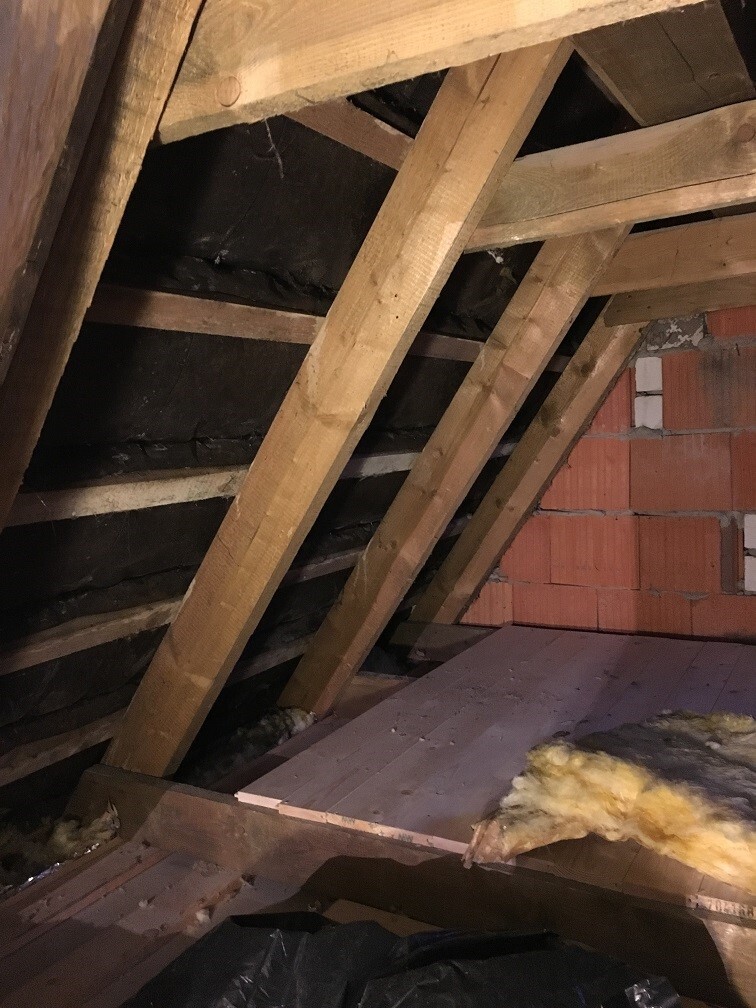
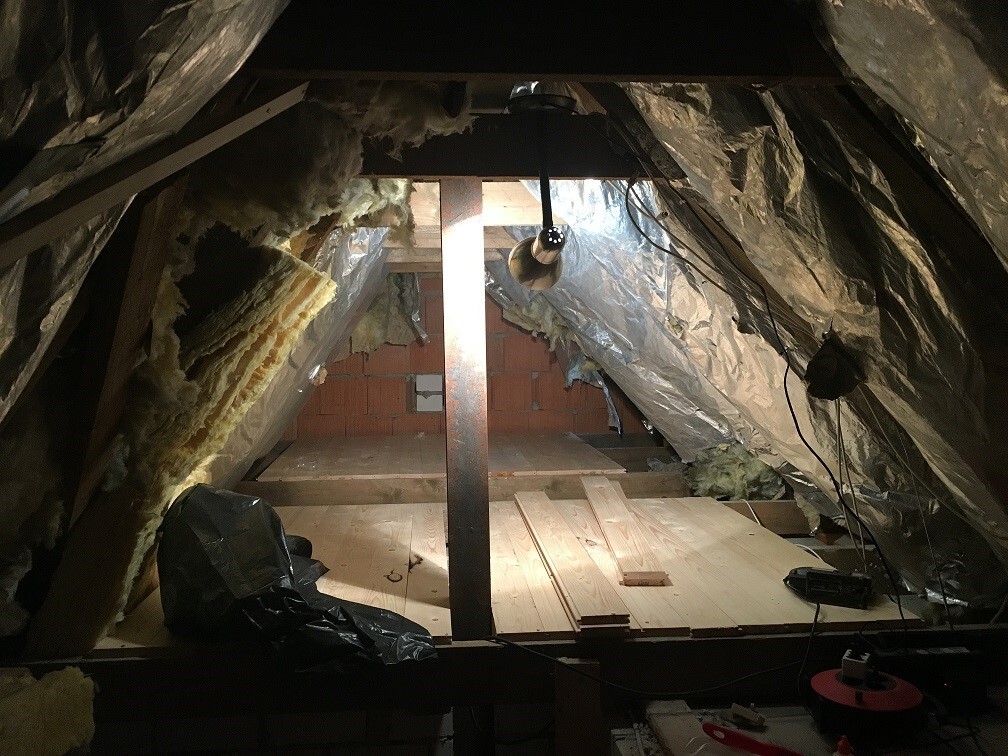
As you can see in the pictures, I am currently planning the insulation of our intermediate ceiling. Previously, the roof was insulated in a typical way with laminated aluminum foil and insulation from the 1980s. Everything was just stapled, nothing glued, no vapor barrier, etc. That material eventually fell down or was damaged by a marten.
We recently bought the house, built in 1982.
Since we only have roofing felt on the tiles and no Delta-Max membrane, I decided to insulate the floor because of the moisture – this is actually required according to the Energy Saving Ordinance 2016, right?
The attic is not intended to be used as living space; it’s too small anyway. So, air can circulate freely.
Well, I have now installed the following materials (from top to bottom):
Insulation fleece 180mm (7 inches) (Climowool KF2)
Vapor retarder (Climowool DB Flex)
Rafters (doubled up to 200-220mm (8-9 inches))
Sheathing boards (30mm (1 inch), staggered under the rafters)
Below the rafters and between the sheathing boards, 30mm (1 inch) polystyrene insulation to prevent air circulation “in case” there is a flaw in the system!
Drywall panels (as ceiling)
I have properly installed the vapor retarder between the rafters, sealed it, and adhered it to the exterior wall (after prior filling). On the sides, I extended the vapor retarder as far as possible up the roof slope. Picture will follow!
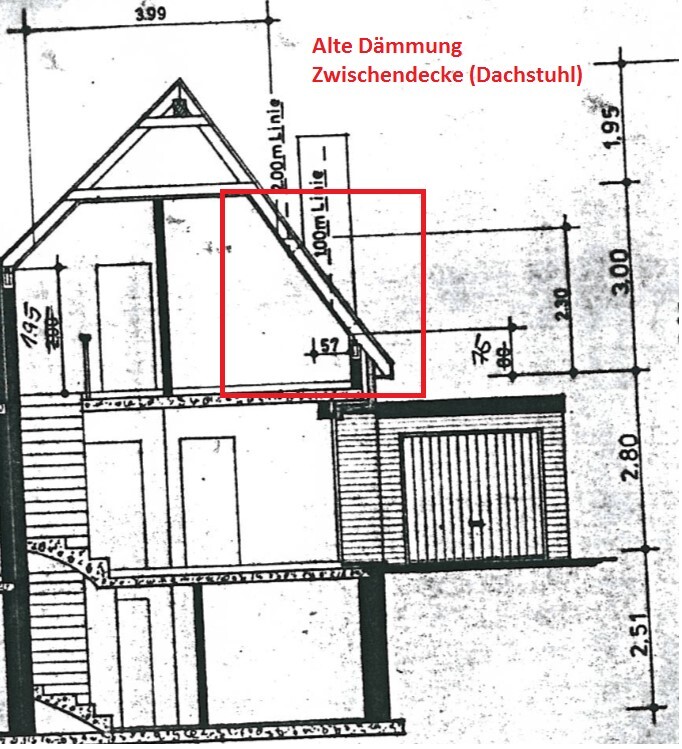
NOW I am worried about what to do with the transition between the roof slope and the floor? Two materials and temperatures theoretically meet there.
In the slope, I have the old (approx. 100-120mm (4-5 inches) thick) insulation wool with the foil facing inside, where the air above leaks through due to the roof tiles, and above that the 180mm (7 inches) insulation with vapor retarder.
Can moisture form in that corner? I do not have a 100% tight connection between the aluminum foil and the vapor retarder, and there might be two different temperatures meeting there, right? Possibly about +20°C (68°F) from the corner in the ceiling and -10°C (14°F) from the roof structure. Or should I glue the vapor retarder ONTO the aluminum foil?
Maybe someone can help me, thanks in advance 🙂)
I have the following concern and would be extremely grateful if someone could help me with their expertise.
As you can see in the pictures, I am currently planning the insulation of our intermediate ceiling. Previously, the roof was insulated in a typical way with laminated aluminum foil and insulation from the 1980s. Everything was just stapled, nothing glued, no vapor barrier, etc. That material eventually fell down or was damaged by a marten.
We recently bought the house, built in 1982.
Since we only have roofing felt on the tiles and no Delta-Max membrane, I decided to insulate the floor because of the moisture – this is actually required according to the Energy Saving Ordinance 2016, right?
The attic is not intended to be used as living space; it’s too small anyway. So, air can circulate freely.
Well, I have now installed the following materials (from top to bottom):
Insulation fleece 180mm (7 inches) (Climowool KF2)
Vapor retarder (Climowool DB Flex)
Rafters (doubled up to 200-220mm (8-9 inches))
Sheathing boards (30mm (1 inch), staggered under the rafters)
Below the rafters and between the sheathing boards, 30mm (1 inch) polystyrene insulation to prevent air circulation “in case” there is a flaw in the system!
Drywall panels (as ceiling)
I have properly installed the vapor retarder between the rafters, sealed it, and adhered it to the exterior wall (after prior filling). On the sides, I extended the vapor retarder as far as possible up the roof slope. Picture will follow!
NOW I am worried about what to do with the transition between the roof slope and the floor? Two materials and temperatures theoretically meet there.
In the slope, I have the old (approx. 100-120mm (4-5 inches) thick) insulation wool with the foil facing inside, where the air above leaks through due to the roof tiles, and above that the 180mm (7 inches) insulation with vapor retarder.
Can moisture form in that corner? I do not have a 100% tight connection between the aluminum foil and the vapor retarder, and there might be two different temperatures meeting there, right? Possibly about +20°C (68°F) from the corner in the ceiling and -10°C (14°F) from the roof structure. Or should I glue the vapor retarder ONTO the aluminum foil?
Maybe someone can help me, thanks in advance 🙂)
Similar topics