
Hello everyone!
We are currently building a new house (the foundation pit has just been excavated). We already have two concrete monolithic cisterns of 7000 liters (about 1850 gallons) each on the property and plan to use this water later for garden irrigation (the washing machine and toilets will not be connected to the cistern water). I have a few questions regarding this.
(1) What options are possible?
- Domestic water system or pressure booster with a suction pump in the utility room
- Automatic submersible pressure pump hanging inside the cistern, with electrical connection from the utility room to the cistern
- Garden pump from a hardware store
(2) What are the advantages and disadvantages of each option?
(3) What are the costs of each option?
(4) What is the additional cost for an automatic garden irrigation system for a 150 m² (1600 sq ft) garden?
Best regards
jx7
We are currently building a new house (the foundation pit has just been excavated). We already have two concrete monolithic cisterns of 7000 liters (about 1850 gallons) each on the property and plan to use this water later for garden irrigation (the washing machine and toilets will not be connected to the cistern water). I have a few questions regarding this.
(1) What options are possible?
- Domestic water system or pressure booster with a suction pump in the utility room
- Automatic submersible pressure pump hanging inside the cistern, with electrical connection from the utility room to the cistern
- Garden pump from a hardware store
(2) What are the advantages and disadvantages of each option?
(3) What are the costs of each option?
(4) What is the additional cost for an automatic garden irrigation system for a 150 m² (1600 sq ft) garden?
Best regards
jx7
N
Nordlichtchen19 Nov 2015 12:28What kind of crappy system do they have? Were they poorly advised?
Our system is from Graf. The simpler home water system we have includes a drinking water tank made of PE, connected to the pump, with about 10 liters (2.6 gallons) capacity. This tank is always filled with drinking water. When the rainwater cistern is empty, the water level sensor (which hangs inside the tank and the cable runs through a conduit to the utility room where the pump unit is located) switches to supply drinking water.
This system is also sold by other manufacturers (for example, concrete manufacturers who purchase the technical unit).
Other systems that operate fully automatically like ours are designed differently, for example, they do not have a drinking water storage tank at the pump but instead feed drinking water directly into the cistern (also fully automatically).
Our system is from Graf. The simpler home water system we have includes a drinking water tank made of PE, connected to the pump, with about 10 liters (2.6 gallons) capacity. This tank is always filled with drinking water. When the rainwater cistern is empty, the water level sensor (which hangs inside the tank and the cable runs through a conduit to the utility room where the pump unit is located) switches to supply drinking water.
This system is also sold by other manufacturers (for example, concrete manufacturers who purchase the technical unit).
Other systems that operate fully automatically like ours are designed differently, for example, they do not have a drinking water storage tank at the pump but instead feed drinking water directly into the cistern (also fully automatically).
N
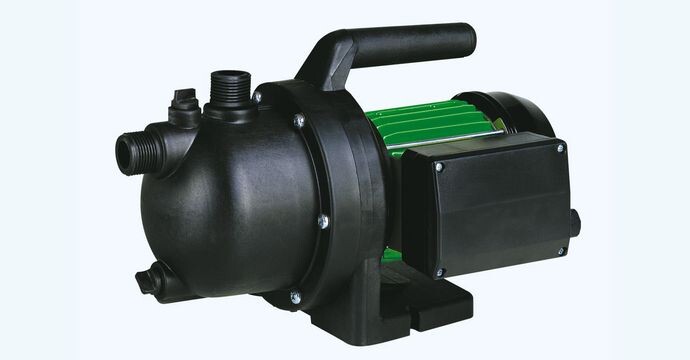
Nordlichtchen19 Nov 2015 12:45For example, the Jet 700 self-priming pump by Otto Graf costs 165 euros according to the price list.
Similar topics