
ᐅ Controlled residential ventilation supply air in the living area near the sofa
Created on: 29 May 2021 14:19
K
kasse-tkHello dear forum members,
I have been an active reader of this forum for some time now, but I have reached a point where I need to ask a question. We are currently finalizing the construction plans for our semi-detached house, with construction scheduled to start in July. The HVAC contractor has recommended positions for the supply and exhaust vents of the mechanical ventilation system. Everything is clear so far, except for the location of the fresh air supply in the living area (marked in red in the attached picture). According to the HVAC contractor, the position so close to the sofa is acceptable and there should be no drafts, but we have some concerns. However, we can’t really think of a better location. If placed further to the left, the airflow would pass over the sofa area on its way to the kitchen exhaust; if placed further to the right, the left side of the living room would be without fresh air.
What do you think?
Thanks in advance!
Best regards, kasse-tk
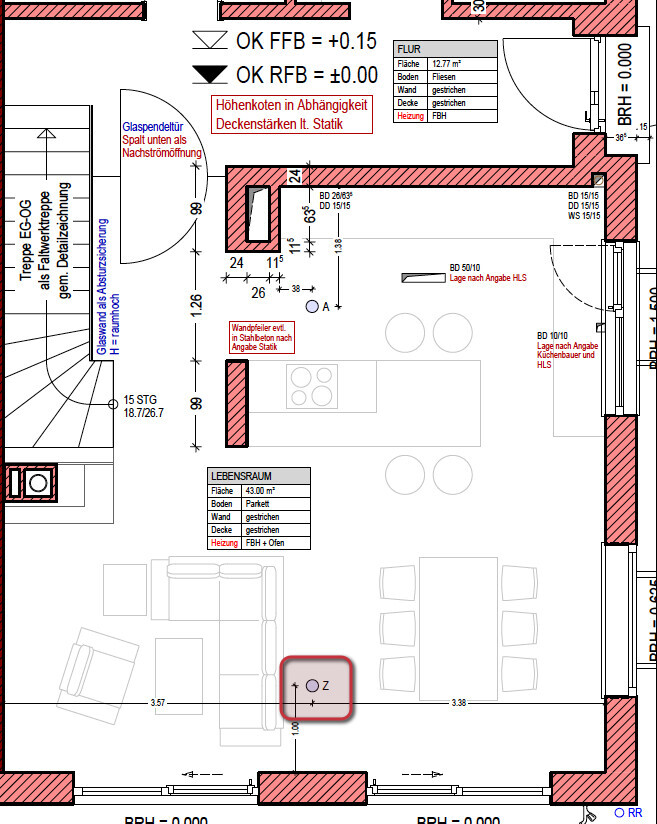
I have been an active reader of this forum for some time now, but I have reached a point where I need to ask a question. We are currently finalizing the construction plans for our semi-detached house, with construction scheduled to start in July. The HVAC contractor has recommended positions for the supply and exhaust vents of the mechanical ventilation system. Everything is clear so far, except for the location of the fresh air supply in the living area (marked in red in the attached picture). According to the HVAC contractor, the position so close to the sofa is acceptable and there should be no drafts, but we have some concerns. However, we can’t really think of a better location. If placed further to the left, the airflow would pass over the sofa area on its way to the kitchen exhaust; if placed further to the right, the left side of the living room would be without fresh air.
What do you think?
Thanks in advance!
Best regards, kasse-tk
 KingJulien29 May 2021 15:34
I don’t think you would feel a draft on the sofa. Unless you always lie there wet and naked, half over the backrest. 😉
The air would have to move up and across, about one to two meters. Such an air supply is not like a fan.
At around 200 m³/h (cubic meters per hour), I have to hold my hand about 20–30 cm (8–12 inches) away just to feel anything at all.
The air would have to move up and across, about one to two meters. Such an air supply is not like a fan.
At around 200 m³/h (cubic meters per hour), I have to hold my hand about 20–30 cm (8–12 inches) away just to feel anything at all.
KingJulien29 May 2021 17:11Then it must be true after all. I have no feelings except hunger and thirst.
Similar topics