
Hello,
Regarding the current situation: an air source heat pump with an outdoor unit mounted on a standard base and frame, placed on the gravel fascia strip at the house.
Now, in winter, I have already ended up with quite a large “ice rink” due to the freezing condensate.
What are your experiences or ideas to prevent or reduce this? Drainage, connection to the drainage system...? I would not favor heating...
Regarding the current situation: an air source heat pump with an outdoor unit mounted on a standard base and frame, placed on the gravel fascia strip at the house.
Now, in winter, I have already ended up with quite a large “ice rink” due to the freezing condensate.
What are your experiences or ideas to prevent or reduce this? Drainage, connection to the drainage system...? I would not favor heating...
@Bieber0815:
I will upload the picture later, as I am not on site at the moment.
Equipment: Rotex HPSU compact 508 8 kW.
The eaves strip is 40 cm wide (16 inches), and the ice stands for at least 1.5 m (5 feet) length on the strip. The gravel is graywacke crushed stone 0–16 mm (0–0.6 inches) loosely filled about 20 cm (8 inches) high, without any slope.
I will upload the picture later, as I am not on site at the moment.
Equipment: Rotex HPSU compact 508 8 kW.
The eaves strip is 40 cm wide (16 inches), and the ice stands for at least 1.5 m (5 feet) length on the strip. The gravel is graywacke crushed stone 0–16 mm (0–0.6 inches) loosely filled about 20 cm (8 inches) high, without any slope.
Update from the user manual:
Condensate water:
– Since condensate drains from the outdoor unit, a drainage bed must be installed underneath to allow the condensate to flow away. Do not place anything under the unit that is sensitive to moisture.
– The condensate must be able to drain freely.
– If the condensate connection is covered by a base plate or floor surface, install additional risers with a height of at least 300 mm (12 inches) under the feet of the outdoor unit.
– Do not use a condensate hose with the outdoor unit in cold climates. Otherwise, the water may freeze and impair functionality.
Condensate water:
– Since condensate drains from the outdoor unit, a drainage bed must be installed underneath to allow the condensate to flow away. Do not place anything under the unit that is sensitive to moisture.
– The condensate must be able to drain freely.
– If the condensate connection is covered by a base plate or floor surface, install additional risers with a height of at least 300 mm (12 inches) under the feet of the outdoor unit.
– Do not use a condensate hose with the outdoor unit in cold climates. Otherwise, the water may freeze and impair functionality.
B
Bieber08151 Feb 2017 19:50This is how it looks at our place:
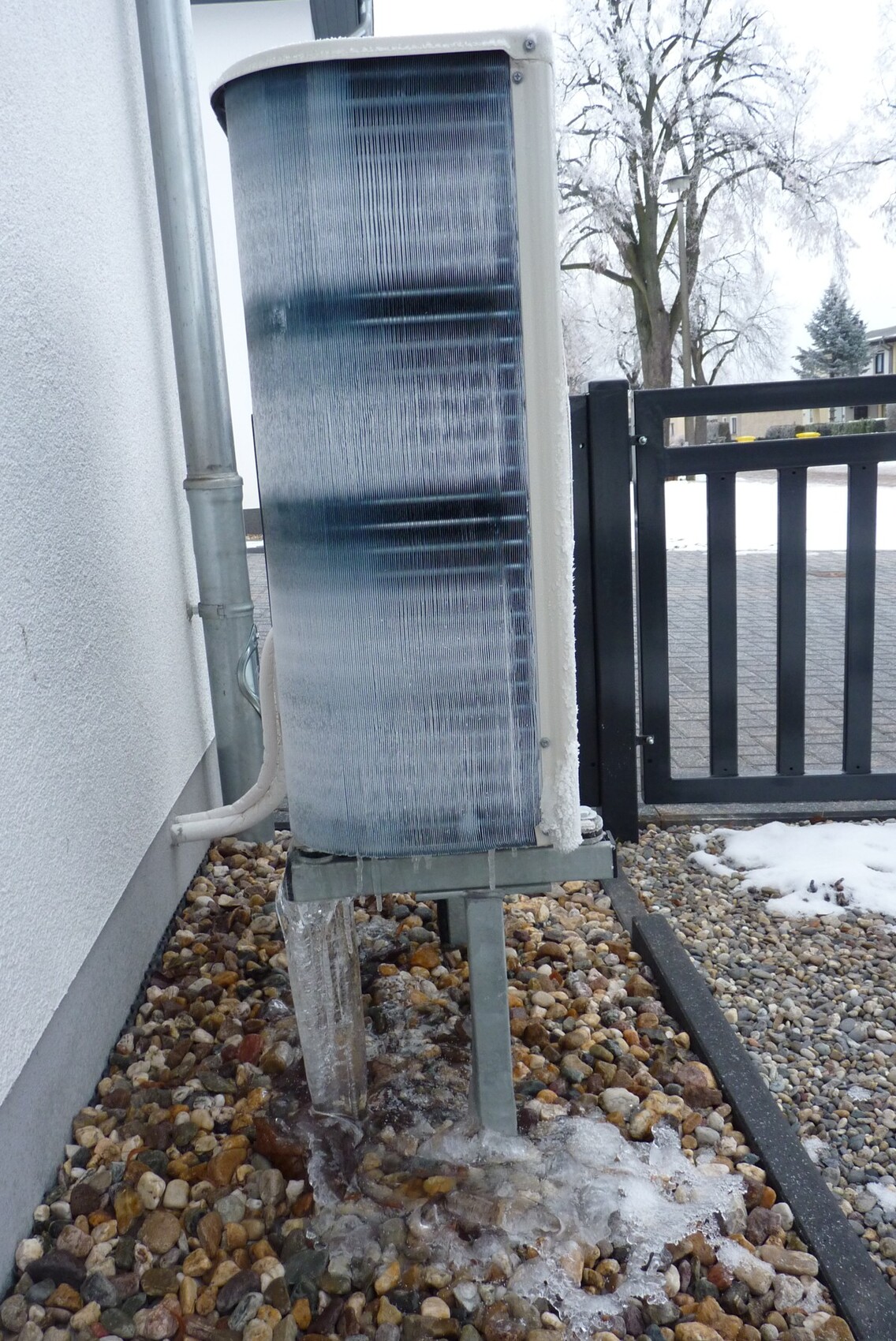
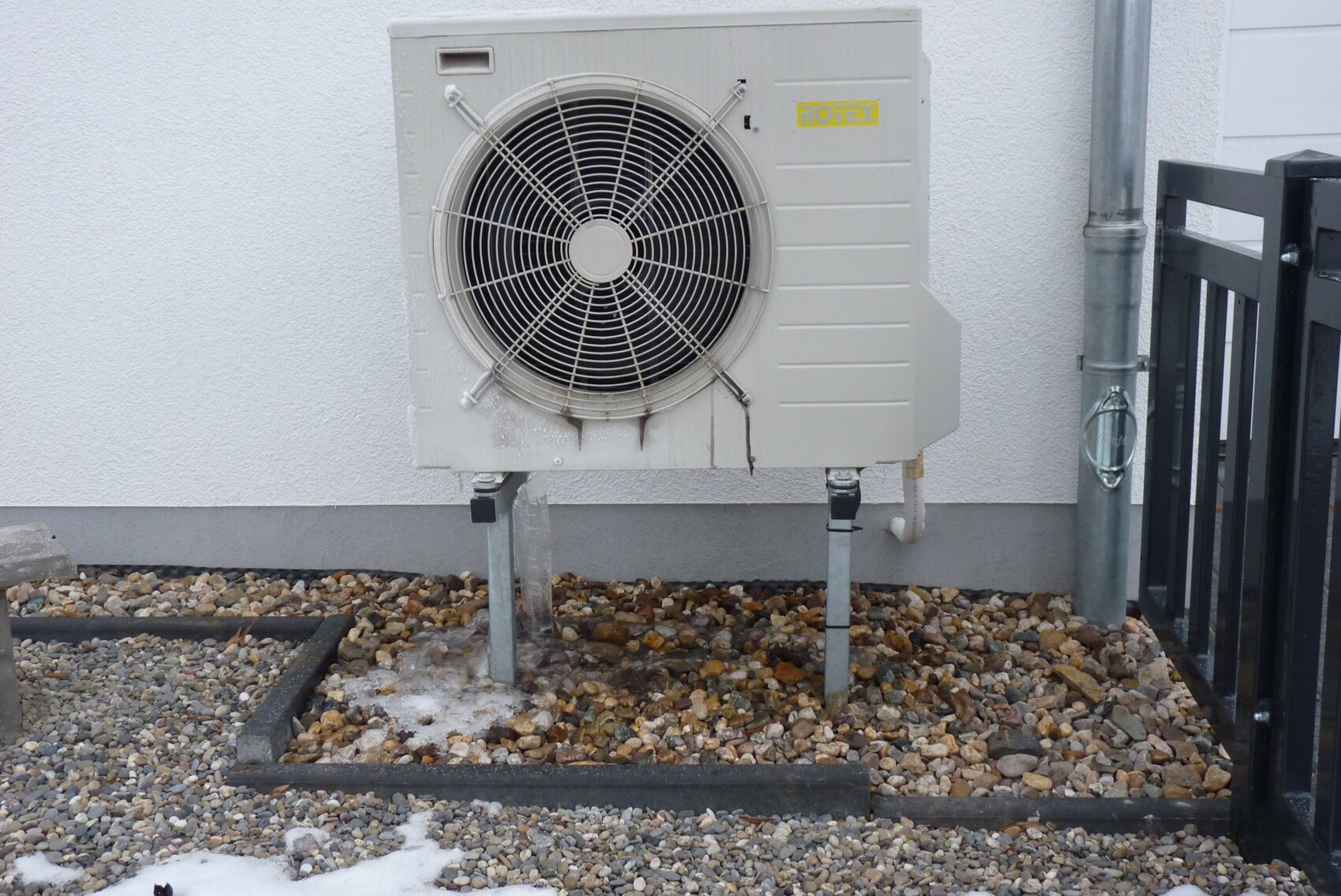
By now, I have been fighting the ice with a pickaxe, rock salt, and thanks to the mild temperatures. Unfortunately, there is a lot of standing water at the moment, so I am considering installing drainage under the equipment in spring and connecting it to the rainwater pipe (which leads to my own cistern).
B
Bieber08151 Feb 2017 22:00It seems that the condensate initially spread out in liquid form, then stayed in place and froze. Drainage or a permeable ground could therefore help.
Similar topics