
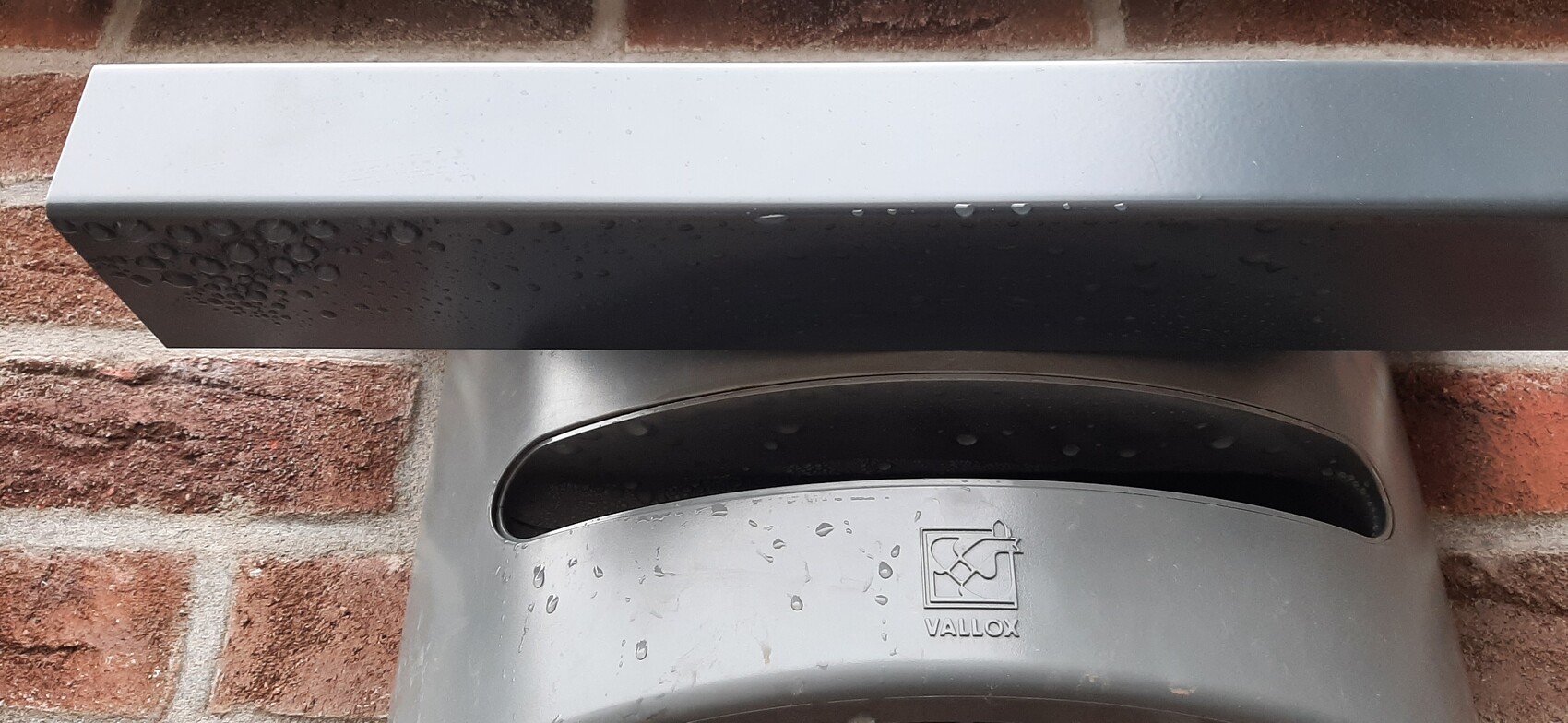
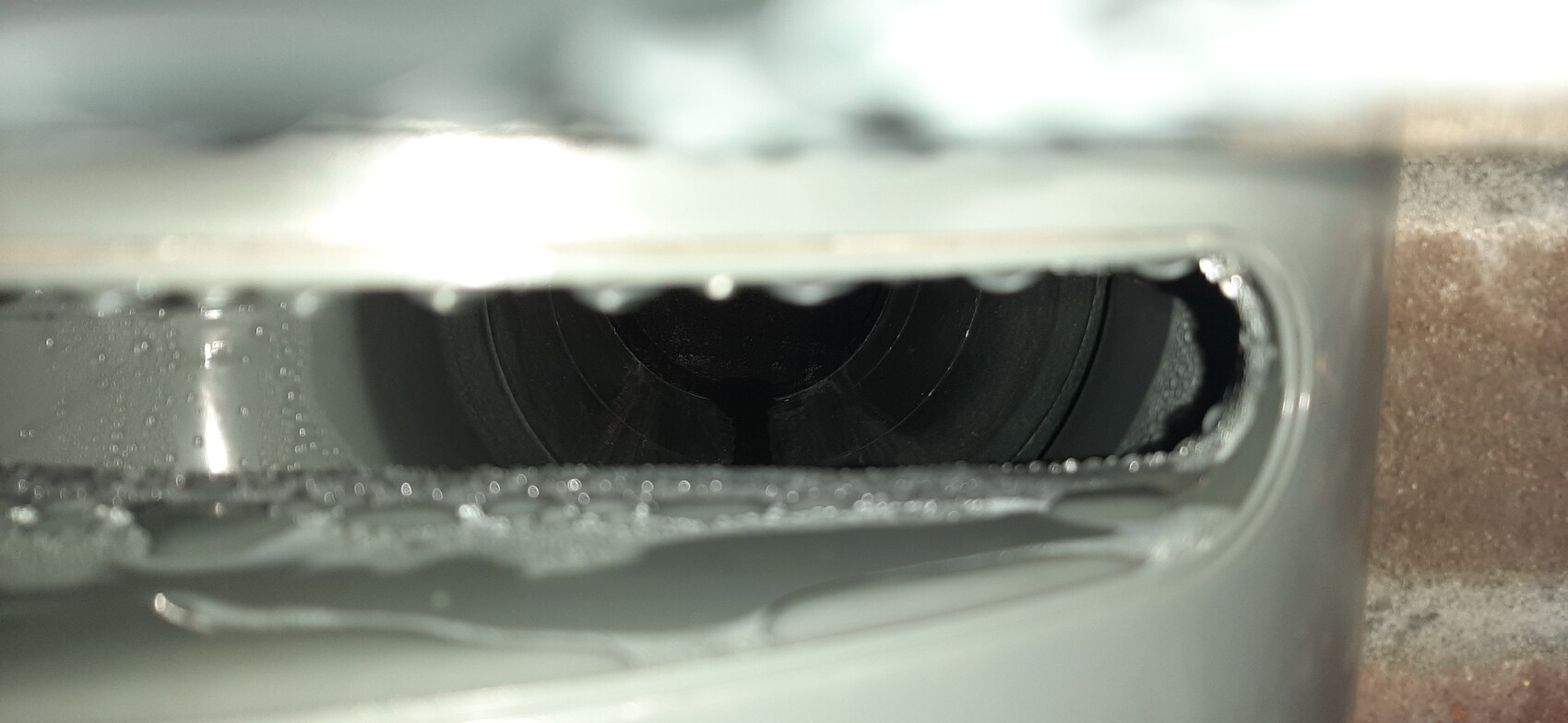
Hello, I’m struggling to control the condensation buildup we’re experiencing. The ducts for our ventilation system pass through the utility room wall into the garage and from there through the wall to the outside. We have a double outlet side by side. Condensation always forms on the exhaust hood, as shown in the pictures.
About half a liter of water accumulates quickly, which then collects inside the duct. I only noticed this when it started dripping in the garage (where the duct meets the exterior wall).
At first, I thought it was rainwater because there was so much water inside the duct. In a test, water also entered the duct when I poured water over the cover from above. I therefore screwed a metal sheet over it. The metal sheet extends outward to prevent driving rain from entering.
I’ve also already screwed the cover at an angle so most of the water runs off the front. Inside the cover, I applied a thin silicone bead to prevent water from flowing back.
Of course, the manufacturer has already been involved here. They said they had never seen anything like this before.
No condensation forms on the duct itself; it is always dry when I check. It’s the exhaust hood that causes the condensation.
What are your ideas? Different exhaust hood? Do you know of anything like this? The system is from Vallox.
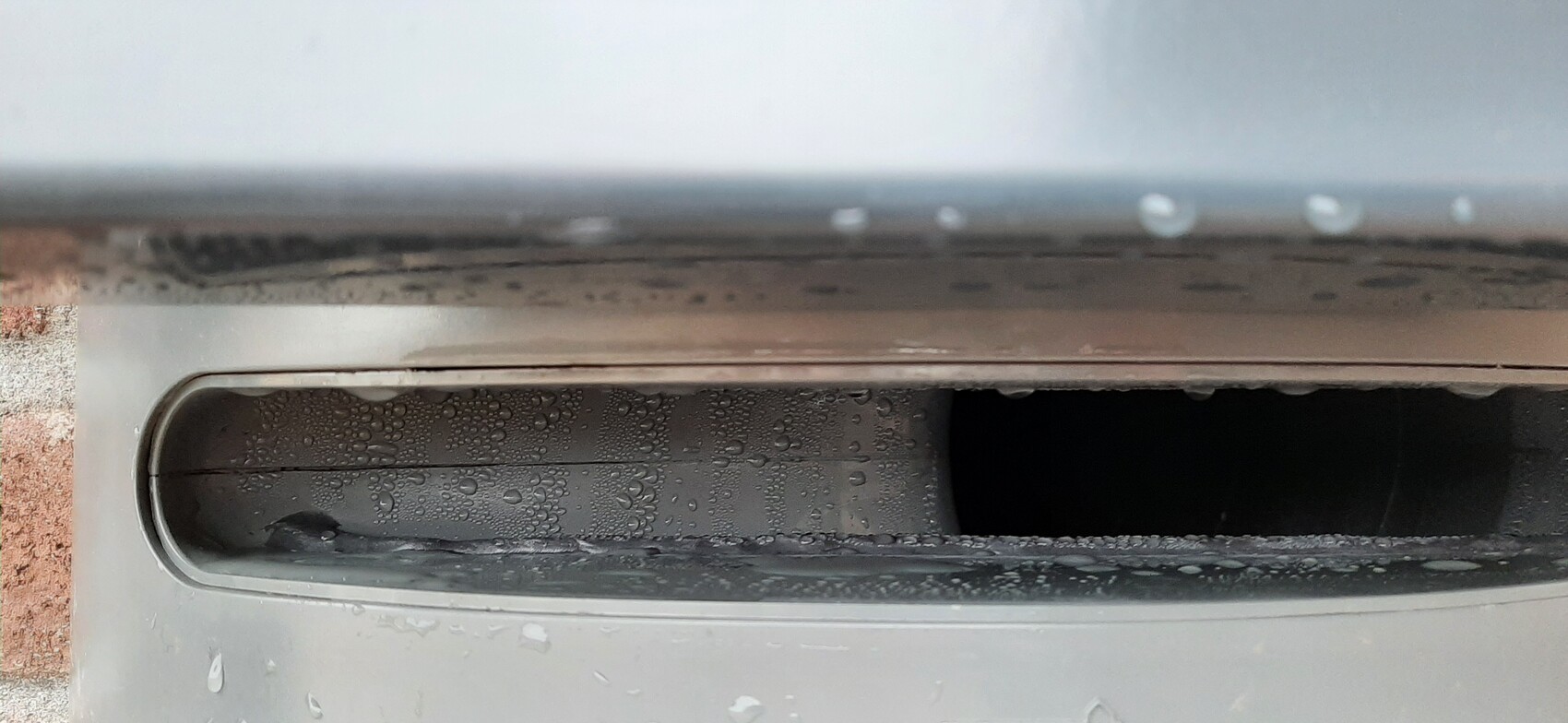
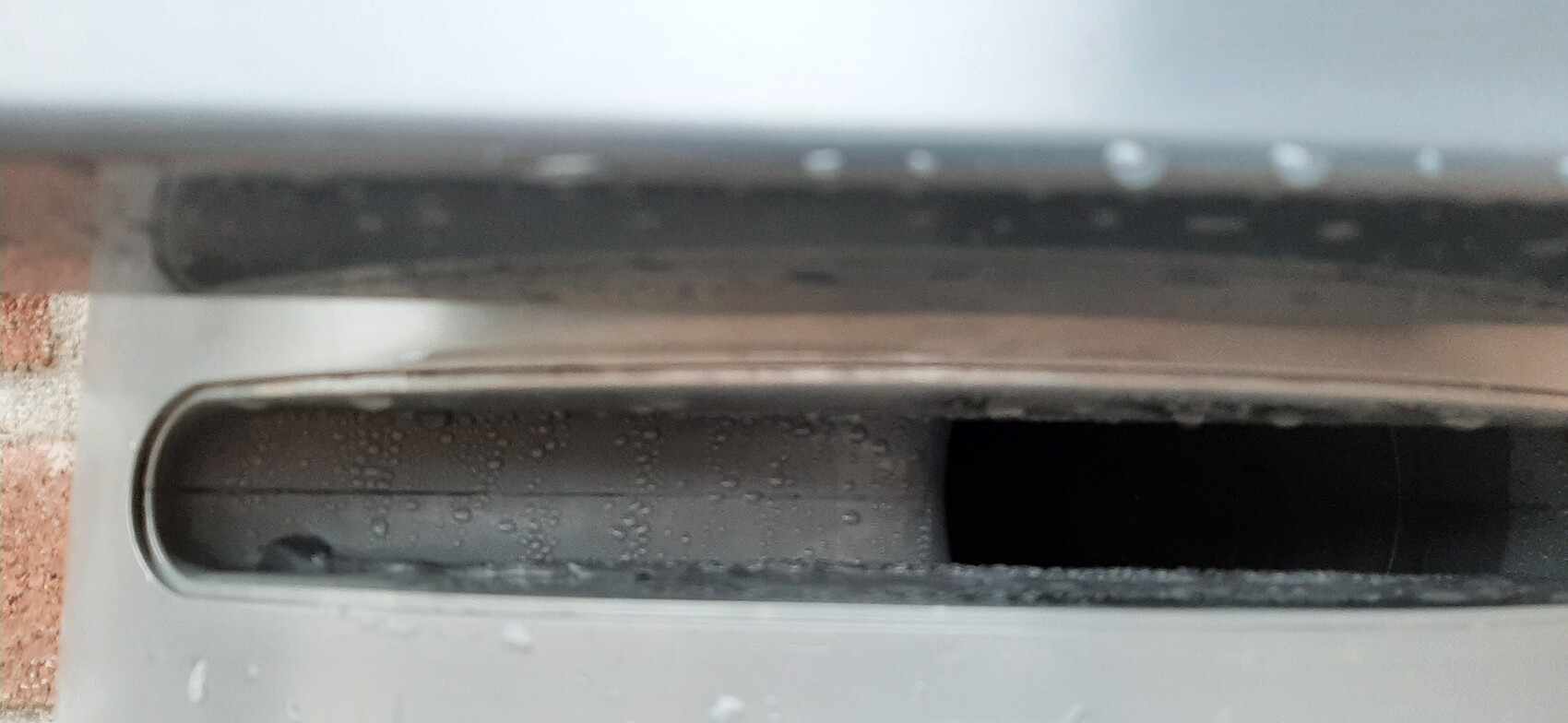
About half a liter of water accumulates quickly, which then collects inside the duct. I only noticed this when it started dripping in the garage (where the duct meets the exterior wall).
At first, I thought it was rainwater because there was so much water inside the duct. In a test, water also entered the duct when I poured water over the cover from above. I therefore screwed a metal sheet over it. The metal sheet extends outward to prevent driving rain from entering.
I’ve also already screwed the cover at an angle so most of the water runs off the front. Inside the cover, I applied a thin silicone bead to prevent water from flowing back.
Of course, the manufacturer has already been involved here. They said they had never seen anything like this before.
No condensation forms on the duct itself; it is always dry when I check. It’s the exhaust hood that causes the condensation.
What are your ideas? Different exhaust hood? Do you know of anything like this? The system is from Vallox.
The part is made of plastic. Here are some more pictures. You can see that a lot of water gathers in the front area because I attached the part at a slight angle. Behind it is my thin silicone cord inserted. You can also see that condensation collects on the left and right at the back, which can only flow back due to the shape. The water standing at the front edge also flows back into the pipe when the part is installed normally. It flows to the left and down the slope at the front into the pipe. The pipe itself is dry. Currently, there is only a small amount of water in the pipe. But you can already see how high the water usually stands there.
I also included a picture from the inside. What are your ideas for adding a drain there? Unfortunately, I am in the garage for this, where I currently have no access point to work on.
My conclusion so far: According to Vallox planning, the water should apparently always flow back into the pipe. We are missing the drain for that. Or what do you think?
P.S. @Mycraft do you work for Vallox?
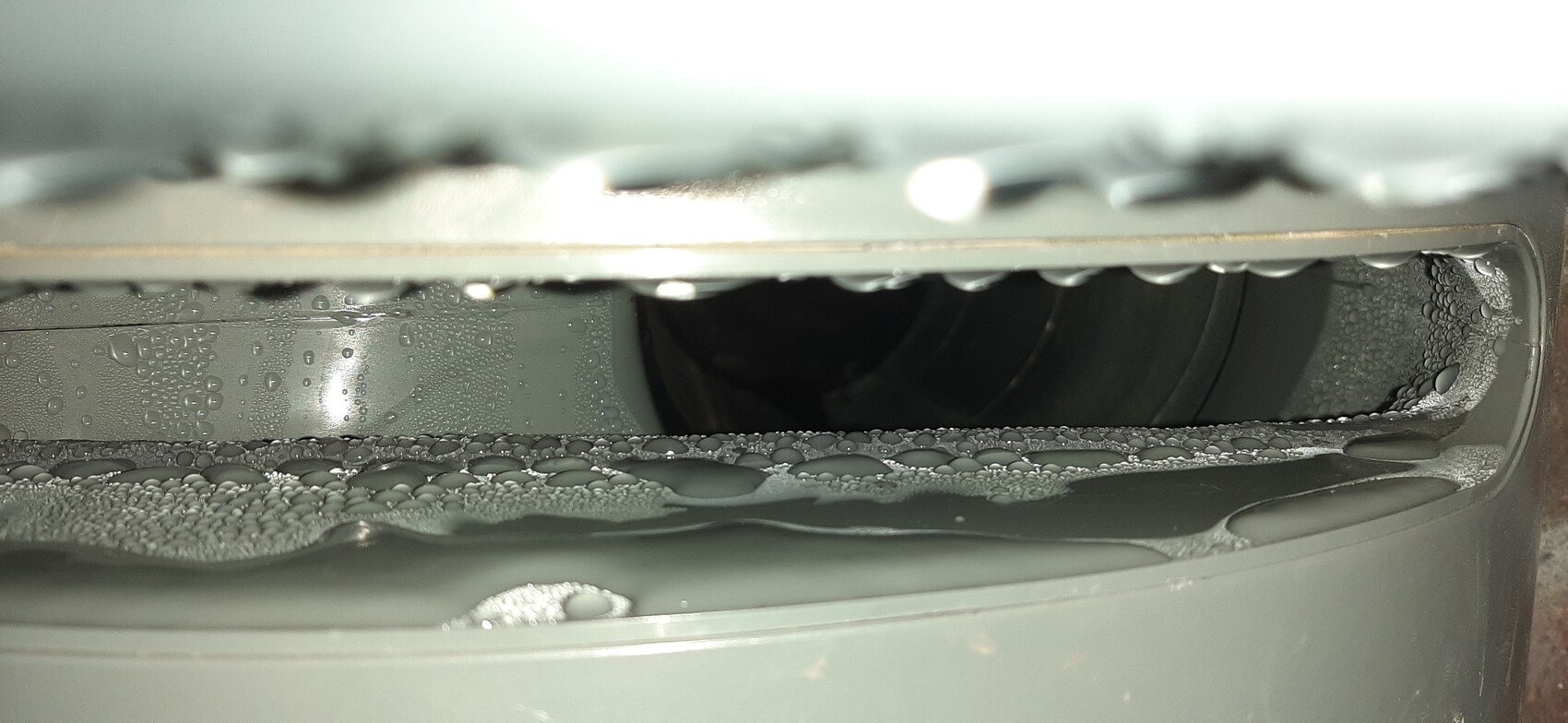

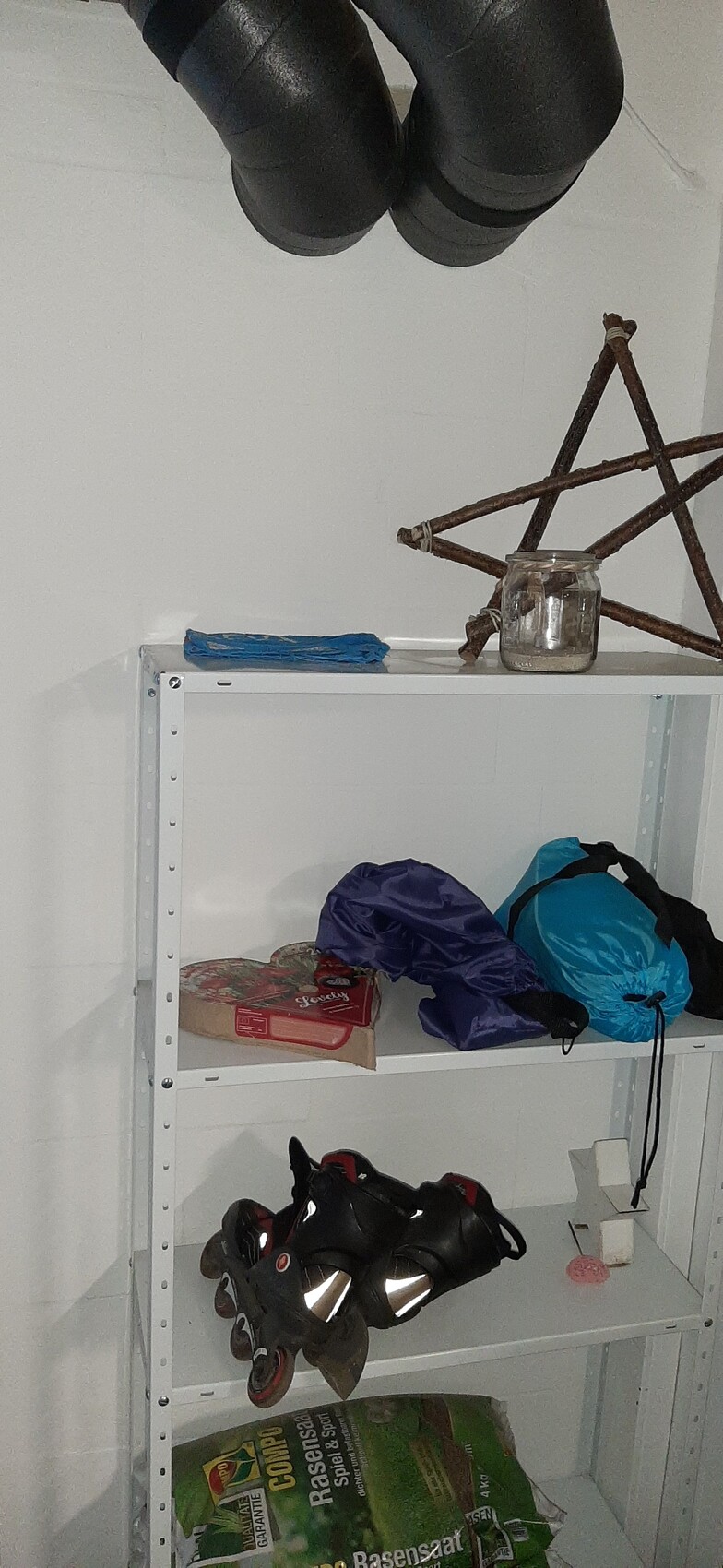
I also included a picture from the inside. What are your ideas for adding a drain there? Unfortunately, I am in the garage for this, where I currently have no access point to work on.
My conclusion so far: According to Vallox planning, the water should apparently always flow back into the pipe. We are missing the drain for that. Or what do you think?
P.S. @Mycraft do you work for Vallox?

Mycraft schrieb:
No, I don’t work for Vallox. But I am quite familiar with the units.
Wait a few years and the problem will likely resolve itself. Your building is simply still too damp. Or, more likely, it will disappear soon with the warmer temperatures approaching.That has nothing to do with it. There is a defect present, regardless of the building’s age.Similar topics