
Hello everyone,
Our construction project is almost finished, and we will soon start working on the garden.
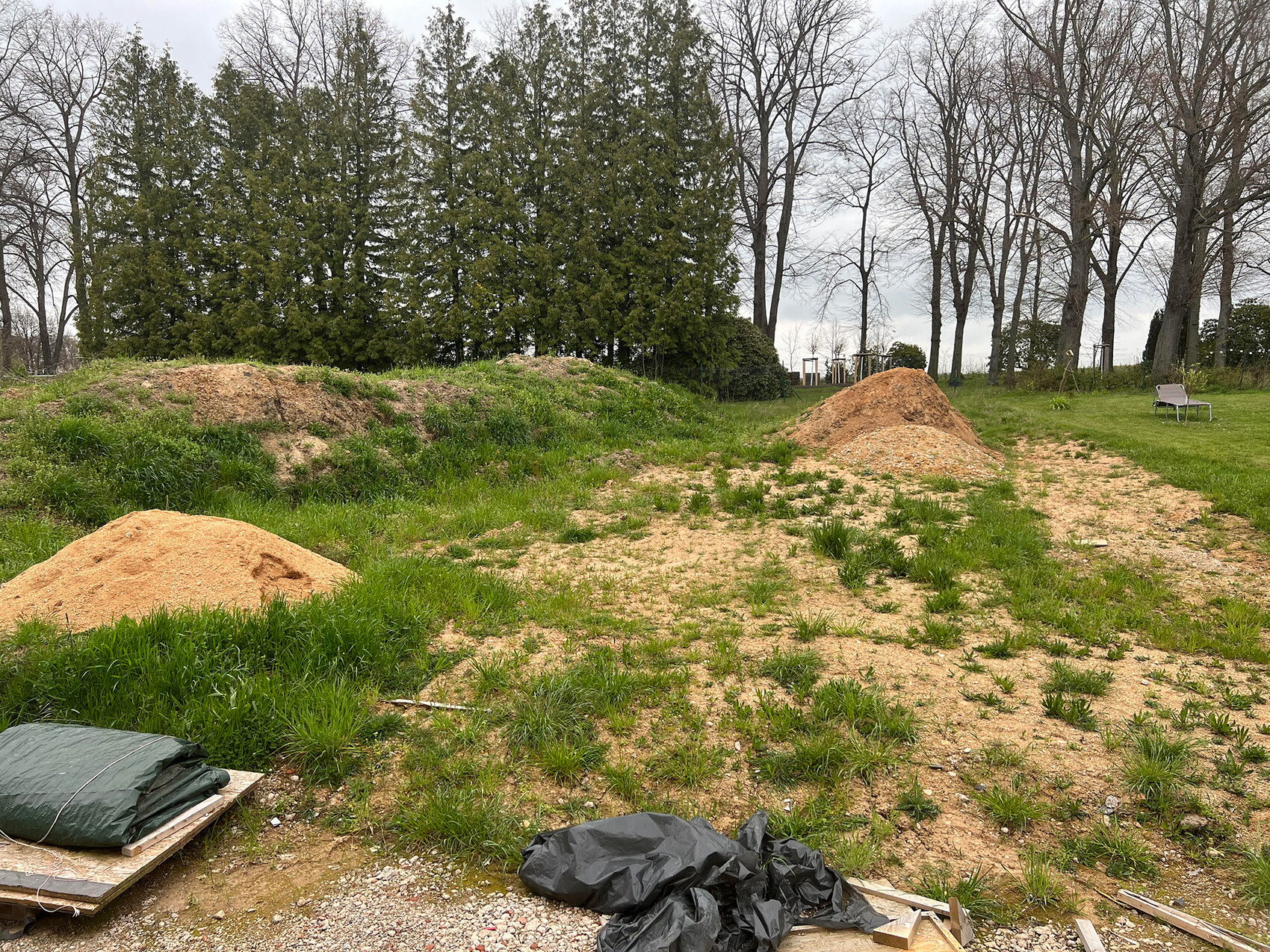
Due to the installation of our trench collector system and using the garden area as temporary storage for topsoil and other excavated material, our future garden is currently in a rather unfortunate state (see attached image).
Basically, the topsoil has been removed almost entirely. Because of the trench collector, there are now some settlements and cracks that need to be leveled out. Unfortunately, the topsoil was not handled very carefully during removal and temporary storage, so it’s certainly not all sorted properly. The soil here is generally very clayey (slope clay).
I would like to spread out the existing excavated material first and create as even a surface as possible, especially towards the house. Whatever cannot be spread will then have to be moved in front of the house to shape the front yard there.
I assume it would be wise to sift the soil. Should I do anything else, like mixing in additives? Should I basically till the soil? Can or should I use a lawn roller afterward, or would that be counterproductive since the soil is already partly compacted by construction vehicles and excavators?
I would appreciate it if someone had a simple how-to guide on how to create a proper foundation from the current state for later use as a garden (mainly kitchen garden, partly fruit trees, also some natural meadow). Please explain like I’m a complete beginner, as to be honest, I’m not quite sure where to start.
It doesn’t have to be “quick”; theoretically, we could even let it rest for one growing season if that would be beneficial for its future use.
Thanks for your time!
Our construction project is almost finished, and we will soon start working on the garden.
Due to the installation of our trench collector system and using the garden area as temporary storage for topsoil and other excavated material, our future garden is currently in a rather unfortunate state (see attached image).
Basically, the topsoil has been removed almost entirely. Because of the trench collector, there are now some settlements and cracks that need to be leveled out. Unfortunately, the topsoil was not handled very carefully during removal and temporary storage, so it’s certainly not all sorted properly. The soil here is generally very clayey (slope clay).
I would like to spread out the existing excavated material first and create as even a surface as possible, especially towards the house. Whatever cannot be spread will then have to be moved in front of the house to shape the front yard there.
I assume it would be wise to sift the soil. Should I do anything else, like mixing in additives? Should I basically till the soil? Can or should I use a lawn roller afterward, or would that be counterproductive since the soil is already partly compacted by construction vehicles and excavators?
I would appreciate it if someone had a simple how-to guide on how to create a proper foundation from the current state for later use as a garden (mainly kitchen garden, partly fruit trees, also some natural meadow). Please explain like I’m a complete beginner, as to be honest, I’m not quite sure where to start.
It doesn’t have to be “quick”; theoretically, we could even let it rest for one growing season if that would be beneficial for its future use.
Thanks for your time!
Time is definitely on your side.
I would start by clearing everything from the site that you don’t want there.
Then spread the soil. The rockier it is, the deeper you’ll need to remove weeds.
Apply a green manure cover crop, mow it before it flowers, and leave it as mulch.
Where soil is missing, add good topsoil.
In the area around the collector, the soil may settle somewhat over the next few months.
While the ground is settling, you can start installing paths, terraces, and similar features.
In autumn, you can plant trees and shrubs and establish the lawn.
In late winter or spring next year, you can prepare the vegetable beds. I can recommend the compost beds from Wurzelwerk for this. Overall, I find their videos very helpful for home gardeners.
I would start by clearing everything from the site that you don’t want there.
Then spread the soil. The rockier it is, the deeper you’ll need to remove weeds.
Apply a green manure cover crop, mow it before it flowers, and leave it as mulch.
Where soil is missing, add good topsoil.
In the area around the collector, the soil may settle somewhat over the next few months.
While the ground is settling, you can start installing paths, terraces, and similar features.
In autumn, you can plant trees and shrubs and establish the lawn.
In late winter or spring next year, you can prepare the vegetable beds. I can recommend the compost beds from Wurzelwerk for this. Overall, I find their videos very helpful for home gardeners.
W
WilderSueden3 May 2023 12:05If you have time, make use of it. I would spread the soil here once, level it superficially with a rake, and then break it up initially with a deep-rooting green manure crop like lupines. After they have done their work, till the soil once and allow the weeds in the vegetable garden to germinate several times. Meadow and grass areas can also be seeded without waiting for weed growth (look up the Burri method). Settling will likely continue over the years, so either keep making adjustments or accept that a natural garden is not like a golf lawn.
The lawn roller compacts only slightly. To be honest, I was a bit disappointed with the 70-kilogram (154-pound) roller because I still left some footprints afterward, and small bumps were not smoothed out well. After tilling, however, I would definitely recommend using it for recompaction if you plan to access the area again soon.
The lawn roller compacts only slightly. To be honest, I was a bit disappointed with the 70-kilogram (154-pound) roller because I still left some footprints afterward, and small bumps were not smoothed out well. After tilling, however, I would definitely recommend using it for recompaction if you plan to access the area again soon.
Do you already have a rough plan of where things should go?
In hindsight, I realize I would have preferred to have a slightly hilly area towards the back on one side, so that the planting looks a bit more natural and less dense. Maybe you could model something similar with the poor soil (gravel). Otherwise, the poor soil is well suited for Mediterranean herbs.
In hindsight, I realize I would have preferred to have a slightly hilly area towards the back on one side, so that the planting looks a bit more natural and less dense. Maybe you could model something similar with the poor soil (gravel). Otherwise, the poor soil is well suited for Mediterranean herbs.

W
WilderSueden3 May 2023 21:37Yes, planning is important. How much soil do you have to spread, and how three-dimensional do you want the garden to be? We ended up with much more soil than planned, and still have a huge pile left. Fortunately, the neighbors took it.
Similar topics