
ᐅ Have underfloor heating installed beneath existing wooden floorboards.
Created on: 30 Dec 2023 13:00
E
EutinerWe have an older building from 1934 with beautiful pitch pine floorboards on the ground floor and want to install underfloor heating using the milling-in method. Does anyone have experience with removing and relaying the floorboards after installing the underfloor heating? Is this even possible without increasing the overall floor height? Thanks for any advice!
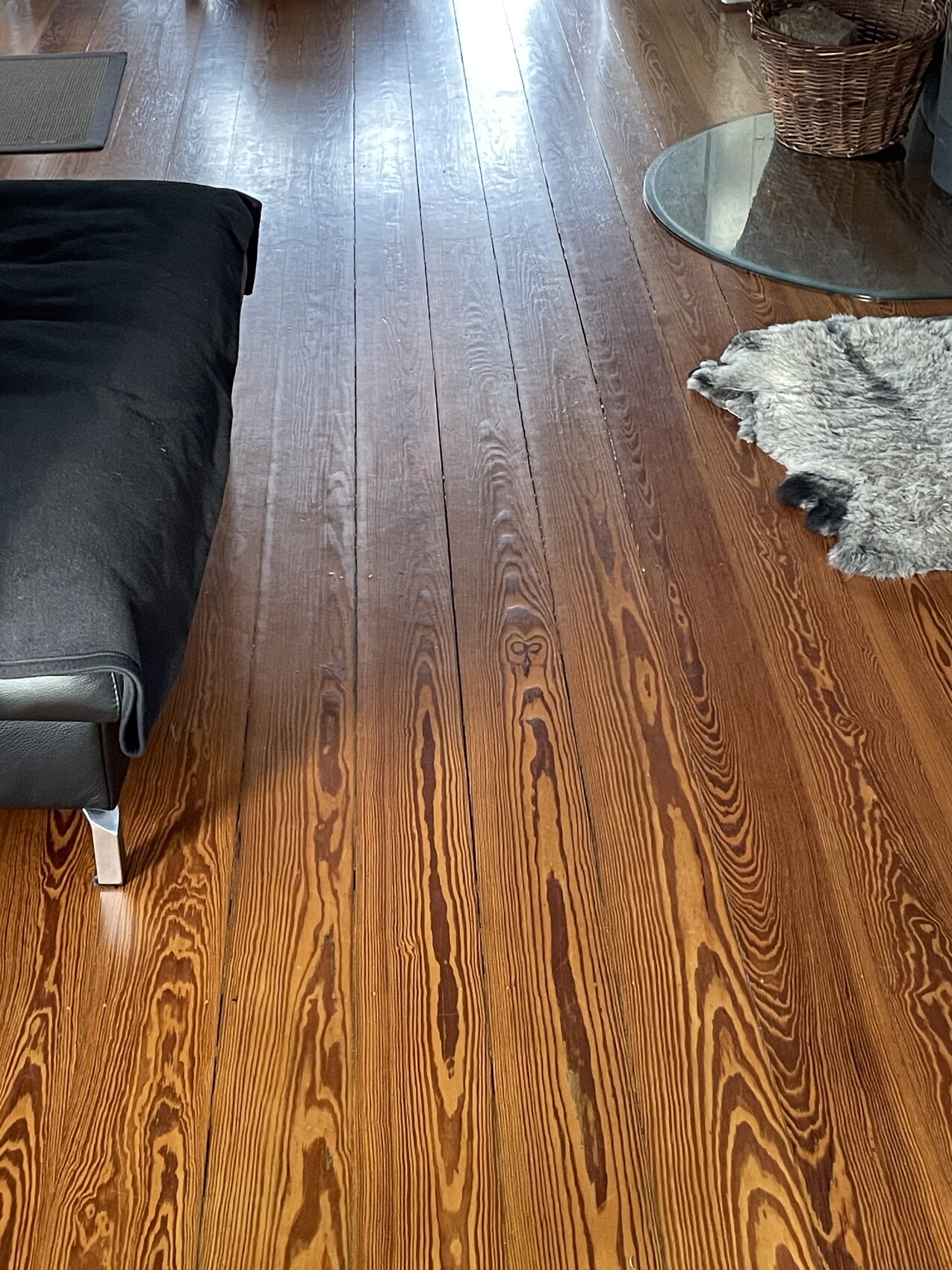

The milling method would imply that there is a screed underneath the floorboards. This would mean the floorboards are glued down and most likely cannot be removed without damage. However, in the picture, the floorboards appear to be nailed. This suggests there must be some kind of wooden substructure. Depending on the construction of this subfloor and the thickness of the filler material within, a renovation system such as one from Ripal can allow for underfloor heating without increasing the floor height. From my own experience, I can say that removing floorboards without causing damage requires very careful and skilled craftsmen.
The floorboards from 1937 definitely do not have a screed underneath.
The floorboards are nailed to joists, which usually rest on a sand bed.
In some cases, this setup was or is ventilated, recognizable by small openings about the size of a Din A6 sheet with mesh coverings, located on the exterior wall near floor level.
As the owner of an even older house with similar floorboards, I can assure you that you won’t be able to remove the floorboards without causing damage.
If the floor is stable, does not wobble, or sag, I would recommend leaving it as is.
Instead of underfloor heating, you could use fan-assisted convectors in these rooms (e.g., Daikin Altherma HPW). They operate with supply temperatures of 30–35°C (86–95°F) and can be run without an additional mixing valve alongside underfloor heating in the other rooms via a heating circuit distributor, if you plan to install a heat pump.
Make sure to seal the ventilation openings on the outside with mortar, otherwise you may have cold feet during winter.
The floorboards are nailed to joists, which usually rest on a sand bed.
In some cases, this setup was or is ventilated, recognizable by small openings about the size of a Din A6 sheet with mesh coverings, located on the exterior wall near floor level.
As the owner of an even older house with similar floorboards, I can assure you that you won’t be able to remove the floorboards without causing damage.
If the floor is stable, does not wobble, or sag, I would recommend leaving it as is.
Instead of underfloor heating, you could use fan-assisted convectors in these rooms (e.g., Daikin Altherma HPW). They operate with supply temperatures of 30–35°C (86–95°F) and can be run without an additional mixing valve alongside underfloor heating in the other rooms via a heating circuit distributor, if you plan to install a heat pump.
Make sure to seal the ventilation openings on the outside with mortar, otherwise you may have cold feet during winter.
dertill schrieb:
The floorboards from 1937 definitely didn’t have any screed underneath.My house dates back to 1914, and in some parts of the ground floor, there was a kind of screed beneath the floorboards. It wasn’t concrete screed but rather a mixture of sawdust, sand, glue, and who knows what else. Removing it was definitely not easy. The floorboards in that area were actually glued down, but not fully adhered across the entire surface. The heritage authorities’ wish to keep and reinstall the original floorboards was quickly abandoned.
The rest of the floor buildup was as you described, with sand used as a fill layer. This setup can easily accommodate underfloor heating.
Eutiner schrieb:
Thanks for any advice! I just noticed your forum name. If the house is in Eutin, and you generally need some advice on renovation or similar topics, get in touch with the local utility company and ask for Till, or check the website for my direct extension.
(I won’t be back in the office until January 8th.)
Similar topics