
M
MaxMustaman9229 Jul 2022 19:54Good evening,
after extensive paving work and laying of stone slabs, we would like to fill the remaining small joints with a suitable material to minimize weed growth. We found online that there is a so-called "No Grow" joint filler sand that is supposed to prevent weeds from growing.
Therefore the question: Is something like this recommended? Has anyone here possibly had experience with it? Or are there better solutions?
after extensive paving work and laying of stone slabs, we would like to fill the remaining small joints with a suitable material to minimize weed growth. We found online that there is a so-called "No Grow" joint filler sand that is supposed to prevent weeds from growing.
Therefore the question: Is something like this recommended? Has anyone here possibly had experience with it? Or are there better solutions?
 bauenmk202030 Jul 2022 08:19
I share the same question. What width are your joints? We have 3mm (1/8 inch) between the tiles, and the manufacturer datasheets usually specify a minimum width of 5mm (3/16 inch). Currently, I am using fine gravel, but I am open to a bonded joint.
B
Benutzer 100130 Jul 2022 08:48Self-adhesive joint sand is helpful and available from many manufacturers; I can see a direct comparison right outside my door.
I am allowed to scratch it because the neighbor used the joint sand with a binder.
I will definitely do the same in due course.
I am allowed to scratch it because the neighbor used the joint sand with a binder.
I will definitely do the same in due course.
H
Hutchinson12330 Jul 2022 09:10I just applied the No Grow Sand on our entrance pathway.
The paving is 20 years old, and the joints were no longer well filled, which made it a nightmare for weeds.
The joint sand was easy to work with, and the visual result is convincing. In some spots, a few weeds are still coming back, BUT I probably didn’t remove the old joint material deeply enough in some areas. It should be about 2-3cm (1-1.2 inches) to let the sand work properly.
I’ll keep an eye on it and initially pull out any new weeds regularly. Otherwise, I’ll clean out the joints again and try another round.
However, I’m sure the result would be worse without this joint sand.
After the first rain, it settles a bit, so a follow-up application is necessary.
The material swells slightly when it comes into contact with water, so it should definitely be applied dry to allow it to settle nicely deep into the joints.
When buying from the hardware store, make sure it’s been stored indoors.
That’s how I got mine at OBI — everything was fine.
Later, I bought a bag for my mother at toom (stored outside), and it was at least 50% damp, making it much harder to apply.
The packaging itself didn’t show any obvious damage.
I suspect this product is highly hygroscopic due to its fine grain size, similar to salt, for example.
Another advantage:
It seems to work quite well against ants. At the front part of the path, ants had spread widely in the joints. I filled their “territory” as well. After a day, they had pushed the material down a bit again.
I reapplied it directly, about twice. After that, the ants probably got fed up and gave up 😉
I guess the stone dust is a bit too heavy for the ants, making it too exhausting for them to keep fighting it, so they eventually move elsewhere.
PS:
It works best when brushed in with a soft broom, so avoid using a typical street broom.
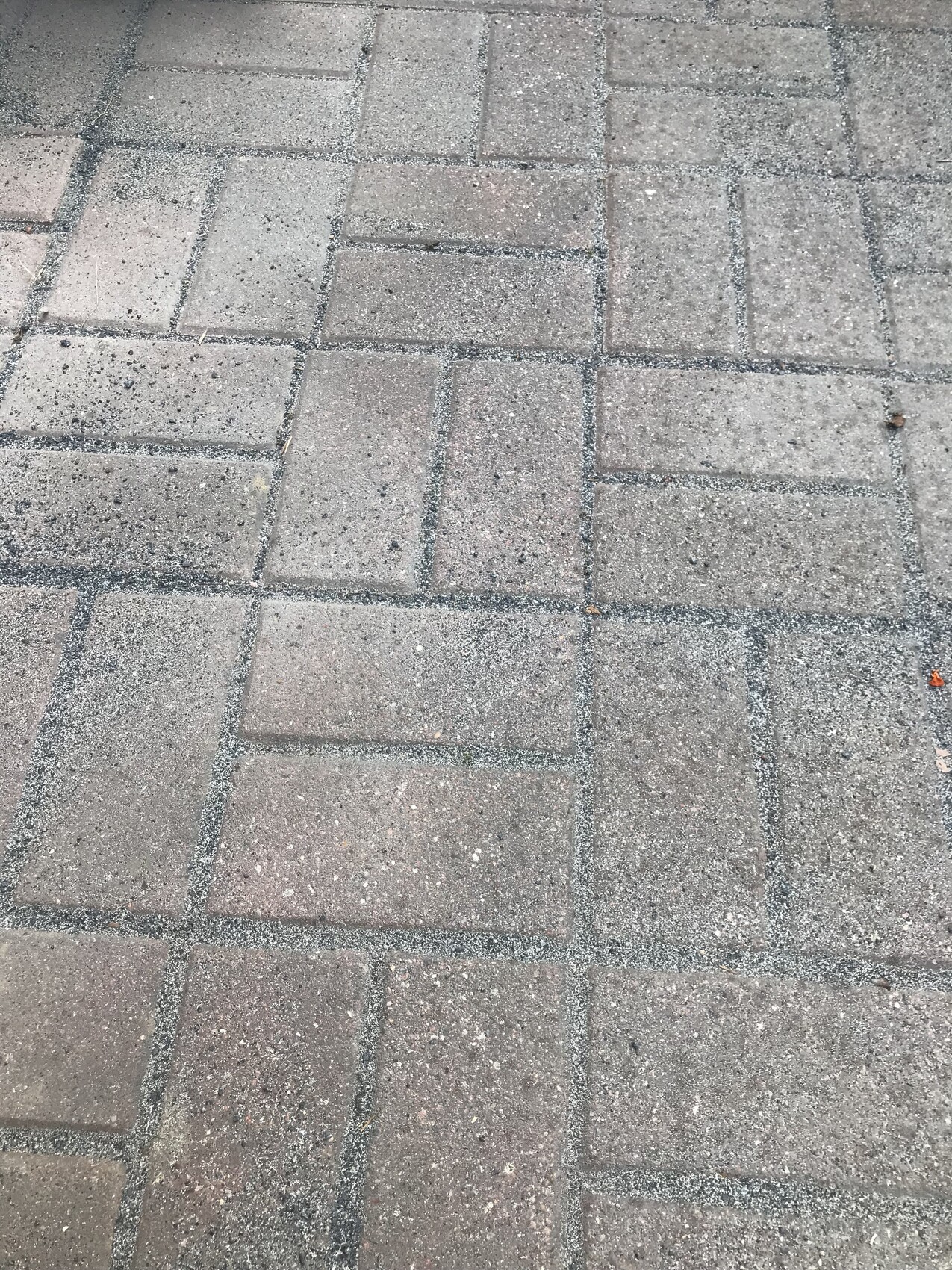
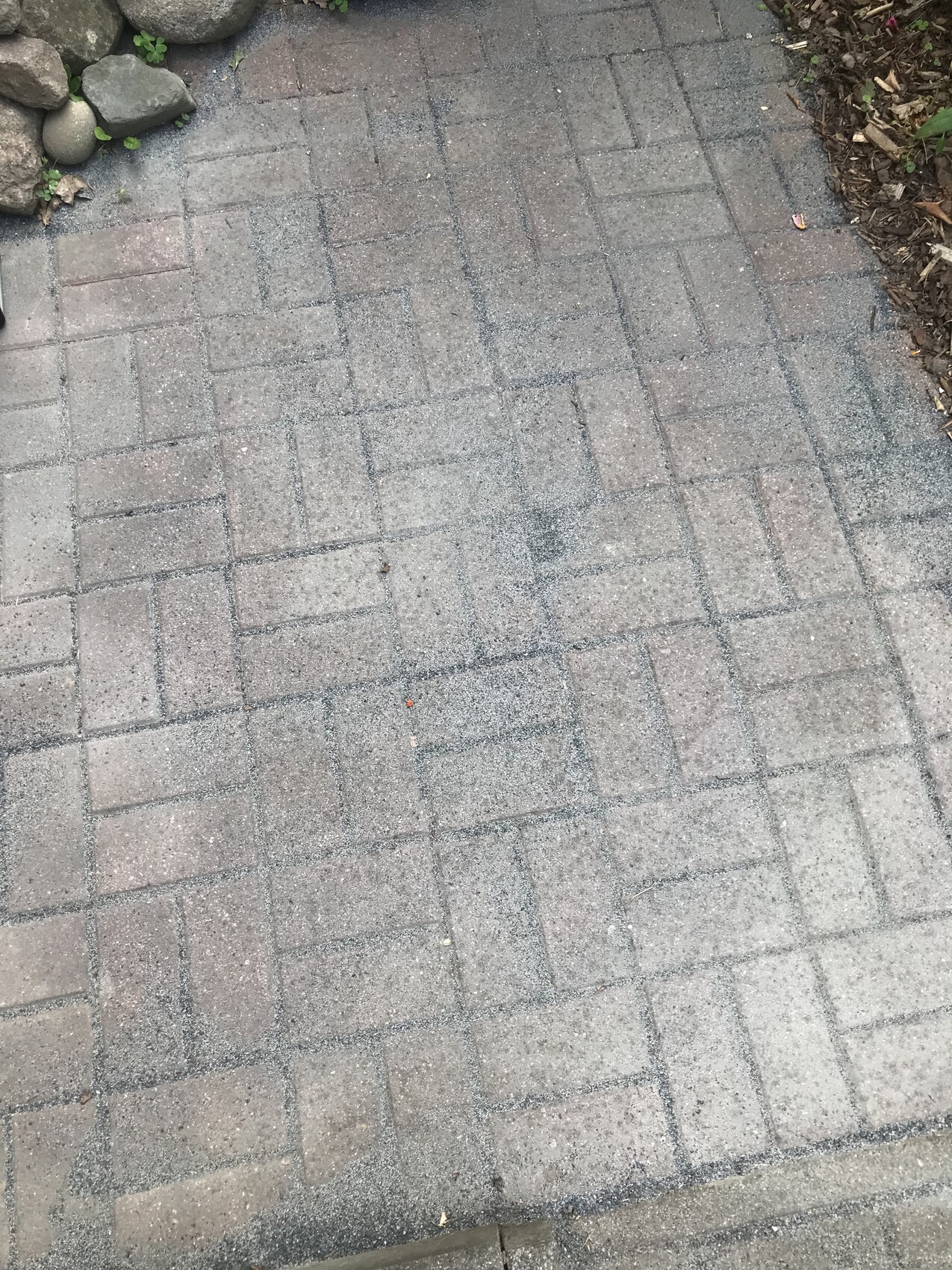
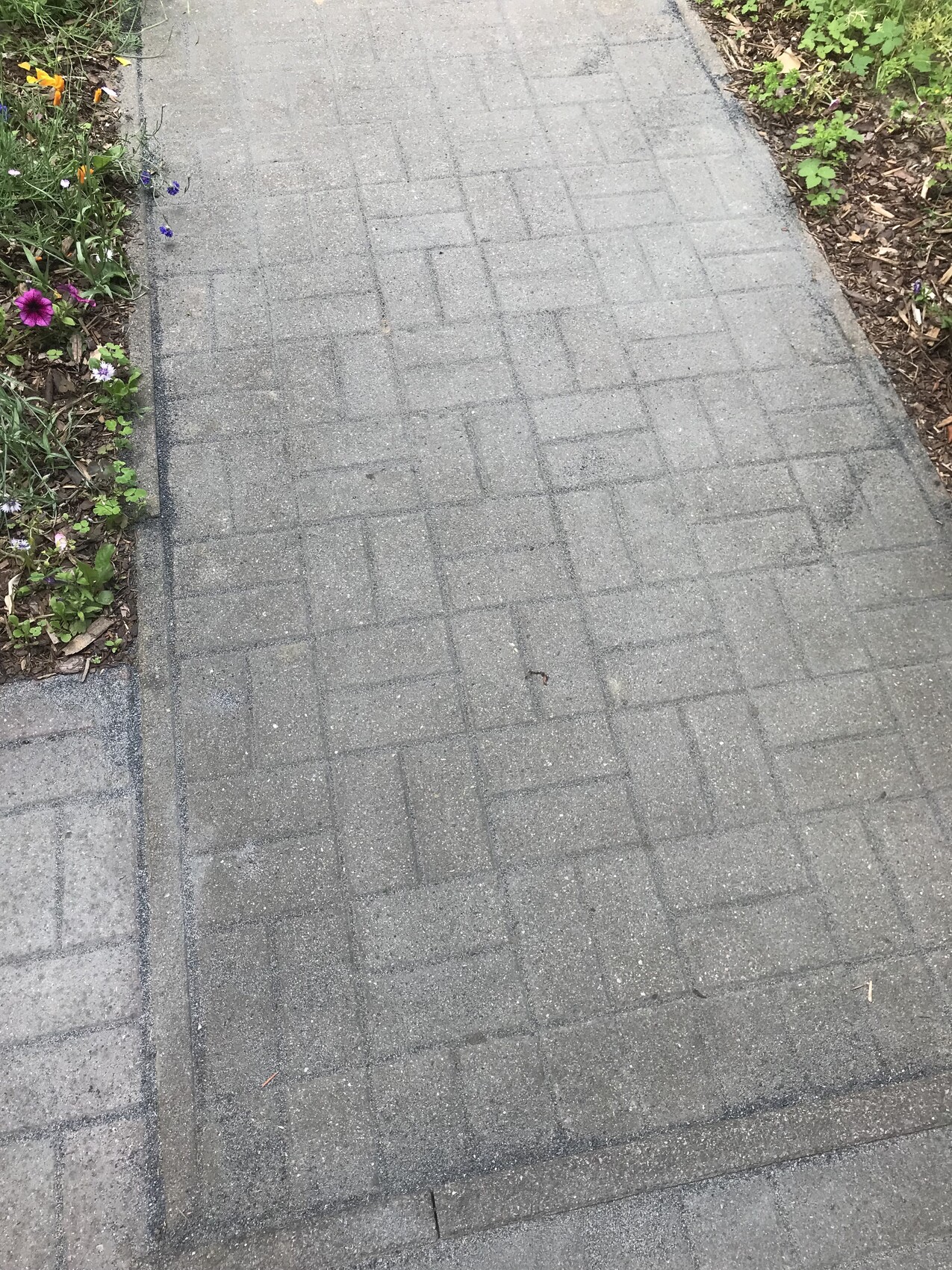
The paving is 20 years old, and the joints were no longer well filled, which made it a nightmare for weeds.
The joint sand was easy to work with, and the visual result is convincing. In some spots, a few weeds are still coming back, BUT I probably didn’t remove the old joint material deeply enough in some areas. It should be about 2-3cm (1-1.2 inches) to let the sand work properly.
I’ll keep an eye on it and initially pull out any new weeds regularly. Otherwise, I’ll clean out the joints again and try another round.
However, I’m sure the result would be worse without this joint sand.
After the first rain, it settles a bit, so a follow-up application is necessary.
The material swells slightly when it comes into contact with water, so it should definitely be applied dry to allow it to settle nicely deep into the joints.
When buying from the hardware store, make sure it’s been stored indoors.
That’s how I got mine at OBI — everything was fine.
Later, I bought a bag for my mother at toom (stored outside), and it was at least 50% damp, making it much harder to apply.
The packaging itself didn’t show any obvious damage.
I suspect this product is highly hygroscopic due to its fine grain size, similar to salt, for example.
Another advantage:
It seems to work quite well against ants. At the front part of the path, ants had spread widely in the joints. I filled their “territory” as well. After a day, they had pushed the material down a bit again.
I reapplied it directly, about twice. After that, the ants probably got fed up and gave up 😉
I guess the stone dust is a bit too heavy for the ants, making it too exhausting for them to keep fighting it, so they eventually move elsewhere.
PS:
It works best when brushed in with a soft broom, so avoid using a typical street broom.

H
Hutchinson12330 Jul 2022 13:43seat88 schrieb:
I would always choose crushed stone sand or stone dust. When mixed with water, it hardens solid, preventing any growth. As far as I know, Dansand No Grow is exactly that.
It doesn’t become rock hard but is broom hard.
However, there seems to be a stronger version with a binding agent.
Similar topics