
ᐅ Light streaks on fresh interior plaster – potential future cracks?
Created on: 5 Mar 2022 20:47
M
MiCasaEsSuCasa
Good evening everyone!
Our interior plaster has been drying for about 2 weeks, and relatively soon after that, these light lines appeared. (See photos) Diagonally at all corners and around all windows, but also on walls without windows, where they are more horizontal. So basically, every plastered wall now has these lines. At the moment, they are only lines, not cracks. I assume these might develop into cracks eventually, or is that not necessarily the case? Could this be caused by missing reinforcing mesh angles?
Have a good evening everyone, and thank you for your answers!
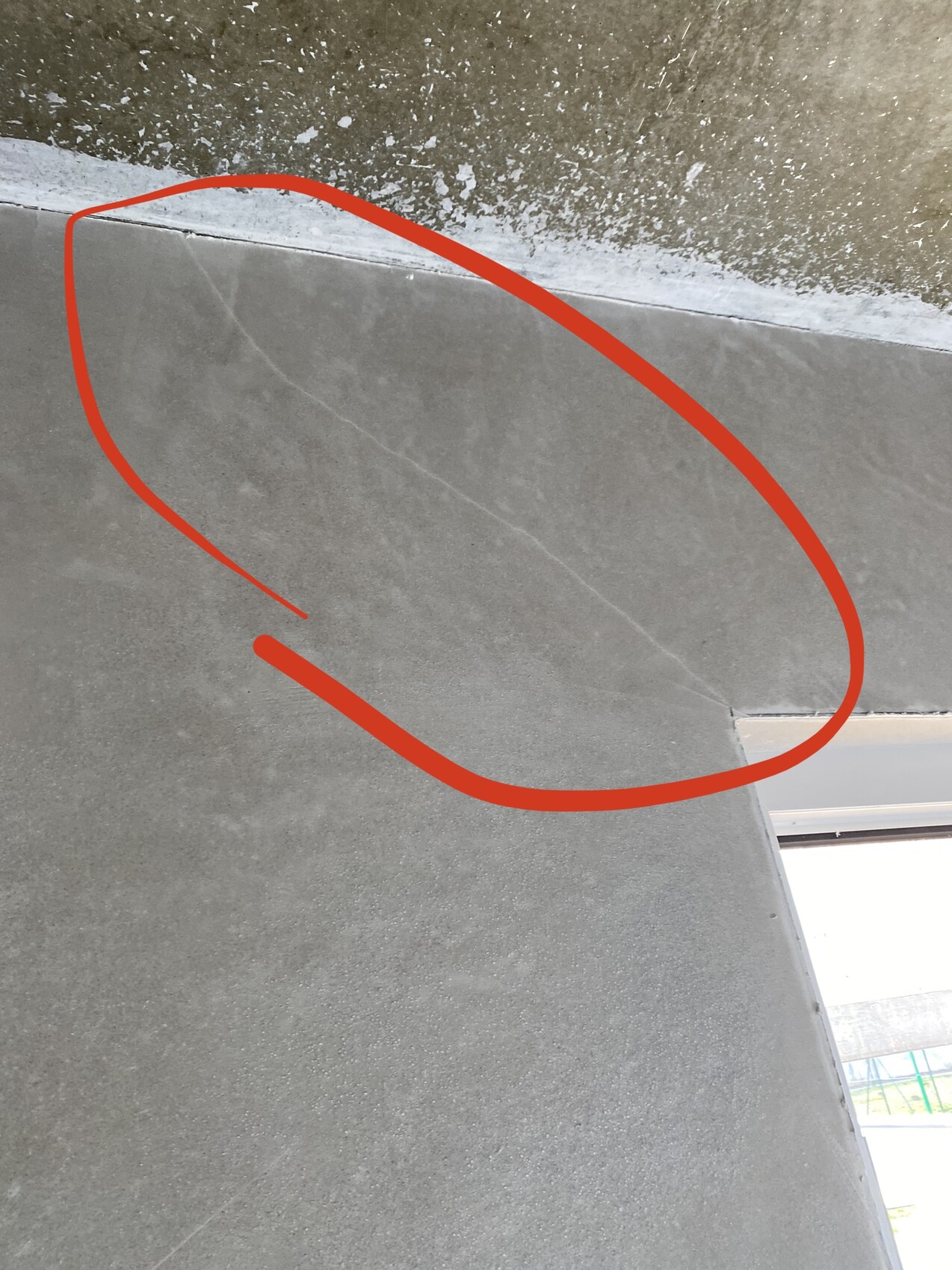
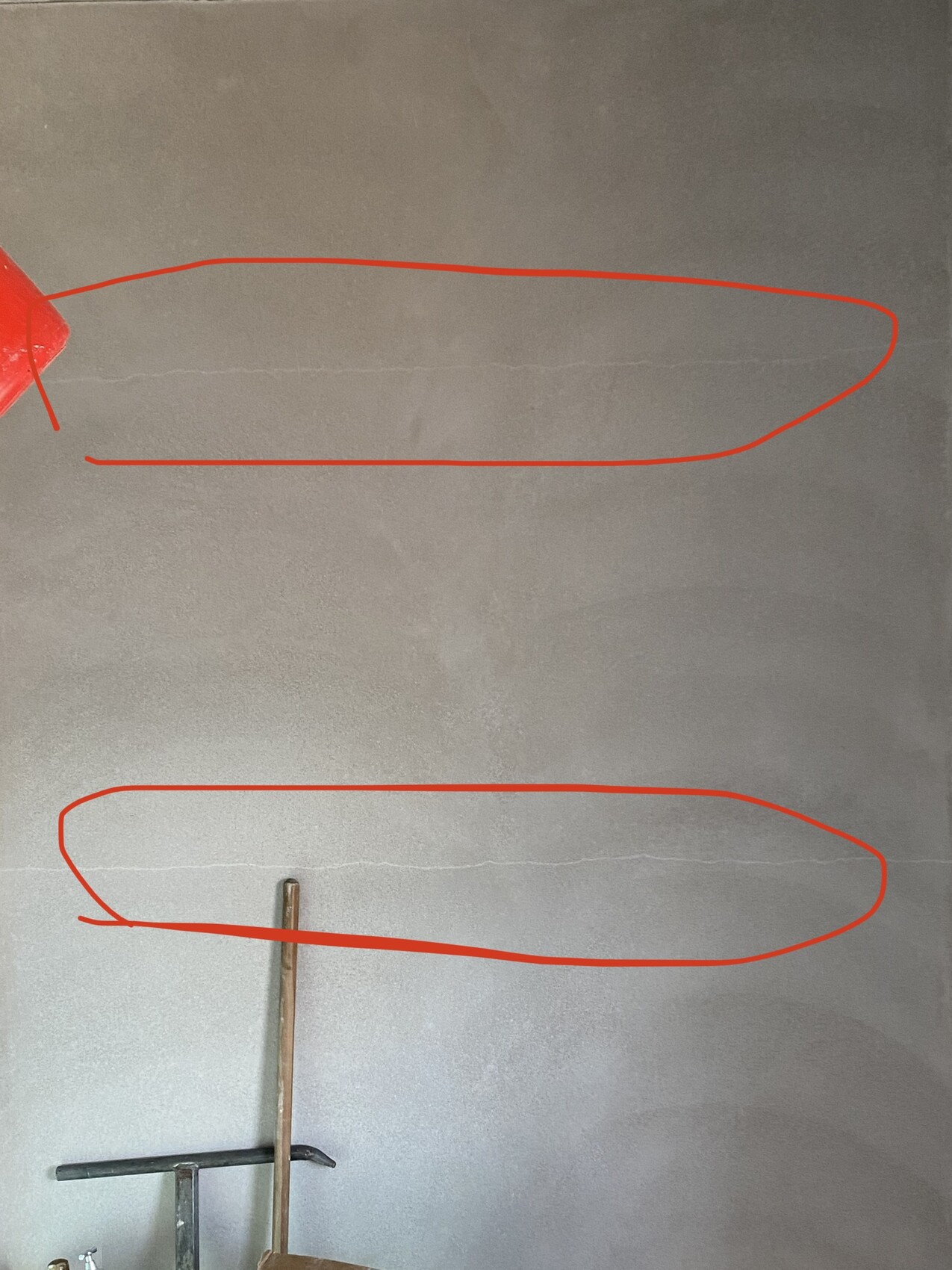
Our interior plaster has been drying for about 2 weeks, and relatively soon after that, these light lines appeared. (See photos) Diagonally at all corners and around all windows, but also on walls without windows, where they are more horizontal. So basically, every plastered wall now has these lines. At the moment, they are only lines, not cracks. I assume these might develop into cracks eventually, or is that not necessarily the case? Could this be caused by missing reinforcing mesh angles?
Have a good evening everyone, and thank you for your answers!
P
Peter Pohlmann30 Mar 2022 22:37Plaster cracks are completely normal. When a reinforcing mesh is embedded, it relieves the tension and results in fewer cracks. This is not caused by drying too quickly; the cracks are simply part of the process.
Cracking above windows is the classic example. Therefore, at least a plaster mesh should be applied around the windows, mainly because of the different materials involved—lintel, masonry, etc.
Question: Was a reinforcing mesh embedded?
Unfortunately, modern construction methods no longer allow for natural drying. As a result, mold tends to develop due to excessive residual moisture inside the house. Gypsum plaster is especially prone to mold because it attracts moisture. In tightly insulated, airtight houses, where else should the moisture go? A natural indoor climate is often hard to find in modern homes.
From the looks of the photos, everything is still quite damp. The screed was also applied immediately. There are about 2,000 to 3,000 liters (500 to 800 gallons) of water inside the house! That simply takes time to dry.
If we get a few days of cold east wind, open all the windows and ventilate thoroughly, day and night. The cold wind will drive out the moisture. In summer, this wouldn’t work because the relative humidity is too high to dry things out.
Cracking above windows is the classic example. Therefore, at least a plaster mesh should be applied around the windows, mainly because of the different materials involved—lintel, masonry, etc.
Question: Was a reinforcing mesh embedded?
Unfortunately, modern construction methods no longer allow for natural drying. As a result, mold tends to develop due to excessive residual moisture inside the house. Gypsum plaster is especially prone to mold because it attracts moisture. In tightly insulated, airtight houses, where else should the moisture go? A natural indoor climate is often hard to find in modern homes.
From the looks of the photos, everything is still quite damp. The screed was also applied immediately. There are about 2,000 to 3,000 liters (500 to 800 gallons) of water inside the house! That simply takes time to dry.
If we get a few days of cold east wind, open all the windows and ventilate thoroughly, day and night. The cold wind will drive out the moisture. In summer, this wouldn’t work because the relative humidity is too high to dry things out.
M
MiCasaEsSuCasa30 Mar 2022 22:48Peter Pohlmann schrieb:
Plaster cracks are completely normal. When a reinforcing mesh is embedded, it relieves the tension and results in fewer cracks.
This has nothing to do with drying too quickly. The cracks are to be expected.
Cracking above the window is a classic issue. That’s why at least around the windows a plaster mesh should be installed, especially because of the different materials involved, such as the lintel, masonry, etc.
Question: Was a reinforcing mesh embedded?
Unfortunately, with modern construction methods, natural drying is often no longer allowed. As a result, mold develops due to excessive residual moisture inside the building.
Gypsum plaster, in particular, is prone to mold because it attracts moisture. Where else should the moisture go in tightly insulated houses? A natural indoor climate is usually hard to find in modern homes.
Judging by the pictures, everything still looks quite damp. The screed was also applied immediately. That means about 2,000–3,000 liters (500–800 gallons) of water inside the building! That takes time to dry out.
If we get a few days of cold easterly air, open all the windows and ventilate continuously, day and night. The cold wind will remove the moisture. This won’t dry out in summer as the humidity is simply too high. Yes, I share your concerns, especially all this before we can even start heating.
Unfortunately, the plaster mesh you mentioned was not installed…

If you cannot heat the space, unfortunately, ventilating alone won’t help much. Get dehumidifiers (or have them arranged). They consume electricity but protect your health.
By the way, gypsum is mineral-based and cannot develop mold. However, unlike lime or silicate, it is not strongly alkaline, so it does not prevent organic materials that adhere to it from molding. Additionally, it can deform if it becomes completely and excessively wet for too long. The drywall (gypsum board) was clearly installed too early. I would recommend removing the drywall first and then properly drying the building. Has the screed already been applied? If not, apply it first. When the screed drying process is underway and then the temperature-controlled drying phase follows, measure the air humidity everywhere with hygrometers. If the air humidity at 20°C (68°F) before morning ventilation does not exceed 60%, only then install the drywall. What does your building inspector or expert say?
By the way, gypsum is mineral-based and cannot develop mold. However, unlike lime or silicate, it is not strongly alkaline, so it does not prevent organic materials that adhere to it from molding. Additionally, it can deform if it becomes completely and excessively wet for too long. The drywall (gypsum board) was clearly installed too early. I would recommend removing the drywall first and then properly drying the building. Has the screed already been applied? If not, apply it first. When the screed drying process is underway and then the temperature-controlled drying phase follows, measure the air humidity everywhere with hygrometers. If the air humidity at 20°C (68°F) before morning ventilation does not exceed 60%, only then install the drywall. What does your building inspector or expert say?
P
Peter Pohlmann30 Mar 2022 23:01Reinforcing mesh is generally embedded in exterior walls, whether you use lime-cement plaster or reinforcing plaster with an external insulation system (ETICS). Inside the house, it is less common.
Since I applied all the plaster myself, I also incorporated plaster mesh. Covering 100 square meters costs about 90 euros. It’s a minimal expense. This way, nothing will crack.
However, it’s not absolutely necessary. If cracks appear in the plaster, you can apply crack-bridging fleece tape and then either paint over it or finish it with textured paint. Alternatively, you can apply fleece wallpaper, and the cracks will no longer be visible.
Therefore, let the plaster dry properly until all cracks have appeared. This can take several weeks or even months. After that, you can fill the cracks with slurry if you wish.
Since I applied all the plaster myself, I also incorporated plaster mesh. Covering 100 square meters costs about 90 euros. It’s a minimal expense. This way, nothing will crack.
However, it’s not absolutely necessary. If cracks appear in the plaster, you can apply crack-bridging fleece tape and then either paint over it or finish it with textured paint. Alternatively, you can apply fleece wallpaper, and the cracks will no longer be visible.
Therefore, let the plaster dry properly until all cracks have appeared. This can take several weeks or even months. After that, you can fill the cracks with slurry if you wish.
P
Peter Pohlmann30 Mar 2022 23:05All windows still open today. We have a few days of dry, cold easterly air now. It dries out more than any construction dryer. Free of charge.
The nights are cold with correspondingly low humidity, ideally with frost as well. This really helps a lot, and these will be the last drying nights until next winter.
The nights are cold with correspondingly low humidity, ideally with frost as well. This really helps a lot, and these will be the last drying nights until next winter.
 Winniefred30 Mar 2022 23:07
I find that interesting. We plastered several rooms ourselves and never experienced such problems. Neither with gypsum plaster nor with lime-cement plaster, and we only installed mesh over wooden beams. And you think this is due to the lack of heating? We didn’t have new screed, or if we did, it was dry screed. We plastered once in summer and once in winter, and good ventilation was enough for us; we didn’t have any such cracks anywhere.
Similar topics