
ᐅ Light streaks on fresh interior plaster – potential future cracks?
Created on: 5 Mar 2022 20:47
M
MiCasaEsSuCasa
Good evening everyone!
Our interior plaster has been drying for about 2 weeks, and relatively soon after that, these light lines appeared. (See photos) Diagonally at all corners and around all windows, but also on walls without windows, where they are more horizontal. So basically, every plastered wall now has these lines. At the moment, they are only lines, not cracks. I assume these might develop into cracks eventually, or is that not necessarily the case? Could this be caused by missing reinforcing mesh angles?
Have a good evening everyone, and thank you for your answers!
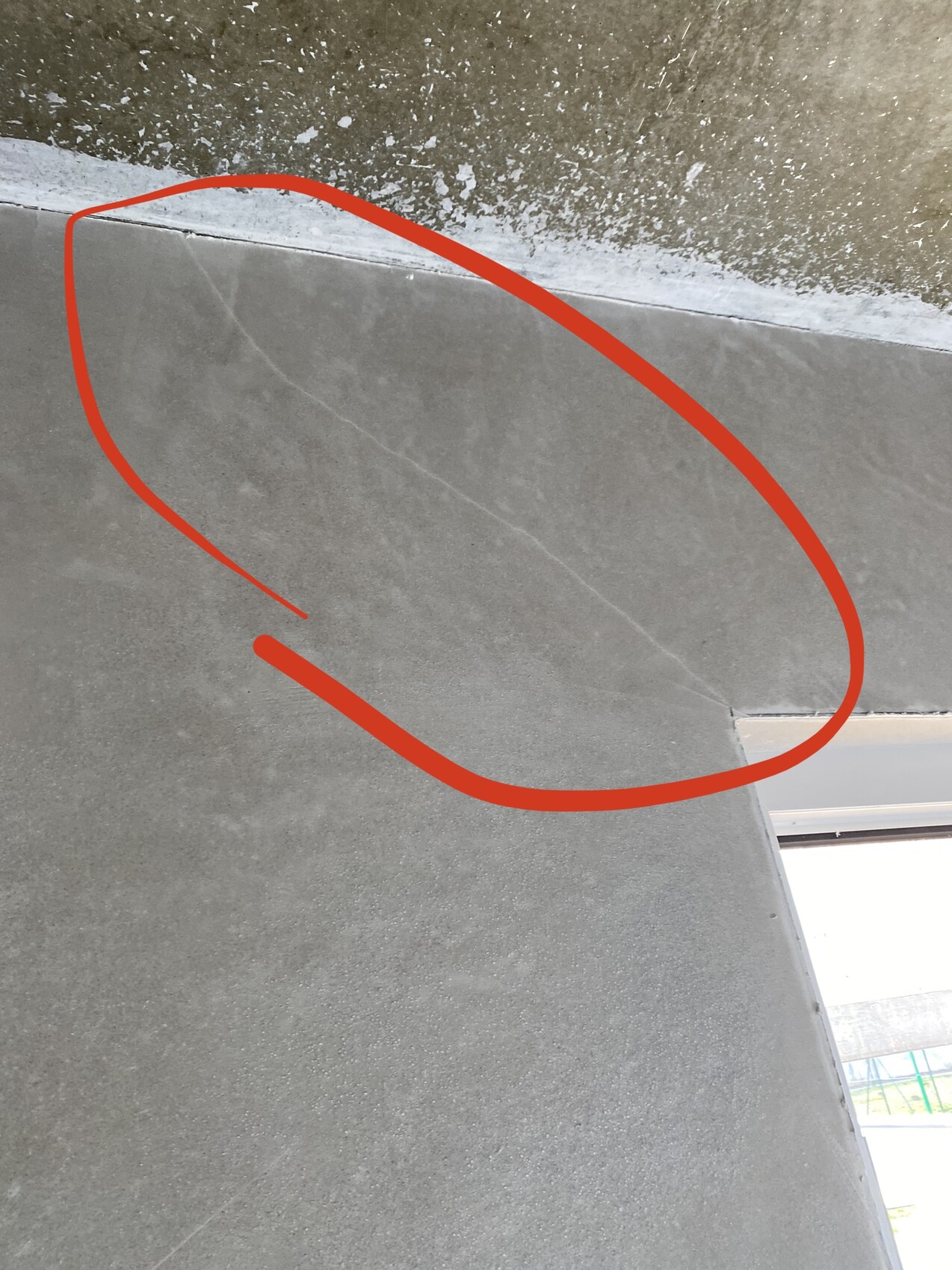
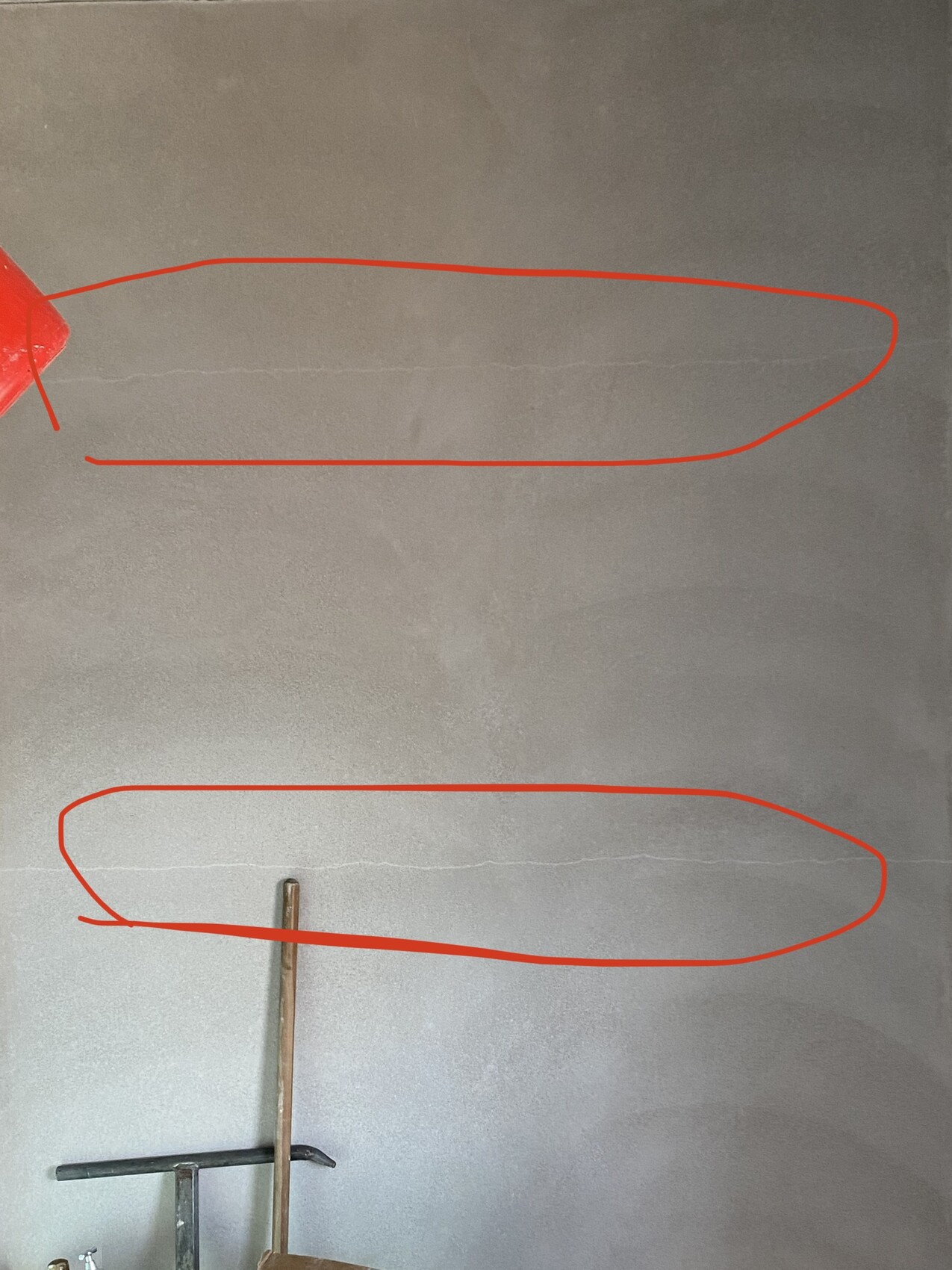
Our interior plaster has been drying for about 2 weeks, and relatively soon after that, these light lines appeared. (See photos) Diagonally at all corners and around all windows, but also on walls without windows, where they are more horizontal. So basically, every plastered wall now has these lines. At the moment, they are only lines, not cracks. I assume these might develop into cracks eventually, or is that not necessarily the case? Could this be caused by missing reinforcing mesh angles?
Have a good evening everyone, and thank you for your answers!
M
MiCasaEsSuCasa30 Mar 2022 23:07Tolentino schrieb:
If you can’t heat the building, ventilating unfortunately doesn’t help much either. Get dehumidifiers (or have them brought in).
They use electricity but protect your health.
By the way, plaster is mineral-based and cannot develop mold. However, unlike lime or silicate, it is not strongly alkaline, so it does not prevent organic materials attached to it from molding. Also, if it becomes completely and excessively soaked, it can deform. The drywall (gypsum board) was obviously installed too early. I would recommend removing the drywall first and then properly drying the building. Has the screed been laid yet? If not, that should be done first. Once the screed drying phase is complete and the surface heating is running, measure the humidity everywhere with hygrometers. If the air humidity at 20°C (68°F) before morning ventilation is a maximum of 60%, then install the drywall. What does your expert say? The interior plaster has been in place for weeks, and the screed was laid exactly one week ago. The drywall partitions were installed before the interior plaster and screed. I’ve already read twice that drywall is better installed afterward. However, our surveyor hasn’t said anything negative about this. I will ask him about it tomorrow.
M
MiCasaEsSuCasa30 Mar 2022 23:08Peter Pohlmann schrieb:
Today we opened all the windows. We now have a few days of dry and cold easterly air. This dries out more than any construction dryer. Free of charge.
The nights are cold with correspondingly low humidity, ideally with frost. This really helps a lot, and these will be the last drying nights until next winter. Really? Because of the low temperatures expected in the coming days, we were advised against ventilating for too long. Up to and including today, we have been ventilating following the pattern of opening windows in the morning and closing them in the evening.
P
Peter Pohlmann30 Mar 2022 23:37Go out into the garden and observe the soil. Measure the humidity as well.
You will notice that with cold air coming from the east, the ground dries out and the moisture in the soil disappears. The same thing happens inside your house. Ideally, you let a house dry out during February when the temperatures are really freezing. The frost needs to penetrate the house and draw out the moisture. Nowadays, people often don’t have the time to wait until February. Instead, they use building dryers and then are surprised by mold in the house.
In fact, it is usually already too late, but the cold days now still help somewhat.
You will notice that with cold air coming from the east, the ground dries out and the moisture in the soil disappears. The same thing happens inside your house. Ideally, you let a house dry out during February when the temperatures are really freezing. The frost needs to penetrate the house and draw out the moisture. Nowadays, people often don’t have the time to wait until February. Instead, they use building dryers and then are surprised by mold in the house.
In fact, it is usually already too late, but the cold days now still help somewhat.
M
MiCasaEsSuCasa31 Mar 2022 07:21Peter Pohlmann schrieb:
Go out into the garden and observe the soil. Measure the humidity in the air as well.
You will notice that with easterly winds and cold temperatures, the ground dries out and the moisture in the soil disappears. The exact same thing happens inside your house. Ideally, you let a house dry out in February during really freezing temperatures. The frost has to penetrate the house and pull the moisture out. Nowadays, most people don’t have the time to wait until February. So they use construction dryers and then wonder about the mold inside the house.
Actually, it’s already too late, but the cold days right now still help somewhat.Interesting, I will discuss all this today. Construction dryers have not been used here so far.
Cold air is drier and can hold more moisture, yes. However, without warming the air or the surrounding environment, the moisture will not be released. If it does, it will only happen through drafts and on surfaces, and if you do this, the involved trades (plastering and screed) will void your warranty... please do not follow this advice under any circumstances. Short bursts of ventilation are recommended, and heating is urgently necessary. Using a construction dryer is not necessarily required in this weather, but (mobile) heating is.
P
Peter Pohlmann31 Mar 2022 08:01Now you will probably explain where the moisture goes when the windows are closed and the heating sources are on?
The house is basically airtight, sealed with various vapor barriers, triple-glazed thermal insulation windows, and external thermal insulation composite systems (ETICS).
With intermittent ventilation, not much of the moisture escapes.
It’s statements like these that cause people to have mold problems in their homes.
The house is basically airtight, sealed with various vapor barriers, triple-glazed thermal insulation windows, and external thermal insulation composite systems (ETICS).
With intermittent ventilation, not much of the moisture escapes.
It’s statements like these that cause people to have mold problems in their homes.
Similar topics