
ᐅ Light streaks on fresh interior plaster – potential future cracks?
Created on: 5 Mar 2022 20:47
M
MiCasaEsSuCasa
Good evening everyone!
Our interior plaster has been drying for about 2 weeks, and relatively soon after that, these light lines appeared. (See photos) Diagonally at all corners and around all windows, but also on walls without windows, where they are more horizontal. So basically, every plastered wall now has these lines. At the moment, they are only lines, not cracks. I assume these might develop into cracks eventually, or is that not necessarily the case? Could this be caused by missing reinforcing mesh angles?
Have a good evening everyone, and thank you for your answers!
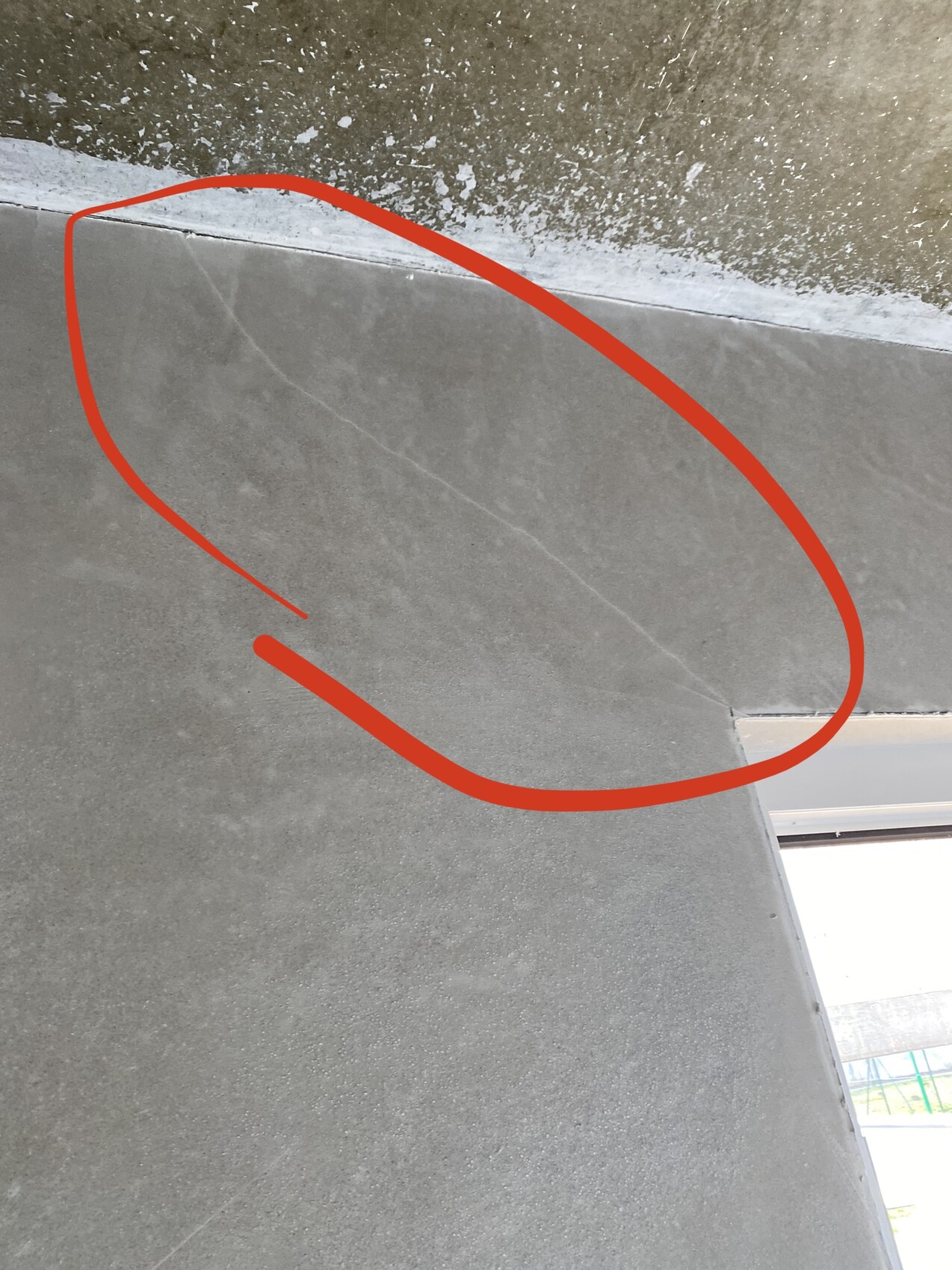
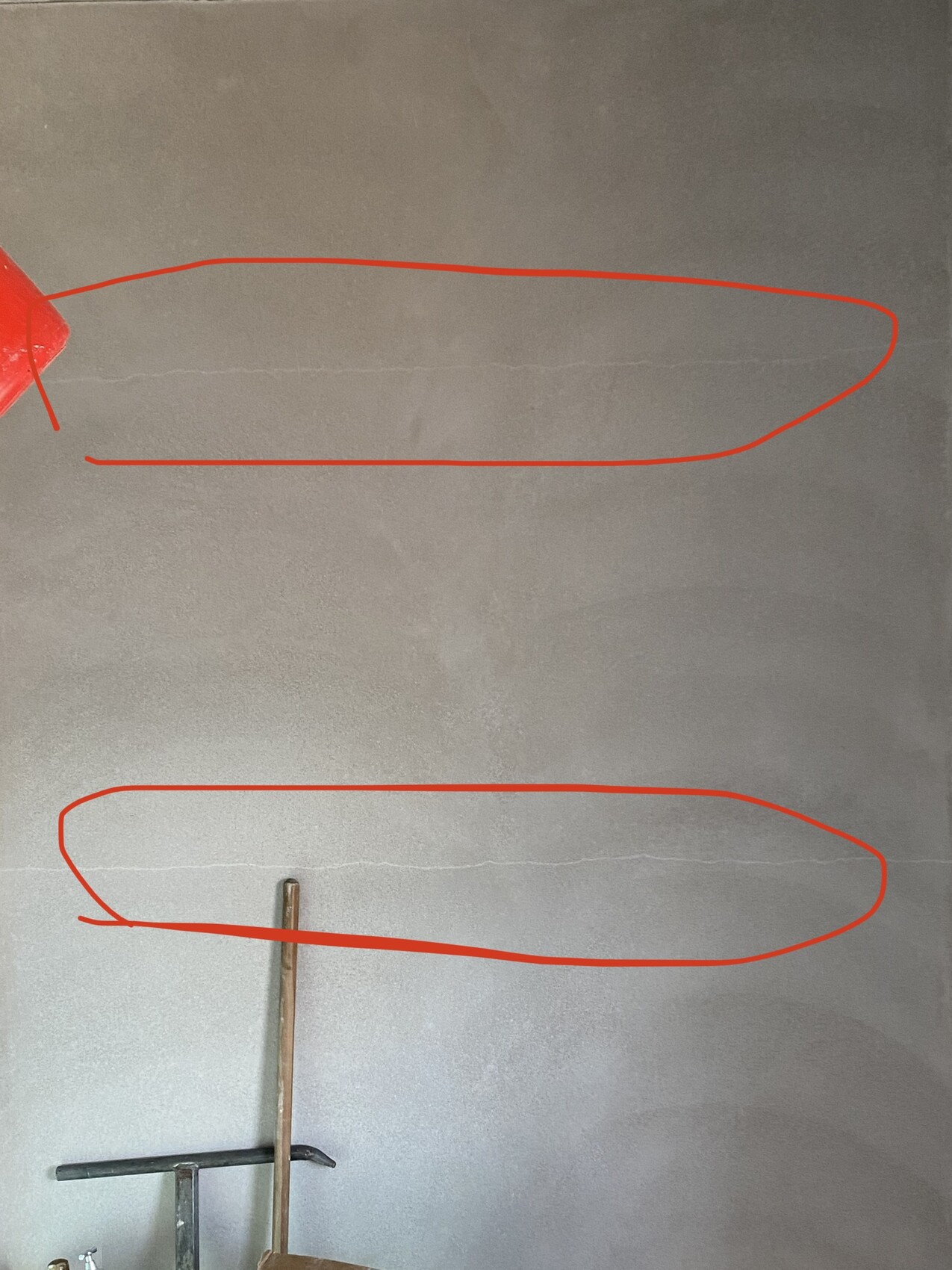
Our interior plaster has been drying for about 2 weeks, and relatively soon after that, these light lines appeared. (See photos) Diagonally at all corners and around all windows, but also on walls without windows, where they are more horizontal. So basically, every plastered wall now has these lines. At the moment, they are only lines, not cracks. I assume these might develop into cracks eventually, or is that not necessarily the case? Could this be caused by missing reinforcing mesh angles?
Have a good evening everyone, and thank you for your answers!
I can confirm the statement made by von guckuck2 based on extensive practical experience. Of course, dry cold air is beneficial, but cold air also holds much less moisture than warm air. That is why regular air exchange is important. The walls then warm up the cold dry air, which can then absorb moisture again. When we have unheated spaces, drying always takes a very long time.
Cracks in the corners of windows are often normal if nothing is done to prevent them, such as installing diagonal reinforcement.
Cracks in the corners of windows are often normal if nothing is done to prevent them, such as installing diagonal reinforcement.
Peter Pohlmann schrieb:
So now you will probably explain where the moisture goes when windows are closed and there are heating sources?
The house is basically airtight, sealed with various vapor barriers, triple-glazed thermal insulation windows, or external insulation systems (ETICS).
Not much moisture escapes during short ventilation.
It’s exactly because of statements like this that people end up with mold in their homes. You are completely wrong. The correct method is exactly what I described. You need to ventilate by short bursts several times a day. If you want to automate or improve efficiency, you can also use construction dryers.
Cold air is dry but can hardly absorb much moisture. Warmed air, on the other hand, can absorb moisture very well. Also, cold building elements release very little moisture, especially with a 6cm (2.4 inch) thick screed. What you want to do is dry the surface by draft. That is possible but not the purpose here and it DAMAGES plaster and screed.
Your theory applies to drying new construction. If you do this with plaster or screed, you will damage them. It’s as simple as that. Feel free to try it yourself if you want, but recommending it publicly is inappropriate and cannot be left uncorrected.
P
Peter Pohlmann31 Mar 2022 09:06Everyone has their own opinions on this.
Personally, I think it’s a bit sloppy if no mesh is embedded around the windows. And when gypsum plaster and screed are applied at the same time, there is definitely too much moisture in the building. But everything has to be done in a hurry, apparently.
No one should be surprised if the drywall ends up moldy.
Personally, I think it’s a bit sloppy if no mesh is embedded around the windows. And when gypsum plaster and screed are applied at the same time, there is definitely too much moisture in the building. But everything has to be done in a hurry, apparently.
No one should be surprised if the drywall ends up moldy.

Peter Pohlmann schrieb:
Everyone just has their own opinion. No, this is physics. No one said that windows can always stay closed while heating. Regular ventilation is obviously necessary. Exactly what @guckuck2 says is correct.
Peter Pohlmann schrieb:
I personally find it rather sloppy if no mesh is embedded around the windows. And when plaster and screed are applied at the same time, there is definitely too much moisture in the building. But everything has to be done in a rush.
No one should be surprised if the drywall ends up moldy. I fully agree with you here.
Similar topics