
Hello dear house-building experts,
I found a floor in a room of a recently purchased house that I am not happy with in its current condition. Unfortunately, it is inconsistent, with some areas appearing grayish and others showing a nice wood tone. There are no major damages. I assumed it was laminate flooring, so I thought replacement was the only option. Then I removed a profile strip and started to doubt that.
It doesn’t really look like what I would expect from typical laminate flooring. From the cross-section, it seems more like engineered hardwood flooring to me. Unfortunately, I am a complete beginner in this area and can only rely on information from Google.
Would it be possible to sand this floor with fine grit and treat it with hardwax oil to achieve a uniform, attractive appearance again?
Thank you and best regards
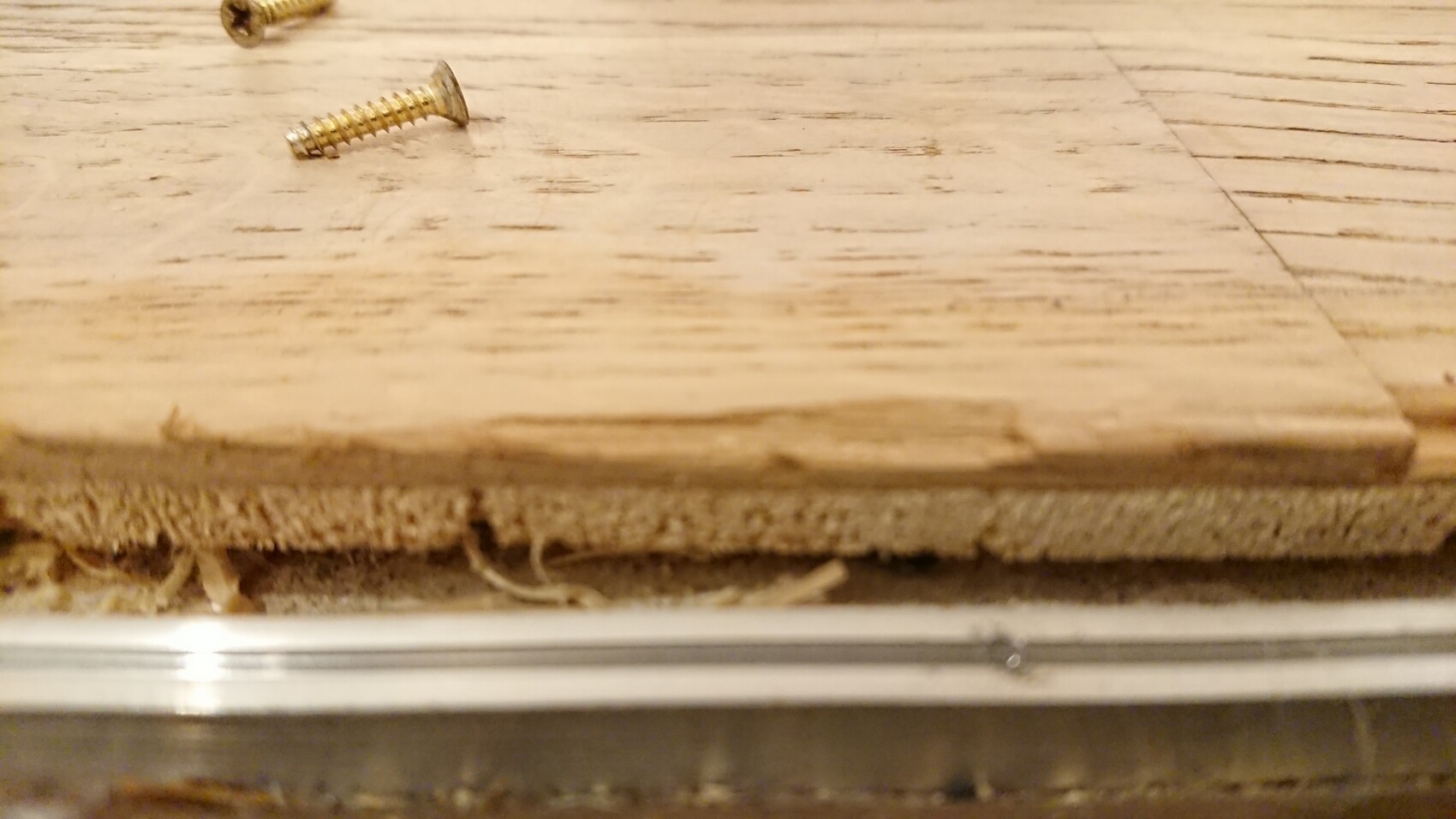
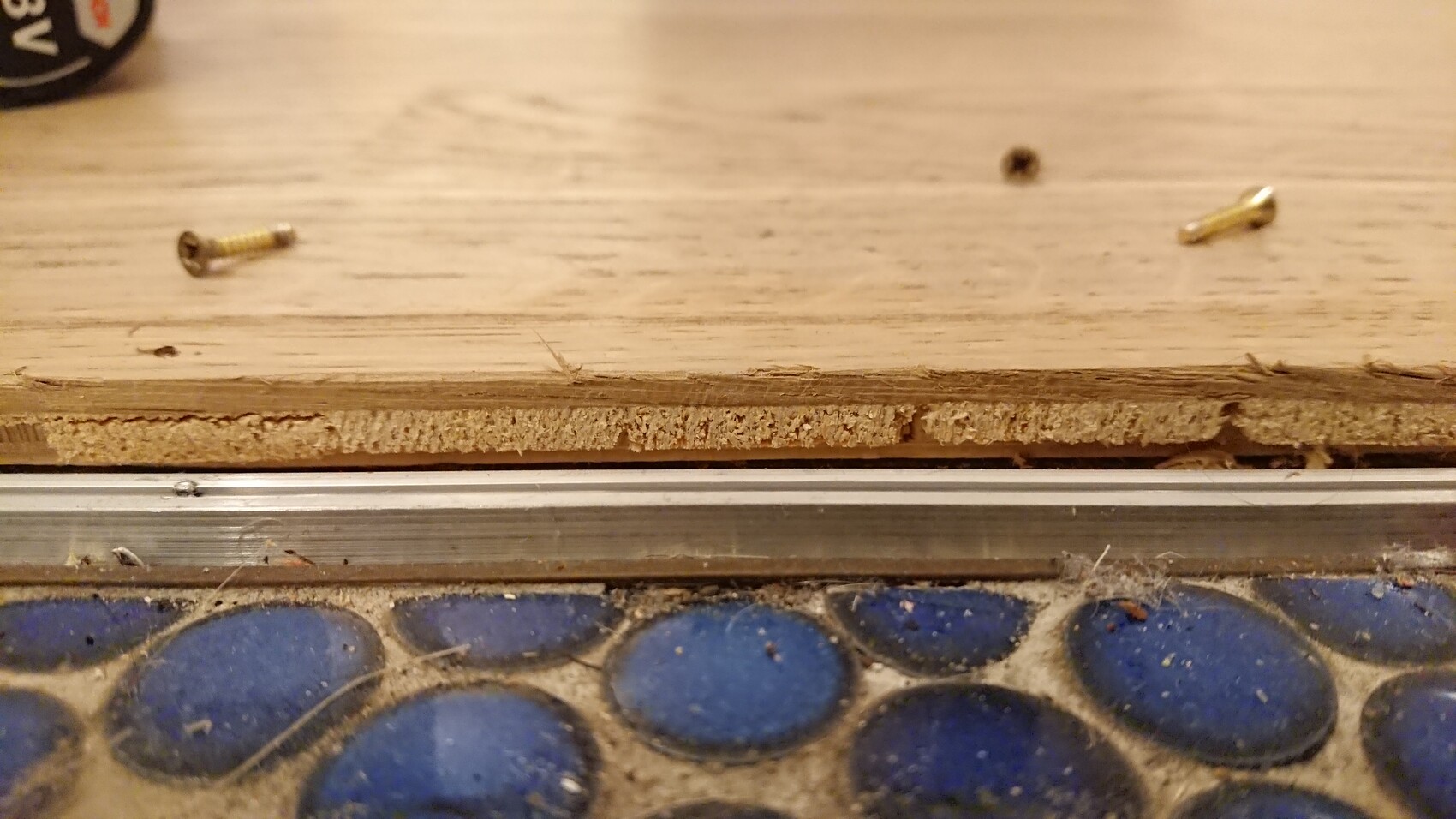
I found a floor in a room of a recently purchased house that I am not happy with in its current condition. Unfortunately, it is inconsistent, with some areas appearing grayish and others showing a nice wood tone. There are no major damages. I assumed it was laminate flooring, so I thought replacement was the only option. Then I removed a profile strip and started to doubt that.
It doesn’t really look like what I would expect from typical laminate flooring. From the cross-section, it seems more like engineered hardwood flooring to me. Unfortunately, I am a complete beginner in this area and can only rely on information from Google.
Would it be possible to sand this floor with fine grit and treat it with hardwax oil to achieve a uniform, attractive appearance again?
Thank you and best regards
P
pagoni202013 Jan 2021 22:49RAL5018 schrieb:
A clear recommendation, like I had hoped for, doesn’t seem to be emerging here. Perhaps it was naive to expect one given the many options available.????Maybe read through all the answers again. 😀
Since the HBF no longer offers an introduction thread, you might want to write a short paragraph explaining what kind of house you have purchased and that you would like to renovate everything yourself cost-effectively. Adding photos is also welcome. This usually makes users more creative and interested.
There are several threads here where users present their projects, which then become more active with upcoming questions and receive a lot of support. You will get fewer tips when starting out cold compared to an active building diary.
There are several threads here where users present their projects, which then become more active with upcoming questions and receive a lot of support. You will get fewer tips when starting out cold compared to an active building diary.
pagoni2020 schrieb:
????
Maybe read all the answers again. 😀Please don’t misunderstand me! I find your last suggestion especially important. But some of the other advice was leaning more toward sanding. So now there are two directions again, and I don’t know how to decide. Before your post, I was pretty sure that smoothing was the way to go. Now I have an additional "problem" to think about. I actually expected someone to just tell me which grit to use so I could get started... 😉
ypg schrieb:
Since the forum no longer has an introduction thread, maybe you should write a short paragraph about the house you bought and that you want to renovate everything yourself cost-effectively. Photos would also be welcome. Users tend to be more creative and engaged then.
There are several threads here where users introduce their projects, which then get more lively with forthcoming questions, and many people can help. Spontaneous tips are less common than in an active building diary.I’ll consider that. Sorry if all this sounds somewhat impersonal or even ungrateful. I’m currently under a lot of pressure to somehow plan the most important things before moving in, partly do the work myself, or fight with contractors... I’m probably not the only one in this situation... but whether I’ll have the time and energy to keep a diary here, I’m not sure.
I’ve already learned quite a bit from the answers here and truly appreciate it. Unfortunately, the floor still looks the same as on January 3rd, and I’ve gained a few gray hairs.
I have one more question regarding "sanding by hand with fine sandpaper and treating with Osmo hardwax oil":
Could I also do this with a small handheld machine?
How fine should the grit be? 100? 120? Even finer?
When you say oil, do you mean the Osmo hardwax oil Original?
I fully understand there is no guarantee, and a remote diagnosis is difficult. But if I have to guess, it’s probably no better than an educated guess from someone who, unlike me, hopefully has some experience and expertise.
ypg schrieb:
Oops, links lead to exclusion here.Thanks for the tip. I have removed them.P
pagoni202014 Jan 2021 00:19There are always several options, and these depend on your possibilities and preferences.
My approach would be:
Which room is it, and how/what is it used for?
What does the entire floor look like – are there many pieces of furniture on it, rugs?
What are MY DIY skills in this regard?
Financial aspect?
Is the entire room being renovated, including wallpaper, ceilings, etc.?
If this weren’t my absolute “showroom” room, I would first try the easier, less extensive method. If the floor is cleaned and, depending on the product, lightly sanded by hand or machine, then treated with wax or oil, it will look great in my opinion. I know a tile setter who had even poured grit on the wooden floor in his showroom for several weeks so people could walk on it. Afterwards, he cleaned it and sealed the rustic look with oil/wax. A wooden floor can visually forgive a lot. We had a very old wooden floor in a historical villa, a few marks, some gaps… but it was great.
I definitely did not want to unsettle you, but back then I was told it was “just” sanding with the big machine, the rest by hand sander, and done. Nowadays, I am more confident with tools, but I still wouldn’t want to do it because you can quickly sand in bigger marks than you had before. Of course, this was also because I wanted to remove 2mm (0.08 inches) of my 30mm (1.2 inches) solid wood planks and had initially worked with coarser sandpaper.
You mentioned current stress and hectic times, so I would all the more try the simpler option first, as I see no reason why it shouldn’t work. If necessary, buy a small tin and try it out.
Right after installation, we used original hard wax oil, satin finish, on the floor. Nowadays, there are also rapid versions for faster application as well as colored variants. Since you don’t know how the current floor will absorb the pigments, I would be more cautious there, although… personally, I would… unfortunately… be brave.
During the renovation, we wanted a different color and decided, on recommendation, to sand with a machine… with the well-known disappointing result, as the colored stain from the decorative wax showed the uneven sanding. The rescue was an opaque decorative wax, which was very easy to apply and lasted until we moved out 10 years later (despite having a dog) and we always liked it (it’s probably still there today). #Over the years, for example, we painted our former country-style doors with opaque decorative wax or our once maize-yellow window frames with gray decorative wax.
If it doesn’t work, you can always sand afterward.
This is my opinion. This is how I would do it, and don’t worry – I like to keep things looking nice at home.
Looking forward to seeing what you decide… let us know.
So – hopefully you feel more confident now 😀
My approach would be:
Which room is it, and how/what is it used for?
What does the entire floor look like – are there many pieces of furniture on it, rugs?
What are MY DIY skills in this regard?
Financial aspect?
Is the entire room being renovated, including wallpaper, ceilings, etc.?
If this weren’t my absolute “showroom” room, I would first try the easier, less extensive method. If the floor is cleaned and, depending on the product, lightly sanded by hand or machine, then treated with wax or oil, it will look great in my opinion. I know a tile setter who had even poured grit on the wooden floor in his showroom for several weeks so people could walk on it. Afterwards, he cleaned it and sealed the rustic look with oil/wax. A wooden floor can visually forgive a lot. We had a very old wooden floor in a historical villa, a few marks, some gaps… but it was great.
I definitely did not want to unsettle you, but back then I was told it was “just” sanding with the big machine, the rest by hand sander, and done. Nowadays, I am more confident with tools, but I still wouldn’t want to do it because you can quickly sand in bigger marks than you had before. Of course, this was also because I wanted to remove 2mm (0.08 inches) of my 30mm (1.2 inches) solid wood planks and had initially worked with coarser sandpaper.
You mentioned current stress and hectic times, so I would all the more try the simpler option first, as I see no reason why it shouldn’t work. If necessary, buy a small tin and try it out.
Right after installation, we used original hard wax oil, satin finish, on the floor. Nowadays, there are also rapid versions for faster application as well as colored variants. Since you don’t know how the current floor will absorb the pigments, I would be more cautious there, although… personally, I would… unfortunately… be brave.
During the renovation, we wanted a different color and decided, on recommendation, to sand with a machine… with the well-known disappointing result, as the colored stain from the decorative wax showed the uneven sanding. The rescue was an opaque decorative wax, which was very easy to apply and lasted until we moved out 10 years later (despite having a dog) and we always liked it (it’s probably still there today). #Over the years, for example, we painted our former country-style doors with opaque decorative wax or our once maize-yellow window frames with gray decorative wax.
If it doesn’t work, you can always sand afterward.
This is my opinion. This is how I would do it, and don’t worry – I like to keep things looking nice at home.
Looking forward to seeing what you decide… let us know.
So – hopefully you feel more confident now 😀