
We have been using our Viessmann heat pump for a few weeks now. So far, it only needed to provide cooling and hot water, but now that the nights and days are getting colder, we noticed that the ground loop pipe has developed a thick layer of ice, especially in areas where there is little or no insulation on the pipe. During the day, the ice melts and drips, making the floor wet.
I thought this was due to insufficient insulation, and that fully and properly insulating the pipes should solve the problem. However, I recently read that while insulation may help prevent icing, it doesn’t address the root cause, and that this kind of ice buildup isn’t normal. Does anyone have experience with this?
I thought this was due to insufficient insulation, and that fully and properly insulating the pipes should solve the problem. However, I recently read that while insulation may help prevent icing, it doesn’t address the root cause, and that this kind of ice buildup isn’t normal. Does anyone have experience with this?
S
Stadtvilla192 Oct 2020 08:56I took a look inside the heating circuit distributor; usually, the markings in the tubes show the numbers corresponding to the current settings.
Now I noticed that when the system is off, all the tubes are closed, as you can see in picture 2—is this normal?
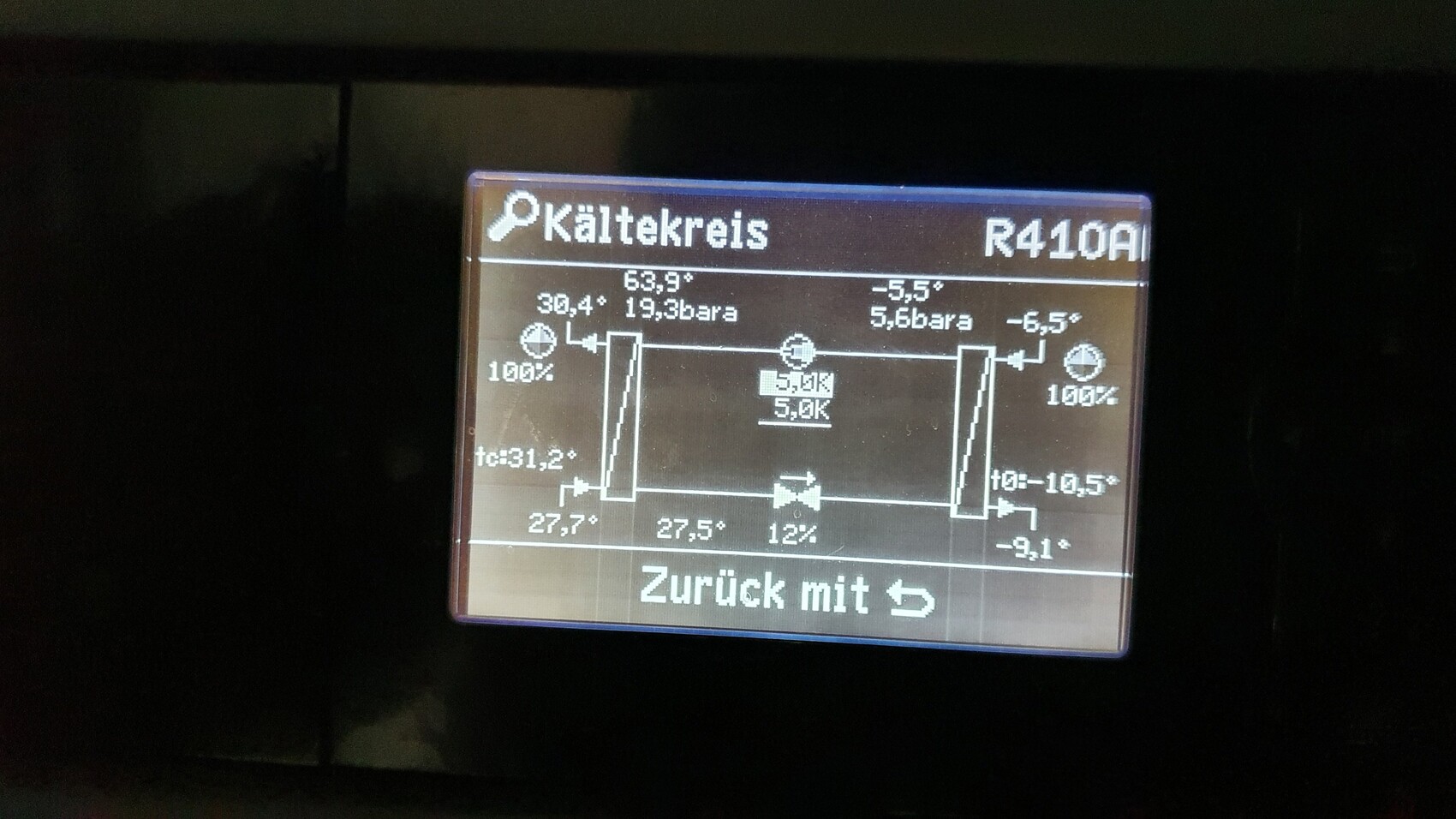
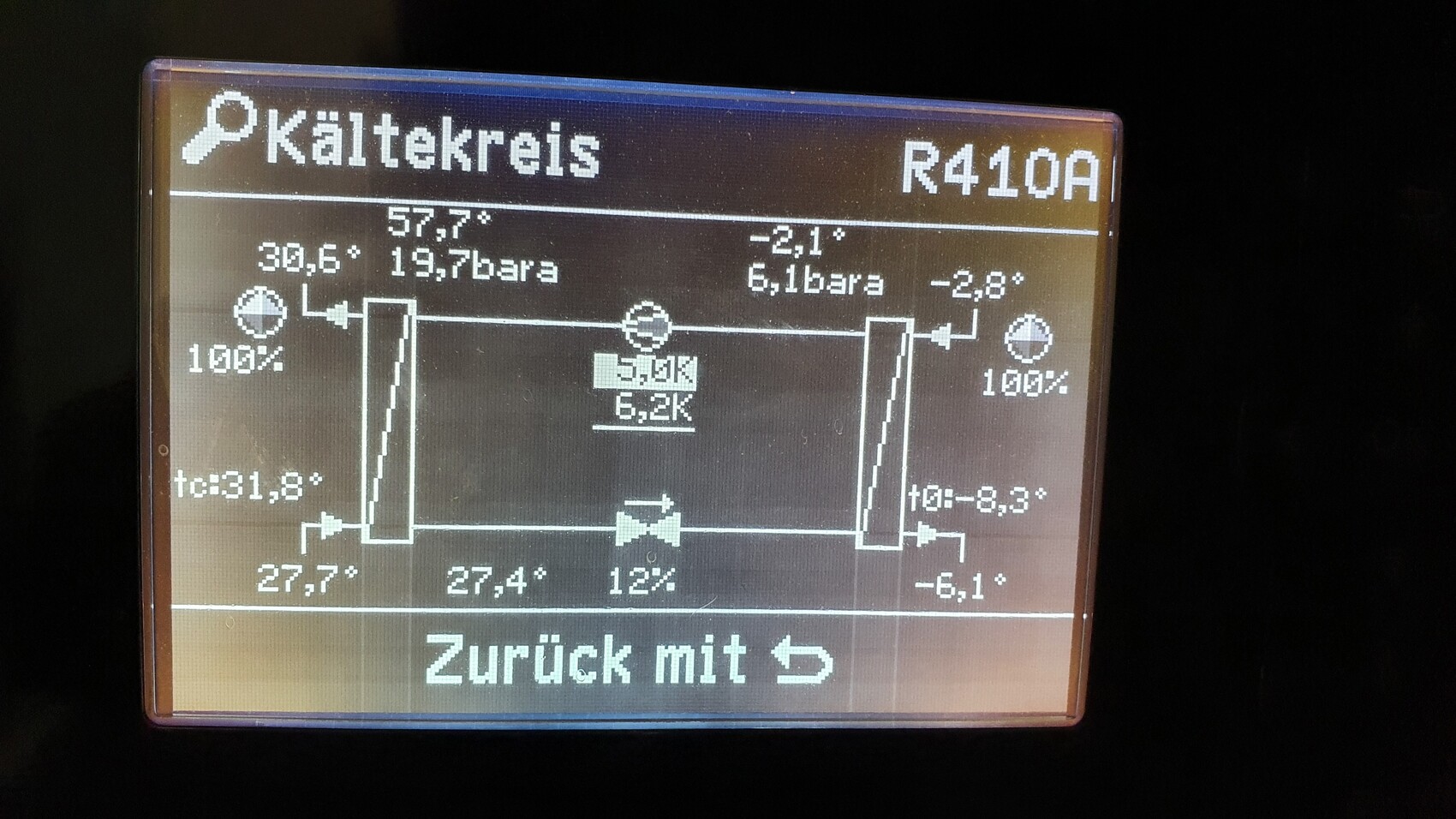
I also took a few pictures of the cooling circuit while it was running. Can anything be seen here?
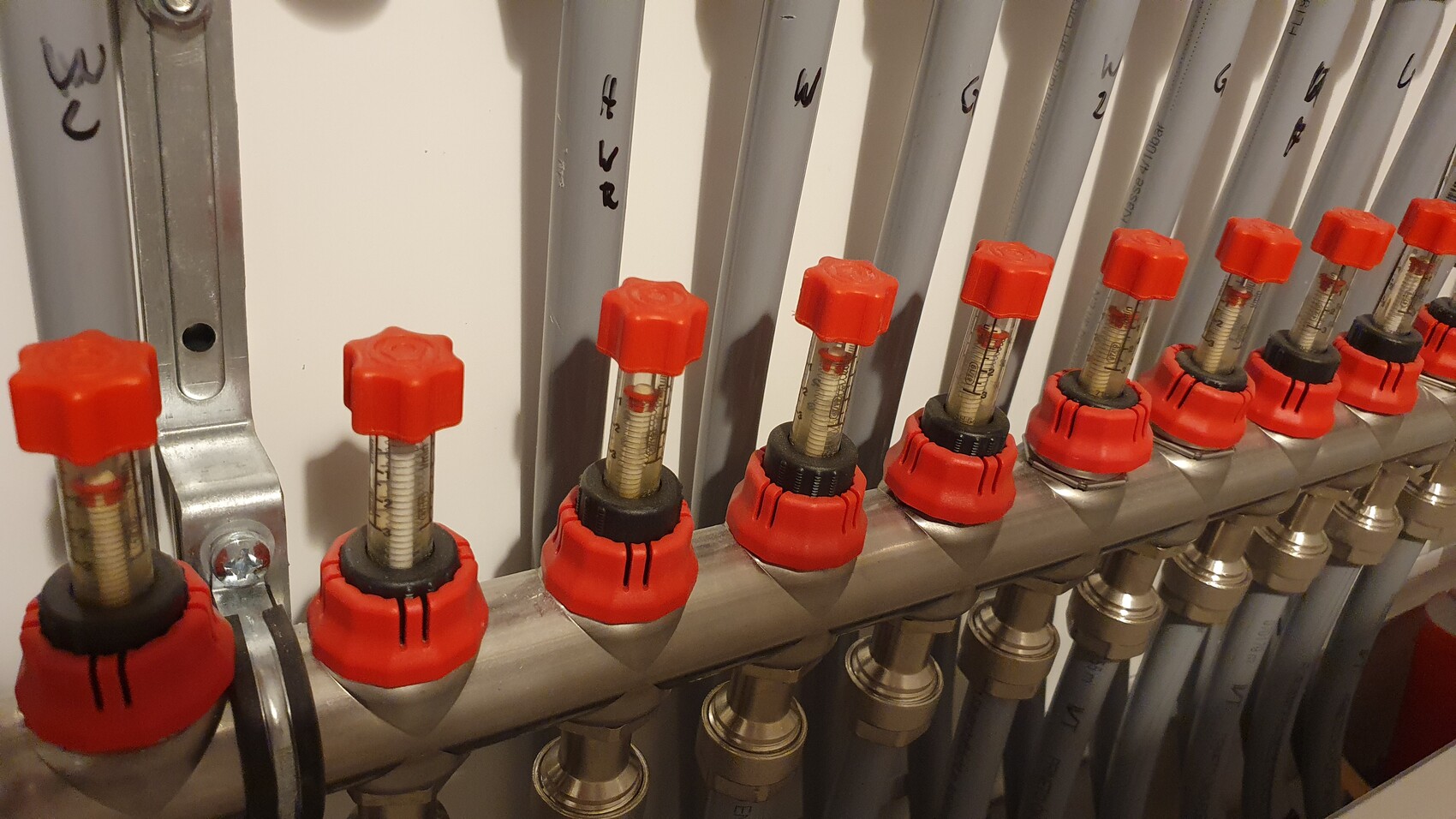
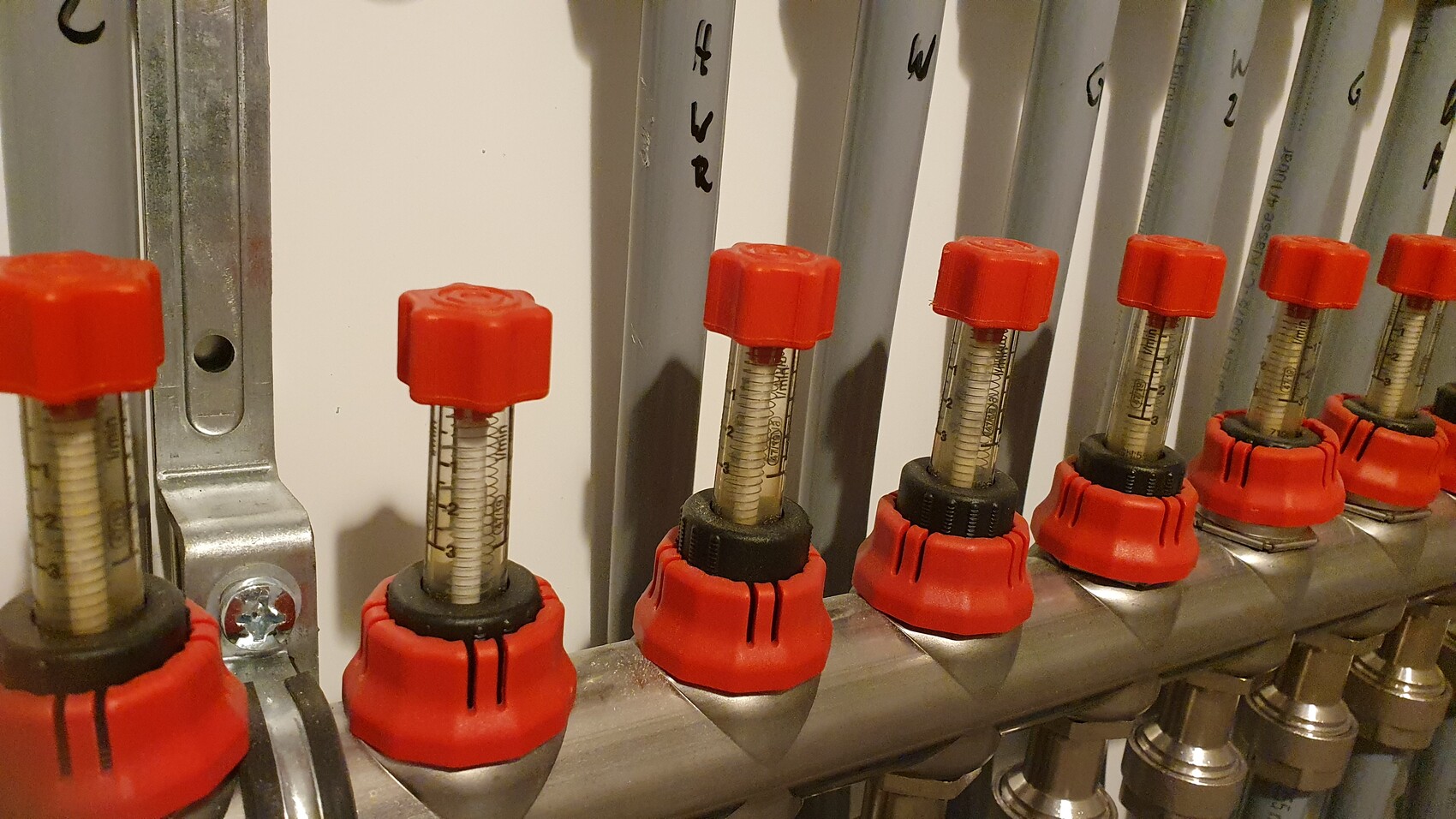
Now I noticed that when the system is off, all the tubes are closed, as you can see in picture 2—is this normal?
I also took a few pictures of the cooling circuit while it was running. Can anything be seen here?

Heinz2k schrieb:
the water is standing in the return pipeAs a complete beginner, my question is: Where exactly do you see that?

OWLer schrieb:
As a complete novice, where exactly do you see that? Well, if the valve is closed, then nothing moves in the circuit. This means the water may cool down between the heating control valve and the heater, even though the pipes in the room might still be warming from sunlight and the water there is still relatively warm. When the pump turns on, warm water flows from the underfloor heating and the heater switches off again at the same time.
Since I don’t have a return flow controlled heating system, I can’t say how other systems manage this.
S
Stadtvilla192 Oct 2020 13:12The pump is running; I think it was because it was just producing hot water, then the circulation of the underfloor heating switches off. However, I didn’t know that these small floats all rise when the pump is off... Learned something new.
I spoke with the company today, and they explained the Tichelmann system to me again. They’ve always done it this way and have had good experiences with it. They only connect the lines from the fourth borehole onward because it naturally costs more. At the moment, they still don’t know remotely where the problem lies because, according to the technician, all the values were excellent after the last flushing two weeks ago.
In any case, we are supposed to keep an eye on the temperatures and any freezing, so the probe doesn’t freeze. If necessary, just switch to the heating element.
The technician wants to come on October 12 to look at it together with the manager — I’m curious whether we will make progress then. You have already helped me a lot; now I also have a bit of background information. Once I mentioned the cycling and operating hours, they finally paid attention.
On the phone, they wanted to tell my wife that it’s normal for condensation to form on the pipes due to the high humidity, and that it simply freezes...
I spoke with the company today, and they explained the Tichelmann system to me again. They’ve always done it this way and have had good experiences with it. They only connect the lines from the fourth borehole onward because it naturally costs more. At the moment, they still don’t know remotely where the problem lies because, according to the technician, all the values were excellent after the last flushing two weeks ago.
In any case, we are supposed to keep an eye on the temperatures and any freezing, so the probe doesn’t freeze. If necessary, just switch to the heating element.
The technician wants to come on October 12 to look at it together with the manager — I’m curious whether we will make progress then. You have already helped me a lot; now I also have a bit of background information. Once I mentioned the cycling and operating hours, they finally paid attention.
On the phone, they wanted to tell my wife that it’s normal for condensation to form on the pipes due to the high humidity, and that it simply freezes...
Similar topics