
ᐅ Chimney not properly sealed? Water leaking in – who is responsible?
Created on: 4 Jun 2020 09:41
T
TwiggyG85T
TwiggyG854 Jun 2020 09:41Hello everyone,
Following my last question about the structural engineer (we managed to install the beam and it’s still holding ^^), now to my best friend throughout the renovation phase, the roofer.
I’ll skip the emotions here, so let’s stick to the facts.
In short: Rainwater is entering the house through the chimney wall.
The roofer took a look at the problem and said it’s no one’s fault, but it can be fixed for around 1000€ (about 1100 USD). Here are the details.
When the roof was installed, our chimney looked like in the following picture (the point of contention is the flashing).
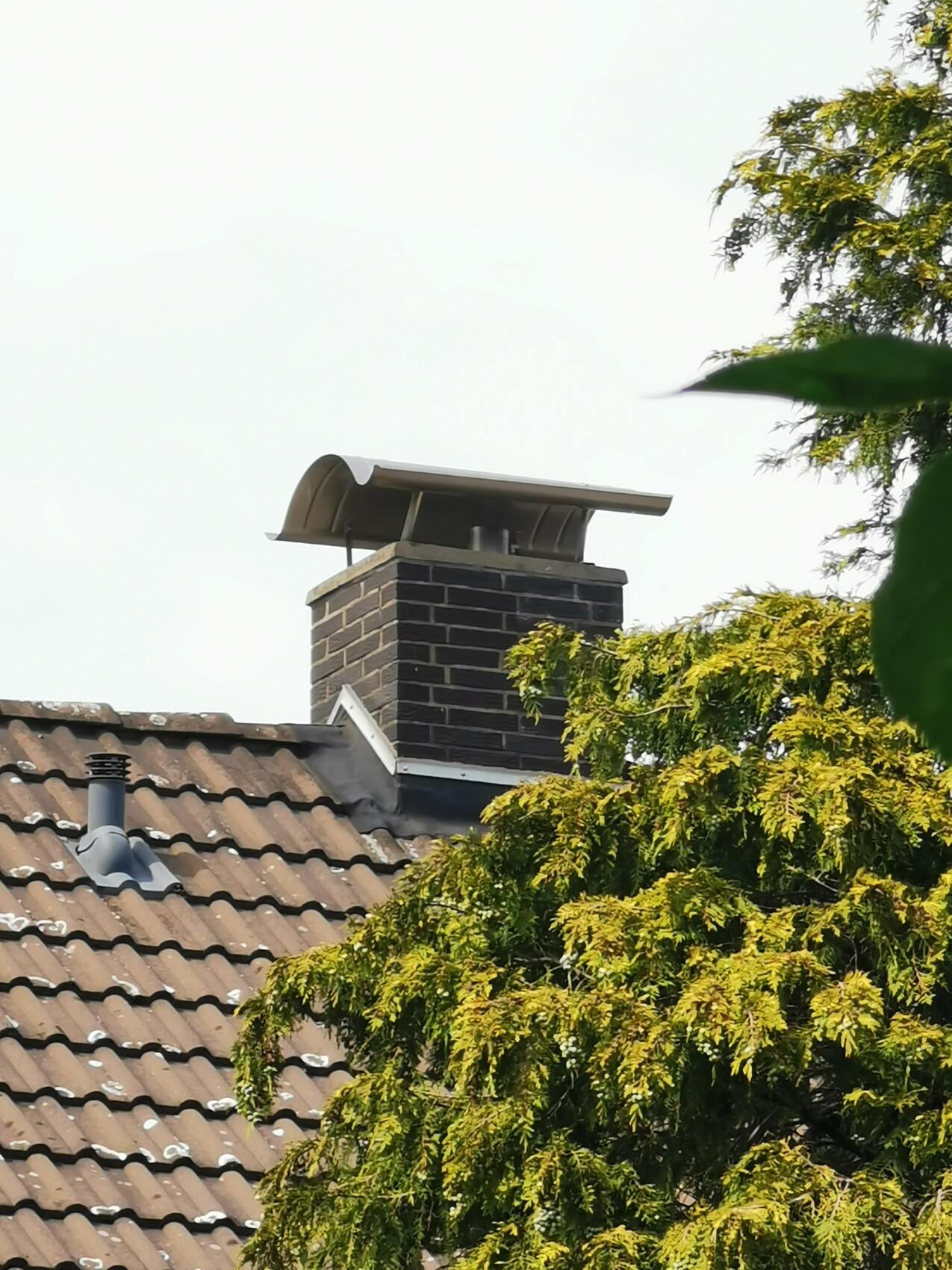
This flashing was removed AFTER the roofing work was finished for the heating system installation. Since the flashing was removed, we have had the problem of rainwater coming in during rain and strong wind. So far, this has only occurred during the heavy rain period earlier this year. We only noticed it when a yellow stain appeared on the ceiling upstairs, so it’s hard to say what the condition was like with the flashing in place. The next picture shows the condition as seen from the attic (the plastic sheet was hanging like this in general).
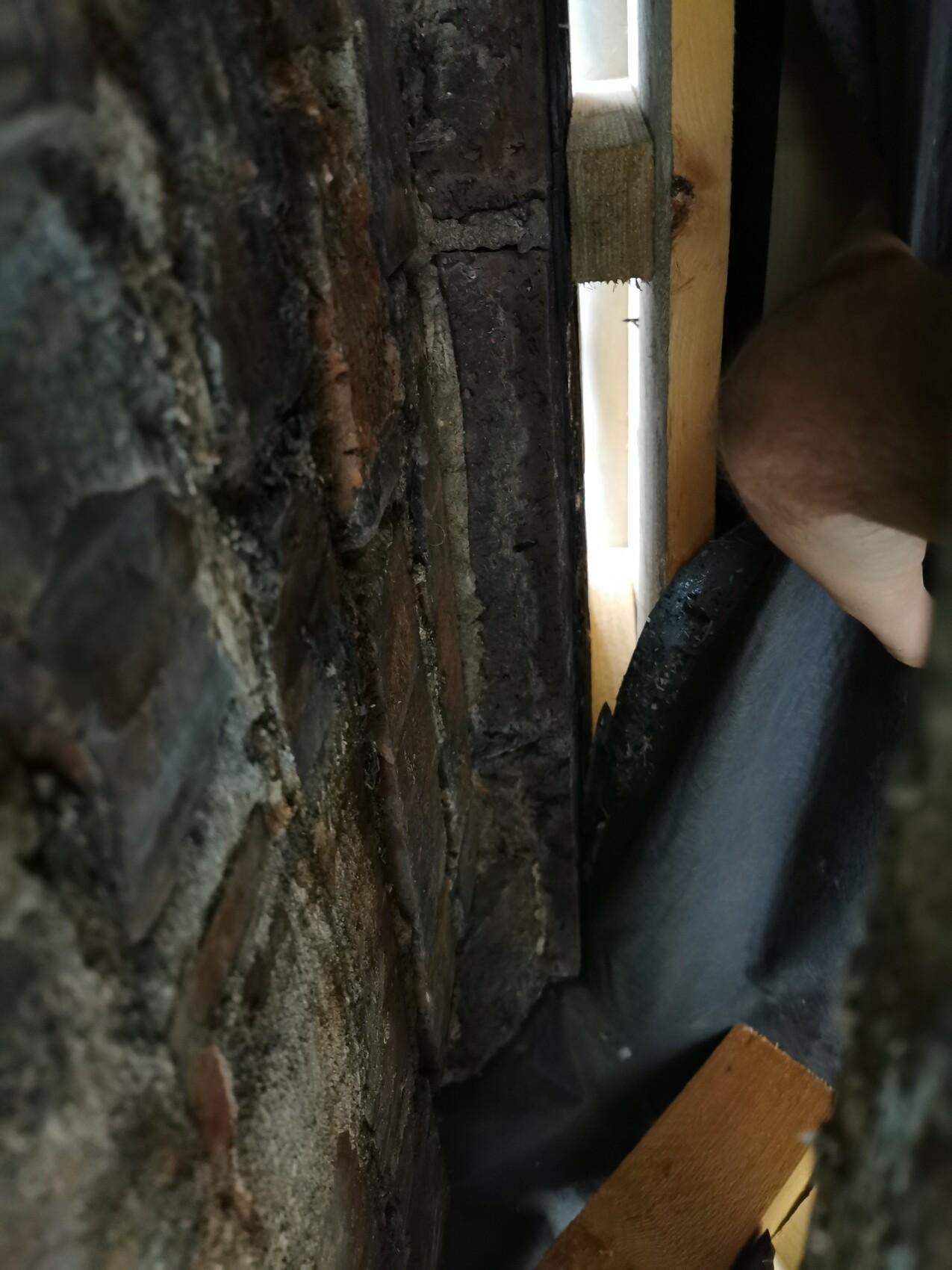
On the left is the chimney wall, on the right the paneling, and above is the framing around the paneling. As you can see, light is clearly visible.
Our roofer says this is all correct, and that the flashing prevented rain from coming in. But looking at that flashing, I doubt it would hold up against storms and heavy rain, so I worry about the future insulation getting damaged.
The roofer offered to seal the chimney top with resin for about 1000€ (about 1100 USD), which is apparently a normal procedure. This should make it waterproof. Now, the money is one thing, but I have lost trust in him a long time ago, as too much has happened. I suspect he did a poor job and now wants to fix his mistakes at our expense. That’s why I’m asking the forum: if his statements are accurate and you can confirm this here, I won’t question it. But the loose plastic sheeting on the chimney wall alone raises doubts for me.
Thanks in advance.
Best regards
Following my last question about the structural engineer (we managed to install the beam and it’s still holding ^^), now to my best friend throughout the renovation phase, the roofer.
I’ll skip the emotions here, so let’s stick to the facts.
In short: Rainwater is entering the house through the chimney wall.
The roofer took a look at the problem and said it’s no one’s fault, but it can be fixed for around 1000€ (about 1100 USD). Here are the details.
When the roof was installed, our chimney looked like in the following picture (the point of contention is the flashing).
This flashing was removed AFTER the roofing work was finished for the heating system installation. Since the flashing was removed, we have had the problem of rainwater coming in during rain and strong wind. So far, this has only occurred during the heavy rain period earlier this year. We only noticed it when a yellow stain appeared on the ceiling upstairs, so it’s hard to say what the condition was like with the flashing in place. The next picture shows the condition as seen from the attic (the plastic sheet was hanging like this in general).
On the left is the chimney wall, on the right the paneling, and above is the framing around the paneling. As you can see, light is clearly visible.
Our roofer says this is all correct, and that the flashing prevented rain from coming in. But looking at that flashing, I doubt it would hold up against storms and heavy rain, so I worry about the future insulation getting damaged.
The roofer offered to seal the chimney top with resin for about 1000€ (about 1100 USD), which is apparently a normal procedure. This should make it waterproof. Now, the money is one thing, but I have lost trust in him a long time ago, as too much has happened. I suspect he did a poor job and now wants to fix his mistakes at our expense. That’s why I’m asking the forum: if his statements are accurate and you can confirm this here, I won’t question it. But the loose plastic sheeting on the chimney wall alone raises doubts for me.
Thanks in advance.
Best regards
H
HilfeHilfe4 Jun 2020 11:40What did the chimney look like before?
T
TwiggyG854 Jun 2020 11:57HilfeHilfe schrieb:
What did the chimney look like before?From the outside, it looked like in the first picture, and the chimney wall was already that "dirty" before. Here are a few more photos from the outside. I can gladly take more pictures if needed.
During the construction phase
T
TwiggyG854 Jun 2020 12:51[IMG width="270px"]https://www.hausbau-forum.de/attachments/img_20200524_135122-jpg.47706/[/IMG]
It is difficult to determine the exact cause. The membrane that I am pushing away with my hand in the picture usually lies more or less loosely against the chimney wall. Since it is not firmly attached to the wall, water drips onto the folds that have formed. Sorry that I can’t explain it better.
The top photo is taken from the same perspective as the bottom one, but viewed from the left side. The same issue also occurs on the right side.
[IMG width="269px"]https://www.hausbau-forum.de/attachments/20190730_190820-jpg.47715/[/IMG]
The roofer performed a complete roof replacement. The old roof was removed, additional layers were added, and a new roof installed, including new cladding of the chimney to match the roof. The chimney head itself was not altered, as the structure was in good condition.
It is difficult to determine the exact cause. The membrane that I am pushing away with my hand in the picture usually lies more or less loosely against the chimney wall. Since it is not firmly attached to the wall, water drips onto the folds that have formed. Sorry that I can’t explain it better.
The top photo is taken from the same perspective as the bottom one, but viewed from the left side. The same issue also occurs on the right side.
[IMG width="269px"]https://www.hausbau-forum.de/attachments/20190730_190820-jpg.47715/[/IMG]
The roofer performed a complete roof replacement. The old roof was removed, additional layers were added, and a new roof installed, including new cladding of the chimney to match the roof. The chimney head itself was not altered, as the structure was in good condition.
Similar topics