
If you look closely, our house is from the 1970s and not very imaginative.
I am planning an entrance that brings joy both when passing by and walking through.
According to Hessian building regulations, you can construct an entrance area that isn’t too large without a building permit / planning permission. I like that.
I hope the pictures help to show what I mean.
In the third one, you can see the current condition ... I already "spruced up" the door a bit beforehand, but it’s not enough for me.
The roof (white here) will be covered with metal sheets. The door will be set slightly outward.
For now, it’s just an idea ... we’ll see ...
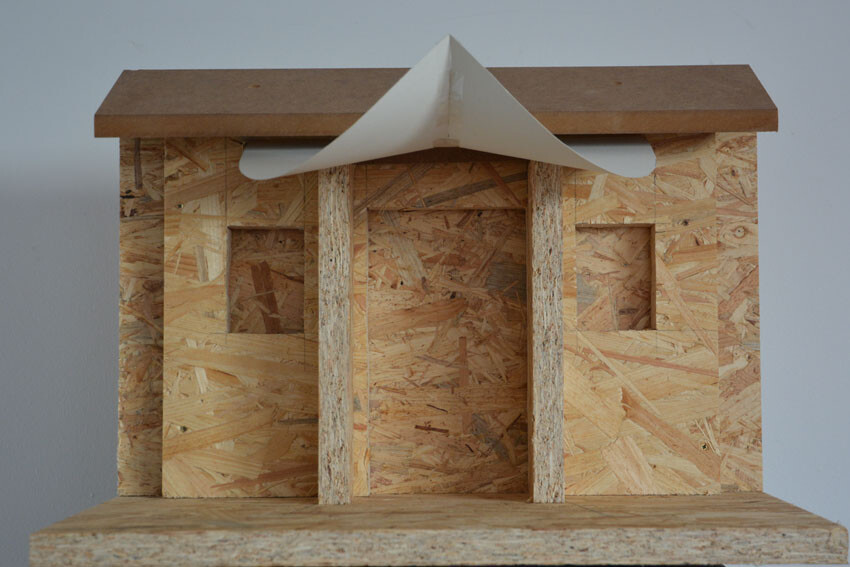
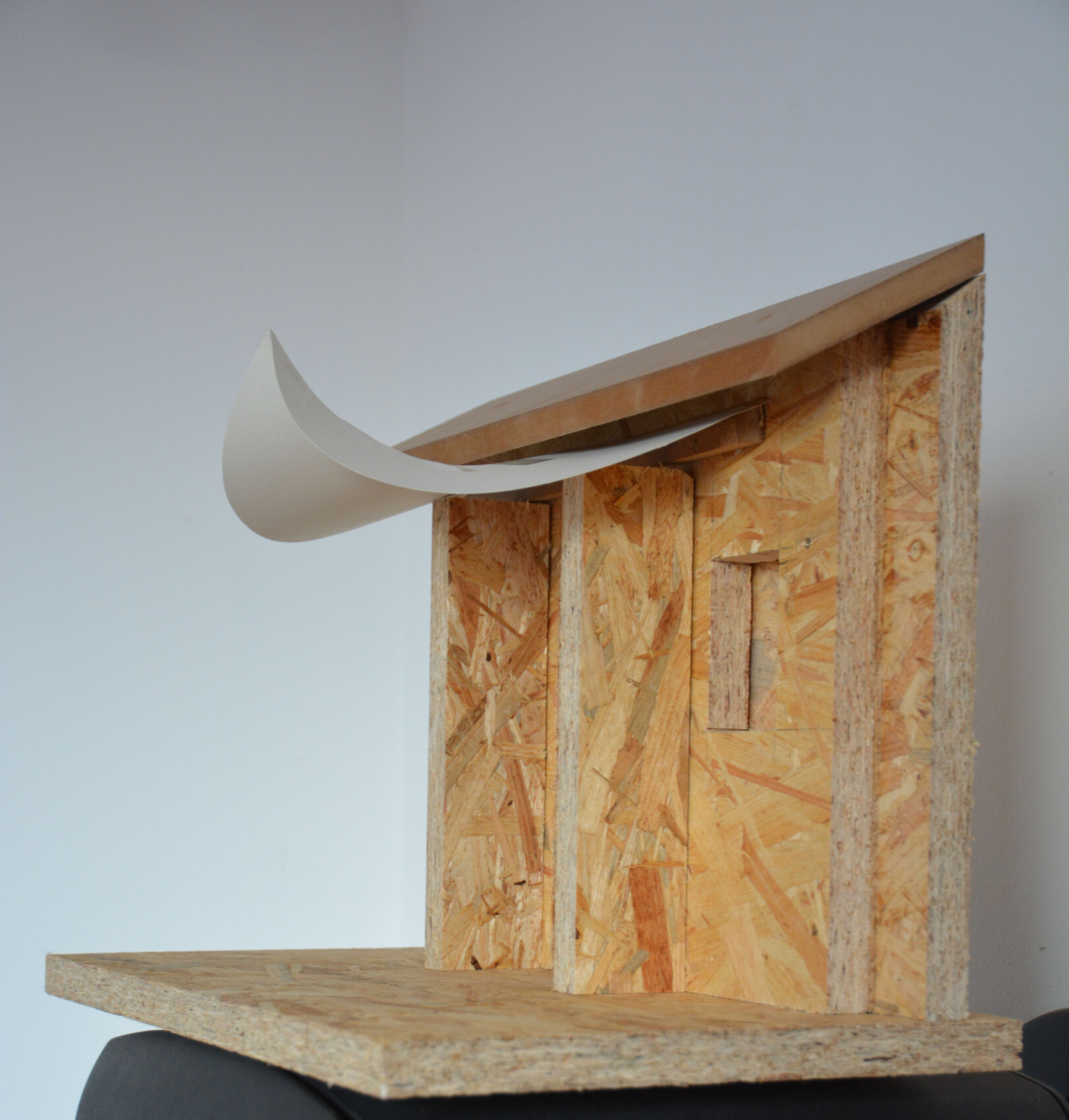
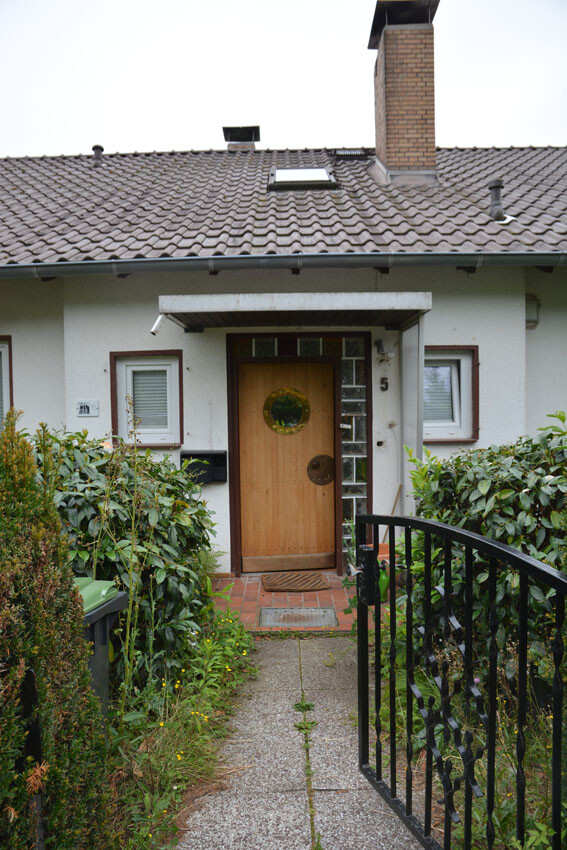
I am planning an entrance that brings joy both when passing by and walking through.
According to Hessian building regulations, you can construct an entrance area that isn’t too large without a building permit / planning permission. I like that.
I hope the pictures help to show what I mean.
In the third one, you can see the current condition ... I already "spruced up" the door a bit beforehand, but it’s not enough for me.
The roof (white here) will be covered with metal sheets. The door will be set slightly outward.
For now, it’s just an idea ... we’ll see ...

Earlier, I contacted a company that works with aluminum and seemed capable of handling this, but their quick response was:
"a welded construction is required, which is then anodized or powder coated"
One challenge appears to be that even professionals don’t always immediately understand what they are dealing with.
The part is quite simple in its design.
The shape is created from two flat surfaces joined at the center seam – almost automatically.
In one direction, the material remains straight at all times. The surface is not bent in three dimensions.
Simply brilliant, I say.
"a welded construction is required, which is then anodized or powder coated"
One challenge appears to be that even professionals don’t always immediately understand what they are dealing with.
The part is quite simple in its design.
The shape is created from two flat surfaces joined at the center seam – almost automatically.
In one direction, the material remains straight at all times. The surface is not bent in three dimensions.
Simply brilliant, I say.
Certainly, there are companies that can bend metal sheets of this size, (1.50 x 2.50 meters) (5 ft x 8 ft 2 in), but how do you find someone like that?
I have already spent quite some time searching online.
99% can bend narrow materials and profiles, but 1.50 meters (5 ft) wide… I haven’t found that one percent yet.
I have already spent quite some time searching online.
99% can bend narrow materials and profiles, but 1.50 meters (5 ft) wide… I haven’t found that one percent yet.

Meanwhile, I’m considering using multiple thin sheets instead of a single 3 or 4 mm (0.1 or 0.16 inch) thick sheet metal, which I can’t bend myself (because I can’t heat it up). These thinner sheets could be joined together in the desired shape.
I usually enjoy doing things myself (well, most of the time).
This experiment, however, is more ambitious than what I normally “dare” to try.
If it goes wrong, a lot of material will be wasted.
Here are two more pictures of the paper model, without the house. Maybe the shape can be seen better or differently this way.
I hope to be able to weld or solder the edges where several thin sheets lie on top of each other and are riveted together.
I think the seam in the middle would look best if welded, but in my mind it’s difficult to get the sheets close enough there to weld them properly.
An alternative would be an angled profile that tapers from 45° at one end to 0° at the other, which would then be riveted from the top as well as from the right and left.
The difficult part there is to “hit” the correct angle at the right spot.
If possible, I would also weld over the rivet points from above to prevent water from seeping in.
Well... all this now has only a slight connection to house building... but I enjoy it.

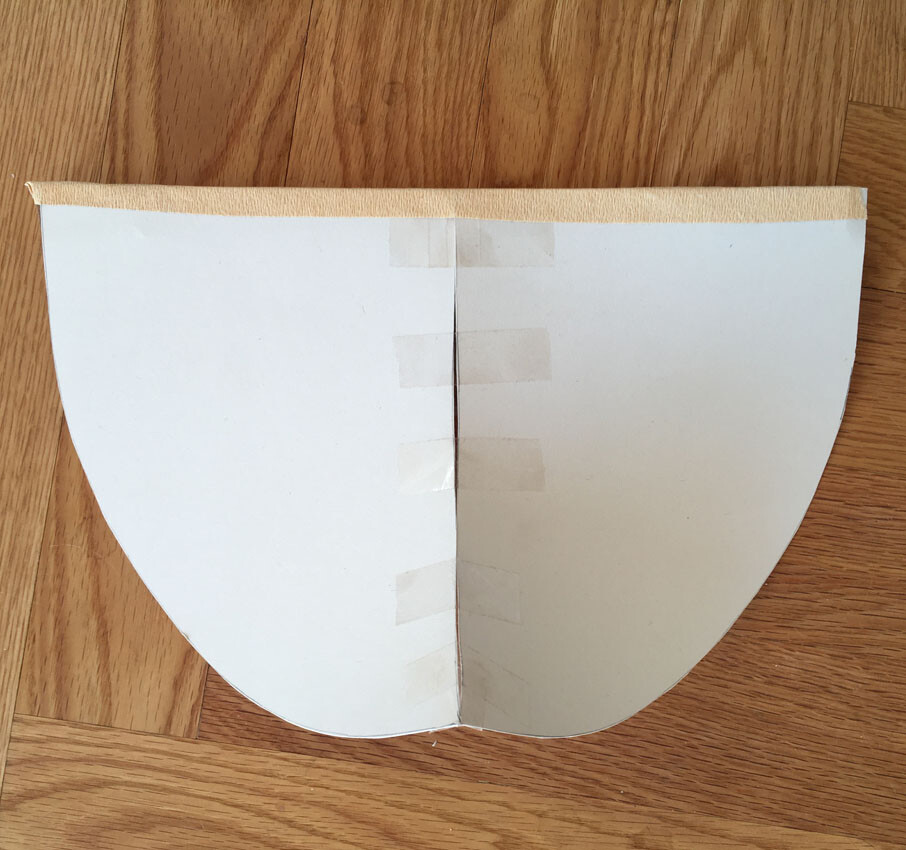
I usually enjoy doing things myself (well, most of the time).
This experiment, however, is more ambitious than what I normally “dare” to try.
If it goes wrong, a lot of material will be wasted.
Here are two more pictures of the paper model, without the house. Maybe the shape can be seen better or differently this way.
I hope to be able to weld or solder the edges where several thin sheets lie on top of each other and are riveted together.
I think the seam in the middle would look best if welded, but in my mind it’s difficult to get the sheets close enough there to weld them properly.
An alternative would be an angled profile that tapers from 45° at one end to 0° at the other, which would then be riveted from the top as well as from the right and left.
The difficult part there is to “hit” the correct angle at the right spot.
If possible, I would also weld over the rivet points from above to prevent water from seeping in.
Well... all this now has only a slight connection to house building... but I enjoy it.
Hello again,
If it only needs to be bent in one dimension, the process is quite straightforward.
My approach would be to have two 3mm (1/8 inch) aluminum sheets bent—there’s surely a metal fabrication workshop or sheet metal worker who can do this. You could then cut the sheets to size and prepare them for welding, create the flange for attaching to the house, have it welded, finish the weld seams and cut edges, and then have it coated.
All the stuff with wooden constructions, various substructures, multiple layers, and so on, just makes the whole thing look too heavy and bulky.
Olli
If it only needs to be bent in one dimension, the process is quite straightforward.
My approach would be to have two 3mm (1/8 inch) aluminum sheets bent—there’s surely a metal fabrication workshop or sheet metal worker who can do this. You could then cut the sheets to size and prepare them for welding, create the flange for attaching to the house, have it welded, finish the weld seams and cut edges, and then have it coated.
All the stuff with wooden constructions, various substructures, multiple layers, and so on, just makes the whole thing look too heavy and bulky.
Olli