
Hello everyone,
I have an appointment with my site manager next week. Before that, I wanted to gather some opinions and maybe someone has already experienced the same issue or at least seen it before.
The problem is as follows:
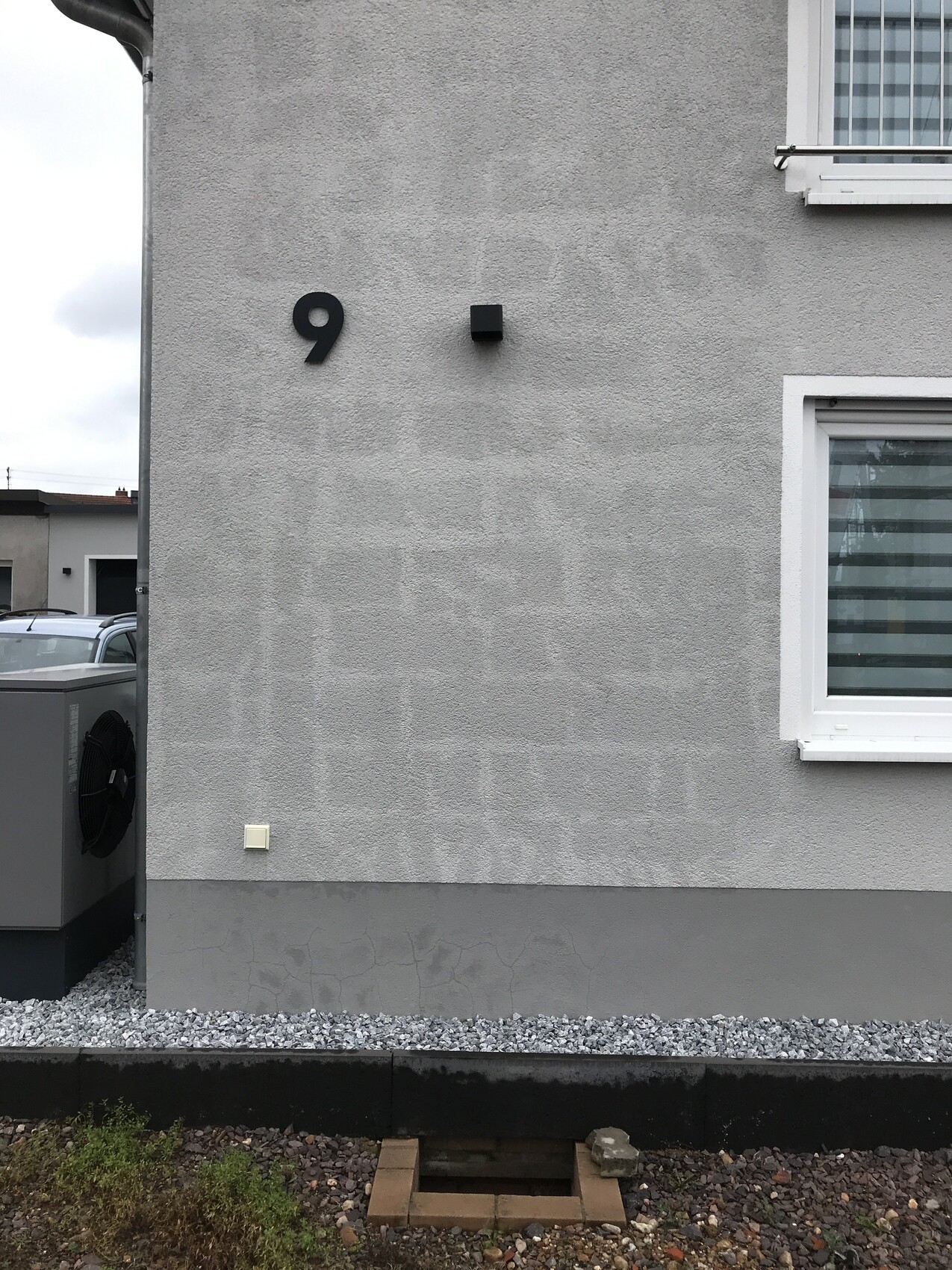
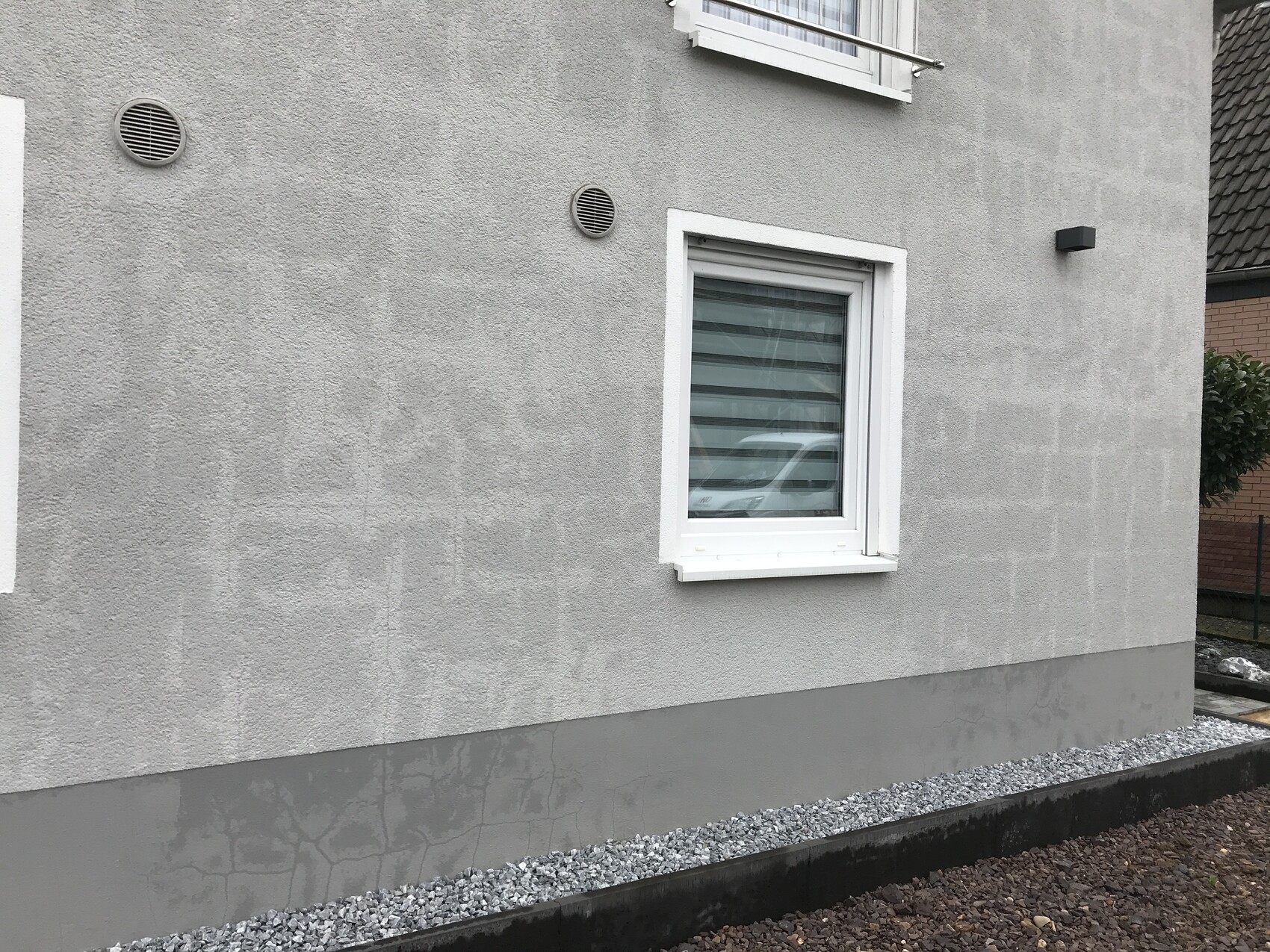
Last week, when it was raining very heavily and the wind was quite strong, our facade suddenly looked like this (see photo). You could clearly see the joints of the blocks through the render and there were slight cracks in the base area. Does anyone have any idea what this could be? Could this indicate a construction defect? For example, an insufficient base coat thickness?
Details about the house:
Year built: 2016
Masonry: 30 cm (12 inch) Ytong blocks, glued
Render: according to the building plan, 15 mm (0.6 inch) base coat and 3 mm (0.1 inch) top coat
I have an appointment with my site manager next week. Before that, I wanted to gather some opinions and maybe someone has already experienced the same issue or at least seen it before.
The problem is as follows:
Last week, when it was raining very heavily and the wind was quite strong, our facade suddenly looked like this (see photo). You could clearly see the joints of the blocks through the render and there were slight cracks in the base area. Does anyone have any idea what this could be? Could this indicate a construction defect? For example, an insufficient base coat thickness?
Details about the house:
Year built: 2016
Masonry: 30 cm (12 inch) Ytong blocks, glued
Render: according to the building plan, 15 mm (0.6 inch) base coat and 3 mm (0.1 inch) top coat
Bookstar schrieb:
Oh, and the heat pump probably shouldn’t be placed like that either; the distance to the house is definitely too small. I would also be concerned about the cracks, I just looked at them again.Is there some kind of guideline or regulation for this? At our neighbors’, they usually have it placed like that everywhere ops:
Similar topics