
ᐅ New Herringbone Beech Parquet, Oiled – What Are These Dents?
Created on: 1 May 2018 20:00
C
cmenschelC
cmenschel1 May 2018 20:00We had our floor (from the early 1990s) completely sanded and oiled in November 2017. It looked great at first. In some rooms, we also had new parquet flooring (herringbone beech, oiled) installed, replacing tiles.
Now, the "old" parquet already has several dents. The new parquet also has various dents and holes.
It looks particularly bad in the kitchen area. I don’t recall dropping any cutlery or plates.
We have no children or pets. We don’t walk on the floor with shoes.
The dents follow a recurring pattern. Could it possibly be caused by the vacuum cleaner?
See pictures attached.
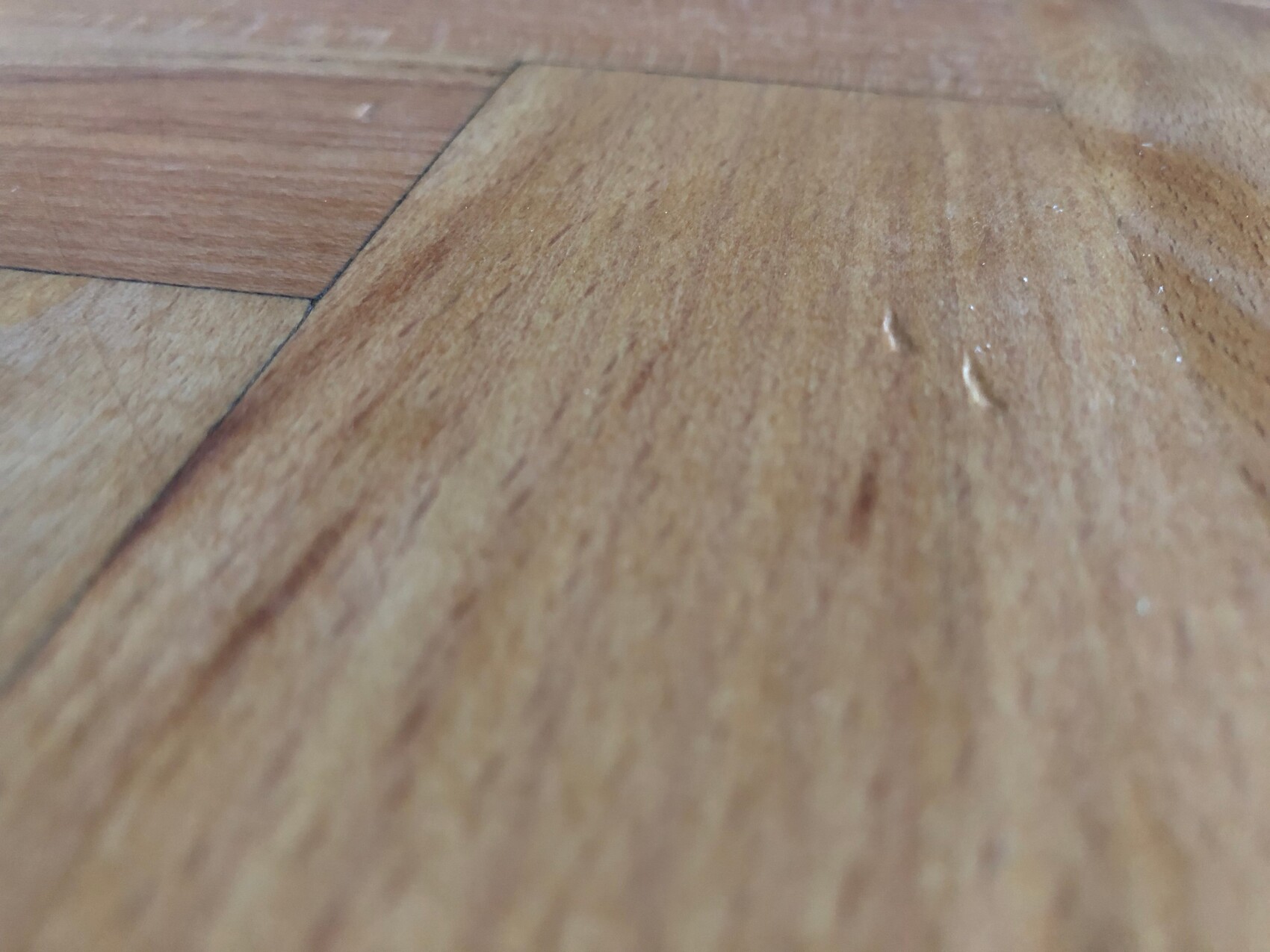


Now, the "old" parquet already has several dents. The new parquet also has various dents and holes.
It looks particularly bad in the kitchen area. I don’t recall dropping any cutlery or plates.
We have no children or pets. We don’t walk on the floor with shoes.
The dents follow a recurring pattern. Could it possibly be caused by the vacuum cleaner?
See pictures attached.

Hello questioner,
It is not possible to provide an answer about the causes without on-site knowledge. The statement that both the old and new parquet tend to dent is unusual and speaks against a batch defect. This suggests that these dents may be related to usage. This is speculation, of course, but without being there, no other conclusion is possible.
Please try the following on two or three dents:
Tear off small pieces of a tissue paper, dampen them well (should not drip), and place them directly on the dent.
Cover with a small container, e.g., a cappuccino cup, for about 8 hours.
After that, the dents treated in this way should have recovered on their own.
Regards, KlaRa
It is not possible to provide an answer about the causes without on-site knowledge. The statement that both the old and new parquet tend to dent is unusual and speaks against a batch defect. This suggests that these dents may be related to usage. This is speculation, of course, but without being there, no other conclusion is possible.
Please try the following on two or three dents:
Tear off small pieces of a tissue paper, dampen them well (should not drip), and place them directly on the dent.
Cover with a small container, e.g., a cappuccino cup, for about 8 hours.
After that, the dents treated in this way should have recovered on their own.
Regards, KlaRa

If you occasionally use the metal tube of the vacuum cleaner without the brush attached, the dents could actually come from that. The slight rounded shape of the dents looks like it. Unfortunately, I have managed to do that too :-(
I have been able to "iron out" many dents in our oiled parquet flooring using a little bit of water, really just a small amount, a cloth on top, and then gently ironing. If the wood fibers are not torn, this works really well. The compressed wood raises back up. Good luck!
I have been able to "iron out" many dents in our oiled parquet flooring using a little bit of water, really just a small amount, a cloth on top, and then gently ironing. If the wood fibers are not torn, this works really well. The compressed wood raises back up. Good luck!
Ibdk14 schrieb:
If you occasionally use the vacuum cleaner’s metal tube without a brush attachment, the dents could actually come from that. The slight curve of the dents looks like it. Unfortunately, I’ve managed to do the same :-(
I was able to "iron out" many dents in our oiled hardwood floor by using just a little water, a cloth on top, and then lightly ironing. As long as the wood grain isn’t torn, this works really well. The compressed wood fibers spring back. Good luck!That sounds very plausible. When the tube is directly on the surface, even if you’re careful and move it in circles, there can be a double contact—meaning the edge hits twice by accident. That’s how it is for me at least [emoji6]
And you can see it in the photos as well.
Similar topics