
ᐅ Screed cracked – Can it be repaired, or does it need to be replaced?
Created on: 19 Sep 2023 20:35
S
sysrun80A few weeks ago, we had the screed installed (including insulation and underfloor heating). Everything was dried and heated according to specifications.
Last week, the drywall installers came and completed their work.
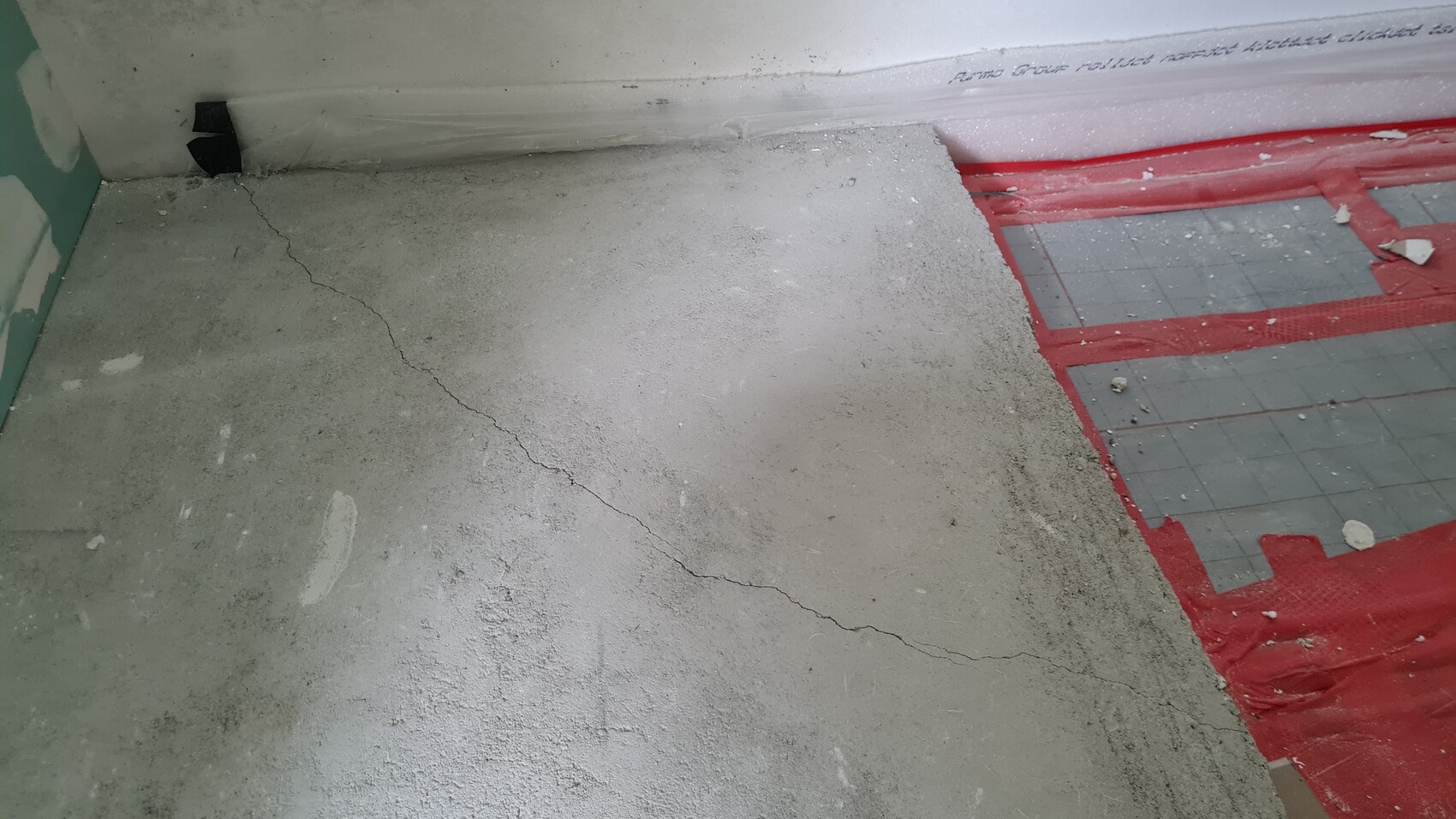
Today, when we checked again, I unfortunately noticed that the screed in the upstairs bathroom, where the shower is planned, is cracked. The crack is about 1.5m (5 feet) long.
This is frustrating, especially since the painter/floor installer is scheduled to start next week.
Does the screed need to be removed and re-poured, or are there other ways to fix this?
Last week, the drywall installers came and completed their work.
Today, when we checked again, I unfortunately noticed that the screed in the upstairs bathroom, where the shower is planned, is cracked. The crack is about 1.5m (5 feet) long.
This is frustrating, especially since the painter/floor installer is scheduled to start next week.
Does the screed need to be removed and re-poured, or are there other ways to fix this?
X
xMisterDx20 Sep 2023 04:37What does the construction manager say about that? You must have called him immediately and informed him about the mishap, right? If he says, "Yes, damn it, it needs to be redone," then that issue would already be settled.
H
hanghaus202320 Sep 2023 14:02What is this?
I filled cracks in my garage with resin. You cut into the crack a bit with an angle grinder (10mm (0.4 inches) deep) and then fill it up until nothing more seeps out.
It has held up without issues under car load for 20 years.

If the impact sound insulation beneath the broken section is as carelessly installed as in the visible part of the recessed shower area, I’m not surprised it broke. However, since the perspective of the photo doesn’t even give a hint of the overlap height, I can’t say much more except: It’s better to have it properly repaired now than to deal with cracks in the tiles later.
From my experience, screed layers are usually handled rather roughly. In such problematic areas, it’s best to be present and watch very closely.
From my experience, screed layers are usually handled rather roughly. In such problematic areas, it’s best to be present and watch very closely.
X
xMisterDx21 Sep 2023 19:00I would like to see a person with poor coordination who can level a cement screed smoothly over areas of 10, 20, or 40 m² (107, 215, or 430 sq ft)... what is the point of such statements?

@ sysrun80:
It is unusual for the screed to crack given this length-to-width ratio, just so you know!
It seems unlikely to me that this is a heated screed, since although a type of system underlay covering the insulation is visible, the exposed heating elements typical of heated screeds cannot be seen.
The heating elements must be exposed so that the screed mortar can integrate and surround them in the lower edge zone during installation.
Also, one of the installations wrapped with tape is placed so close to the wall that a proper heated screed is certainly not possible there.
I rather think that these wrapped installations are electrical or of another type; which, in any case, are protected with red tape against the alkaline screed mortar in an unprofessional manner. Or perhaps they were intended to lie on the system foil during screed installation (to prevent them from bending further into the screed structure due to bending moments).
If the screed was applied at the typical thickness for living spaces, it would be about 45mm (1.77 inches) thick, but the installations then create an impermissible cross-sectional narrowing in the screed structure, which under mechanical stress could act as an unintended "predetermined breaking point."
Looking at the end of the curved crack, you can see an object at the wall junction, a feature that could very well indicate the endpoint of an electrical or other installation.
In this case, my earlier remark fully applies that the screed cracked at that point due to mechanical overstrain above the installation route.
The question of how to proceed further can only be answered without risk if the screed is opened at a point along the crack. This allows measuring the screed thickness.
If the thickness is less than 45mm (1.77 inches) for a cement screed, the existing floor structure must be corrected.
Under normal circumstances, this would mean removing the screed and relocating the installation lines into the insulation layer.
Simply sealing the crack with a low-viscosity epoxy resin would be like turning a blind eye to the real problem—merely masking the cause. Because the likelihood is quite high that new cracks will appear later, once everything is furnished and the living space is in use, and this time also in the floor covering.
------------------------------
Wishing you a good decision: KlaRa
It is unusual for the screed to crack given this length-to-width ratio, just so you know!
It seems unlikely to me that this is a heated screed, since although a type of system underlay covering the insulation is visible, the exposed heating elements typical of heated screeds cannot be seen.
The heating elements must be exposed so that the screed mortar can integrate and surround them in the lower edge zone during installation.
Also, one of the installations wrapped with tape is placed so close to the wall that a proper heated screed is certainly not possible there.
I rather think that these wrapped installations are electrical or of another type; which, in any case, are protected with red tape against the alkaline screed mortar in an unprofessional manner. Or perhaps they were intended to lie on the system foil during screed installation (to prevent them from bending further into the screed structure due to bending moments).
If the screed was applied at the typical thickness for living spaces, it would be about 45mm (1.77 inches) thick, but the installations then create an impermissible cross-sectional narrowing in the screed structure, which under mechanical stress could act as an unintended "predetermined breaking point."
Looking at the end of the curved crack, you can see an object at the wall junction, a feature that could very well indicate the endpoint of an electrical or other installation.
In this case, my earlier remark fully applies that the screed cracked at that point due to mechanical overstrain above the installation route.
The question of how to proceed further can only be answered without risk if the screed is opened at a point along the crack. This allows measuring the screed thickness.
If the thickness is less than 45mm (1.77 inches) for a cement screed, the existing floor structure must be corrected.
Under normal circumstances, this would mean removing the screed and relocating the installation lines into the insulation layer.
Simply sealing the crack with a low-viscosity epoxy resin would be like turning a blind eye to the real problem—merely masking the cause. Because the likelihood is quite high that new cracks will appear later, once everything is furnished and the living space is in use, and this time also in the floor covering.
------------------------------
Wishing you a good decision: KlaRa
Similar topics