
Hello,
Yesterday we had the final inspection (new build). There are 40 terraced houses, but it seems that only we have this problem.
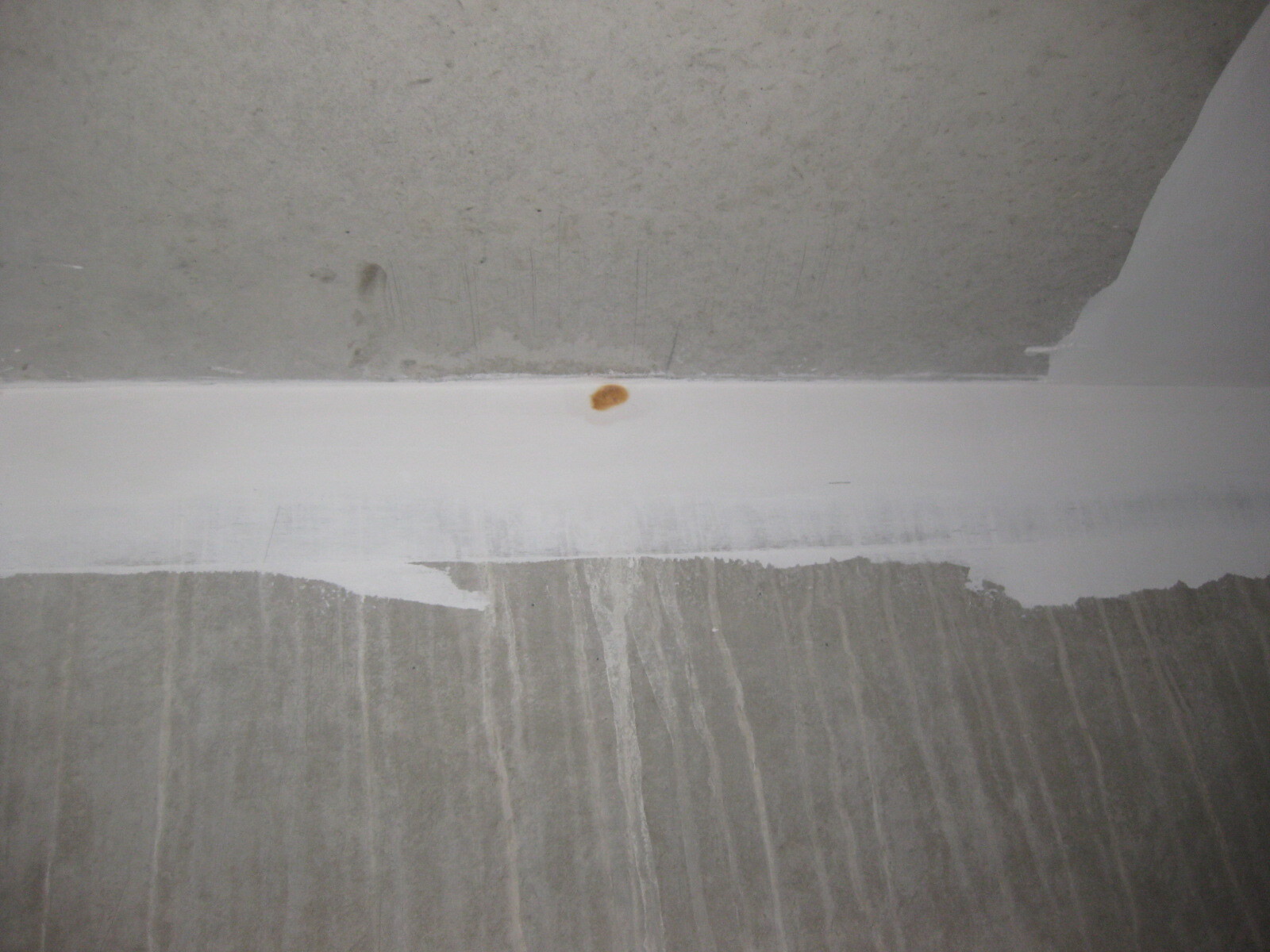
There are several rust spots between the ceilings and walls on the ground floor. In total, we noticed 6 spots. Two rust spots are quite large, about 3cm (1.2 inches), another spot is about 5mm (0.2 inches), all distributed on the ground floor. Attached is a photo of the largest rust spot. The area is still damp.
The site manager said this comes from the connections between the concrete walls. He will fix these defects. We have the handover appointment in 3 weeks, and these issues will be corrected by then.
We recorded this in the protocol and accepted the house.
However, I couldn’t sleep last night. Is what the site manager said correct? If the defect is not properly repaired, will the house become unstable after a few years? It doesn’t seem easy to fix these defects.
What should we do now? Unfortunately, we have no experience with this...
Thank you very much for your help.
Yesterday we had the final inspection (new build). There are 40 terraced houses, but it seems that only we have this problem.
There are several rust spots between the ceilings and walls on the ground floor. In total, we noticed 6 spots. Two rust spots are quite large, about 3cm (1.2 inches), another spot is about 5mm (0.2 inches), all distributed on the ground floor. Attached is a photo of the largest rust spot. The area is still damp.
The site manager said this comes from the connections between the concrete walls. He will fix these defects. We have the handover appointment in 3 weeks, and these issues will be corrected by then.
We recorded this in the protocol and accepted the house.
However, I couldn’t sleep last night. Is what the site manager said correct? If the defect is not properly repaired, will the house become unstable after a few years? It doesn’t seem easy to fix these defects.
What should we do now? Unfortunately, we have no experience with this...
Thank you very much for your help.


Hello "Nemnem".
The photo is sufficiently informative (at least for me).
If this were caused by embedded reinforcing steel in the concrete, the situation would look different.
There are no steel reinforcements in masonry walls, and there is no reason for them to be there.
If you open the spot we see in the photo up to its cause, you will find that something (let's call it "tie wire") was installed there, which normally doesn’t belong in that location.
Reinforcing steel would only rust if the minimum concrete cover was not maintained. In that case, rust-induced spalling would occur over the following years, leading to an “unhappy end.”
However, I do not see that happening in your case. Therefore, I partly agree with the previous commenter who describes this as a “visual issue.” Nevertheless, it is something that must be addressed (not just can).
-----------------------
Regards, KlaRa
The photo is sufficiently informative (at least for me).
If this were caused by embedded reinforcing steel in the concrete, the situation would look different.
There are no steel reinforcements in masonry walls, and there is no reason for them to be there.
If you open the spot we see in the photo up to its cause, you will find that something (let's call it "tie wire") was installed there, which normally doesn’t belong in that location.
Reinforcing steel would only rust if the minimum concrete cover was not maintained. In that case, rust-induced spalling would occur over the following years, leading to an “unhappy end.”
However, I do not see that happening in your case. Therefore, I partly agree with the previous commenter who describes this as a “visual issue.” Nevertheless, it is something that must be addressed (not just can).
-----------------------
Regards, KlaRa
K
Knallkörper26 Aug 2017 13:49I would fully agree with KlaRa. But what if it is reinforcement that is not properly covered at these points? Can this be ruled out?
Similar topics