
ᐅ Open-Plan Living Area with Kitchen: Which Flooring Materials Are Suitable?
Created on: 28 Feb 2021 11:11
F
Forsberg21
Hi,
For my new apartment (which will be rented out), I need to choose the floor materials. The living room floor will be brushed oak, finished with natural oil (similar to the second photo).
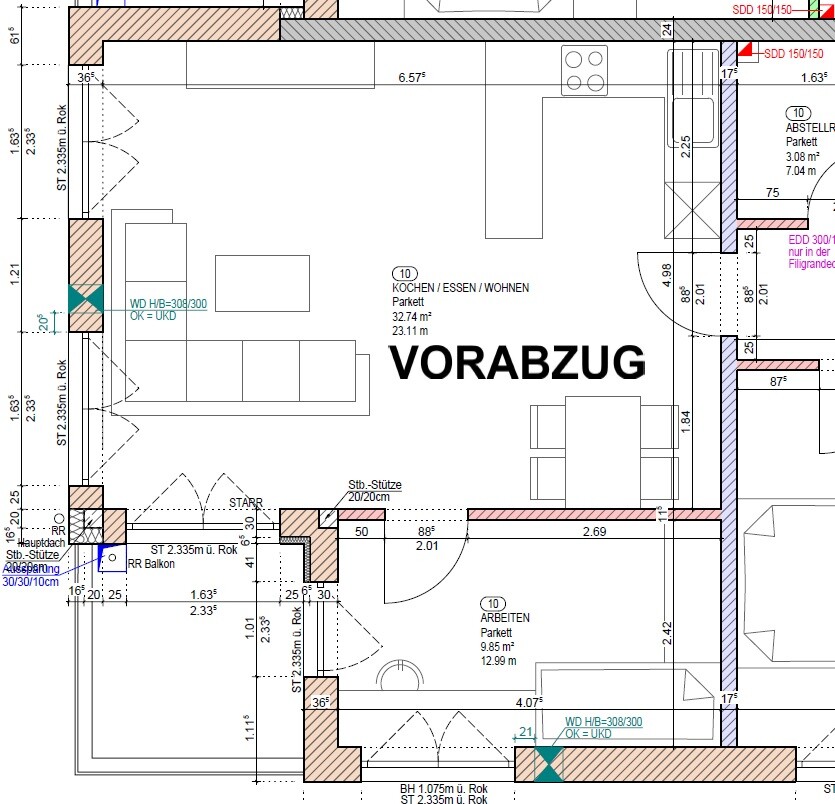
Nowadays, it is common for the entire living and dining area, including the kitchen, to be fitted with hardwood flooring. However, since I’m renting out the apartment and personally prefer tiles in the kitchen area (due to water exposure), I plan to have tiles installed in the kitchen. The first photo shows the kitchen layout.
Here are my questions:
1. Does this seem old-fashioned, or are there any disadvantages to this approach?
2. What size and color would you recommend? I was thinking of 30 x 60 cm (12 x 24 inches) cream-colored tiles. Would square tiles (50 x 50 cm, 20 x 20 inches) be better?
3. What else should I pay attention to? At the transition between tiles and hardwood flooring, it is important that no tile edge is visible, as that would look really unattractive.
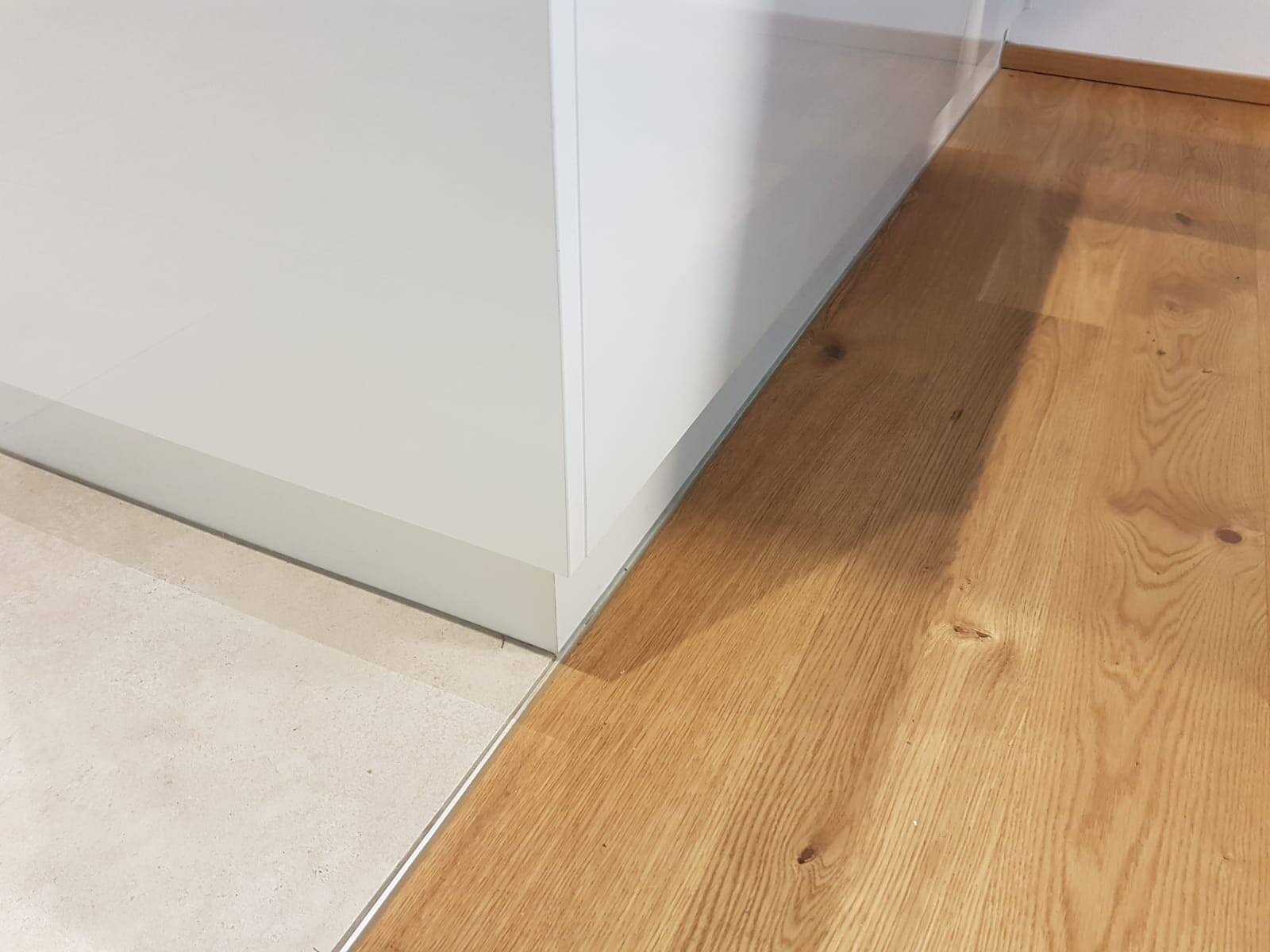
For my new apartment (which will be rented out), I need to choose the floor materials. The living room floor will be brushed oak, finished with natural oil (similar to the second photo).
Nowadays, it is common for the entire living and dining area, including the kitchen, to be fitted with hardwood flooring. However, since I’m renting out the apartment and personally prefer tiles in the kitchen area (due to water exposure), I plan to have tiles installed in the kitchen. The first photo shows the kitchen layout.
Here are my questions:
1. Does this seem old-fashioned, or are there any disadvantages to this approach?
2. What size and color would you recommend? I was thinking of 30 x 60 cm (12 x 24 inches) cream-colored tiles. Would square tiles (50 x 50 cm, 20 x 20 inches) be better?
3. What else should I pay attention to? At the transition between tiles and hardwood flooring, it is important that no tile edge is visible, as that would look really unattractive.

We have this type of flooring in our rental apartment 😉
It’s more durable than I expected, but still not very hard-wearing. Water stains have to be cleaned immediately (!) or else they become impossible to remove.
In the kitchen, you can clearly see wear marks and so on, even though we are really careful. It’s just a high-traffic area and we cook every day.
Who is planned to live there as a tenant? With children, I would find this a nightmare, which is why we’re not using this flooring in our own house, even though we like it a lot and especially appreciate that it feels warm underfoot.
For now, we’re opting for vinyl while our little one is small; alternatively, we would have chosen floor tiles with a wood look and underfloor heating.
But I don’t like regular tiles at all, especially not transitions (in our home).
It’s more durable than I expected, but still not very hard-wearing. Water stains have to be cleaned immediately (!) or else they become impossible to remove.
In the kitchen, you can clearly see wear marks and so on, even though we are really careful. It’s just a high-traffic area and we cook every day.
Who is planned to live there as a tenant? With children, I would find this a nightmare, which is why we’re not using this flooring in our own house, even though we like it a lot and especially appreciate that it feels warm underfoot.
For now, we’re opting for vinyl while our little one is small; alternatively, we would have chosen floor tiles with a wood look and underfloor heating.
But I don’t like regular tiles at all, especially not transitions (in our home).
minimini schrieb:
You can clearly see wear marks in the kitchen, even though we are really careful. It’s used a lot since we cook every day.Is yours oiled or lacquered?
Oiled: You can see stains from grease, water, coffee, tea, etc. if not wiped immediately (we use this in our kitchen, and yes, you can see signs of wear, but it’s fine for us – and we don’t have children or pets).
Lacquered: Water and similar can be wiped off easily, but every scratch remains visible (dog claws leave pretty noticeable marks!). Personally, I find scratches on lacquered parquet more unattractive than the wear marks on oiled parquet.
I wouldn’t install either of these in a rental property. You never know how tenants will treat your belongings. Sometimes it’s unbelievable. Since it’s not theirs, they often don’t take care of it. That’s why I’d lean towards vinyl flooring. I find the texture more pleasant than laminate; it’s also durable in the kitchen area and significantly cheaper than real wood flooring. You’ll also have tenants who say, well, after 10 years it’s time for a new floor anyway, so don’t get upset about scratches or other damage.
They’re right to an extent, because there are general guidelines for bathrooms, floors, etc. in rental properties. This means if a tenant has lived there for 13 years and has been very messy, you generally can’t complain about the toilet being filthy or the shower wall heavily scaled. After 10 years, a bathroom renovation is considered acceptable in terms of tenant protection.
Therefore: choose low-maintenance and durable floors and bathroom fixtures, not necessarily high-end options.
Unless it’s a very exclusive apartment. In that case, you usually have a somewhat different clientele.
Lacquered: Water and similar can be wiped off easily, but every scratch remains visible (dog claws leave pretty noticeable marks!). Personally, I find scratches on lacquered parquet more unattractive than the wear marks on oiled parquet.
I wouldn’t install either of these in a rental property. You never know how tenants will treat your belongings. Sometimes it’s unbelievable. Since it’s not theirs, they often don’t take care of it. That’s why I’d lean towards vinyl flooring. I find the texture more pleasant than laminate; it’s also durable in the kitchen area and significantly cheaper than real wood flooring. You’ll also have tenants who say, well, after 10 years it’s time for a new floor anyway, so don’t get upset about scratches or other damage.
They’re right to an extent, because there are general guidelines for bathrooms, floors, etc. in rental properties. This means if a tenant has lived there for 13 years and has been very messy, you generally can’t complain about the toilet being filthy or the shower wall heavily scaled. After 10 years, a bathroom renovation is considered acceptable in terms of tenant protection.
Therefore: choose low-maintenance and durable floors and bathroom fixtures, not necessarily high-end options.
Unless it’s a very exclusive apartment. In that case, you usually have a somewhat different clientele.
H
HansDampf131111 Mar 2021 15:35I can only share my perspective as a tenant living in an apartment with hardwood flooring. If I were a landlord, I would never install hardwood floors. I took great care of the floor since it wasn’t my property, yet it still ended up with numerous scratches and marks from things I never would have expected. For example, I placed a rug under the dining table to protect the floor from the chairs – only to find out that the seam of the rug left an impression on the floor behind it.
F
Forsberg2111 Mar 2021 19:25I understand where you’re coming from. In my case, the hallway and kitchen area in the living room are tiled. Currently, it seems fashionable to have nearly all rooms floored with hardwood. Especially in modern open-plan layouts with kitchens, almost everything is covered with hardwood. I can’t imagine that this will hold up well in the long run.
Similar topics