
ᐅ Moisture or Water Stains in the Basement After Heating Cycle
Created on: 26 Oct 2022 13:51
C
clausen77C
clausen7726 Oct 2022 13:51Hello everyone,
We have now completed the screed heating protocol, and according to the tiler, the screed is well dried.
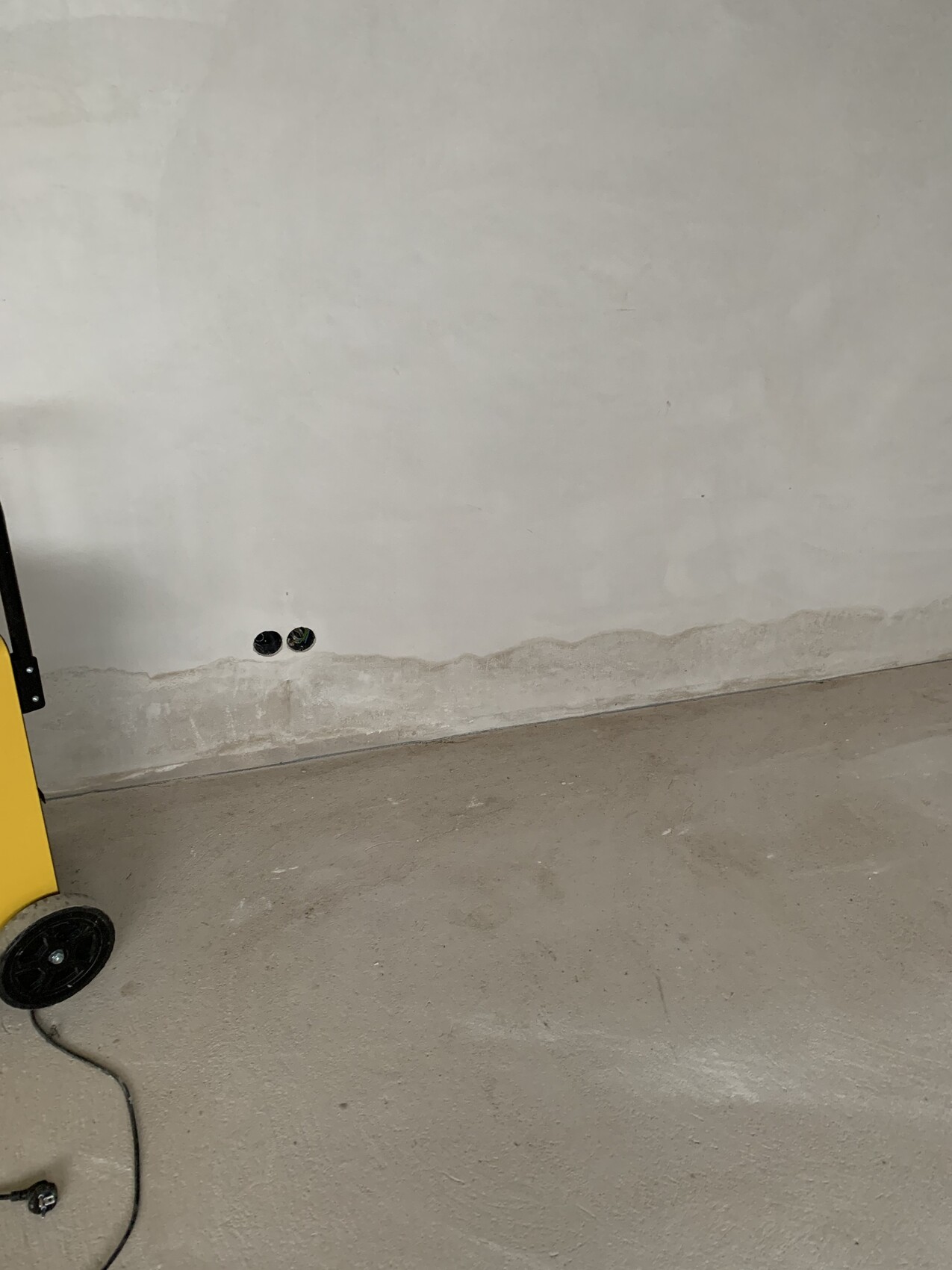
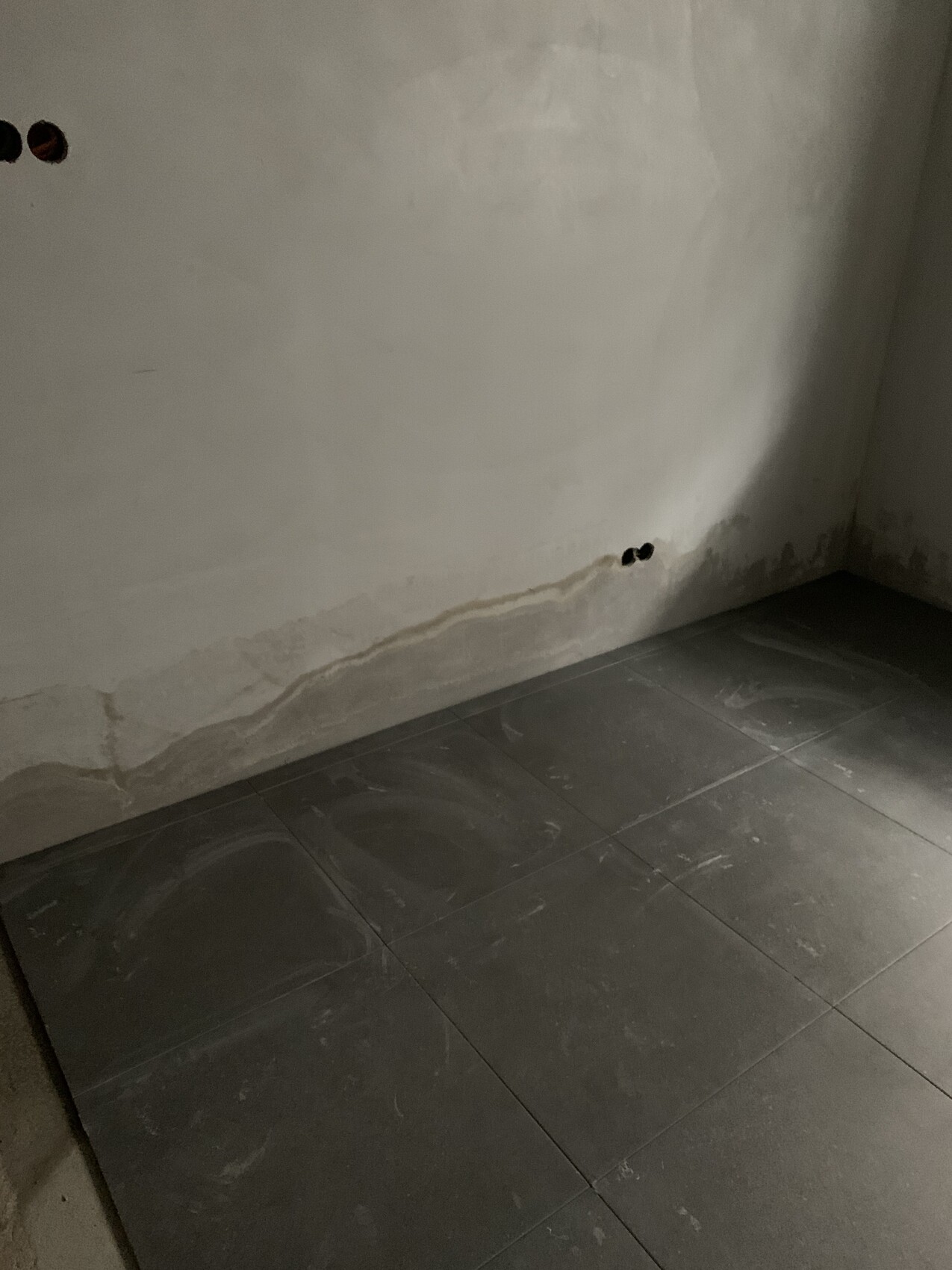
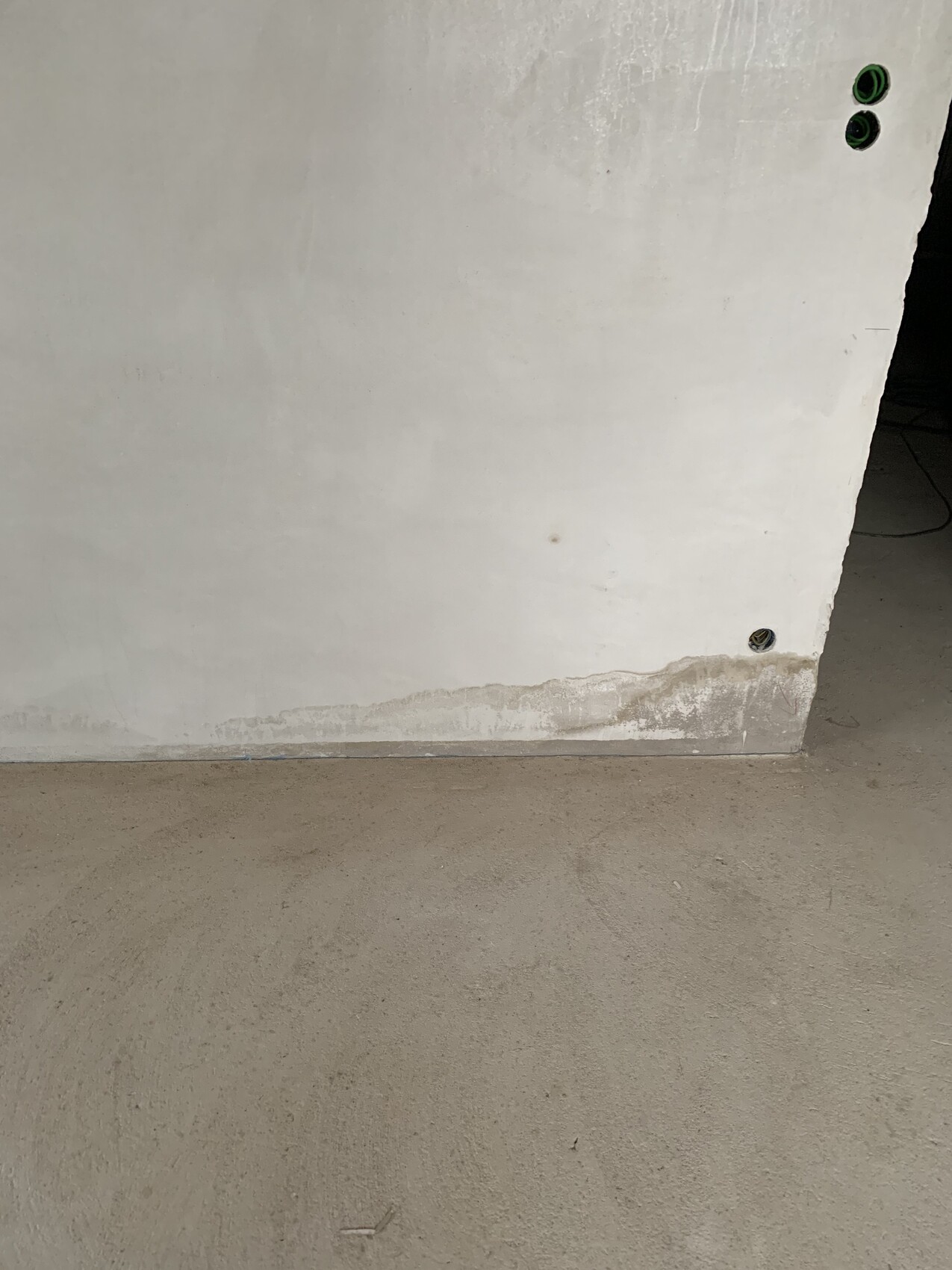
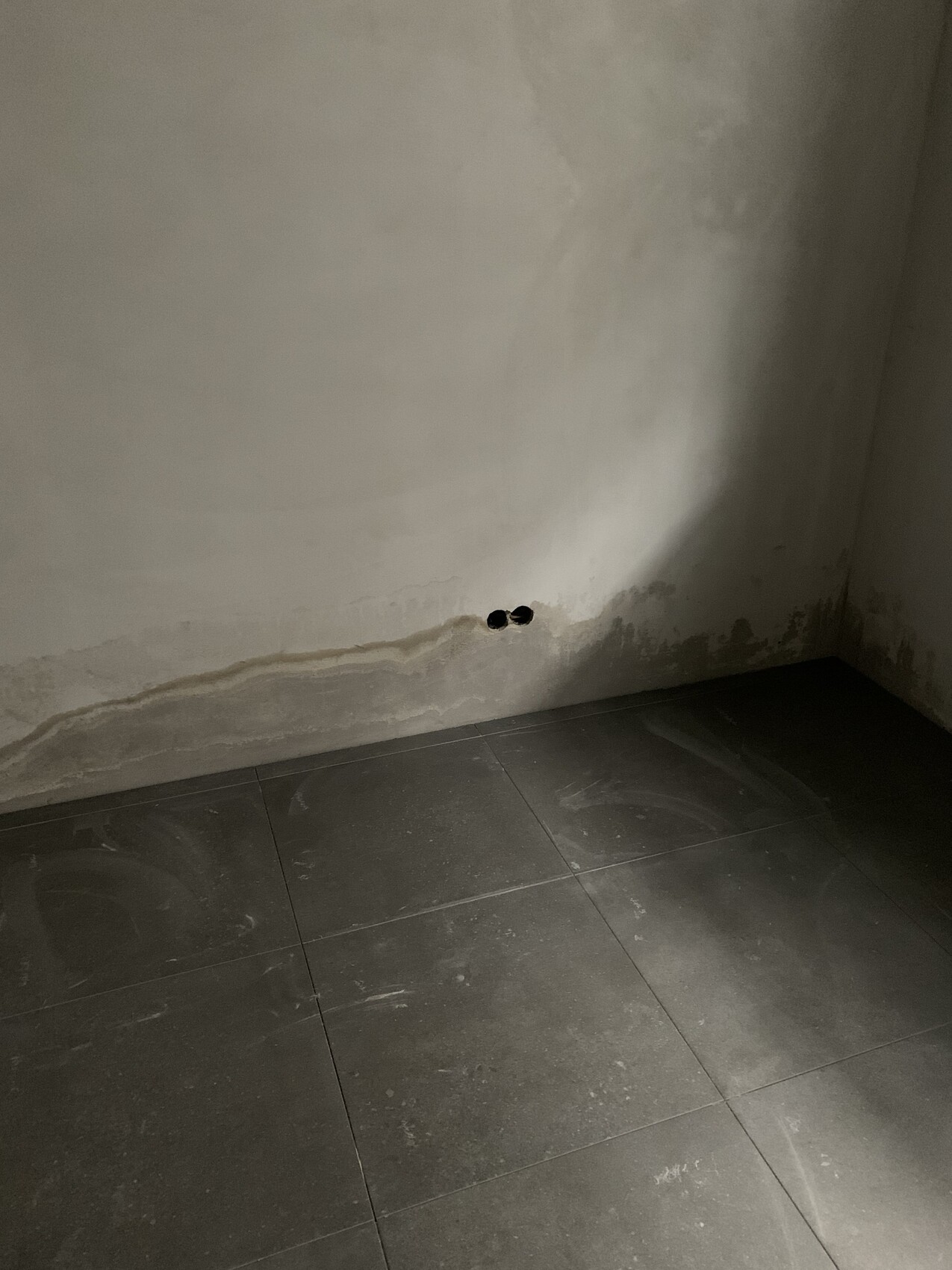
However, during the heating phase, water stains appeared on the walls in two larger rooms in the basement only (see photos).
Our site manager now suggests setting up drying equipment. Is this the right approach? I would also like to understand why the stains appeared at all (only in the basement, not on the ground or upper floors). Was it due to improper execution of the heating program? There was a dehumidifier in one of the rooms, but in my opinion, it was emptied too infrequently (whenever I was there, the container was full and I emptied it).
The basement itself is constructed as a waterproof concrete structure ("white tank") and the seals looked good. However, it rained several times during the heating phase.
Thank you very much for your advice.

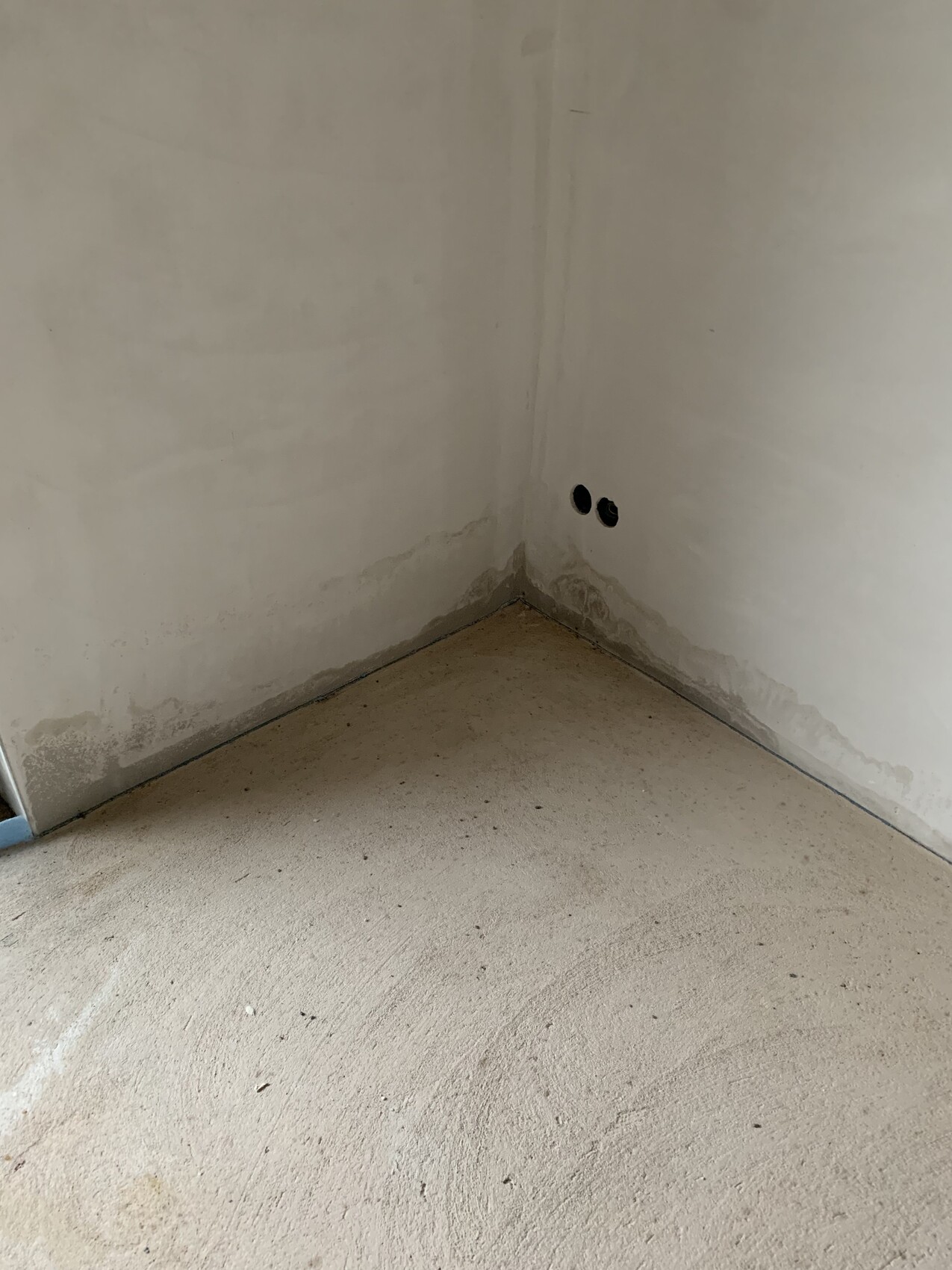
We have now completed the screed heating protocol, and according to the tiler, the screed is well dried.
However, during the heating phase, water stains appeared on the walls in two larger rooms in the basement only (see photos).
Our site manager now suggests setting up drying equipment. Is this the right approach? I would also like to understand why the stains appeared at all (only in the basement, not on the ground or upper floors). Was it due to improper execution of the heating program? There was a dehumidifier in one of the rooms, but in my opinion, it was emptied too infrequently (whenever I was there, the container was full and I emptied it).
The basement itself is constructed as a waterproof concrete structure ("white tank") and the seals looked good. However, it rained several times during the heating phase.
Thank you very much for your advice.

Hello "Clausen77".
Some issues in construction technology cannot be resolved easily, or only with considerable effort.
I am writing this to you as an expert in the field!
In the case you described, I would indeed follow the site manager's advice and wait to see how the situation develops on the lower wall surfaces.
It is definitely not due to a "wrong heating program."
Whether it makes sense to use forced drying equipment depends on the indoor humidity levels you measure at a given room temperature.
A "white tank" (watertight concrete structure) does not mean it is vapor-proof against water vapor; it means it is sealed against liquid water.
What is visible in the photos is by no means dramatic.
However, the situation should be monitored carefully without causing unnecessary alarm.
--------------------
Regards, KlaRa
Some issues in construction technology cannot be resolved easily, or only with considerable effort.
I am writing this to you as an expert in the field!
In the case you described, I would indeed follow the site manager's advice and wait to see how the situation develops on the lower wall surfaces.
It is definitely not due to a "wrong heating program."
Whether it makes sense to use forced drying equipment depends on the indoor humidity levels you measure at a given room temperature.
A "white tank" (watertight concrete structure) does not mean it is vapor-proof against water vapor; it means it is sealed against liquid water.
What is visible in the photos is by no means dramatic.
However, the situation should be monitored carefully without causing unnecessary alarm.
--------------------
Regards, KlaRa
C
clausen774 Nov 2022 15:00Hello KlaRa, thank you very much for your assessment and for taking the time to respond so thoroughly. That already reassures me a bit.
I will continue to report on any further developments regarding the screed.
I will continue to report on any further developments regarding the screed.
Similar topics