
Hello everyone,
I’m currently unsure whether we need a backflow prevention device for our construction project or not. Our architect was only somewhat helpful and said that we “actually” don’t need one, but if we wanted to be on the safe side, we could of course have one installed.
Here are the key details:
The plot is connected to a separate sewer system.
We are building without a basement and have no shower on the ground floor, meaning the lowest wastewater outlet in the house should be the toilet on the ground floor.
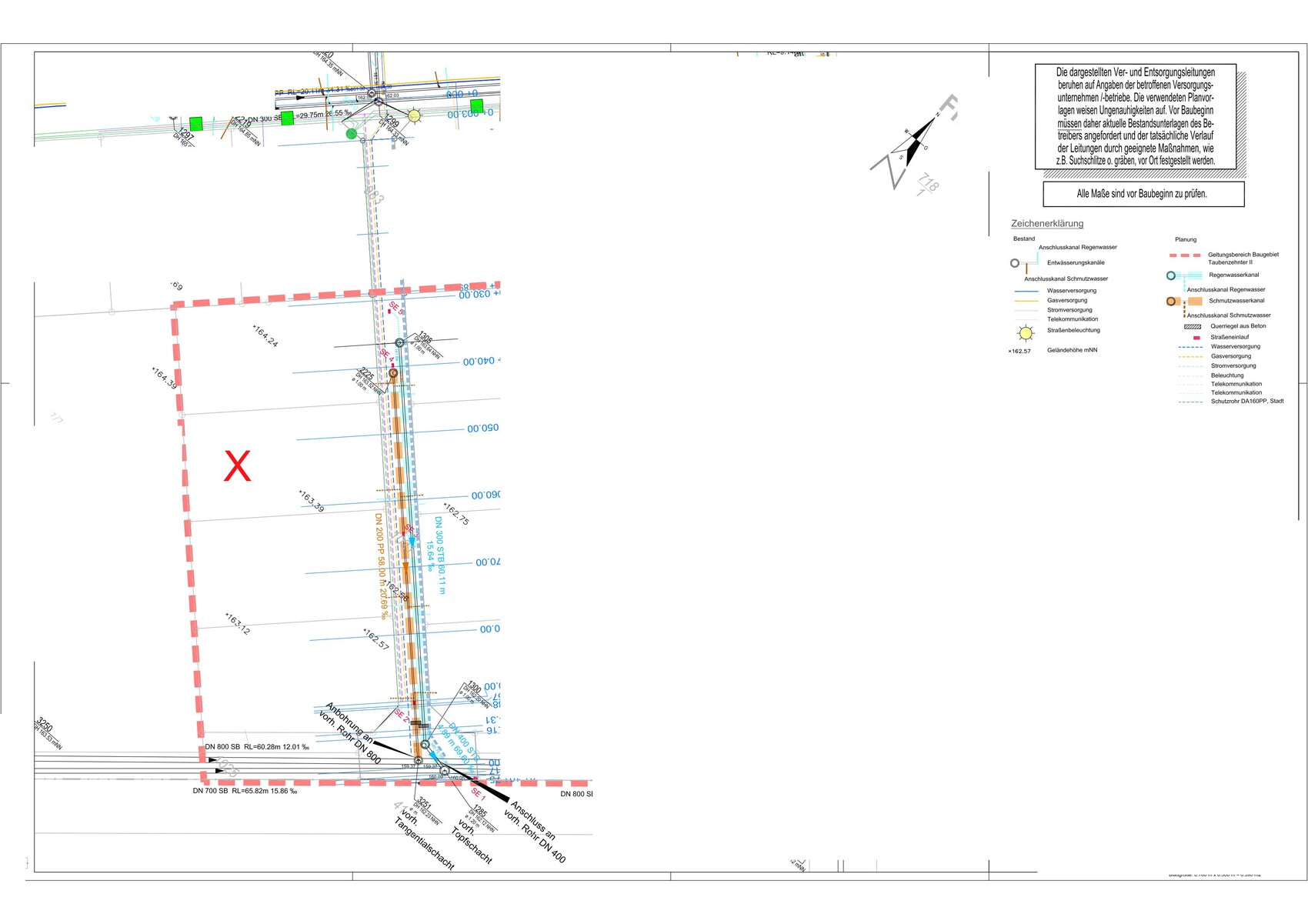
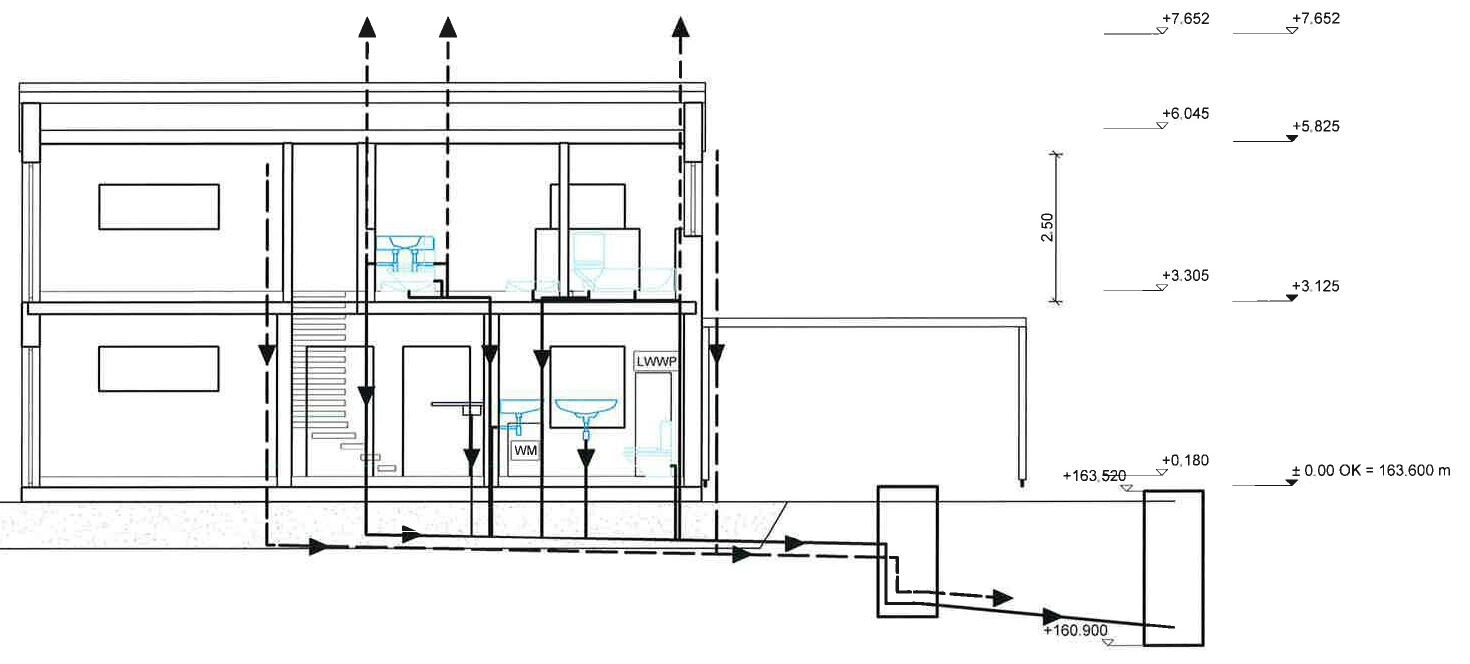
The plot is located on a slightly sloping street (downhill from top to bottom according to the plan). Attached are the city’s drainage plan and a cross-section of the planned house, both with elevation details.
The city’s drainage regulations contain no information regarding the backflow level, which I understand to mean that the street elevation corresponds to the backflow level (please correct me if this is wrong).
Based on this, I understand the situation as follows:
- The nearest manhole cover uphill from our plot is at 163.52m NHN (according to the plan provided by our surveyor for the building permit, it is at 163.48m NHN). The nearest manhole cover downhill is at 162.23m NHN.
- The top of the floor slab is at 163.30m NHN, plus 0.18m (7 inches) floor build-up, plus about 0.20m (8 inches) to the toilet outlet = 163.68m NHN.
As a non-expert, I would conclude that a backflow prevention device is not necessary since the lowest outlet is 16 (or rather 20) centimeters (6 or 8 inches) higher than the nearest uphill manhole cover. Is that correct?
However, I wonder why the architect said that I could “install a backflow prevention device to be on the safe side.” Of course, I could just ask him, but I wanted to inform myself here first to better understand his answer.
Thank you all in advance and have a nice second Advent!
I’m currently unsure whether we need a backflow prevention device for our construction project or not. Our architect was only somewhat helpful and said that we “actually” don’t need one, but if we wanted to be on the safe side, we could of course have one installed.
Here are the key details:
The plot is connected to a separate sewer system.
We are building without a basement and have no shower on the ground floor, meaning the lowest wastewater outlet in the house should be the toilet on the ground floor.
The plot is located on a slightly sloping street (downhill from top to bottom according to the plan). Attached are the city’s drainage plan and a cross-section of the planned house, both with elevation details.
The city’s drainage regulations contain no information regarding the backflow level, which I understand to mean that the street elevation corresponds to the backflow level (please correct me if this is wrong).
Based on this, I understand the situation as follows:
- The nearest manhole cover uphill from our plot is at 163.52m NHN (according to the plan provided by our surveyor for the building permit, it is at 163.48m NHN). The nearest manhole cover downhill is at 162.23m NHN.
- The top of the floor slab is at 163.30m NHN, plus 0.18m (7 inches) floor build-up, plus about 0.20m (8 inches) to the toilet outlet = 163.68m NHN.
As a non-expert, I would conclude that a backflow prevention device is not necessary since the lowest outlet is 16 (or rather 20) centimeters (6 or 8 inches) higher than the nearest uphill manhole cover. Is that correct?
However, I wonder why the architect said that I could “install a backflow prevention device to be on the safe side.” Of course, I could just ask him, but I wanted to inform myself here first to better understand his answer.
Thank you all in advance and have a nice second Advent!

BananaJoe schrieb:
We don’t have a basement, but I thought that if the relevant wastewater contains fecal matter (which would be the case for toilets in our home), a type 3F backwater valve would be required – I saw those cost over 1000 euros in the first Google search. That’s probably correct, but since we don’t have a toilet in the basement, the mechanical option was sufficient. In any case: a good decision to install the backflow prevention device!

B
BananaJoe7 Dec 2020 10:08Nida35a schrieb:
where do you want to install them without a basementNaive as I am, I thought in the inspection shaft? But to be honest, I don’t know. However, it should also be possible to plan and install a backwater valve in houses without a basement, right?
BananaJoe schrieb:
Naive as I am, I thought it should go into the inspection chamber? But to be honest, I’m not sure. However, it must also be possible to plan and install a backwater valve in houses without basements, right?Yes, definitely. Backwater valves are available as retrofit kits for the inspection opening. You just need to make sure the models are compatible.Similar topics