
ᐅ Interior walls: aerated concrete, calcium silicate blocks, or lightweight partition walls?
Created on: 19 Aug 2017 20:26
P
Paulus16Hello,
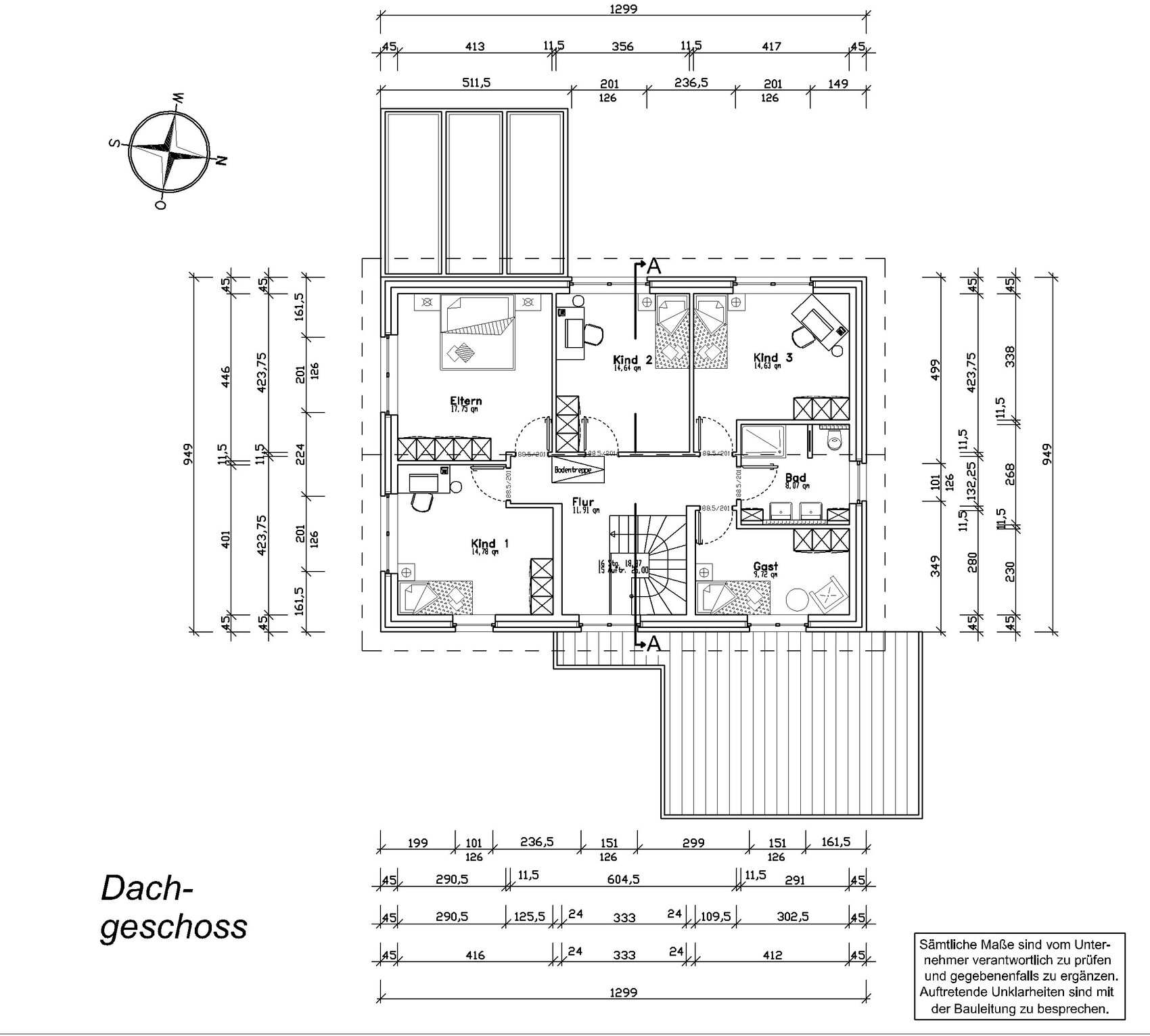
before you write: Yes, I know this question comes up quite often, and there are similar questions here and on the web, but somehow every case is individual.
Regarding our single-family house new build project, I have the following question about the interior walls:
- The structural engineer recommends calcium silicate blocks because of the better sound insulation, but he can also manage the static requirements with interior walls without any problem.
- The mason, however, recommends aerated concrete blocks since they integrate well with the aerated concrete exterior walls as well as the slab, ceiling, ring beam, columns, etc. With interior walls made of calcium silicate, there is a risk of cracks due to the mixed masonry. In addition, he can certainly work with aerated concrete more easily.
- I’m torn: On one hand, I am inclined to let the mason use his usual working method and material, because the craftsman builds best what he is most familiar with. On the other hand, I’m worried about sound insulation between the bedrooms. Our two girls play music (piano and clarinet), and the children (ages 7, 10, and 12) are growing and might make more noise over time (puberty).
Or can I use lightweight partition walls as a compromise between the bedrooms on the upper floor? Are these better in terms of sound insulation, and what does their construction look like?
What would you suggest? Feel free to share your own experience!
before you write: Yes, I know this question comes up quite often, and there are similar questions here and on the web, but somehow every case is individual.
Regarding our single-family house new build project, I have the following question about the interior walls:
- The structural engineer recommends calcium silicate blocks because of the better sound insulation, but he can also manage the static requirements with interior walls without any problem.
- The mason, however, recommends aerated concrete blocks since they integrate well with the aerated concrete exterior walls as well as the slab, ceiling, ring beam, columns, etc. With interior walls made of calcium silicate, there is a risk of cracks due to the mixed masonry. In addition, he can certainly work with aerated concrete more easily.
- I’m torn: On one hand, I am inclined to let the mason use his usual working method and material, because the craftsman builds best what he is most familiar with. On the other hand, I’m worried about sound insulation between the bedrooms. Our two girls play music (piano and clarinet), and the children (ages 7, 10, and 12) are growing and might make more noise over time (puberty).
Or can I use lightweight partition walls as a compromise between the bedrooms on the upper floor? Are these better in terms of sound insulation, and what does their construction look like?
What would you suggest? Feel free to share your own experience!

Paulus16 schrieb:
On one hand, I tend to let the mason use his usual methods and materials, since the craftsman builds best what he usually builds. I basically consider that reasonable, but I don’t really see a conflict here:
Paulus16 schrieb:
The mason recommends aerated concrete because it integrates well with the aerated concrete exterior walls as well as the floor slab, ceiling, ring beam, columns, ... Interior walls made of sand-lime brick carry the risk of cracking due to the combination of masonry types. Moreover, he can certainly work aerated concrete more easily. That’s basically a sound approach as well. However, the sand-lime brick interior walls don’t need to integrate tightly anywhere since they can be butted directly. The mason simply builds the exterior walls without considering the interior walls and then constructs the sand-lime brick interior walls in a separate later step. There is little work needed on those walls here since they have straightforward layouts without complicated connections. Plaster in corners where two different wall materials meet can be reinforced.
The idea that if every evening the sun fell into the sea, the Earth must be flat, seemed logical for centuries. The popular belief that heavier stone better blocks sound follows the same reasoning.
Personally, I would do either without concern: interior walls made of sand-lime brick between exterior walls of other masonry materials pose no more risk to sound insulation than a homogeneous aerated concrete house.
By the way, sand-lime bricks are now also available as plan bricks (and in 11.5cm (5 inches) thickness also in large formats), so the mason hardly needs to change his workflow between exterior and interior wall materials. In the case of Ytong / Silka, aerated concrete and sand-lime brick come from the same source. But even other masonry manufacturers are experienced in the professional combination of sand-lime brick interior walls with various exterior wall materials, due to the common use of sand-lime brick for interior walls regardless of the exterior masonry.
Paulus16 schrieb:
Yes, I know, this question comes up quite often, and there are similar questions here And quite recently: https://www.hausbau-forum.de/threads/Außenwände-Porenbeton-innenwaende-Kalksandstein-ja-oder-nein.25078/
https://www.instagram.com/11antgmxde/
https://www.linkedin.com/company/bauen-jetzt/
Yes, both acoustically and structurally. Among the three options—an aerated concrete exterior wall combined with an interior wall also made of aerated concrete, or made of sand-lime brick, or lightweight construction—none is a disaster nor a groundbreaking discovery.
By the way, sound insulation is not achieved solely through interior walls. What I would be more concerned about in your situation—I assume the well-known floor plan remains unchanged in this regard—is the heat accumulation pressing against the headboard in the bedroom from the conservatory (as I already mentioned).
https://www.instagram.com/11antgmxde/
https://www.linkedin.com/company/bauen-jetzt/
By the way, sound insulation is not achieved solely through interior walls. What I would be more concerned about in your situation—I assume the well-known floor plan remains unchanged in this regard—is the heat accumulation pressing against the headboard in the bedroom from the conservatory (as I already mentioned).
https://www.instagram.com/11antgmxde/
https://www.linkedin.com/company/bauen-jetzt/
Similar topics