
ᐅ Drinking water pipes installed directly beneath heating pipes (underfloor heating)
Created on: 7 Nov 2017 23:38
T
titozHello everyone,
The plumbing team has installed cold water, hot water, and the circulation line partially on the unfinished subfloor of the upper floor in our new build.
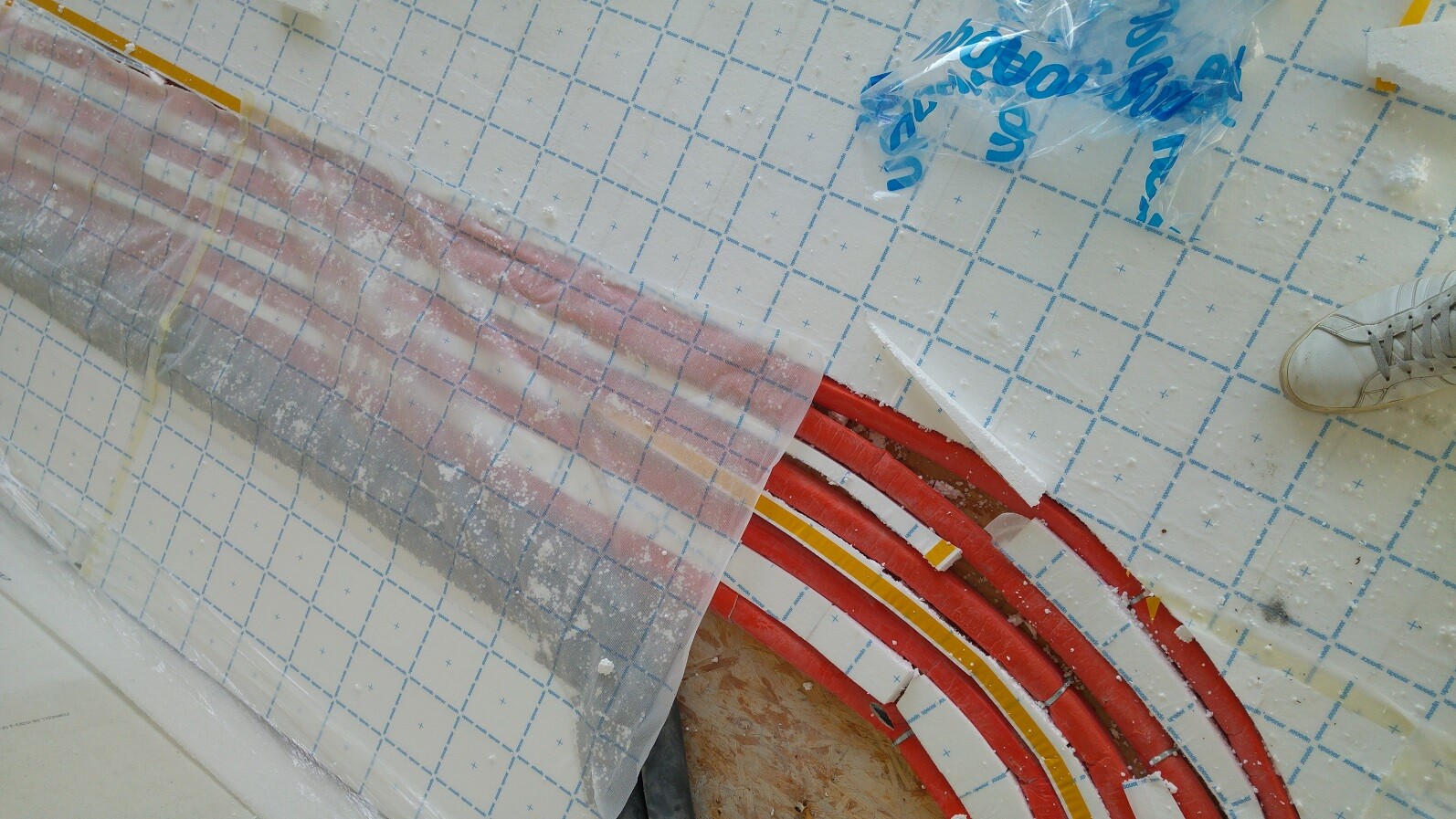
As you can see in the pictures, all pipes—except for the heat pump brine pipes—are wrapped in red insulation that is 4mm (0.16 inches) thick. I’m not sure if this is meant solely as mechanical protection.
The 3cm (1.2 inches) impact sound insulation does not cover the pipes, so the plastic pipes of the underfloor heating lie directly above the impact insulation and a thin foil layer. From my research, there should be at least 13mm (0.5 inches) of insulation around the drinking water pipes.
My concern is that, especially in winter, the underfloor heating might warm the cold water to the point that it does not stay below 20°C (68°F) continuously but could even rise above 25°C (77°F). This temperature range can promote the growth of Legionella bacteria, among others.
I have attached a few photos. Would you consider this acceptable as is, or should the insulation under the underfloor heating at least meet the minimum required thickness? Currently, only the underfloor heating is installed without the screed, so addressing this now would still be manageable without too much effort.
What arguments or evidence can I rely on if the plumbing professional insists with statements like, "Oh, nothing will happen... we always install it like this... 4mm (0.16 inches) is enough... we'll just put some edge insulation strips between the drinking water and heating pipes..."?
Thank you in advance for your help.
Best regards,
Tito


The plumbing team has installed cold water, hot water, and the circulation line partially on the unfinished subfloor of the upper floor in our new build.
As you can see in the pictures, all pipes—except for the heat pump brine pipes—are wrapped in red insulation that is 4mm (0.16 inches) thick. I’m not sure if this is meant solely as mechanical protection.
The 3cm (1.2 inches) impact sound insulation does not cover the pipes, so the plastic pipes of the underfloor heating lie directly above the impact insulation and a thin foil layer. From my research, there should be at least 13mm (0.5 inches) of insulation around the drinking water pipes.
My concern is that, especially in winter, the underfloor heating might warm the cold water to the point that it does not stay below 20°C (68°F) continuously but could even rise above 25°C (77°F). This temperature range can promote the growth of Legionella bacteria, among others.
I have attached a few photos. Would you consider this acceptable as is, or should the insulation under the underfloor heating at least meet the minimum required thickness? Currently, only the underfloor heating is installed without the screed, so addressing this now would still be manageable without too much effort.
What arguments or evidence can I rely on if the plumbing professional insists with statements like, "Oh, nothing will happen... we always install it like this... 4mm (0.16 inches) is enough... we'll just put some edge insulation strips between the drinking water and heating pipes..."?
Thank you in advance for your help.
Best regards,
Tito

What do you mean by "what was ordered"?
I have a contract with my general contractor, who in turn put the sanitary installations out to tender.
There is also an in-house architect involved who is in charge of site management.
The fact that I report defects to him several times a week and question things already says a lot.
But that is not the subject here...
I have a contract with my general contractor, who in turn put the sanitary installations out to tender.
There is also an in-house architect involved who is in charge of site management.
The fact that I report defects to him several times a week and question things already says a lot.
But that is not the subject here...
B
Bieber081510 Nov 2017 06:50This somewhat misses the point of the question, but in my opinion, the space between the pipes should be filled with a bonded infill material so that a flat, load-bearing base for the screed is ensured everywhere (ideally with a separating layer). If your photos show the final state before underfloor heating/screed installation, I believe that would not be correct.
By what was ordered, I mean exactly what is specified there: What type of floor construction did you order? There is a detailed execution plan with sections and drawings that show how the assembly should be.
This plan is signed before construction begins and can then be followed accordingly.
This plan is signed before construction begins and can then be followed accordingly.

I cannot assess whether there is insufficient installation height in that area. If this is poor workmanship, it should be corrected properly.
In winter, the cold water is colder than in summer, so it might balance out with the heating system. It is clear that the standing water warms up, but in summer, when the ground temperature is also around 20°C (68°F), it behaves the same way with standing water.
Legionella is only a problem if the water remains stagnant, meaning no cold water is drawn. I discussed this topic with three plumbers (two acquaintances, the third from the company installing this) and the architect. All said the water would need to stand for at least a week before anything develops (with the caveat that this statement does not necessarily hold true in theory).
In winter, the cold water is colder than in summer, so it might balance out with the heating system. It is clear that the standing water warms up, but in summer, when the ground temperature is also around 20°C (68°F), it behaves the same way with standing water.
Legionella is only a problem if the water remains stagnant, meaning no cold water is drawn. I discussed this topic with three plumbers (two acquaintances, the third from the company installing this) and the architect. All said the water would need to stand for at least a week before anything develops (with the caveat that this statement does not necessarily hold true in theory).
Similar topics