
Hello everyone,
three years ago we bought a house and completely renovated it. Now that all the living areas are finished, I am turning my attention to the basement to make it usable as well, because at the moment it resembles more of a storage room.
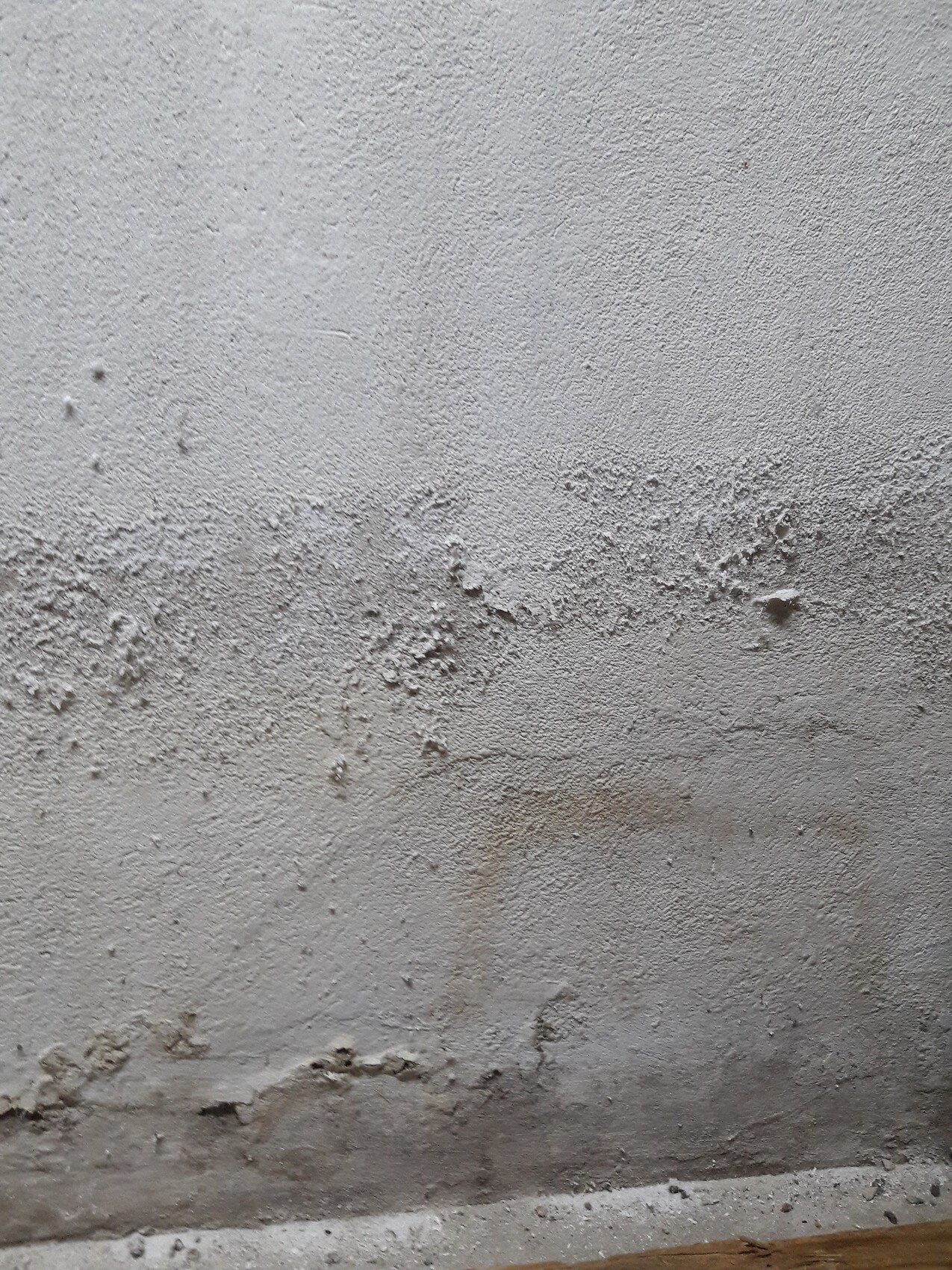
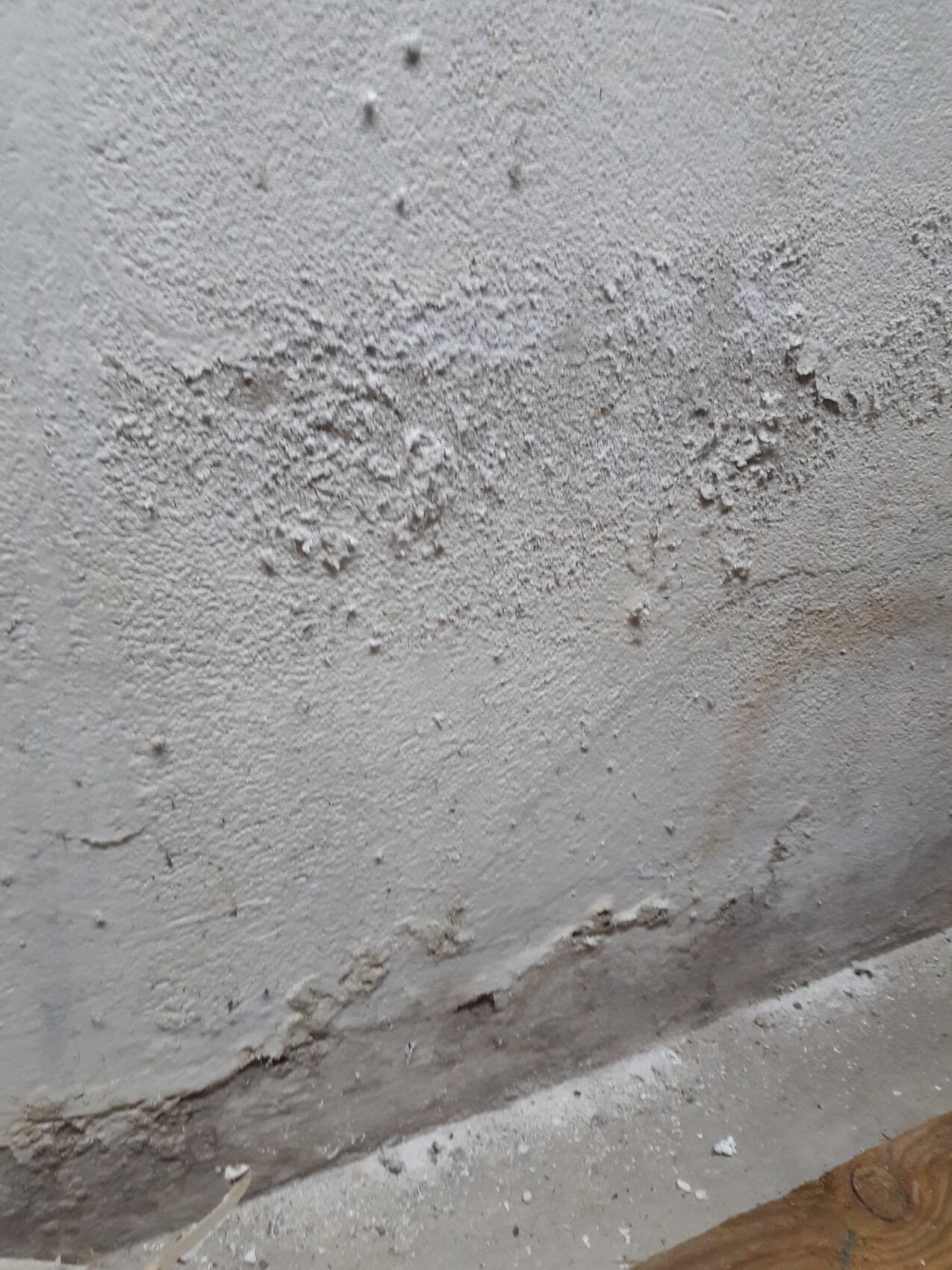
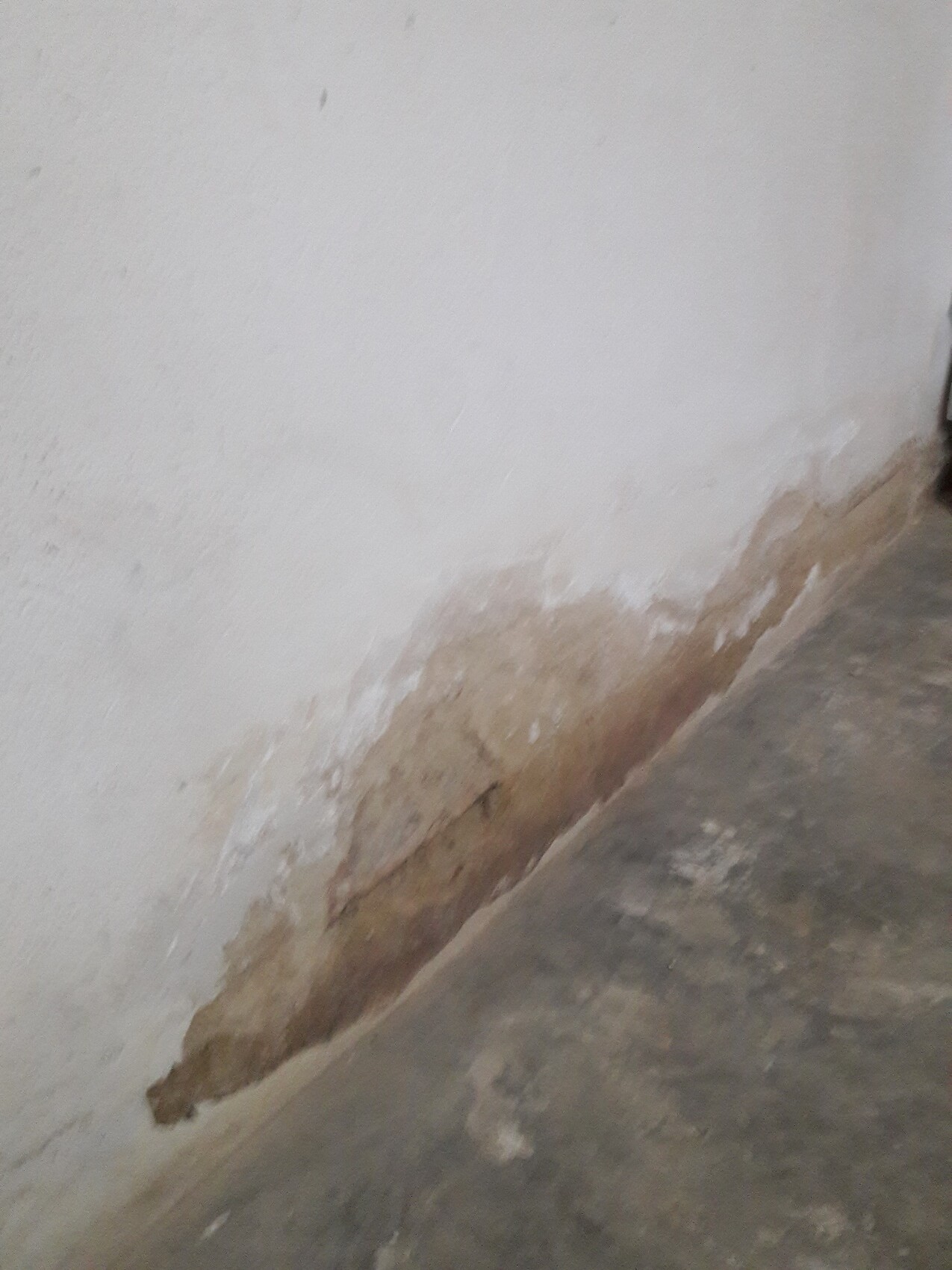
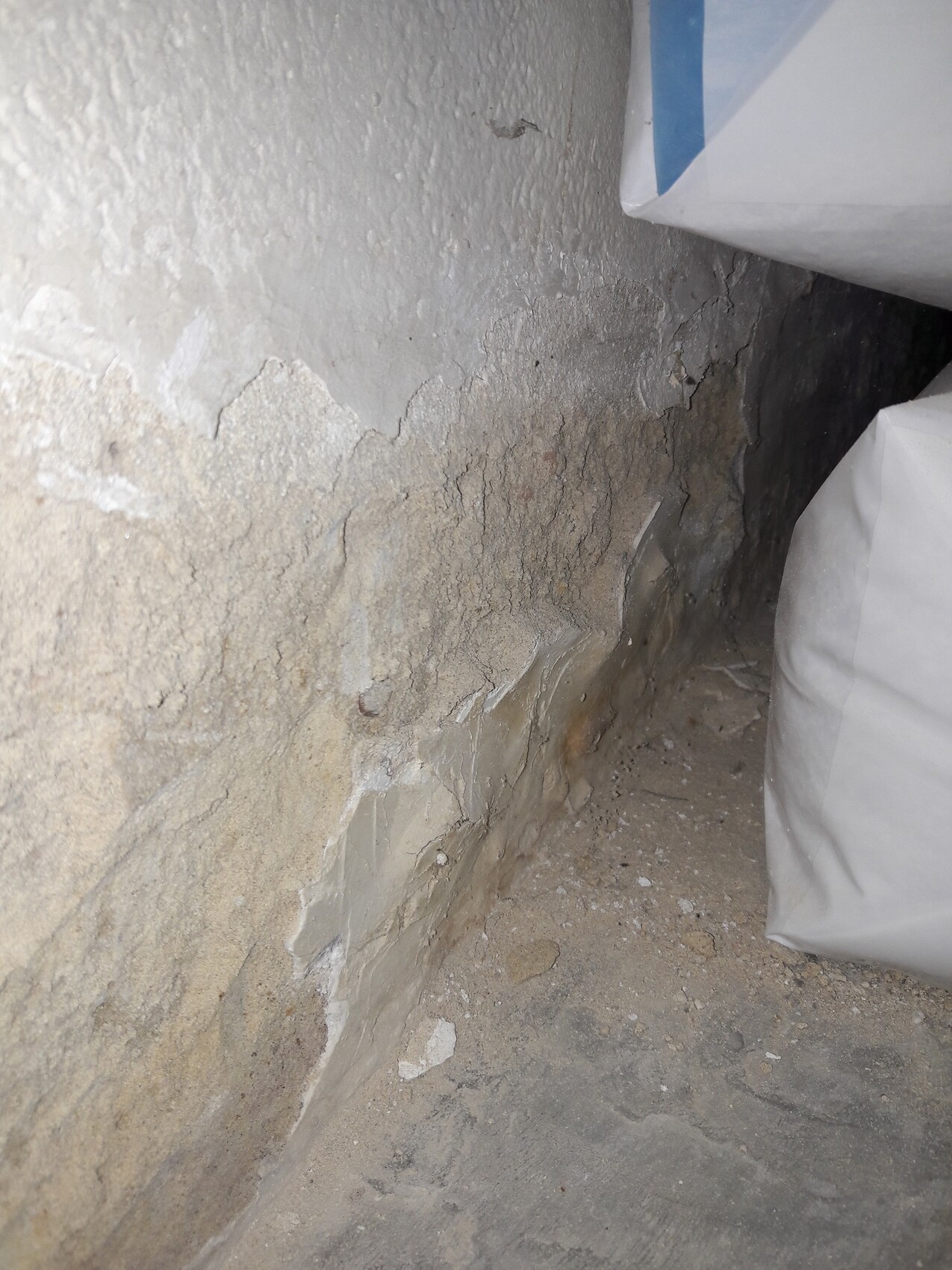
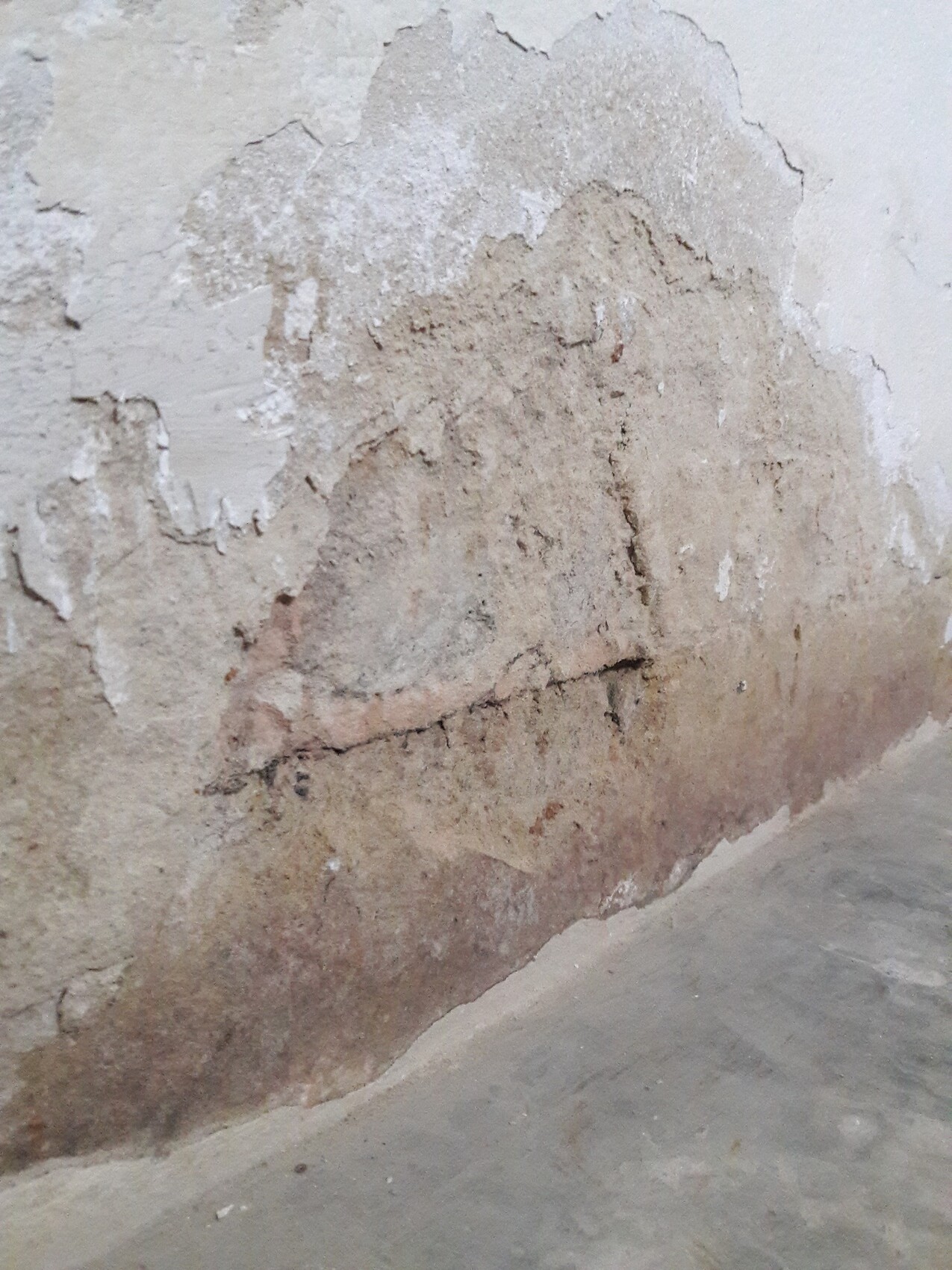
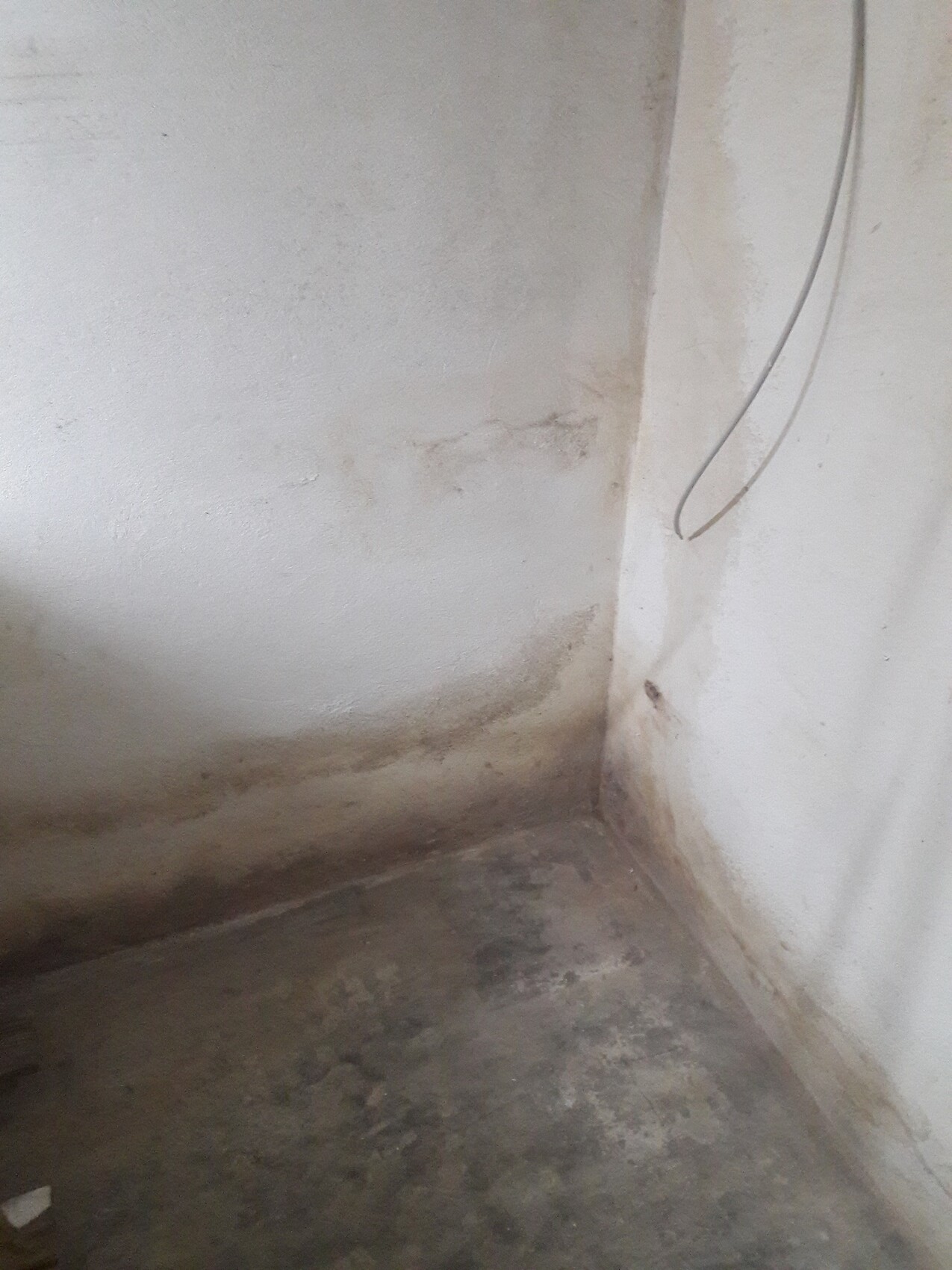
While clearing out items like paint cans, furniture, boxes, etc., I immediately noticed something concerning. Wherever something had been standing on the floor, there is a damp spot underneath. Under the moving boxes, the boxes have become so wet from below that the floor has cracked and is almost disintegrating. On the walls, I have seen that on the lowest row of blocks, the plaster is completely coming off and there is a sort of “mold”? on the walls. When I tapped the walls, it sounded hollow and the plaster detached. However, this only affects the bottom row of blocks. Above that, everything is solid and shows no discoloration.
This issue occurs both on the exterior walls that are in contact with the soil and on the interior walls, but not in all the basement rooms—only in 2 of the 4 rooms. The others are dry at both the walls and the floor.
I have attached some photos for you.
Now the important question... what is causing this? Rising groundwater? Missing insulation under the concrete slab? Missing waterproofing where the house meets the surrounding soil?
AND what measures should I take now to get this problem under control?
Additional info: The basement currently has single-glazed basement windows installed, and there is no heating in the basement. The walls are NOT sandstone.
I hope you can help me.
Thanks and best regards
three years ago we bought a house and completely renovated it. Now that all the living areas are finished, I am turning my attention to the basement to make it usable as well, because at the moment it resembles more of a storage room.
While clearing out items like paint cans, furniture, boxes, etc., I immediately noticed something concerning. Wherever something had been standing on the floor, there is a damp spot underneath. Under the moving boxes, the boxes have become so wet from below that the floor has cracked and is almost disintegrating. On the walls, I have seen that on the lowest row of blocks, the plaster is completely coming off and there is a sort of “mold”? on the walls. When I tapped the walls, it sounded hollow and the plaster detached. However, this only affects the bottom row of blocks. Above that, everything is solid and shows no discoloration.
This issue occurs both on the exterior walls that are in contact with the soil and on the interior walls, but not in all the basement rooms—only in 2 of the 4 rooms. The others are dry at both the walls and the floor.
I have attached some photos for you.
Now the important question... what is causing this? Rising groundwater? Missing insulation under the concrete slab? Missing waterproofing where the house meets the surrounding soil?
AND what measures should I take now to get this problem under control?
Additional info: The basement currently has single-glazed basement windows installed, and there is no heating in the basement. The walls are NOT sandstone.
I hope you can help me.
Thanks and best regards
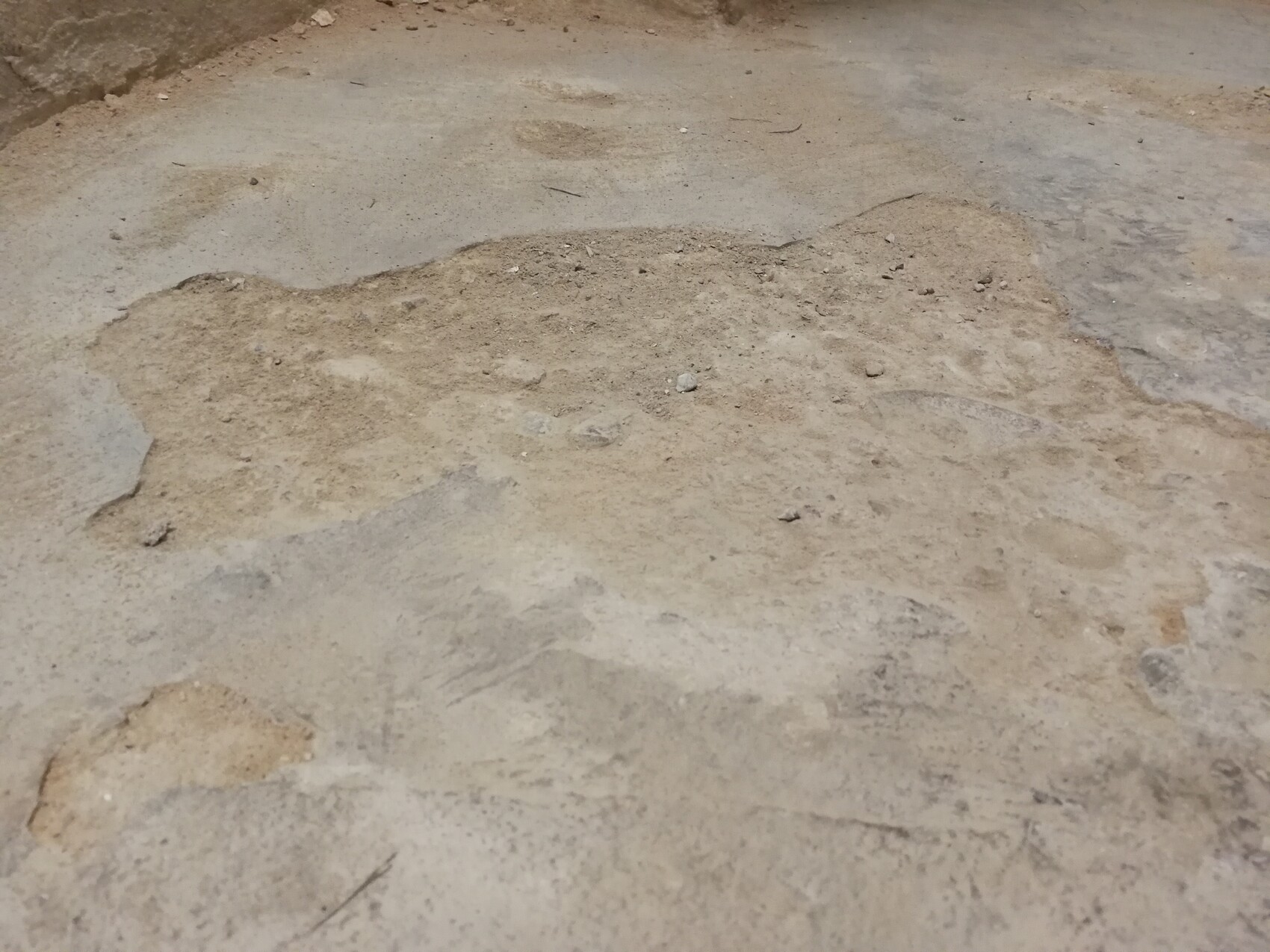
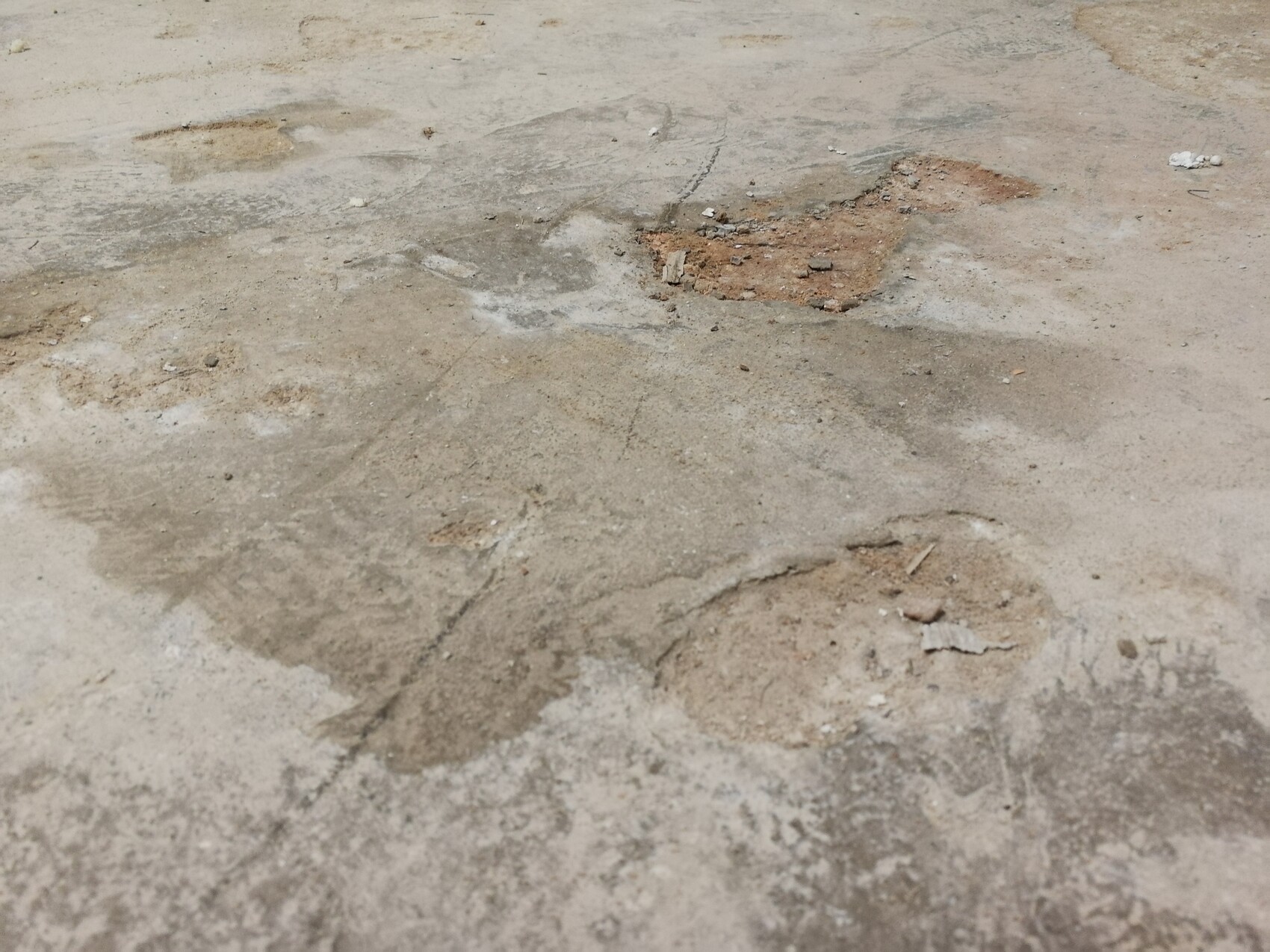
I'll get back to you sooner than expected. I have now cleared out the first room and didn't remember the floor looking so worn. I've attached a few photos.
Do I need to remove the existing thin layer, or can I just fill the holes with a thicker layer of slurry? I have no idea what the previous owner did here. Since it looks so thin, I guess it might be some kind of leveling compound. Around the edges of the holes, it is loose and sounds hollow, while where there are no holes it does not sound hollow.
In one photo, you can also see the damp spots on the floor now that it has rained for a longer time.


Do I need to remove the existing thin layer, or can I just fill the holes with a thicker layer of slurry? I have no idea what the previous owner did here. Since it looks so thin, I guess it might be some kind of leveling compound. Around the edges of the holes, it is loose and sounds hollow, while where there are no holes it does not sound hollow.
In one photo, you can also see the damp spots on the floor now that it has rained for a longer time.
Yes, an old basement floor is rarely as smooth as a baby’s bottom and is usually not a homogeneous, crater-free concrete surface.
You should remove and chip away any loose material. It’s best to lightly tap the entire floor with a hammer or mallet and remove everything that crumbles or flakes off. Do not destroy the floor with a demolition hammer; instead, gently drop a 500g (1 lb) hammer from a short height. If any area sounds hollow, remove it!
Sweep and vacuum everything thoroughly to remove dust. Then, fill any depressions deeper than 5mm (0.2 inches) with suitable repair mortar. MEM recommends their own rubber mortar for this, while I personally prefer Lugato R&S 1-component mortar – you will need something like this anyway for fillets or broken wall areas.
You can also fill smaller irregularities by applying the waterproofing slurry more thickly during the first sealing layer. The important thing is that nothing is loose or crumbly anymore, and you must bind the dust with water beforehand.
You should remove and chip away any loose material. It’s best to lightly tap the entire floor with a hammer or mallet and remove everything that crumbles or flakes off. Do not destroy the floor with a demolition hammer; instead, gently drop a 500g (1 lb) hammer from a short height. If any area sounds hollow, remove it!
Sweep and vacuum everything thoroughly to remove dust. Then, fill any depressions deeper than 5mm (0.2 inches) with suitable repair mortar. MEM recommends their own rubber mortar for this, while I personally prefer Lugato R&S 1-component mortar – you will need something like this anyway for fillets or broken wall areas.
You can also fill smaller irregularities by applying the waterproofing slurry more thickly during the first sealing layer. The important thing is that nothing is loose or crumbly anymore, and you must bind the dust with water beforehand.