
ᐅ Building according to the Building Energy Act or EH55 or EH40 standards
Created on: 3 Oct 2023 19:32
R
Radfahrer
I have just read a study on the life cycle costs of a 12-unit residential building.
Alarming!
The cost per ton of CO2 saved was more than three times higher for the standard EH40 compared to the building energy regulation / building code.
Although this study focuses on a multi-family building, it could, to some extent, also be applicable to a single-family house.
According to the study, especially higher costs for maintenance, repairs, and component replacement negatively affected the economic efficiency.
Cost per ton of CO2 saved
Building energy regulation / building code: 2,171 €
EH55: 4,718 €
EH40: 7,523 €
Alarming!
The cost per ton of CO2 saved was more than three times higher for the standard EH40 compared to the building energy regulation / building code.
Although this study focuses on a multi-family building, it could, to some extent, also be applicable to a single-family house.
According to the study, especially higher costs for maintenance, repairs, and component replacement negatively affected the economic efficiency.
Cost per ton of CO2 saved
Building energy regulation / building code: 2,171 €
EH55: 4,718 €
EH40: 7,523 €
R
RotorMotor7 Oct 2023 12:19@Radfahrer what exactly are you trying to achieve with this thread?
There are many strange statements here one after another, but I can’t see a clear purpose.
Why should an air-to-water heat pump in an EH55-rated house require no maintenance, but cost €300 in an EH40-rated house?
It’s also odd that you assume electricity prices per kWh to be 15% higher for EH40.
And what exactly do you expect to clean every few years on a centralized mechanical ventilation system for €400-800?
I bought the filters for 50 cents each, and the ducts still look like new.
Where do you get nearly 600 kWh consumption for a mechanical ventilation system?
Ours used 300 kWh, and 75% of that was from solar power at 6 cents per kWh.
There are many strange statements here one after another, but I can’t see a clear purpose.
Why should an air-to-water heat pump in an EH55-rated house require no maintenance, but cost €300 in an EH40-rated house?
It’s also odd that you assume electricity prices per kWh to be 15% higher for EH40.
And what exactly do you expect to clean every few years on a centralized mechanical ventilation system for €400-800?
I bought the filters for 50 cents each, and the ducts still look like new.
Where do you get nearly 600 kWh consumption for a mechanical ventilation system?
Ours used 300 kWh, and 75% of that was from solar power at 6 cents per kWh.
Radfahrer schrieb:
Well, then I made a mistake.
The system was sold to me as a maintenance-free heat pump.
By the way, I also don’t service my refrigerator.
Of course, we have had one issue or another, but that’s probably normal after almost 19 years. Anything with filters needs maintenance at some point – if your manufacturer claimed back then that the heat pump was maintenance-free (really? not even cleaning the filters? never checking valves?), and still gave you more than 5 years of warranty despite no maintenance, consider yourself lucky that they were young and inexperienced at the time – most (if not all) have learned since.
Therefore, if you buy a heat pump today (for your house or a building complying with the Building Energy Act / EH55 / EH40 standards), you will either have it serviced (for X $/year, depending on the manufacturer, not the house!) or do it yourself (almost free) and accept a residual risk.
R
RotorMotor7 Oct 2023 12:28Harakiri schrieb:
Anything that has a filter will eventually need maintenanceWhich air-to-water heat pumps actually have filters? Mine doesn’t, at least.
The only maintenance you really need to do on an air-to-water heat pump is to vacuum or rinse out the lint from the neighbor’s pampas grass on the heat exchanger once a year.
RotorMotor schrieb:
Which air-to-water heat pumps have filters?
Mine doesn’t have any.
The only maintenance you can or have to do on the air-to-water heat pump is once a year vacuuming/flushing out the lint from the neighbor’s pampas grass caught in the heat exchanger. I would be very surprised – all systems I have looked at either come with a filter ball valve from the manufacturer or some other type of dirt separator/magnetic filter/magnetite filter device for the secondary circuit as a standard feature. Furthermore, I am quite sure your system also has a filter drier in the refrigerant circuit, although this usually only gets replaced if any servicing on the refrigerant is necessary.
R
Radfahrer7 Oct 2023 13:27@RotorMotor sorry if I provided any incorrect information. This is what I found online.
My nephew is building less than 100m (330 ft) away, so naturally there is interest in various details.
I can quickly explain the price difference.
I have a heat pump rate that doesn’t pay off with low consumption due to the meter rental fee. I also assume that this rate doesn’t allow operating a ventilation system.
I never claimed that anywhere.
I was talking about my place, which basically has a large refrigerator installed (figuratively speaking).
The cooling fins are embedded in the screed, and the cabinet is outside.
For domestic hot water, simple hot gas bypass is used.
My nephew is building less than 100m (330 ft) away, so naturally there is interest in various details.
I can quickly explain the price difference.
I have a heat pump rate that doesn’t pay off with low consumption due to the meter rental fee. I also assume that this rate doesn’t allow operating a ventilation system.
RotorMotor schrieb:
Why should an air-to-water heat pump be maintenance-free in EH55, but cost €300 in EH40?
I never claimed that anywhere.
I was talking about my place, which basically has a large refrigerator installed (figuratively speaking).
The cooling fins are embedded in the screed, and the cabinet is outside.
For domestic hot water, simple hot gas bypass is used.
R
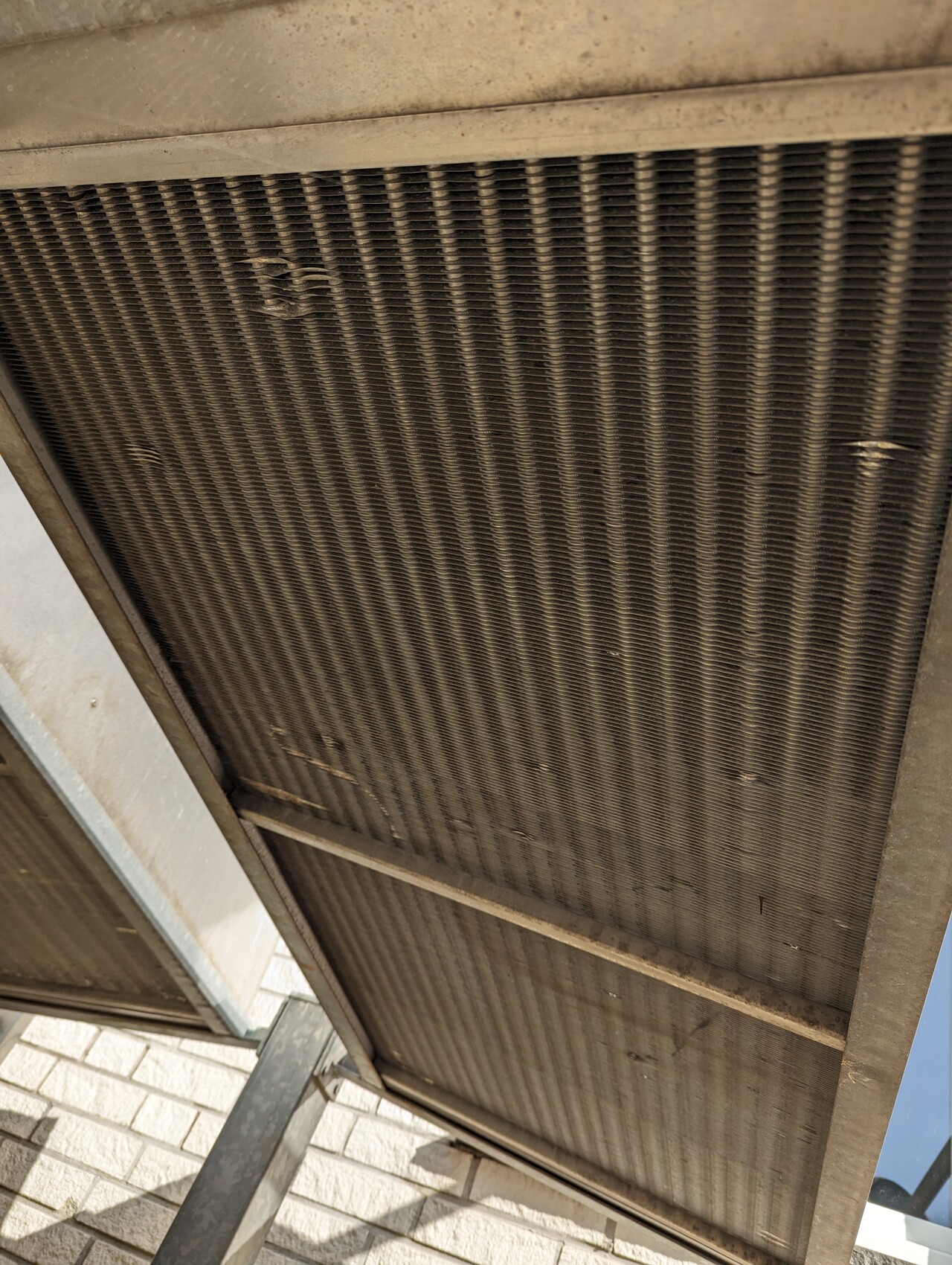
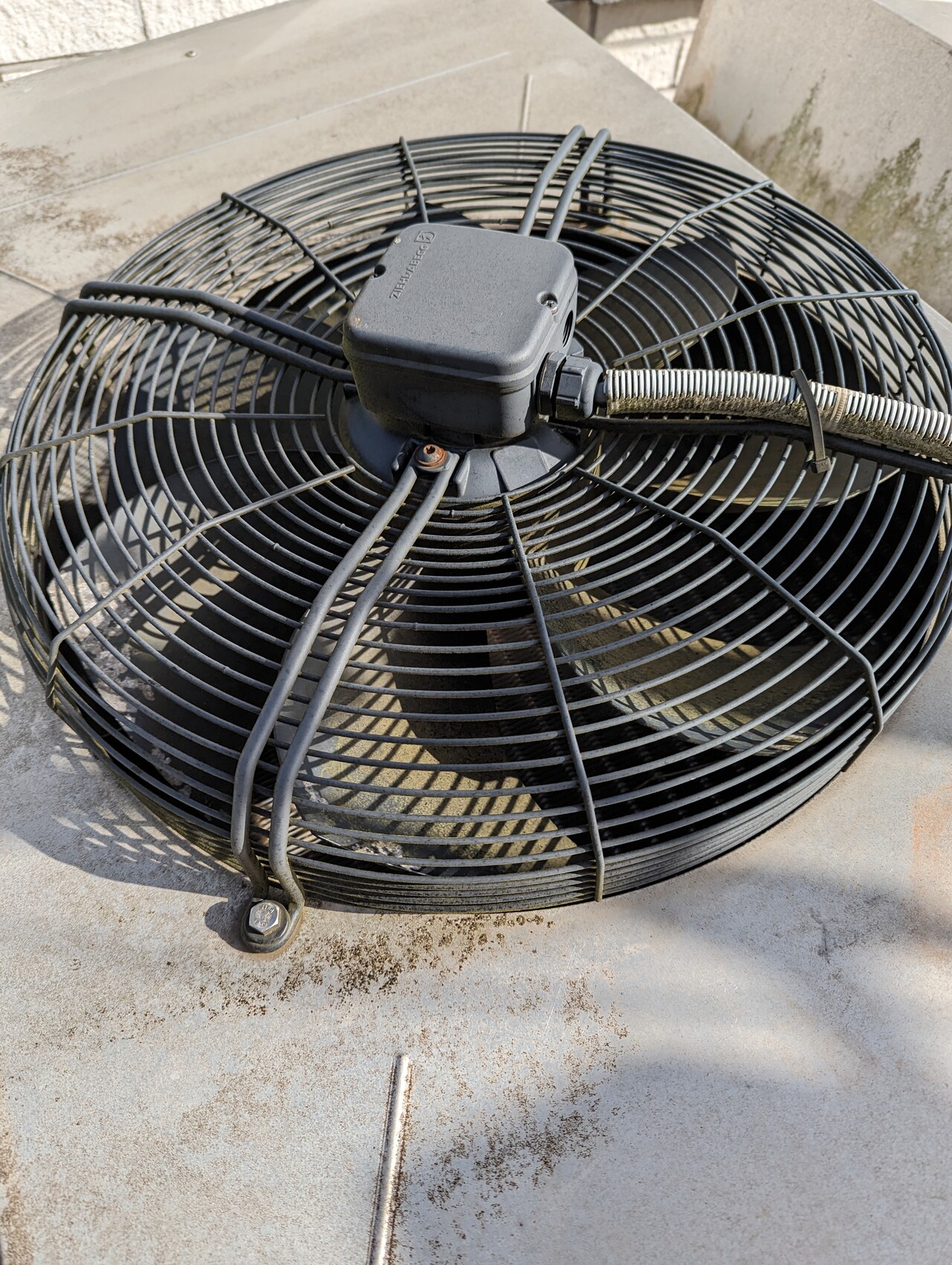
Radfahrer7 Oct 2023 13:41This is what the evaporator looks like after 19 years without maintenance.
Similar topics