
Hello,
we are currently considering what the best roofing option for our new build is. A gable roof without dormers and no skylights.
Smooth clay tiles
or
Flat clay tiles or “Frankfurter Pfanne” (by this I mean curved roof tiles)
What are the differences or advantages and disadvantages?
Are there differences in weather resistance?
Do smooth tiles offer better protection against animals since they cannot crawl underneath as easily?
Can curved roof tiles better dissipate summer heat?
Approximately 90% of the south-facing side will be covered with photovoltaic panels. Does the choice of roof tiles affect anything regarding the installation of photovoltaic systems?
Thank you for your help.
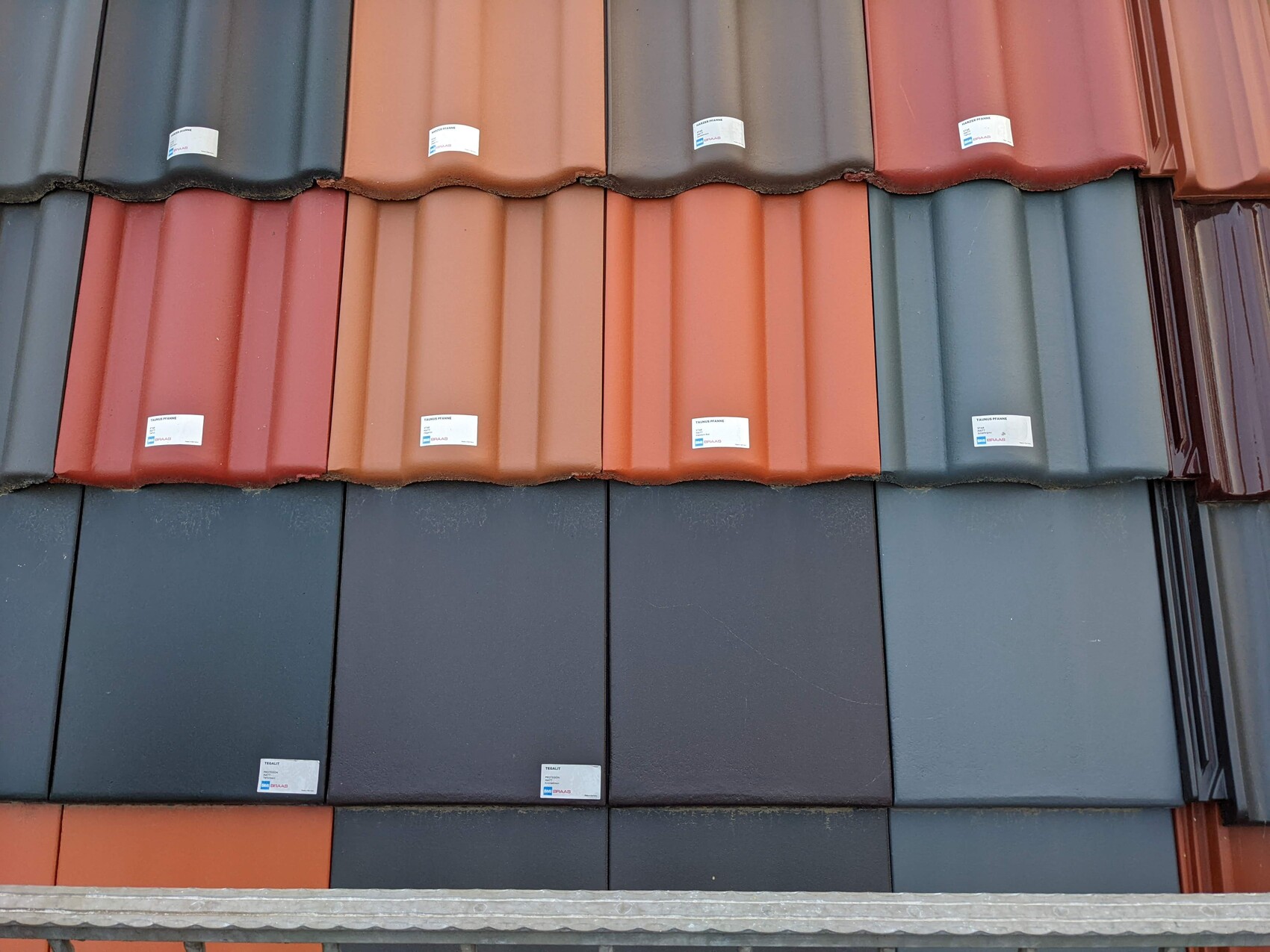
we are currently considering what the best roofing option for our new build is. A gable roof without dormers and no skylights.
Smooth clay tiles
or
Flat clay tiles or “Frankfurter Pfanne” (by this I mean curved roof tiles)
What are the differences or advantages and disadvantages?
Are there differences in weather resistance?
Do smooth tiles offer better protection against animals since they cannot crawl underneath as easily?
Can curved roof tiles better dissipate summer heat?
Approximately 90% of the south-facing side will be covered with photovoltaic panels. Does the choice of roof tiles affect anything regarding the installation of photovoltaic systems?
Thank you for your help.


D
Deliverer4 May 2022 13:16Hausbau e.K. schrieb:
I can’t support the suggestion to choose a zinc or aluminum roof covering here because installing a photovoltaic system on such roofs is significantly more complex and therefore more expensive. Why is that? No tile puzzle, no roof hooks, less leveling, no cutting with an angle grinder. On small carport roofs, you can even skip the substructure.
H
Hausbau e.K.4 May 2022 14:56Deliverer schrieb:
Why is that? No tile puzzling, no roof hooks, less leveling, no grinding. On small carport roofs, you can even skip the substructure. A zinc, aluminum, or copper standing seam roof is installed on battens. That alone causes higher costs.
How exactly would you skip the substructure? Are the photovoltaic modules supposed to be glued directly onto the seams?
I would really like to see that.
By the way, what exactly is tile puzzling?
D
Deliverer4 May 2022 15:05Hausbau e.K. schrieb:
A standing seam roof made of zinc/aluminum or copper is installed on battens. That alone causes higher costs. I would appreciate it if you could elaborate on that.
Hausbau e.K. schrieb:
How exactly is the substructure supposed to be omitted? Are the photovoltaic modules supposed to be glued onto the seams?
I would really like to see that. Actually, gluing is possible—I have already done that on a motorhome. For a carport, though, I would rather use screws. And yes—just directly on top. There are mounting systems for that. Unfortunately, I’m not allowed to share links.
Hausbau e.K. schrieb:
What exactly is “tile Tetris”? Raising tiles, installing roof hooks, cutting tiles, putting the tiles back. If things go badly, half the ridge will need to be uncovered. There is often a lot of work at the eaves as well. For me, about 5% of all tiles were removed at least once. That part took the most time. With a metal roof, you just screw through it, which saves a lot of money and time.
However, I don’t have the aluminum or copper you mentioned. It wasn’t supposed to be especially expensive. ;-)
H
Hausbau e.K.4 May 2022 17:20A standing seam roof always requires a fully boarded substrate. On top of that, a random fiber membrane is applied to reduce drum noise. Only after this can the metal sheets be installed. The standing seam system needs a solid and continuous base.
Adhering modules on a motorhome with a small module might be possible. However, for a roof with modules measuring 1.5 to 2 square meters (16 to 22 square feet), this is absolutely incorrect and not according to professional guidelines. The wind uplift forces are far too strong for bonding alone.
There are the most adventurous installation methods out there. As an expert, I always find this amusing. That way, there is never a shortage of work.
Screwing through a metal roof—goodness no! This will compromise the entire waterproofing.
The ridge remains completely unaffected during the photovoltaic installation. Minimum distances to the roof edges must, of course, be observed. Naturally, small edges are ground off to mount the brackets. This only serves to ensure the roof’s rainproofing; it has nothing to do with fitting puzzle pieces together.
The important thing is that the roof remains perfectly watertight after the photovoltaic installation.
Adhering modules on a motorhome with a small module might be possible. However, for a roof with modules measuring 1.5 to 2 square meters (16 to 22 square feet), this is absolutely incorrect and not according to professional guidelines. The wind uplift forces are far too strong for bonding alone.
There are the most adventurous installation methods out there. As an expert, I always find this amusing. That way, there is never a shortage of work.
Screwing through a metal roof—goodness no! This will compromise the entire waterproofing.
The ridge remains completely unaffected during the photovoltaic installation. Minimum distances to the roof edges must, of course, be observed. Naturally, small edges are ground off to mount the brackets. This only serves to ensure the roof’s rainproofing; it has nothing to do with fitting puzzle pieces together.
The important thing is that the roof remains perfectly watertight after the photovoltaic installation.
Similar topics