
Hello
Are there good retrofit smart home systems available?
We bought a semi-detached house as a new build from a developer.
The electrician declined to work with KNX and said he is not familiar with it and won’t do it.
My question is: Are there good retrofit options for smart home systems that don’t require opening up the walls (that is not an option)?
Which systems would you recommend?
Functions:
Light control
Window sensors (preferably invisible)
Shutter control
Music control
Video doorbell
It should definitely be possible to create scenes and rules.
I’m also open to other suggestions for useful functions I may not have thought of yet.
Are there good retrofit smart home systems available?
We bought a semi-detached house as a new build from a developer.
The electrician declined to work with KNX and said he is not familiar with it and won’t do it.
My question is: Are there good retrofit options for smart home systems that don’t require opening up the walls (that is not an option)?
Which systems would you recommend?
Functions:
Light control
Window sensors (preferably invisible)
Shutter control
Music control
Video doorbell
It should definitely be possible to create scenes and rules.
I’m also open to other suggestions for useful functions I may not have thought of yet.

KNX is not the ultimate solution, but when it comes to wiring, it offers the highest level of reliability, stability, and flexibility. And hey, without much effort, you can also integrate any wireless system as well as Loxone with it.
In terms of cost, it is comparable as well. So everyone can decide whether they are willing to pay amount X for an open global standard or the same amount X for a proprietary system. That choice is entirely up to each individual.
Keyboard *cough* um, 2021 has arrived. You can look at a selection from 500 manufacturers and choose which switch to use… and yes, switches? I thought this was about smart homes.
In terms of cost, it is comparable as well. So everyone can decide whether they are willing to pay amount X for an open global standard or the same amount X for a proprietary system. That choice is entirely up to each individual.
Keyboard *cough* um, 2021 has arrived. You can look at a selection from 500 manufacturers and choose which switch to use… and yes, switches? I thought this was about smart homes.
N
NoggerLoger3 Aug 2021 08:39Mouse piano on the wall? We were able to upgrade to KNX even in an apartment. Almost exclusively MDT devices were used. Wall-mounted push buttons with triple-click functionality theoretically allow me to control every light. However, most functions are automated or controlled via scenes. I had zero prior knowledge of KNX and only watched a few videos, but it’s really self-explanatory. In the living room, there is a control panel near the entrance and one push button; inside the living room itself, there are a total of two push buttons. The rest is managed through Steinel True Presence sensors or by power measurement at the stove. The rooms each have a double switch and one with a display. In the bathroom, the main and shower lighting turn off automatically thanks to two presence detectors.
No server was installed; everything is still integrated natively in KNX.
Furthermore, I had lamps installed that flickered slightly when dimmed by phase-cut dimming. I simply replaced the ballast with a DALI ballast, added a KNX gateway, and now I can dim them without PWM using amplitude dimming (no flickering, no tired eyes). Additionally, all the lamps are dimmed based on the time of day, preventing glare in the evening.
Nevertheless, the touch switches from Loxone are very attractive, but I wanted something tactile. Loxone has its justification and doesn’t pose high barriers for initial integration.
Here are a few photos of the “mouse piano.”
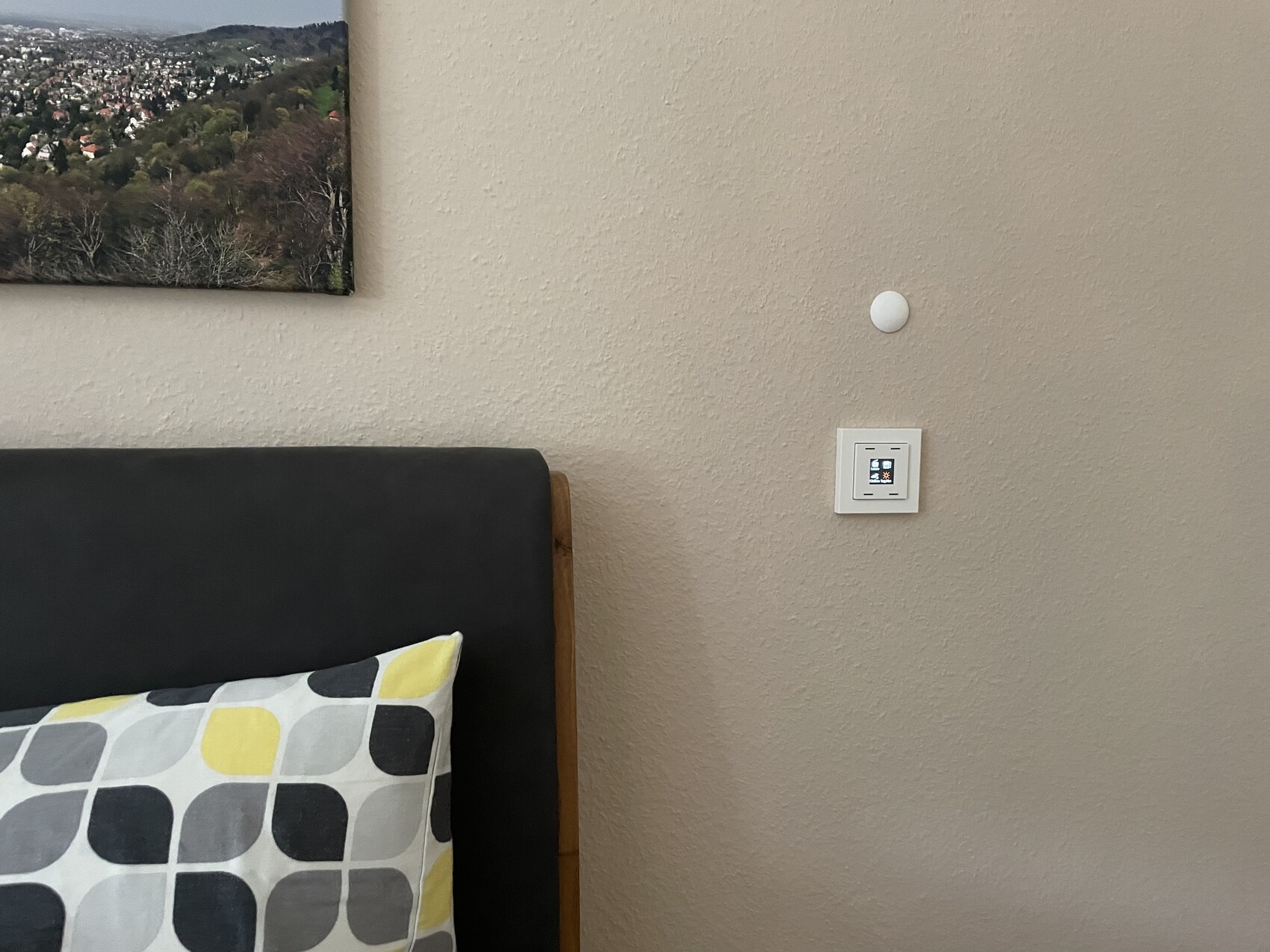
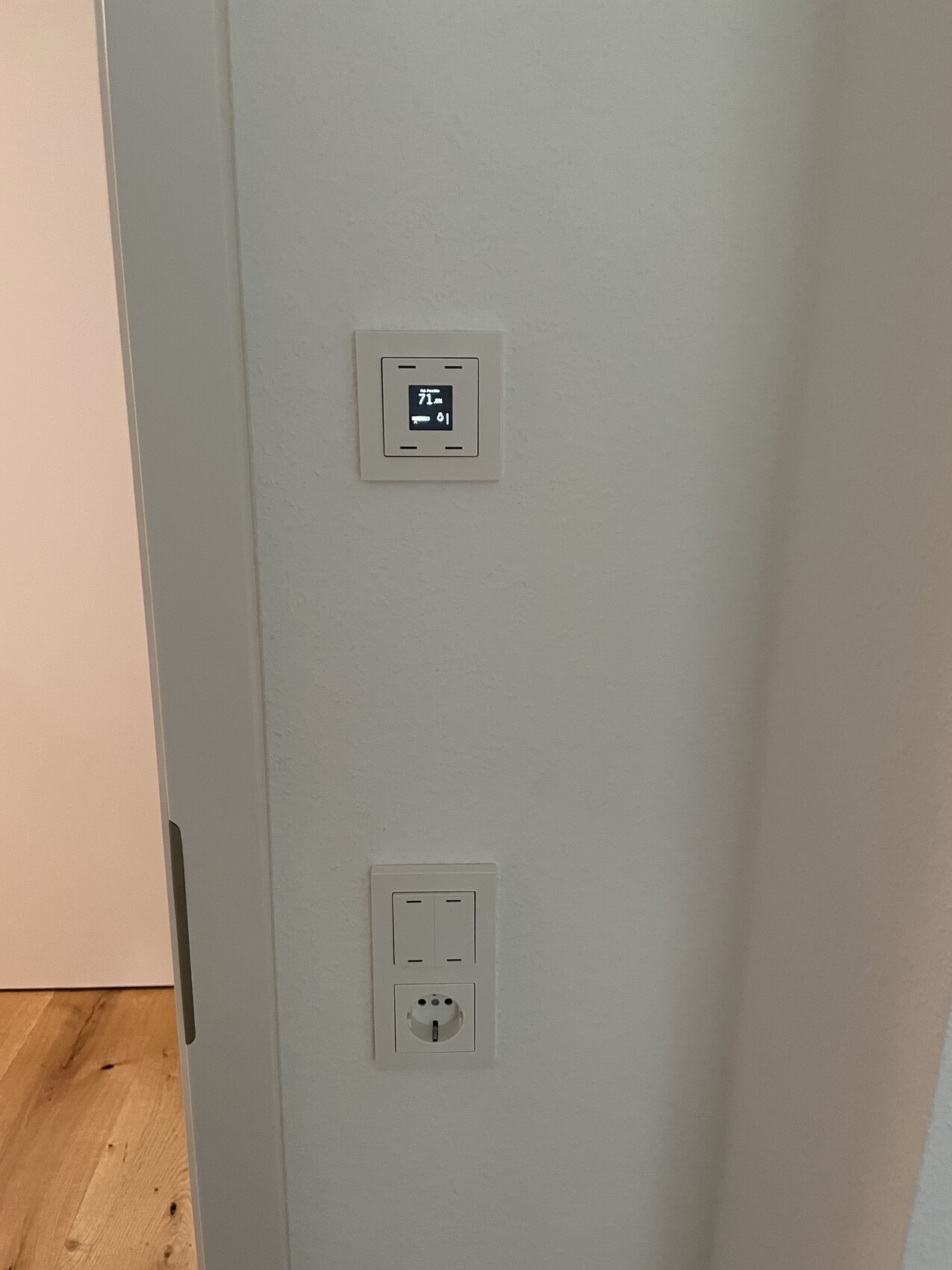
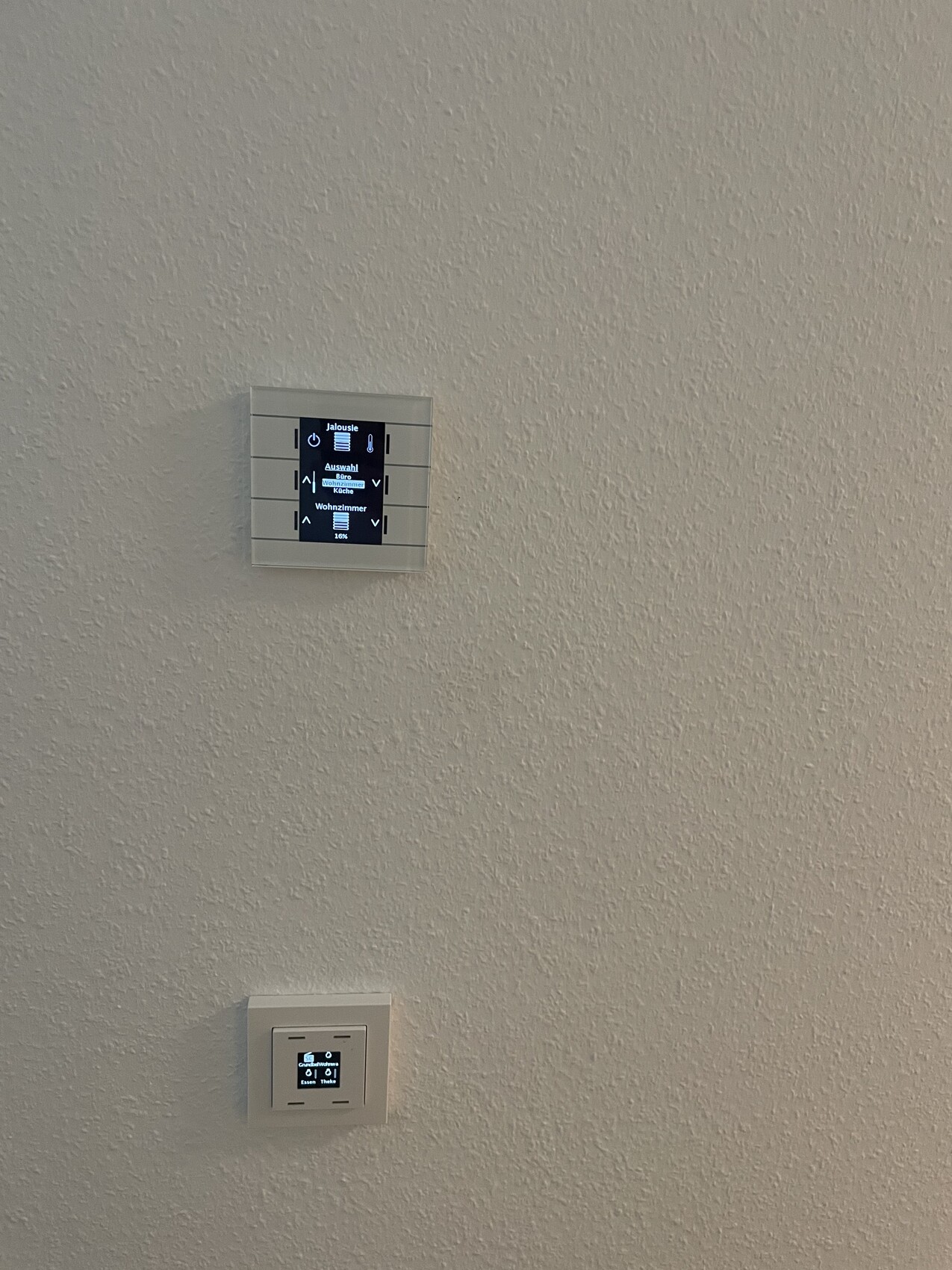
No server was installed; everything is still integrated natively in KNX.
Furthermore, I had lamps installed that flickered slightly when dimmed by phase-cut dimming. I simply replaced the ballast with a DALI ballast, added a KNX gateway, and now I can dim them without PWM using amplitude dimming (no flickering, no tired eyes). Additionally, all the lamps are dimmed based on the time of day, preventing glare in the evening.
Nevertheless, the touch switches from Loxone are very attractive, but I wanted something tactile. Loxone has its justification and doesn’t pose high barriers for initial integration.
Here are a few photos of the “mouse piano.”
Patricck schrieb:
Correct, but blinds, central control, and turning off the lights still need to be implemented somehow.All of that can be done without physical switches. Especially central functions are often achievable without dedicated switches. Why limit yourself? Maybe I want to control the central functions from several locations. Patricck schrieb:
Then there are those who look beyond their own backyard.Patricck schrieb:
I’m someone who likes to stick with one manufacturer or at least use the manufacturers recommended.These two statements completely contradict each other. When you look beyond your own backyard, you move out of the proprietary world and realize that there isn’t just “one single manufacturer.” The same applies to home automation.Patricck schrieb:
There are KNX fans who swear by KNX and praise it to the skies.That’s the natural course of things. Once the arguments (if there even are any) run out, people resort to fan loyalty. From that perspective, it would be (obviously not unlikely!) that Loxone users only use and recommend it because of their affinity for it. Because there are no rational or even technical reasons.Patricck schrieb:
The discussion is actually completely pointless.Yes, it is. It’s like comparing a bicycle and a freight train. And as said several times already: most people only care about the final price anyway. Here KNX has the home advantage... crazy! Yet KNX is always described as a pharmacy.So, to summarize:
- One manufacturer with all the disadvantages (modern term: vendor lock-in)
- Usually requires more wiring
- Less product/component variety
- Same or even higher final price
- Uncertainty regarding the components used (SD cards, etc.)
- And so on...
But that’s enough now. According to the thread title, this is about a retrofit solution, and Loxone is more than unsuitable for that.
Thank you for your responses.
At the moment, we unfortunately need to look for an upgrade solution. What do you think about DigitalStrom? It is supposed to be a DIY retrofit solution that doesn’t require a bus system because it communicates over the existing electrical wiring.
Our developer informed us that we can choose between two electricians (but whether the new electrician is familiar with smart home systems, KNX, Loxone, Busch free@home, or similar is still uncertain. However, we will definitely find out whether a bus system could be an option after all).
At the moment, we unfortunately need to look for an upgrade solution. What do you think about DigitalStrom? It is supposed to be a DIY retrofit solution that doesn’t require a bus system because it communicates over the existing electrical wiring.
Our developer informed us that we can choose between two electricians (but whether the new electrician is familiar with smart home systems, KNX, Loxone, Busch free@home, or similar is still uncertain. However, we will definitely find out whether a bus system could be an option after all).
N
NoggerLoger3 Aug 2021 11:50My electrician wasn’t familiar with it either and just ran the wires according to my instructions. There were one or two mistakes, but these could be corrected thanks to decentralized actuators. Have everything installed exactly as you need it, and let a qualified professional handle the rest.
@Pacc666
Digital electricity systems are suitable for retrofitting but are also designed for users with modest requirements. Using the existing electrical wiring for both communication and power transmission is equally appealing and challenging. This is simply the nature of the technology.
Lost signals and long response times are common issues in this setup.
Digital electricity systems are suitable for retrofitting but are also designed for users with modest requirements. Using the existing electrical wiring for both communication and power transmission is equally appealing and challenging. This is simply the nature of the technology.
Lost signals and long response times are common issues in this setup.