
Good day, dear community,
now that we have received a refund from Bafa regarding the subsidy, we want to start working on the front yard and the garden.
Everything is going well with the front yard, but we have a small problem with the garden.
Our neighbor across the street has four trees about 15-20m (50-65 feet) tall, and the branches extend about 1.5-2m (5-6.5 feet) onto our property.
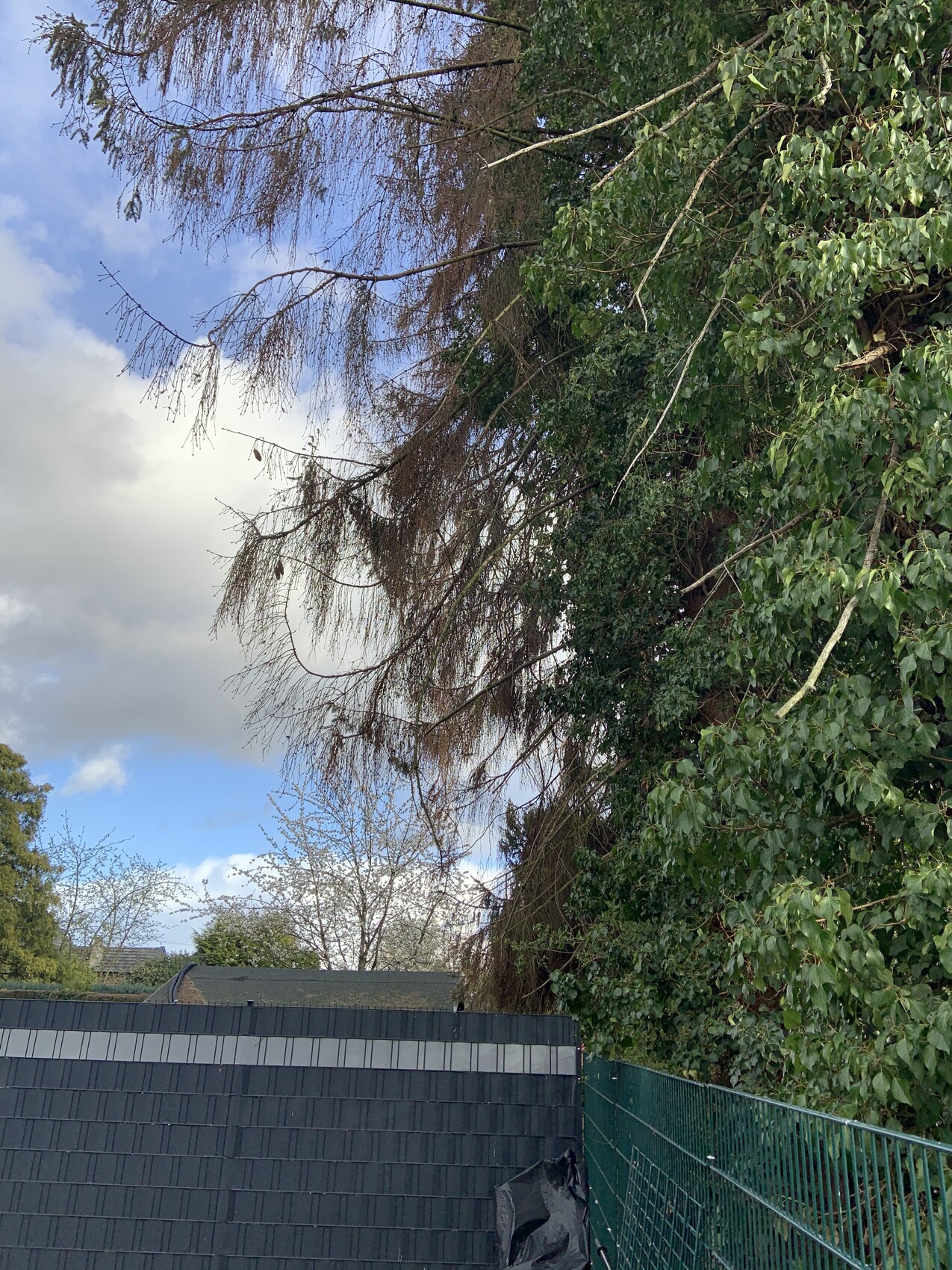
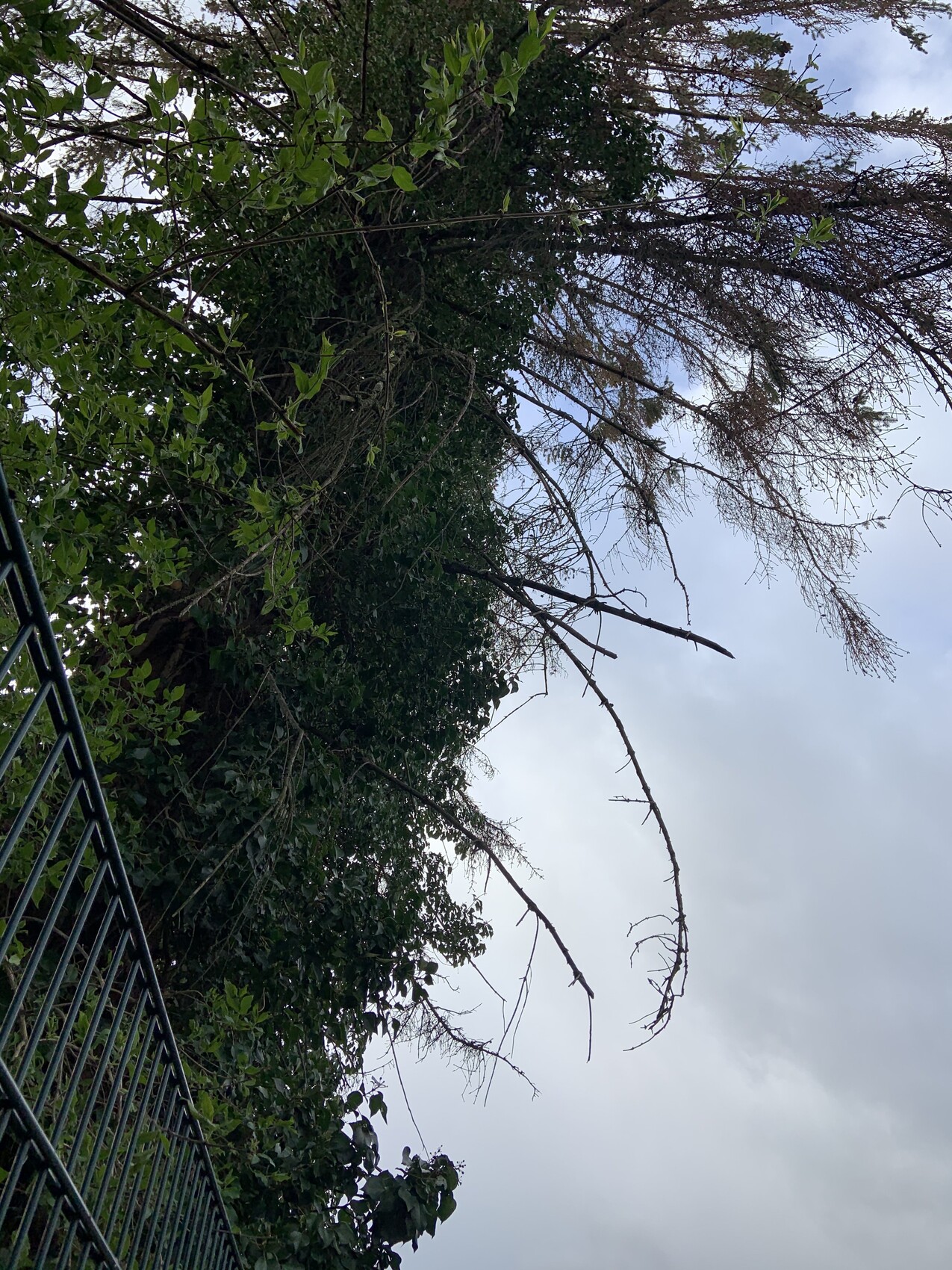
The trees create a lot of debris. During strong gusts of wind, even branches and many pine needles fall to the ground.
We have forbidden our daughter from playing underneath them.
Safety is our top priority, and everything else comes after that.
What have we done so far?
Our first official action was to have a personal conversation. Unfortunately, we were turned away. Our neighbor doesn’t seem to care much.
The trees were here first, and then we came (??), was his reply. For him, the privacy screen is what matters, not safety.
The request to possibly reduce the trees by half was strictly refused! Our invitation to look at the trees and then assess the situation was also declined!
After that, we went to the city authorities and reported the issue. There, too, we encountered a dead end. “The city is not responsible for this.” We were advised to involve a mediator. Said and done. But our neighbor is not interested.
So, dear community, what else can I do now? I’ve found many articles on Google, but none really gives me clear advice in this regard.
As long as the situation with the trees is unresolved, working in the garden will be difficult...
I would be grateful for any small help.

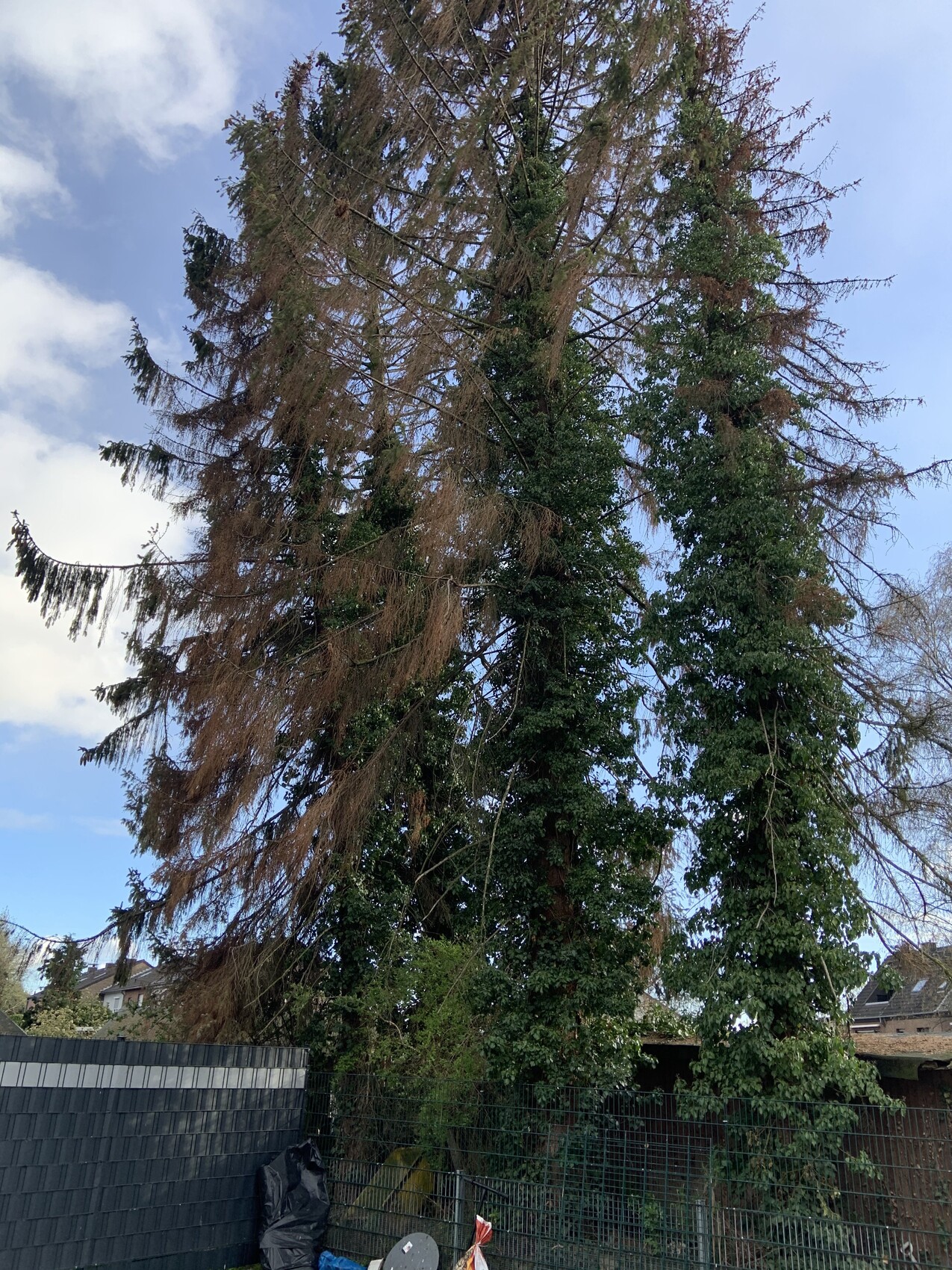


now that we have received a refund from Bafa regarding the subsidy, we want to start working on the front yard and the garden.
Everything is going well with the front yard, but we have a small problem with the garden.
Our neighbor across the street has four trees about 15-20m (50-65 feet) tall, and the branches extend about 1.5-2m (5-6.5 feet) onto our property.
The trees create a lot of debris. During strong gusts of wind, even branches and many pine needles fall to the ground.
We have forbidden our daughter from playing underneath them.
Safety is our top priority, and everything else comes after that.
What have we done so far?
Our first official action was to have a personal conversation. Unfortunately, we were turned away. Our neighbor doesn’t seem to care much.
The trees were here first, and then we came (??), was his reply. For him, the privacy screen is what matters, not safety.
The request to possibly reduce the trees by half was strictly refused! Our invitation to look at the trees and then assess the situation was also declined!
After that, we went to the city authorities and reported the issue. There, too, we encountered a dead end. “The city is not responsible for this.” We were advised to involve a mediator. Said and done. But our neighbor is not interested.
So, dear community, what else can I do now? I’ve found many articles on Google, but none really gives me clear advice in this regard.
As long as the situation with the trees is unresolved, working in the garden will be difficult...
I would be grateful for any small help.
I don’t see any danger for your child here, at least as long as it’s just the small branches shown in the pictures.
Yes, the tree does create some mess, but it was there first. I can understand your neighbor’s point of view a bit, as they might not be thrilled when a new neighbor moves in and suddenly wants the trees trimmed.
Maybe you should let the situation settle for now and revisit the conversation in the fall, offering to cover the costs to have the branches trimmed on your side.
Yes, the tree does create some mess, but it was there first. I can understand your neighbor’s point of view a bit, as they might not be thrilled when a new neighbor moves in and suddenly wants the trees trimmed.
Maybe you should let the situation settle for now and revisit the conversation in the fall, offering to cover the costs to have the branches trimmed on your side.
G
Gartenfreund6 Apr 2021 06:07If I’m interpreting the pictures correctly, these are coniferous trees, which is also supported by the cones. The branches, except for the crown area, appear to be completely dead. I can imagine that in a few years, none of these trees will be alive and will need to be removed anyway.
The owner’s refusal to remove them might be related to the fact that the trees are located between the property boundary and the shed, or whatever that structure is, making removal more difficult.
You could suggest that he has the trees removed in autumn. He could then let them fall onto your property, where they could be cut up and transported away.
Additionally, you can mention that you plan to build a tool shed or plant shrubs and trees with appropriate spacing in the back area of the garden. This would mean that simple and likely more affordable removal would no longer be possible for him.
Perhaps this will encourage him to take action.
The owner’s refusal to remove them might be related to the fact that the trees are located between the property boundary and the shed, or whatever that structure is, making removal more difficult.
You could suggest that he has the trees removed in autumn. He could then let them fall onto your property, where they could be cut up and transported away.
Additionally, you can mention that you plan to build a tool shed or plant shrubs and trees with appropriate spacing in the back area of the garden. This would mean that simple and likely more affordable removal would no longer be possible for him.
Perhaps this will encourage him to take action.
 Schimi17916 Apr 2021 06:58
rick2018 schrieb:
Section 910, paragraph 1 of the Building Code applies here. Set a reasonable deadline.
... If only it were that simple 🙂
Because there is also paragraph 2 of Section 910 of the Building Code:
"(2) The owner does not have this right if the roots or branches do not interfere with the use of the property."
In this case, I do not see the use of the property being fundamentally impaired. If the owner disagrees and the "tree owner" refuses to cooperate, you gain nothing despite the Building Code. Therefore, the only remaining option might be an emergency situation due to diseased trees. But even that can get complicated, and Section 910 of the Building Code says nothing about it.
N
nordanney6 Apr 2021 08:04Schimi1791 schrieb:
I generally do not see any limitations regarding the use of the property here.Just look at the soil. Because of the needles, the soil is completely compromised (acidic). This will not improve. The impact is significant. However,
Schimi1791 schrieb:
If the owner disagrees and the "tree owner" refuses to cooperate, the only option is to involve an expert. This is the usual procedure.Schimi17916 Apr 2021 08:18nordanney schrieb:
...
The impact is significant.
...Significant? I was talking about the general suitability. The plot doesn’t become unusable just because of the location of the trees. nordanney schrieb:
...
Due to the needles, the soil is completely degraded (acidic).
...In the first picture, it appears to me that the entire visible soil is degraded. Besides, the pile of rubbish by the fence is a bigger (visual) nuisance to me. For a toddler, I would say—exaggerating somewhat—that the stacked pallets represent a greater safety hazard. The child could climb on them, jump down, land badly, and break a foot or neck.

nordanney schrieb:
Just look at the ground. Due to the needles, the soil is completely acidic. This will not improve. The impact is significant. The problem is unique. Judging from the condition of Teuto and Wiehengebirge on the four trees, 50% of them are dead and no longer shedding needles. The rest will likely be taken over by bark beetles this year and die as well.
At that point, it will be time for removal, as these trees will snap or fall during the next storm. However, the original poster doesn’t need to worry about the children being outside in such weather anyway, as they shouldn’t be in the garden during storms.
Similar topics