
ᐅ Removing a window and bricking up the opening – Which bricks and how?
Created on: 28 Mar 2021 08:25
H
hbergmannH
hbergmann28 Mar 2021 08:25Hello,
I want to remove an old wooden window in an extension from the 1970s and brick up the opening. The wall is double-layered, with an inner layer of white sand-lime brick (I believe) and an outer layer of beige facing bricks, with almost no air gap between them. (It’s the coldest room in the old house; the rest of the walls are also double-layered but without facing bricks and with a 5 cm to 9 cm (2 to 4 inches) air gap, which we have now filled with blown-in insulation).
The wall thickness including interior plaster is about 33 cm (13 inches). Appearance on the outside doesn’t matter since we plan to cover the facing brick facade with cladding (Rhombus boards) sooner or later, and possibly add proper insulation beforehand.
I wanted to use Poroton block bricks for the masonry, about 30 cm (12 inches) thick. Basically impossible to get here. 26 cm (10 inches) blocks would be no problem to find at hardware stores or specialist suppliers, but then I would have to apply a lot of plaster, which seems pointless. I have been trying to source bricks for two weeks now, mostly refusals or no replies... and now my two-week vacation is starting, during which I had planned to get it done. So long delivery times for bricks are not an option.
Now I’m thinking about simply bricking up the wall with other bricks, maybe using two layers. But which ones and how should I build it? I’m no expert, just a DIYer with reasonably skilled hands. I felt confident about laying single-layer block bricks stacked with proper bonding, but now I’d rather ask for advice...
Thanks for any tips.
hbergmann
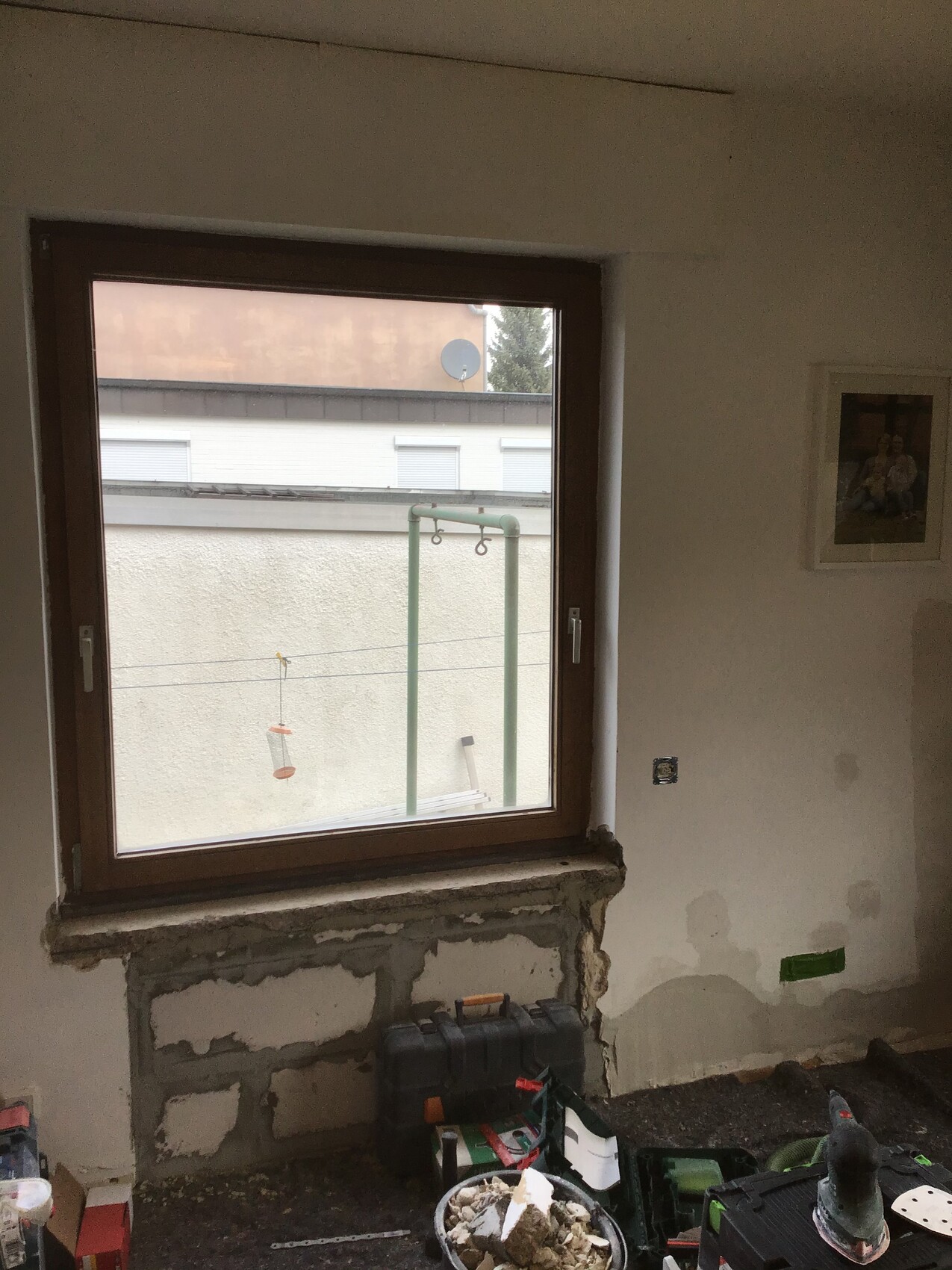
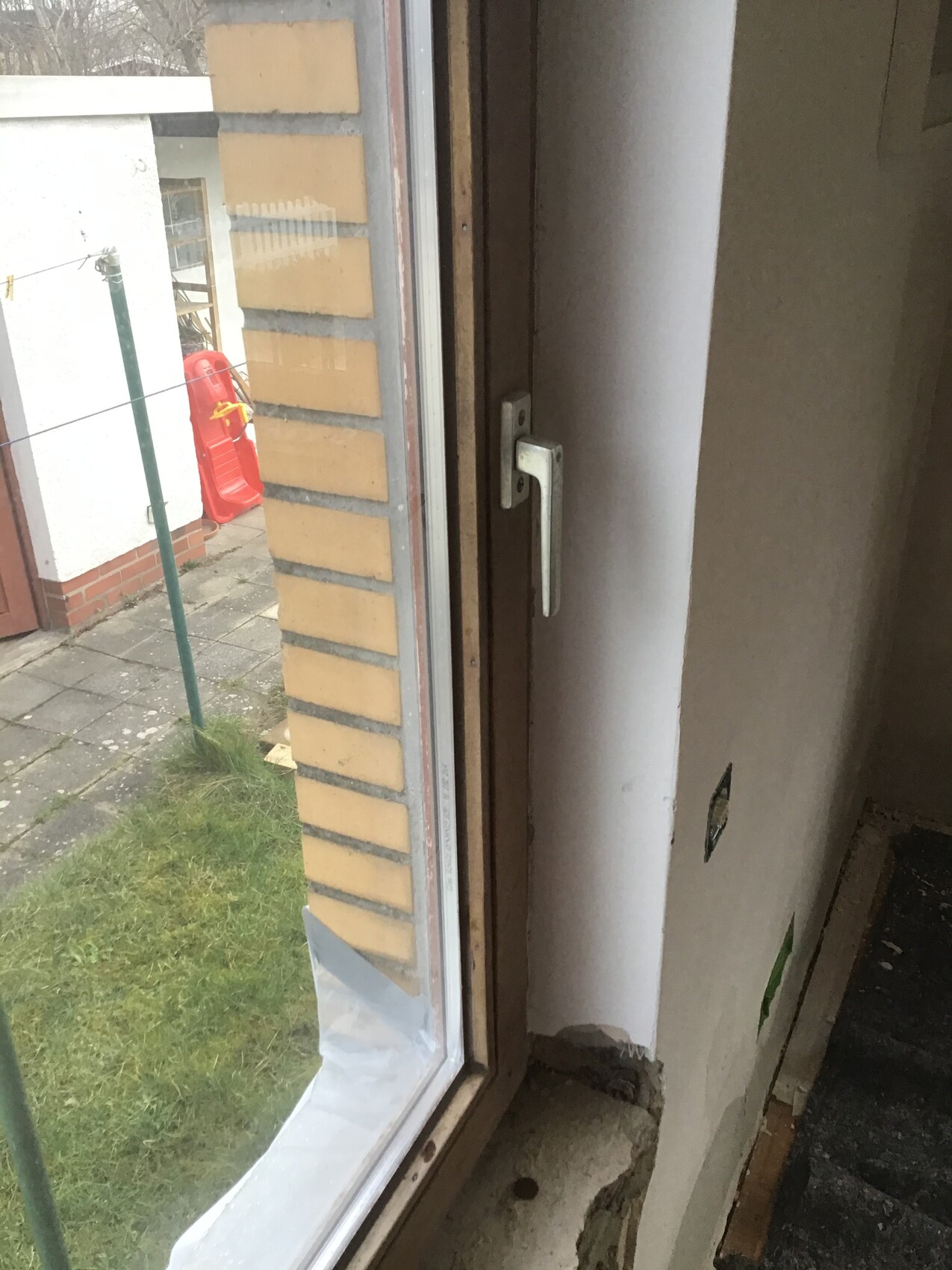
I want to remove an old wooden window in an extension from the 1970s and brick up the opening. The wall is double-layered, with an inner layer of white sand-lime brick (I believe) and an outer layer of beige facing bricks, with almost no air gap between them. (It’s the coldest room in the old house; the rest of the walls are also double-layered but without facing bricks and with a 5 cm to 9 cm (2 to 4 inches) air gap, which we have now filled with blown-in insulation).
The wall thickness including interior plaster is about 33 cm (13 inches). Appearance on the outside doesn’t matter since we plan to cover the facing brick facade with cladding (Rhombus boards) sooner or later, and possibly add proper insulation beforehand.
I wanted to use Poroton block bricks for the masonry, about 30 cm (12 inches) thick. Basically impossible to get here. 26 cm (10 inches) blocks would be no problem to find at hardware stores or specialist suppliers, but then I would have to apply a lot of plaster, which seems pointless. I have been trying to source bricks for two weeks now, mostly refusals or no replies... and now my two-week vacation is starting, during which I had planned to get it done. So long delivery times for bricks are not an option.
Now I’m thinking about simply bricking up the wall with other bricks, maybe using two layers. But which ones and how should I build it? I’m no expert, just a DIYer with reasonably skilled hands. I felt confident about laying single-layer block bricks stacked with proper bonding, but now I’d rather ask for advice...
Thanks for any tips.
hbergmann
S
Seven198428 Mar 2021 08:52Generally, it's better to stick with stone, as if calcium silicate brick were the best choice for existing structures. Why don't you just use stone with a similar thickness so that it fits from the inside for the base coat and top coat plaster? If the exterior appearance doesn't matter initially, you'll just have a few centimeters (inches) difference in the reveal. You can later cover this with your new cladding material. If you insulate beforehand, it really doesn't matter at all, in my opinion.
H
hbergmann28 Mar 2021 13:27Seven1984 schrieb:
Generally, it’s better to stick with masonry rather than assuming that calcium silicate brick is the best choice if that’s what’s already there.
Why not use the same or very similar thickness of masonry so it fits from the inside for the base coat and finish coat plaster, even if the external appearance doesn’t matter at first? You’ll just have a few centimeters (inches) difference in the reveal.
You can cover that later with your new cladding material. If you are installing insulation beforehand, that difference makes no difference in my opinion. Thanks, good tip. I had thought something similar. How should I best build this? For example: one row of calcium silicate bricks on the inside and one row …? Also calcium silicate bricks? Do these two rows need to be interlocked somehow, or is it sufficient if each is connected sideways to the existing masonry using wall ties? Thin-bed mortar (like with Poroton) or another type of mortar? Is there a good YouTube video about this?
H
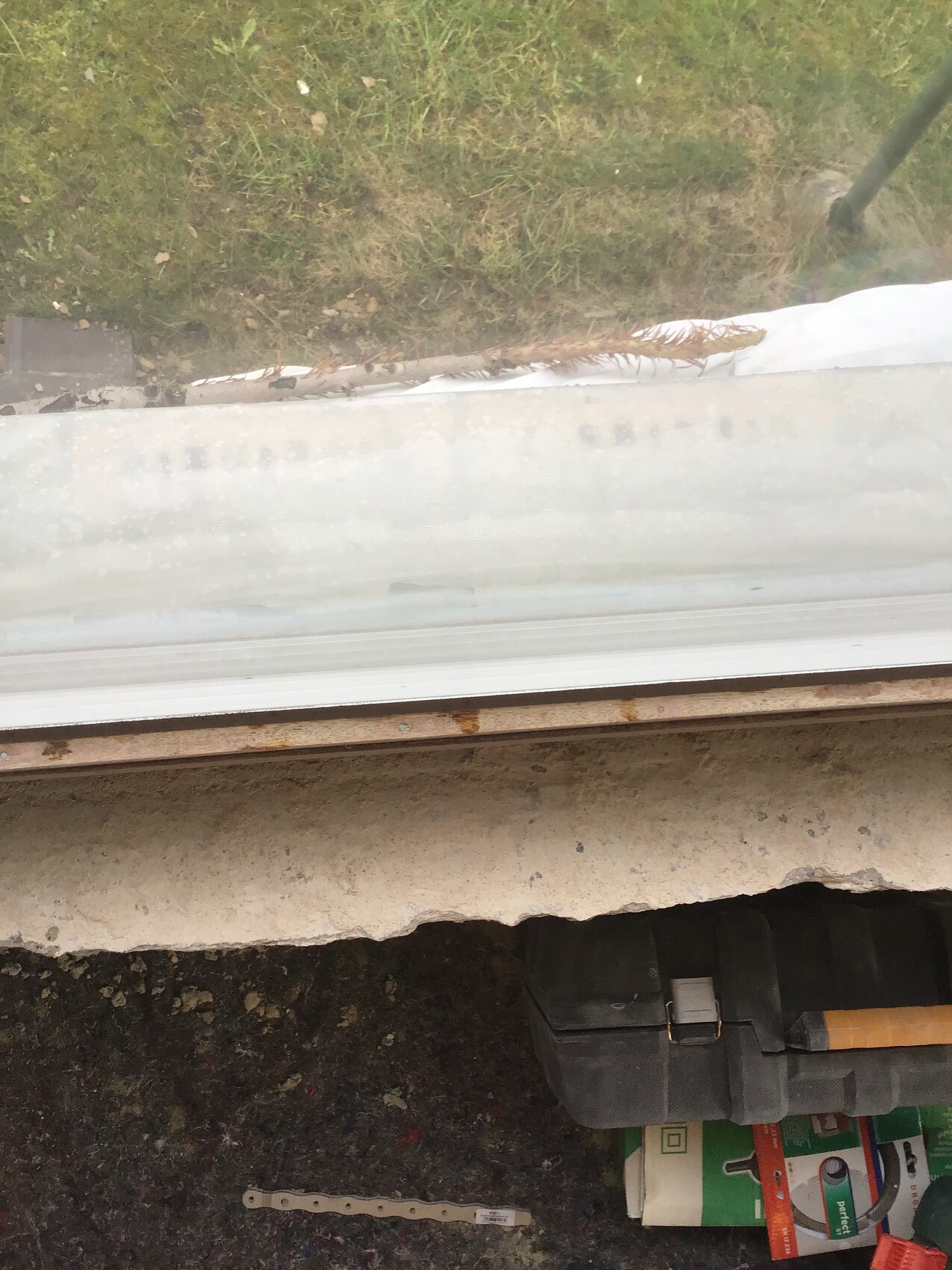
hbergmann28 Mar 2021 13:30Oh, and by the way, I have a question. You can see in the photo that there is an old concrete window sill, which I partially chipped away, removing the portion that protruded into the room. Is it okay to leave it like that, or would it be better to remove it entirely? Below that, I have filled in the heating niche with Ytong blocks.
Similar topics