
ᐅ Efflorescence on concrete paving (driveways and walkways) does not disappear.
Created on: 23 Mar 2023 08:30
C
Chris S.Hello everyone,
In the summer of 2022, we paved the courtyard and paths of our new build with concrete pavers. During the winter, we salted the area 3-4 times due to severe icy conditions, and since the beginning of this year, these unsightly stains have appeared (see attached photos). Despite several attempts, I haven’t been able to remove them. I tried using a high-pressure washer and also applied a soda solution twice (100ml per 10 liters of water). While there was some slight improvement, I can’t get the stains completely or at least significantly removed. It really bothers me. Do you have any suggestions, or does anyone else know this problem?
I would appreciate your feedback very much. Thanks in advance.
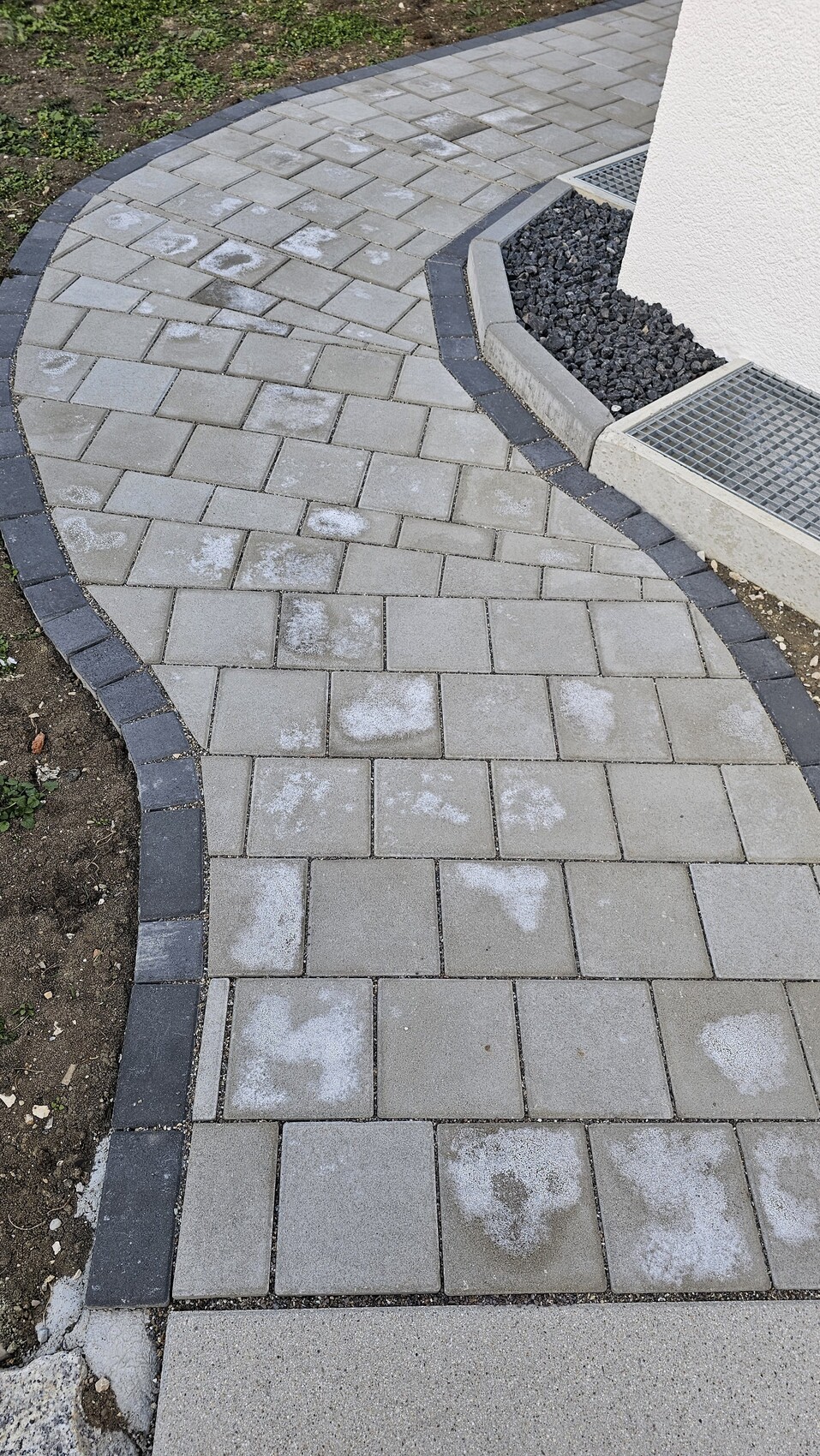
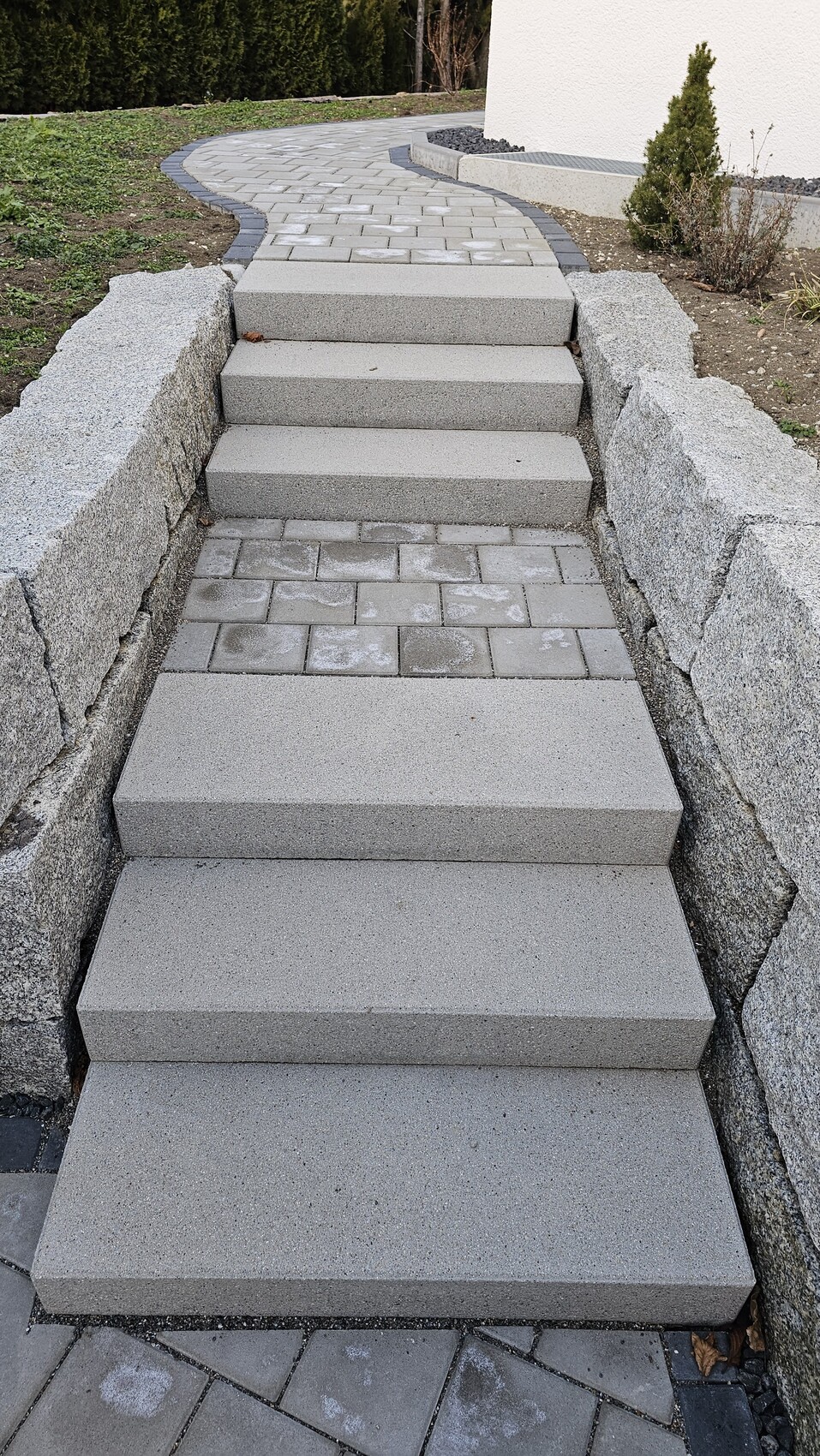

In the summer of 2022, we paved the courtyard and paths of our new build with concrete pavers. During the winter, we salted the area 3-4 times due to severe icy conditions, and since the beginning of this year, these unsightly stains have appeared (see attached photos). Despite several attempts, I haven’t been able to remove them. I tried using a high-pressure washer and also applied a soda solution twice (100ml per 10 liters of water). While there was some slight improvement, I can’t get the stains completely or at least significantly removed. It really bothers me. Do you have any suggestions, or does anyone else know this problem?
I would appreciate your feedback very much. Thanks in advance.

Unfortunately, this no longer helps the original poster, but maybe others here will read this ;-)
Who in 2022 still comes up with the idea of spreading salt?
From the Federal Environment Agency:
Our tips
Clear the sidewalk from snow as quickly as possible using a shovel or broom.
Use salt-free abrasive materials such as sand, gravel, or granules (recognizable in stores by the Blue Angel certification).
What you should know
The use of salt for de-icing is very harmful to trees and other plants, animals, water bodies, vehicles, and buildings (especially concrete). Repairing or limiting the damage causes high costs every year...
Use abrasive materials like sand, gravel, or granules: The use of salt for de-icing is prohibited in most municipalities and subject to fines...
Who in 2022 still comes up with the idea of spreading salt?
From the Federal Environment Agency:
Our tips
Clear the sidewalk from snow as quickly as possible using a shovel or broom.
Use salt-free abrasive materials such as sand, gravel, or granules (recognizable in stores by the Blue Angel certification).
What you should know
The use of salt for de-icing is very harmful to trees and other plants, animals, water bodies, vehicles, and buildings (especially concrete). Repairing or limiting the damage causes high costs every year...
Use abrasive materials like sand, gravel, or granules: The use of salt for de-icing is prohibited in most municipalities and subject to fines...
i_b_n_a_n schrieb:
Unfortunately, this doesn’t help the original poster anymore, but maybe others will read it ;- )
Who in the year 2022 would still think of spreading salt?
From the Federal Environment Agency:
Our tips
Clear the sidewalk from snow as quickly as possible using a shovel or broom.
Use salt-free abrasive materials such as sand, grit, or granules (recognizable in stores by the Blue Angel label).
Know-how
The use of road salt is very harmful to trees and other plants, animals, water bodies, vehicles, and buildings (especially concrete). The repair or containment of damages causes high costs every year...
Use abrasive materials like sand, grit, or granules: The use of road salt is prohibited in most municipalities and subject to fines... I am fully aware of this, but since everywhere lava granules, etc. were sold out and only road salt was available in hardware stores and similar places, I thought it better to spread salt rather than risk people's health due to extreme ice, and possibly face a lawsuit later for insufficient treatment! Still, thanks for the info!!
W
WilderSueden23 Mar 2023 10:32There are paving stones that react sensitively to salt. Do you happen to have any of those?
As far as I know, this mainly affects porous paving stones. It can go as far as some manufacturers not recommending their use for driveways and parking spaces because salty water dripping from cars could cause damage.
As far as I know, this mainly affects porous paving stones. It can go as far as some manufacturers not recommending their use for driveways and parking spaces because salty water dripping from cars could cause damage.
WilderSueden schrieb:
Some paving stones are sensitive to salt. Do you happen to have any of those?
As far as I know, this mainly affects porous paving stones. It can even be to the extent that some manufacturers advise against using them for driveways and parking spaces because saltwater dripping from cars could cause damage.I have standard concrete pavers. No one has told me if or how susceptible they are 🙁
W
WilderSueden23 Mar 2023 10:43Standard concrete paving shouldn't be that susceptible. Of course, salt is still not good for it. Have you already tried scrubbing it with a brush?