
For our new construction project with a developer, we have hired an independent building inspector who is overseeing the process. The developer is building several terraced houses in this row, and after the basement slab was poured, the first defect was identified:
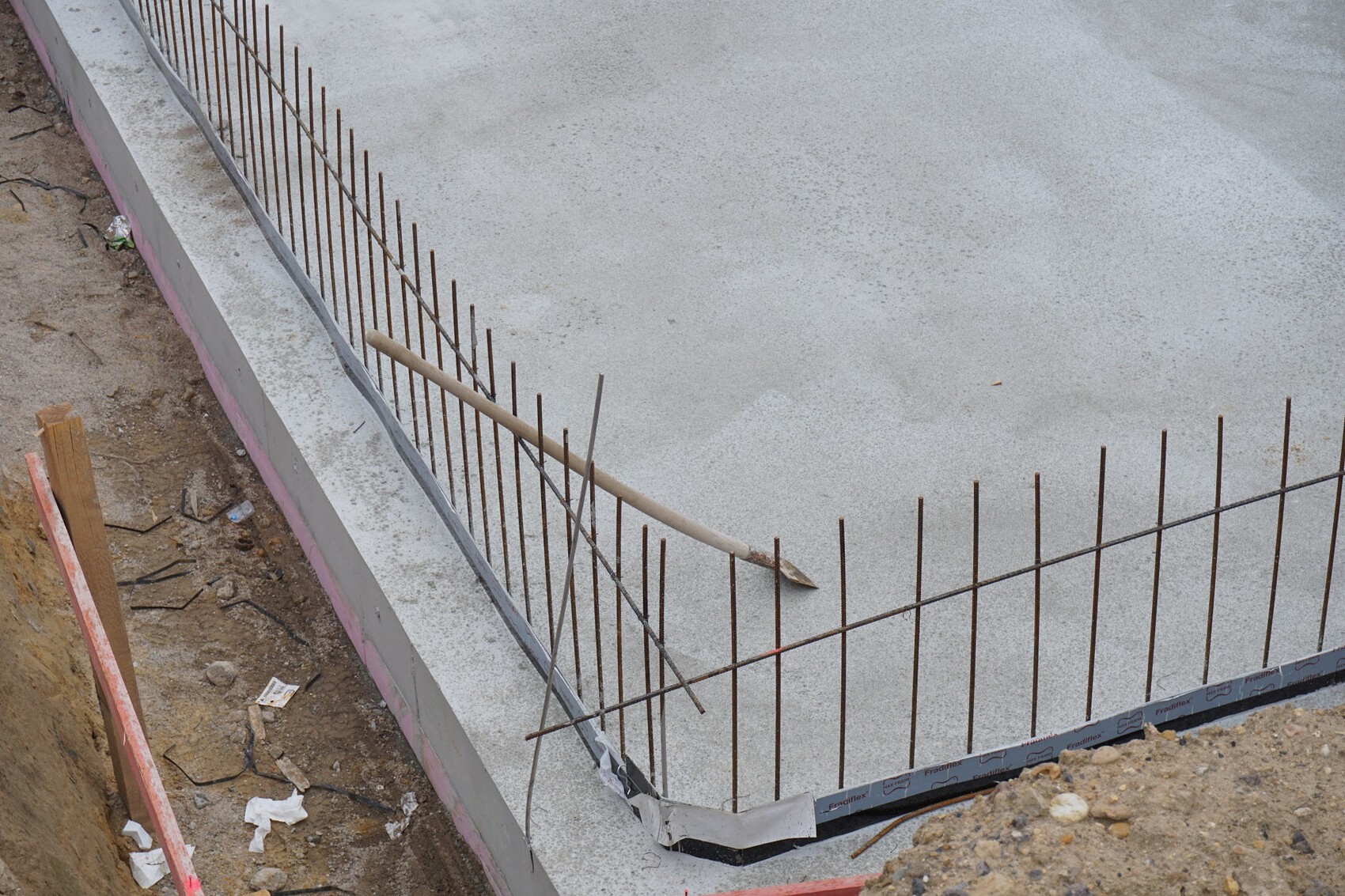
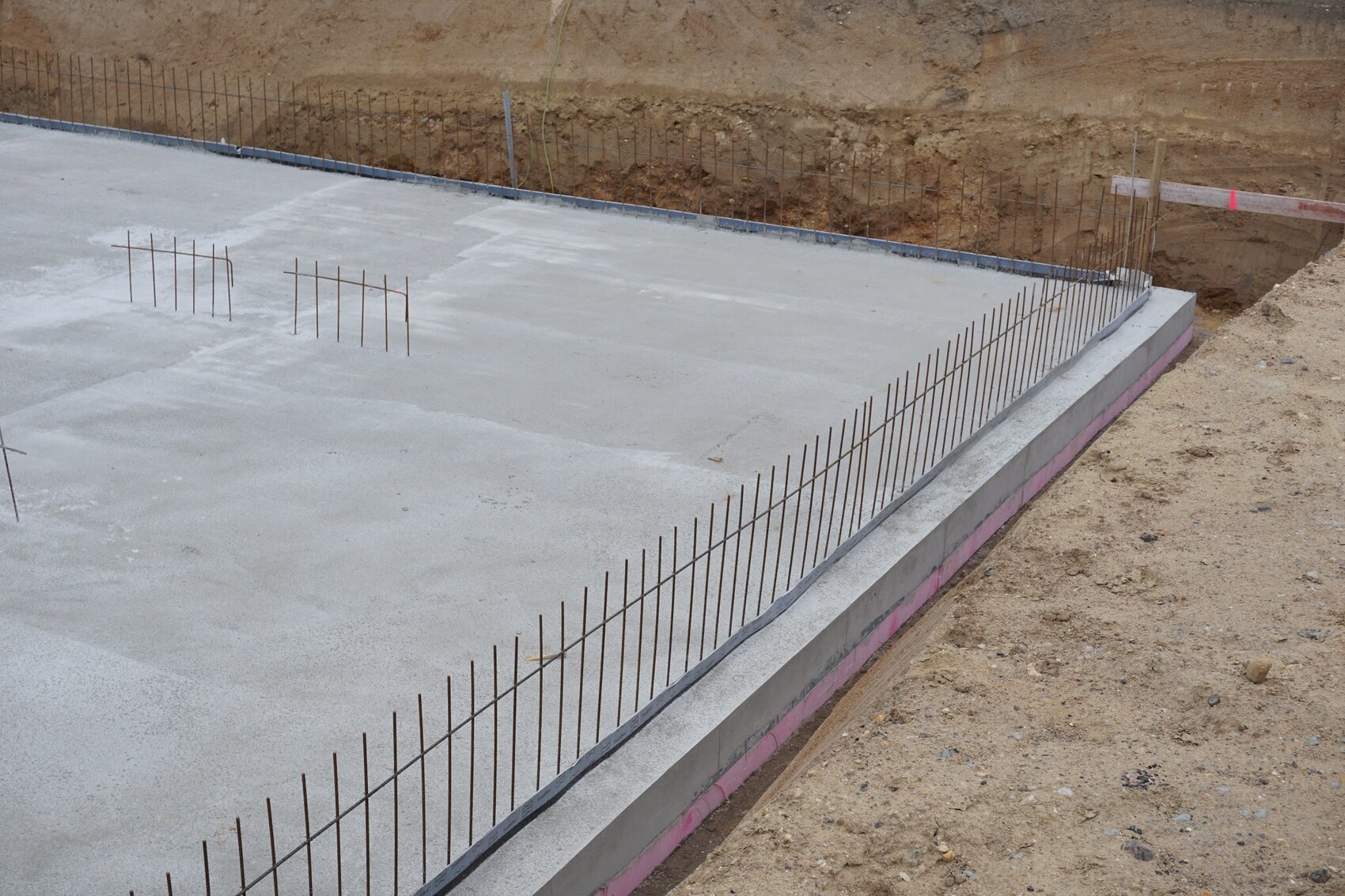
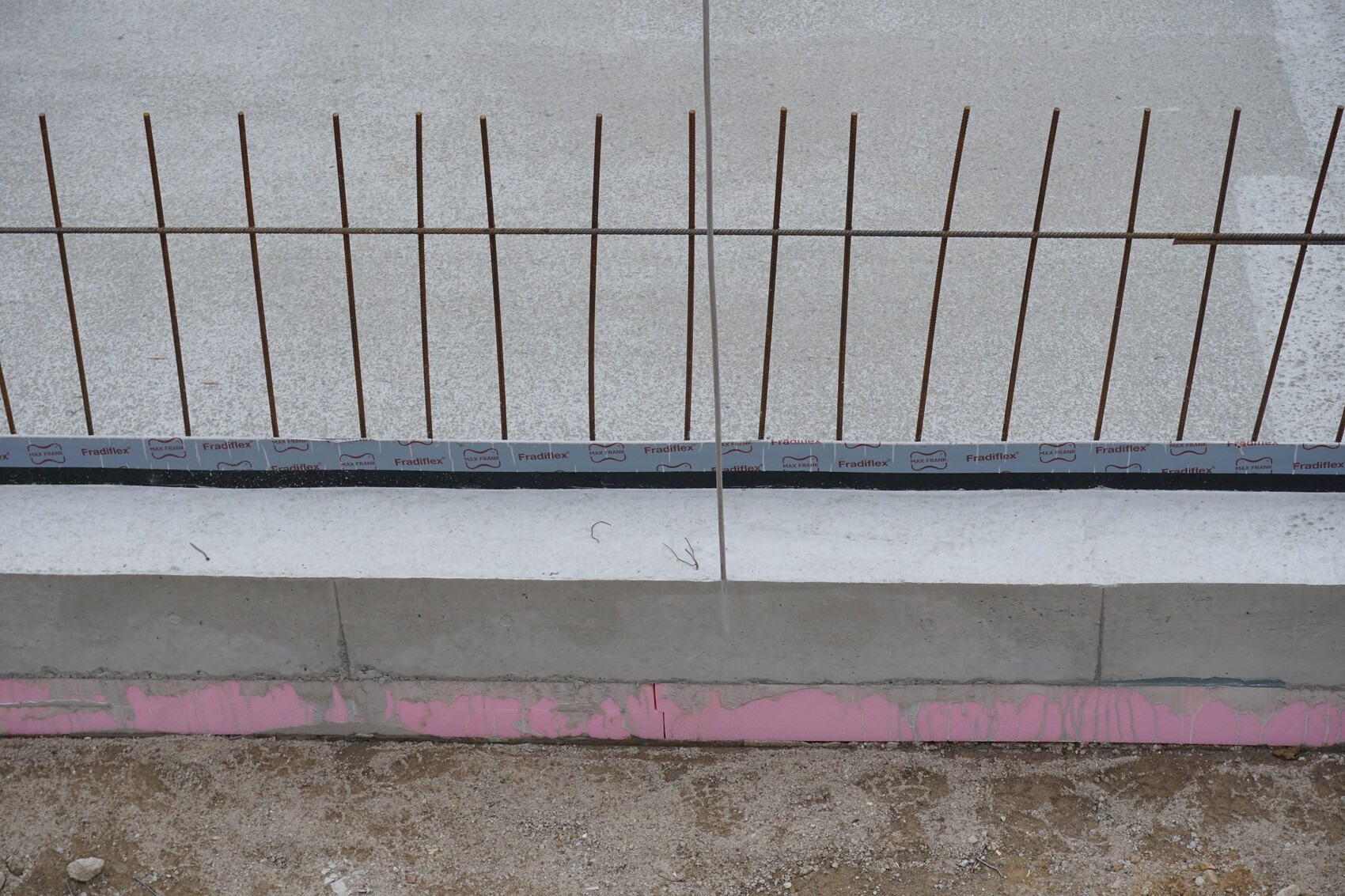
- The on-site execution deviates from the requirements for the joint flashing used (FRADIFLEX).
- The waterproof flashing sheets are 15 cm (6 inches) wide and must be embedded in the concrete between 3 cm (1 inch) and a maximum of half their width, i.e., 7.5 cm (3 inches). From the protective sheets still applied at the top area, it is clear that embedding of at least 3 cm (1 inch) is not always achieved.
- This is particularly the case at the four corners, where significant height differences are visible.
- In some areas, the protective sheet has been cast into the concrete.
A few recent photos:


Below is an excerpt from the purchase contract: "The basement slab will be constructed as waterproof reinforced concrete. Perimeter insulation will be installed beneath the slab. The basement will be built as a waterproof shell (usage class A). On the exterior, a plastic-modified bitumen thick coating (PMB) waterproofing will be applied in the joint areas."
Tomorrow we will discuss this with the construction manager and the independent inspector. What is the expert assessment here? What long-term problems might arise, and is it possible to correct this defect in any way?
- The on-site execution deviates from the requirements for the joint flashing used (FRADIFLEX).
- The waterproof flashing sheets are 15 cm (6 inches) wide and must be embedded in the concrete between 3 cm (1 inch) and a maximum of half their width, i.e., 7.5 cm (3 inches). From the protective sheets still applied at the top area, it is clear that embedding of at least 3 cm (1 inch) is not always achieved.
- This is particularly the case at the four corners, where significant height differences are visible.
- In some areas, the protective sheet has been cast into the concrete.
A few recent photos:
Below is an excerpt from the purchase contract: "The basement slab will be constructed as waterproof reinforced concrete. Perimeter insulation will be installed beneath the slab. The basement will be built as a waterproof shell (usage class A). On the exterior, a plastic-modified bitumen thick coating (PMB) waterproofing will be applied in the joint areas."
Tomorrow we will discuss this with the construction manager and the independent inspector. What is the expert assessment here? What long-term problems might arise, and is it possible to correct this defect in any way?
Hi,
I am obviously late to the discussion, but I am still interested in the results of the inspection.
In my opinion, the partially insufficient installation height is not a disaster. It is hard to tell from the pictures whether the reinforcement is touching the sheet metal. This should definitely be avoided.
If damage occurs there, it can later only be prevented from the outside. At that time, a pressure injection hose could have been installed as a precaution.
In my view, your construction description is somewhat unclear. The term "white tank" is only meaningful if the WU (waterproof concrete) standard has been agreed upon. This is not evident here. The statement about usage class A is unclear as well. You should verify exactly what you are getting.
If you have further questions, I am happy to help.
Best regards,
Jann St
I am obviously late to the discussion, but I am still interested in the results of the inspection.
In my opinion, the partially insufficient installation height is not a disaster. It is hard to tell from the pictures whether the reinforcement is touching the sheet metal. This should definitely be avoided.
If damage occurs there, it can later only be prevented from the outside. At that time, a pressure injection hose could have been installed as a precaution.
In my view, your construction description is somewhat unclear. The term "white tank" is only meaningful if the WU (waterproof concrete) standard has been agreed upon. This is not evident here. The statement about usage class A is unclear as well. You should verify exactly what you are getting.
If you have further questions, I am happy to help.
Best regards,
Jann St
Similar topics