
ᐅ Heat pump on the flat roof is making a loud humming noise
Created on: 3 Apr 2024 07:32
N
Nik_Hamburg
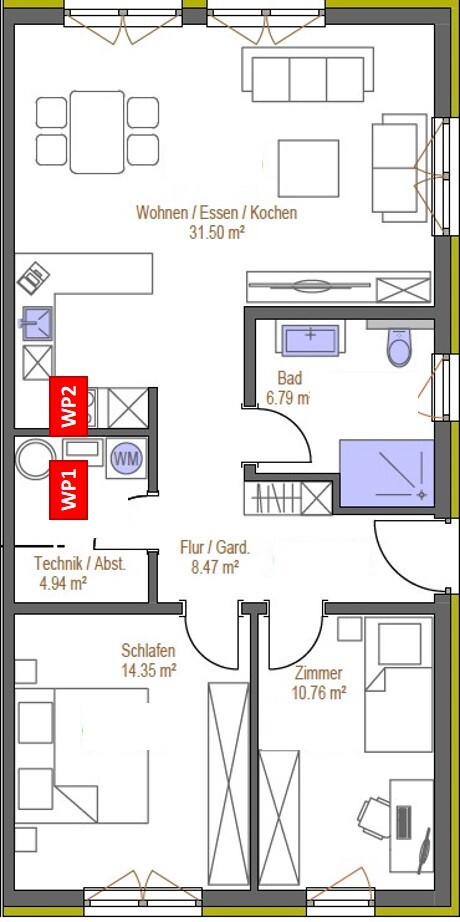
Hello everyone, we purchased a new apartment from a developer. The building has four units, two on the ground floor and two upstairs, with a flat roof timber structure featuring insulation above the rafters and a suspended hollow ceiling. Since there are no common rooms in the building, each apartment has its own heating system (heat pump) with one outdoor unit on the roof. Two of these units are located above our apartment, above the utility room (next to the bedroom) and the kitchen with living area. All interior walls of the apartment are lightweight construction walls. Since the electricity finally started working recently and the units are running, there is a loud humming and droning noise from above, as if a lawn mower is running on the roof. It is unbearable; we are relieved every time we leave the apartment.
Outdoor unit model: Daikin Altherma 3R (I believe, see photos in the link below), placed on small, round vibration isolation feet on vibration dampening beams, which are mounted on concrete beams that are reportedly (I cannot see, as there is green roof substrate on top) resting on vibration isolation mats.
Photos attached.
I am just surprised why the humming and droning noise is still so loud despite the vibration isolation measures. Of course, I also don’t know whether it is airborne noise or structure-borne noise (or both).
Does anyone have any idea what could be done technically here? We are really sad and desperate; it is impossible to move into this apartment.
The only thing I can think of as a layperson would be to place huge and very thick sound insulation mats under the outdoor units. But somehow they also need to be fixed securely, otherwise they could be blown away. Or open the ceiling again and insert thick insulation wool between the rafters. I am really at a loss. Unfortunately, the developer is incompetent and does not take care of the legal or cost issues; we will have to deal with that later.
Thanks for your help. Nik
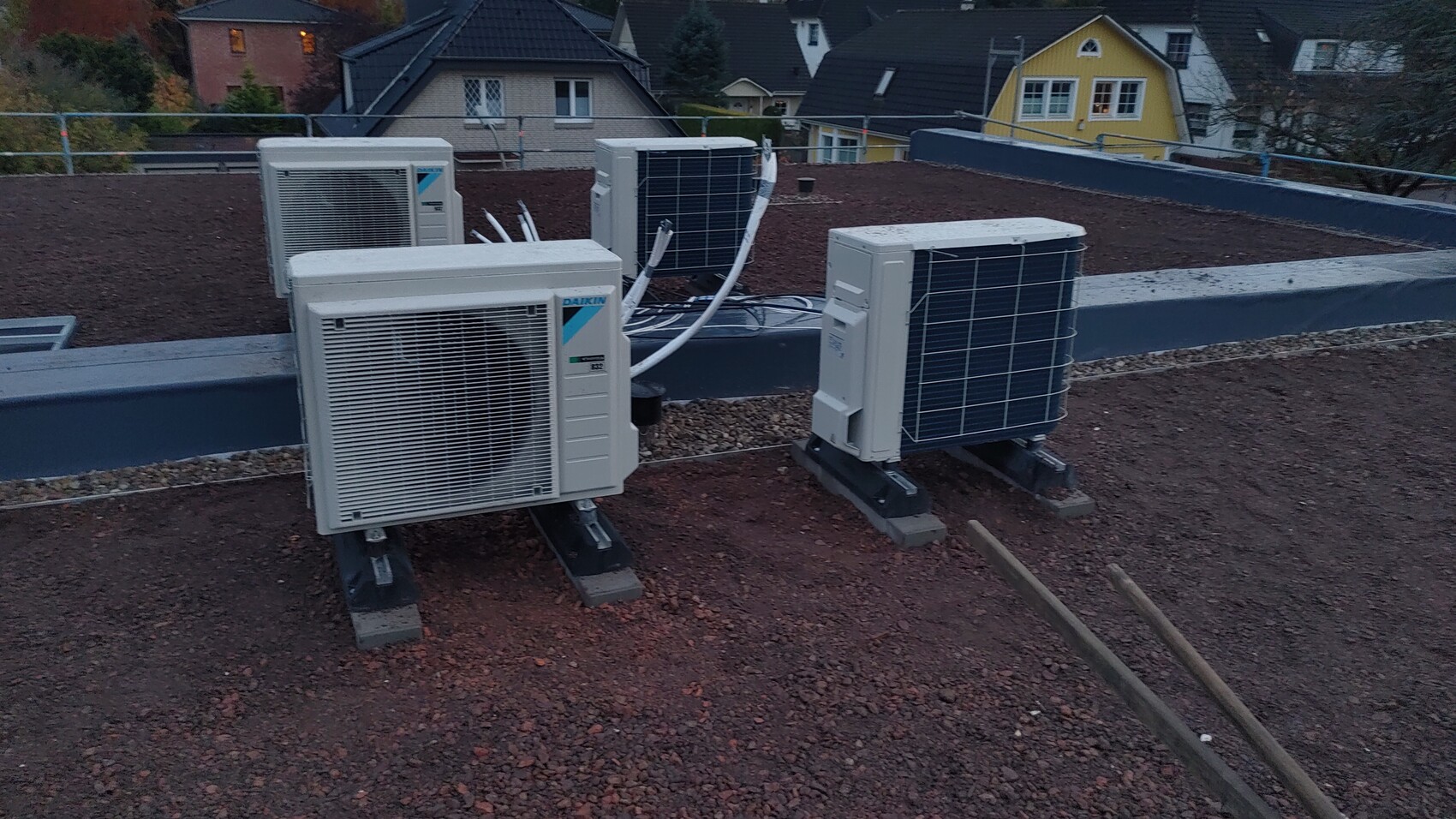
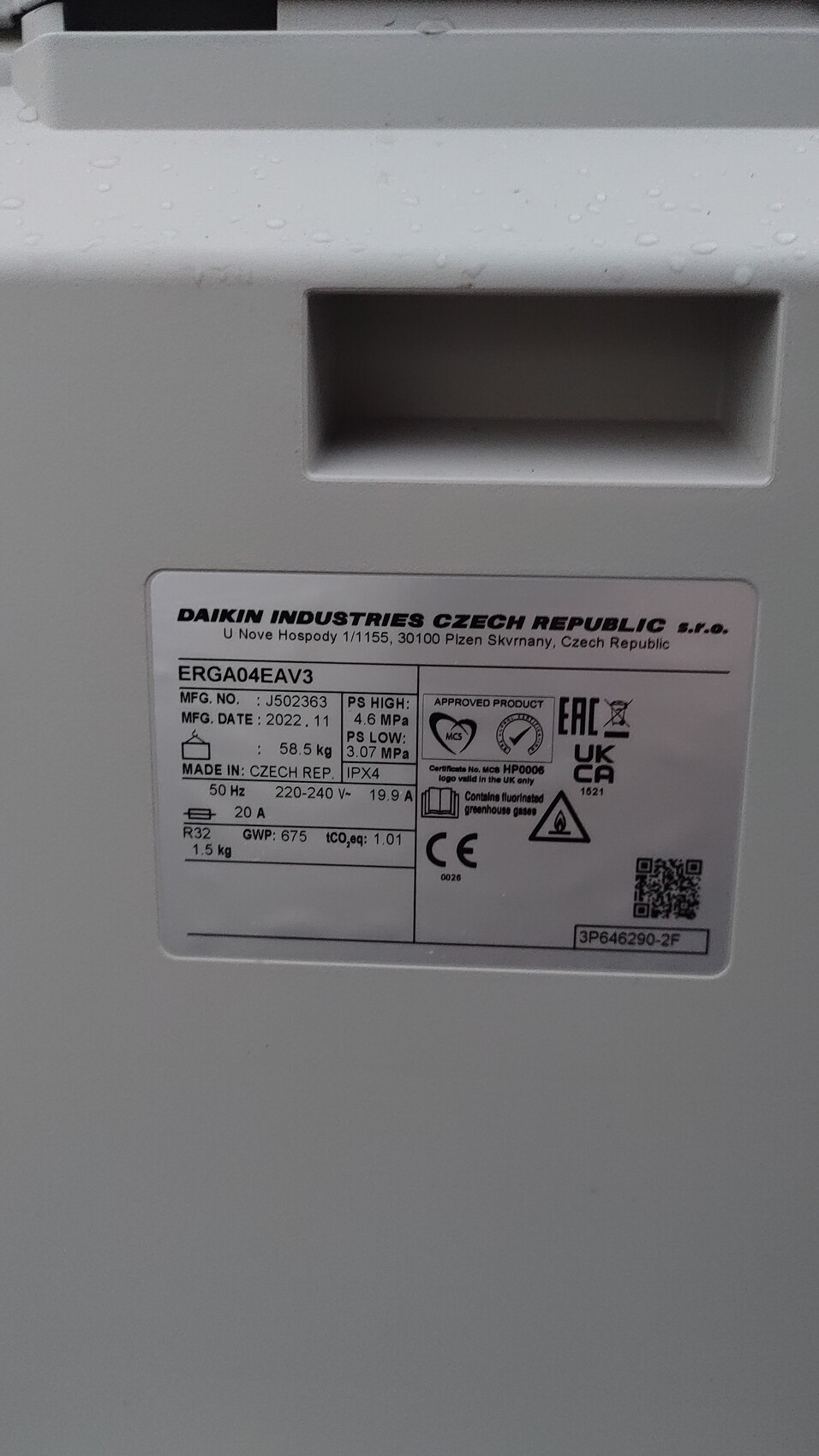
Outdoor unit model: Daikin Altherma 3R (I believe, see photos in the link below), placed on small, round vibration isolation feet on vibration dampening beams, which are mounted on concrete beams that are reportedly (I cannot see, as there is green roof substrate on top) resting on vibration isolation mats.
Photos attached.
I am just surprised why the humming and droning noise is still so loud despite the vibration isolation measures. Of course, I also don’t know whether it is airborne noise or structure-borne noise (or both).
Does anyone have any idea what could be done technically here? We are really sad and desperate; it is impossible to move into this apartment.
The only thing I can think of as a layperson would be to place huge and very thick sound insulation mats under the outdoor units. But somehow they also need to be fixed securely, otherwise they could be blown away. Or open the ceiling again and insert thick insulation wool between the rafters. I am really at a loss. Unfortunately, the developer is incompetent and does not take care of the legal or cost issues; we will have to deal with that later.
Thanks for your help. Nik
N
Nik_Hamburg8 Apr 2024 20:48dertill schrieb:
I believe compensators are also available for refrigerants. Maybe ask Daikin directly. Otherwise, the refrigerant copper pipes at the connection to the outdoor unit should be arranged in a loop, and clamps used to secure the pipes to the walls should not be tightened too much and installed above the insulation. Make sure the copper and the clamp are separated—if clamps are even used at all.
On the indoor unit side, in the heating circuit, compensators or flexible hoses can definitely be installed. There you can check the pipe itself to see if any vibrations are transmitted.Thanks! I also have photos showing how the refrigerant lines pass through the roof and simply rest on other building elements at the wall. Does this look like poor workmanship? In my opinion, the close contact of the pipe element through the roof and the resting on the pegs of the ventilation pipe clamps create solid acoustic bridges. Or is this acceptable or irrelevant?
No, that’s not a problem. What would be problematic are clamps without any insulation. Placing them on the threaded rods with insulation in between is better for soundproofing. The penetration is naturally quite tight, but it needs to be that way. I’m not sure if anything else would be necessary there.
Do the residents on the ground floor have the same issue?
Do the residents on the ground floor have the same issue?
Hmm, how to properly seal this airtight is probably a secret known only to the builder. At least, if it’s not airtight, it will only last a few years anyway, and since the heat pump is located in the room below, the noise issue will resolve itself. Was a blower door test conducted?
Similar topics