
Hello everyone,
the house construction is slowly coming to an end, and topics like garden landscaping are becoming increasingly important.
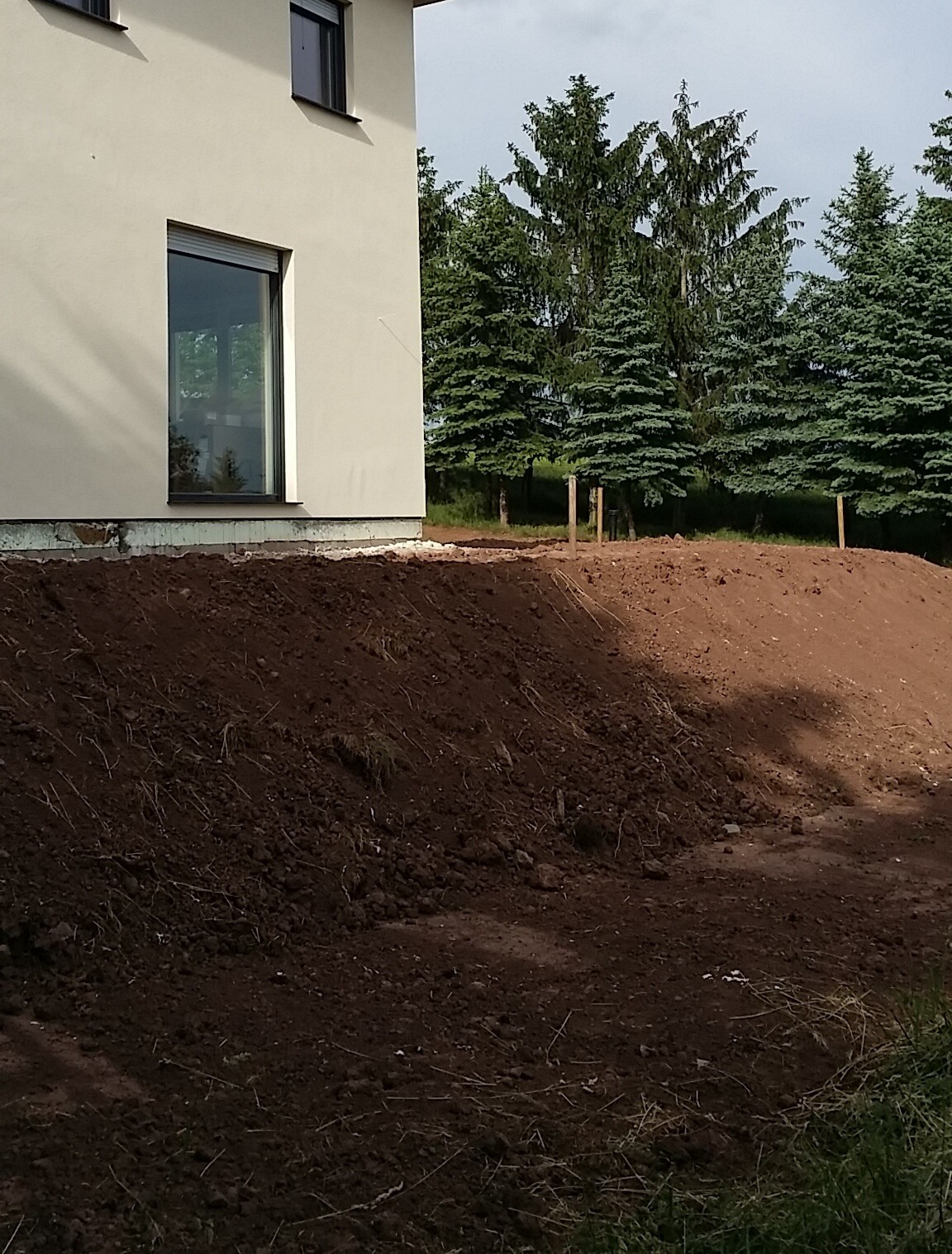
Most of the garden is not directly visible and can be addressed later, but on the south side we have a slope that resulted from the raised foundation of the house. The slope is partially 2m (6.6 ft) high, extends over a length of about 20m (66 ft), and has an incline angle of 45°. At the bottom of the slope, there are about 3m (10 ft) horizontally to the fence. The slope is currently not planted.
We have already spent hours discussing possible design ideas but haven’t come up with any really good solutions. Is it worth getting a landscaping company’s concept? If so, what would that roughly cost?
Previous ideas:
What are your opinions???
the house construction is slowly coming to an end, and topics like garden landscaping are becoming increasingly important.
Most of the garden is not directly visible and can be addressed later, but on the south side we have a slope that resulted from the raised foundation of the house. The slope is partially 2m (6.6 ft) high, extends over a length of about 20m (66 ft), and has an incline angle of 45°. At the bottom of the slope, there are about 3m (10 ft) horizontally to the fence. The slope is currently not planted.
We have already spent hours discussing possible design ideas but haven’t come up with any really good solutions. Is it worth getting a landscaping company’s concept? If so, what would that roughly cost?
Previous ideas:
- Slope with retaining wall blocks: about 450 pieces, disadvantages: cost, "too much" concrete
- Completely cover the slope with ground cover plants, disadvantage: slope hardly walkable due to the angle
- Reduce the slope angle by adding tons of topsoil?
- Shape the slope into terraces or steps? -> better access for maintenance and a good compromise between concrete and greenery
What are your opinions???

We also have a similar slope—or rather embankments—leading down to the neighbors’ properties, which they excavated from their land. On one side, the slope is not too steep. That’s where we placed our herb garden, right next to the terrace. To make it easier to reach the herbs, we added a few stepping stones. At the base, my wife planted a flowering hedge as a visual screen against the neighbors and to hide the fence (which acts as a fall protection). Between the hedge, she planted various flowering plants, possibly including bulbs. It looks nice.
Soon, we'll start working on the other side. Here we plan to:
1. Lay down a strong geotextile fabric and plant a flowering hedge in it. Then we’ll cover the fabric with bark mulch. The geotextile helps stabilize the slope and makes it harder for weeds to grow. Pulling weeds on a slope is very tiring.
2. We will likely plant some flowering plants in front of the hedge to beautify the area (the fabric will need to be cut for this). You might also consider planting one or two fruit trees at around waist height on the slope. I hope our peach tree survives. We planted it about 4 weeks ago, and its leaves are still drooping. I suspect the soil quality is poor. My wife says it’s transplant shock.
Soon, we'll start working on the other side. Here we plan to:
1. Lay down a strong geotextile fabric and plant a flowering hedge in it. Then we’ll cover the fabric with bark mulch. The geotextile helps stabilize the slope and makes it harder for weeds to grow. Pulling weeds on a slope is very tiring.
2. We will likely plant some flowering plants in front of the hedge to beautify the area (the fabric will need to be cut for this). You might also consider planting one or two fruit trees at around waist height on the slope. I hope our peach tree survives. We planted it about 4 weeks ago, and its leaves are still drooping. I suspect the soil quality is poor. My wife says it’s transplant shock.
In my opinion, hiring a landscaping company only makes sense if you need a plan for the entire garden. It won’t be cheap.
The question is whether this slope still needs to serve a purpose or if it should just be planted to avoid future maintenance.
I would suggest installing steps down the middle or wherever it fits, and creating a footpath at about halfway down. Then, use ground cover plants or low-growing shrubs like lavender and beach rose. This depends on your taste and how much upkeep you want. The three meters (10 feet) of garden below could be laid out nicely with lawn.
The question is whether this slope still needs to serve a purpose or if it should just be planted to avoid future maintenance.
I would suggest installing steps down the middle or wherever it fits, and creating a footpath at about halfway down. Then, use ground cover plants or low-growing shrubs like lavender and beach rose. This depends on your taste and how much upkeep you want. The three meters (10 feet) of garden below could be laid out nicely with lawn.

Hello,
most of the alternatives have actually already been mentioned:
Unfortunately, you will probably not be able to avoid one of these options. Maybe a combination would work as well. For example, you could support the slope with a wall at the terrace and green the rest.
In addition to the stairs Yvonne mentioned, you should also consider some kind of ramp. This way, you can move the lawnmower or wheelbarrow between levels without having to lift them up the stairs.
most of the alternatives have actually already been mentioned:
- Wall => Expensive, even with aerated concrete blocks (EL), costs can quickly reach around 10,000 Euros
- Greening => Maintenance effort
- Leveling => Permanent slope next to the house that also needs upkeep
Unfortunately, you will probably not be able to avoid one of these options. Maybe a combination would work as well. For example, you could support the slope with a wall at the terrace and green the rest.
In addition to the stairs Yvonne mentioned, you should also consider some kind of ramp. This way, you can move the lawnmower or wheelbarrow between levels without having to lift them up the stairs.
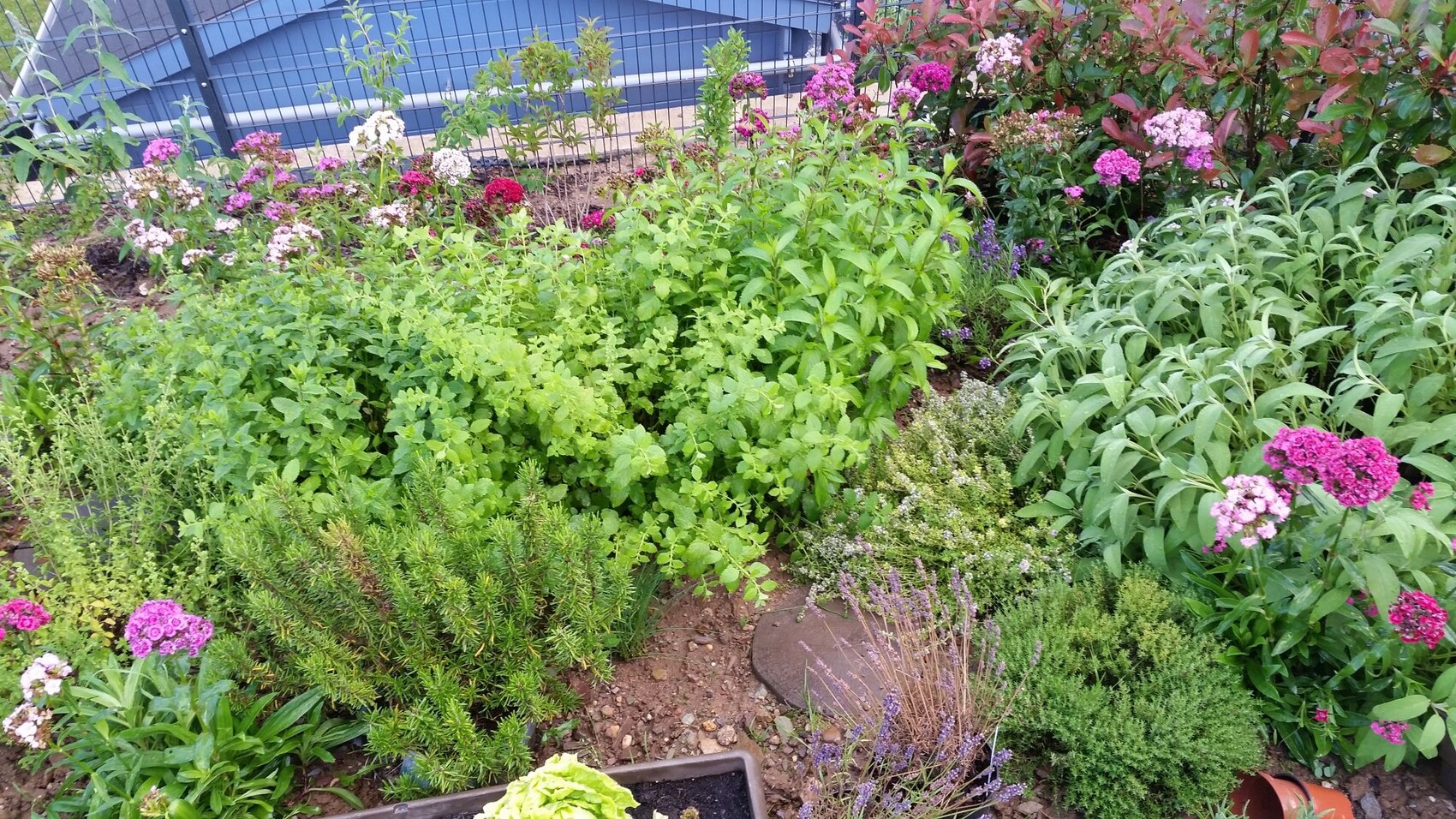
Here are two more pictures of the herb and flower bed, which has now been closed to prevent overcrowding.
This sage has grown tremendously over the past 1.5 years.
The other herbs (thyme, lemon thyme, mint, Japanese mint, lemon balm, marjoram, oregano, and rosemary) we have at least planted in pots with soil – otherwise, they would spread uncontrollably.

This sage has grown tremendously over the past 1.5 years.
The other herbs (thyme, lemon thyme, mint, Japanese mint, lemon balm, marjoram, oregano, and rosemary) we have at least planted in pots with soil – otherwise, they would spread uncontrollably.
Similar topics