
ᐅ Fall protection on L-shaped concrete blocks – Is a special fence required?
Created on: 6 Jul 2018 20:14
M
munger71Hello everyone,
we need to clarify the following. Our landscape architect is insisting on installing unattractive fences due to the Bavarian building regulations, as they are supposedly absolutely necessary because of the risk of falling.
The following excerpt from the building code is the subject of the discussion:
Art 36: Guardrails
On, at, and in structural installations, areas that are generally intended for walking on and that directly border on areas more than 50cm (20 inches) lower, must be enclosed by sufficiently high and sturdy guardrails, unless the guardrail contradicts the purpose of the area.
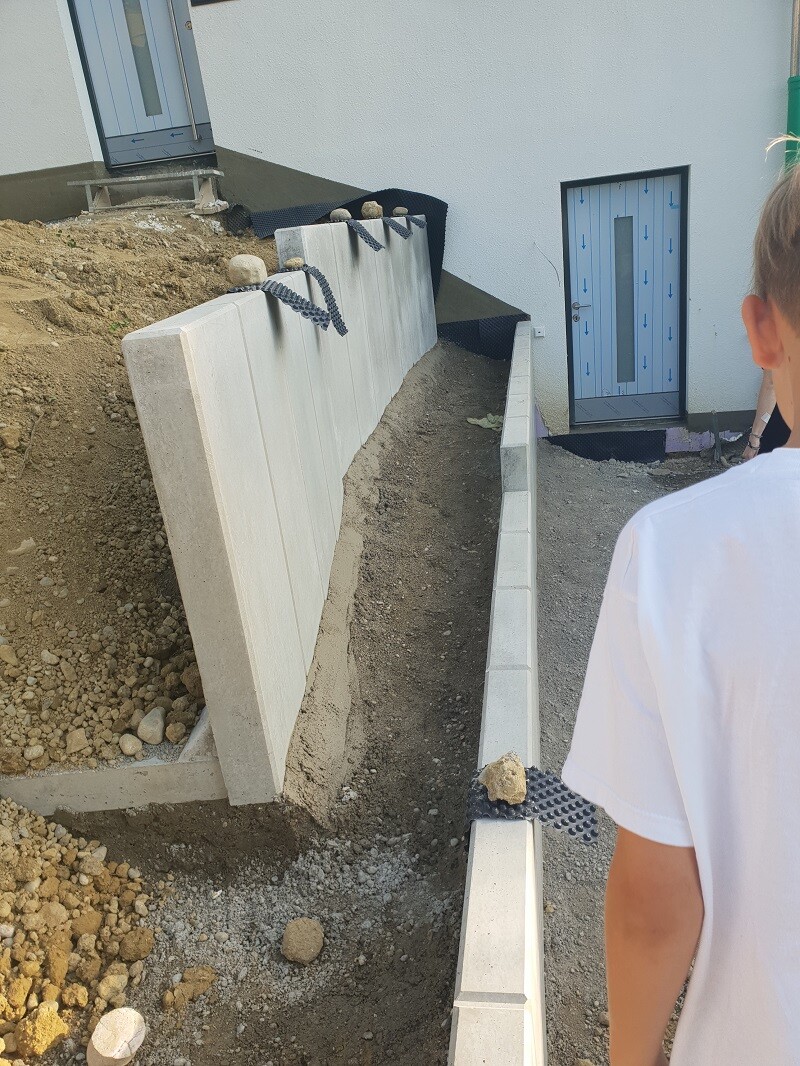
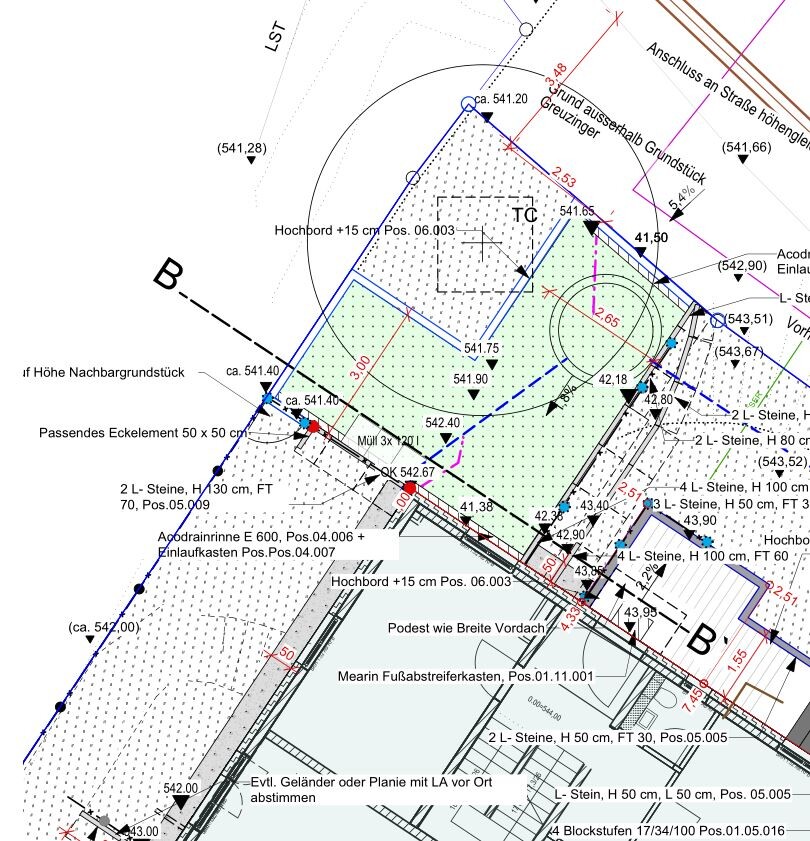
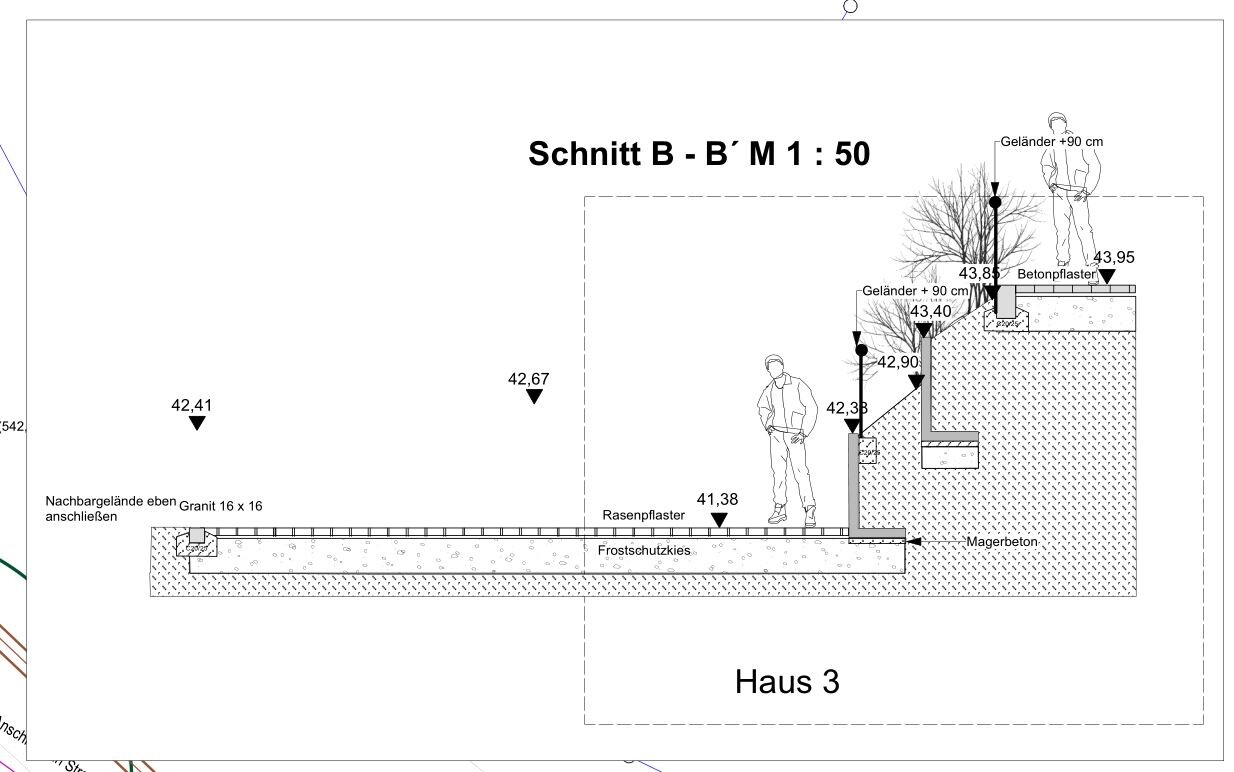
It is proposed to install fall protection both on the L-shaped concrete blocks next to the parking space and behind the trash bin enclosure.
The purpose of this area is planting, and it is generally not intended for walking on. The area was also drawn at a "slope." Who would think to actually walk on it?
The railing would therefore contradict the purpose of the area for planting. It would be much more dangerous to maintain the plants from above rather than comfortably from below.
The same applies to the fence above the trash bin enclosure. Planting area → not intended for walking on, as the terrain slopes steeply forward.
The fence above the trash bin enclosure does not directly face a 0.5m (20 inch) drop → the trash bin enclosure is 69cm (27 inches) deep and stands in front of the fence.
I am at a loss, and the landscape architect insists on legal pitfalls.
Does anyone have any advice for us? Is there any legal precedent or interpretation on this?
we need to clarify the following. Our landscape architect is insisting on installing unattractive fences due to the Bavarian building regulations, as they are supposedly absolutely necessary because of the risk of falling.
The following excerpt from the building code is the subject of the discussion:
Art 36: Guardrails
On, at, and in structural installations, areas that are generally intended for walking on and that directly border on areas more than 50cm (20 inches) lower, must be enclosed by sufficiently high and sturdy guardrails, unless the guardrail contradicts the purpose of the area.
It is proposed to install fall protection both on the L-shaped concrete blocks next to the parking space and behind the trash bin enclosure.
The purpose of this area is planting, and it is generally not intended for walking on. The area was also drawn at a "slope." Who would think to actually walk on it?
The railing would therefore contradict the purpose of the area for planting. It would be much more dangerous to maintain the plants from above rather than comfortably from below.
The same applies to the fence above the trash bin enclosure. Planting area → not intended for walking on, as the terrain slopes steeply forward.
The fence above the trash bin enclosure does not directly face a 0.5m (20 inch) drop → the trash bin enclosure is 69cm (27 inches) deep and stands in front of the fence.
I am at a loss, and the landscape architect insists on legal pitfalls.
Does anyone have any advice for us? Is there any legal precedent or interpretation on this?

We have already had this discussion. He believes he cannot be released from liability because of this. The interesting question is what exactly is meant by "walkable" and "the barrier contradicts the intended use of the area." The area cannot be walked on because bushes are planned to be planted there. This clearly defines the purpose of the area.
We will place L-shaped concrete blocks around the terrace at a height of 1.2m (4 feet). Nobody is concerned about fall protection here, including the person installing it. I am aware of the issue from an insurance perspective. Raised garden beds will be positioned at some distance from the edge, and bushes will be planted at the base of the L-shaped blocks—problem solved.
Similar topics