
K
k-man202129 Nov 2021 22:08Hello everyone,
I have inherited an apartment from the 1960s. Some rooms have relatively large plastic window sashes, some about 180cm (71 inches) wide, which were replaced around 10 years ago. While clearing out the apartment, I noticed cracks in the plaster on the ceiling near some windows, see photos. I understand that plastic windows expand and contract depending on temperature and likely also move under wind loads.... BUT: when pressing outward against the top of the window frame, it can be moved a few millimeters, approximately the width of the cracks. To me, this feels like the window frame was not installed correctly – or is this normal, and the connection between the frame and ceiling plaster just needs to be flexible? Since the apartment is going to be sold, I would appreciate an assessment of how serious this issue might be and how it can be professionally fixed.
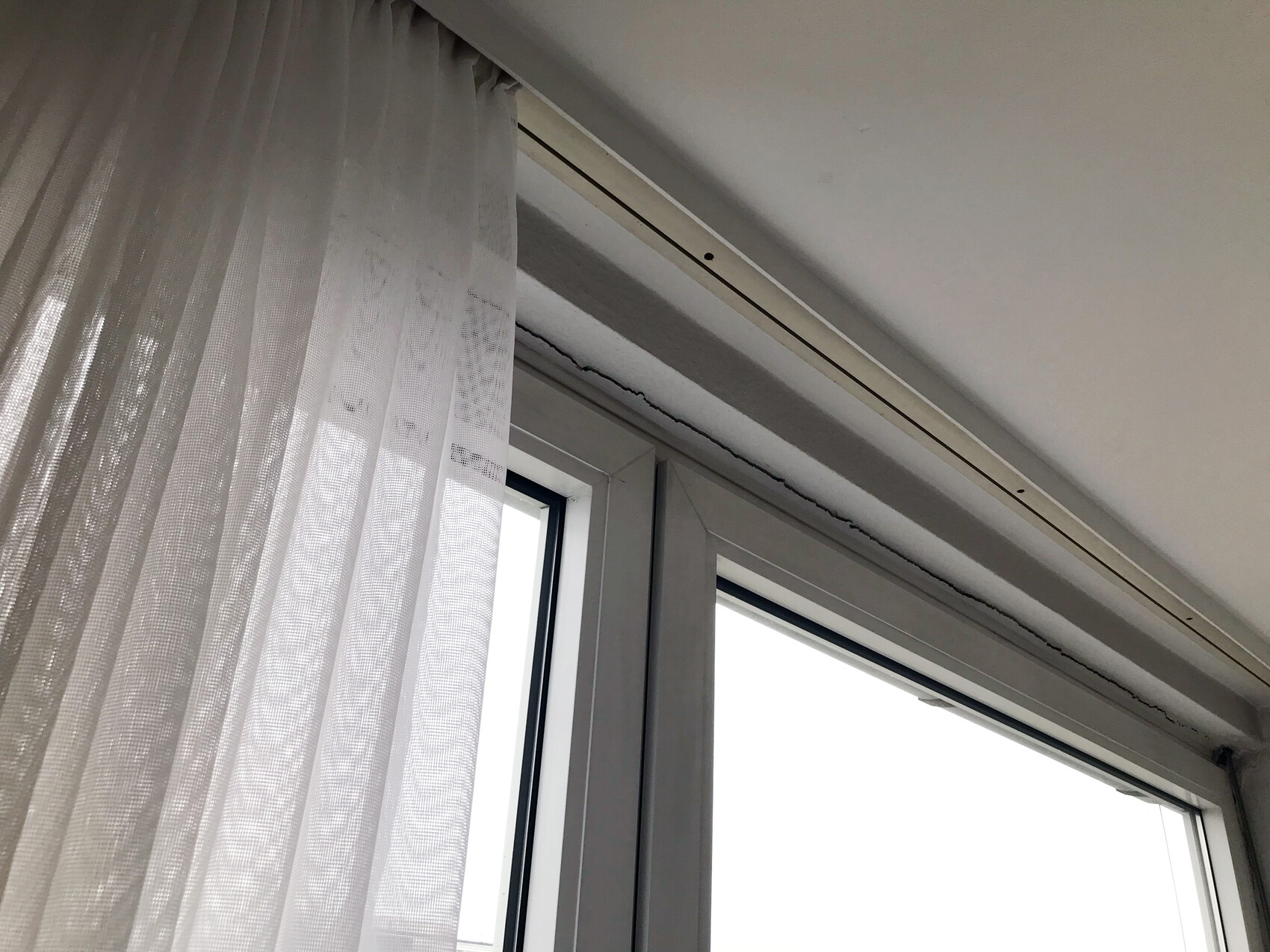
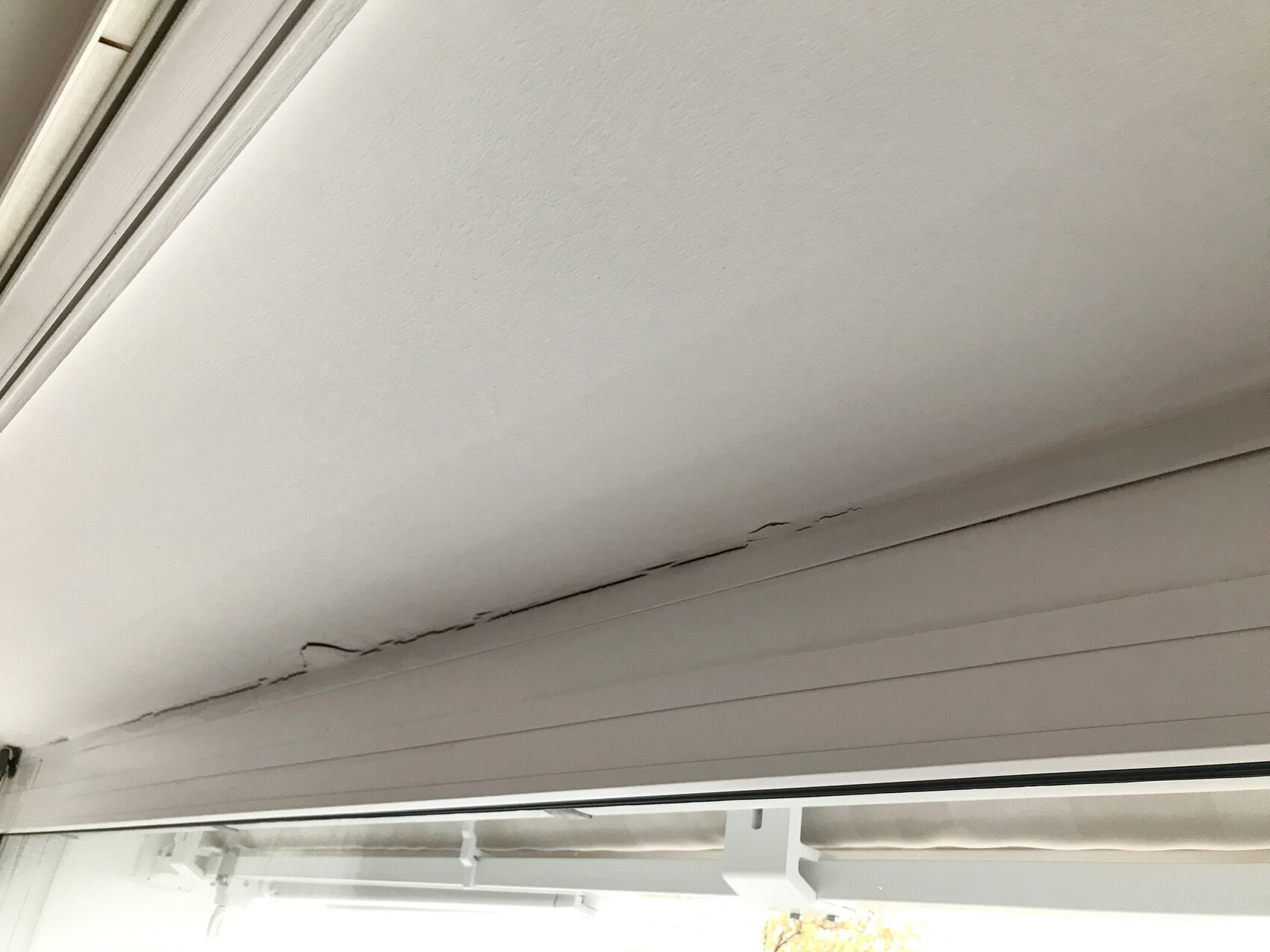
I have inherited an apartment from the 1960s. Some rooms have relatively large plastic window sashes, some about 180cm (71 inches) wide, which were replaced around 10 years ago. While clearing out the apartment, I noticed cracks in the plaster on the ceiling near some windows, see photos. I understand that plastic windows expand and contract depending on temperature and likely also move under wind loads.... BUT: when pressing outward against the top of the window frame, it can be moved a few millimeters, approximately the width of the cracks. To me, this feels like the window frame was not installed correctly – or is this normal, and the connection between the frame and ceiling plaster just needs to be flexible? Since the apartment is going to be sold, I would appreciate an assessment of how serious this issue might be and how it can be professionally fixed.
Hello,
yes, this is normal. Especially with wide windows, the movements caused by wind load as well as deformation due to heat and cold are quite significant, so with an elastic sealant you will see some tears (this will happen repeatedly), and with a rigid surface coating, you might notice cracks in the plaster.
Regards, Jann
yes, this is normal. Especially with wide windows, the movements caused by wind load as well as deformation due to heat and cold are quite significant, so with an elastic sealant you will see some tears (this will happen repeatedly), and with a rigid surface coating, you might notice cracks in the plaster.
Regards, Jann
K
k-man202130 Nov 2021 09:28Hello Jann,
Thank you very much for the reassuring response. This means that a joint with elastic sealant would be the better solution, even if there will eventually be some cracks.
What still puzzles me is that the frame can be moved at the top with firm finger pressure, but is rigid at the bottom. I would have expected it to be firmly connected to the ceiling/the lintel at the top as well.
Good luck
k-man
Thank you very much for the reassuring response. This means that a joint with elastic sealant would be the better solution, even if there will eventually be some cracks.
What still puzzles me is that the frame can be moved at the top with firm finger pressure, but is rigid at the bottom. I would have expected it to be firmly connected to the ceiling/the lintel at the top as well.
Good luck
k-man

Actually, nowadays a window is typically anchored firmly only on the sides of the reveal. Additionally, there is a load transfer downwards. At the top, there is only the sealing. However, it shouldn’t wobble even with light finger pressure. This suggests to me that something might be wrong with the sealing, and perhaps the side anchoring in the upper third is either missing or has come loose.
Please note, I am not a professional but have some practical experience from installing my own windows with my father-in-law (who has 30 years of experience as a window fitter). It’s possible that there were different installation methods in the 1960s that were considered acceptable.
Please note, I am not a professional but have some practical experience from installing my own windows with my father-in-law (who has 30 years of experience as a window fitter). It’s possible that there were different installation methods in the 1960s that were considered acceptable.
B
Benutzer20030 Nov 2021 10:31Jann St schrieb:
yes, that is normal. 😳 - if that is normal, then I wonder what kind of cracks would be considered abnormal?What can be seen in the photos should never happen. Not in that form.
Well, we have a thermally induced material contraction. The sealant adheres more strongly to the frame than to the wall or wall paint, causing it to tear off.
Since these contractions (or expansions in summer) cannot be prevented, fasteners must be chosen to accommodate these movements. All of this information can be found in the relevant standard.
I would say that this crack width no longer occurs in summer.
Since these contractions (or expansions in summer) cannot be prevented, fasteners must be chosen to accommodate these movements. All of this information can be found in the relevant standard.
I would say that this crack width no longer occurs in summer.
Similar topics