
ᐅ After removing the screed: how to seal a leak in the basement?
Created on: 16 Oct 2021 08:45
U
User-101Hello everyone,
I am asking for your advice on how to proceed with the unexpected renovation of my basement.
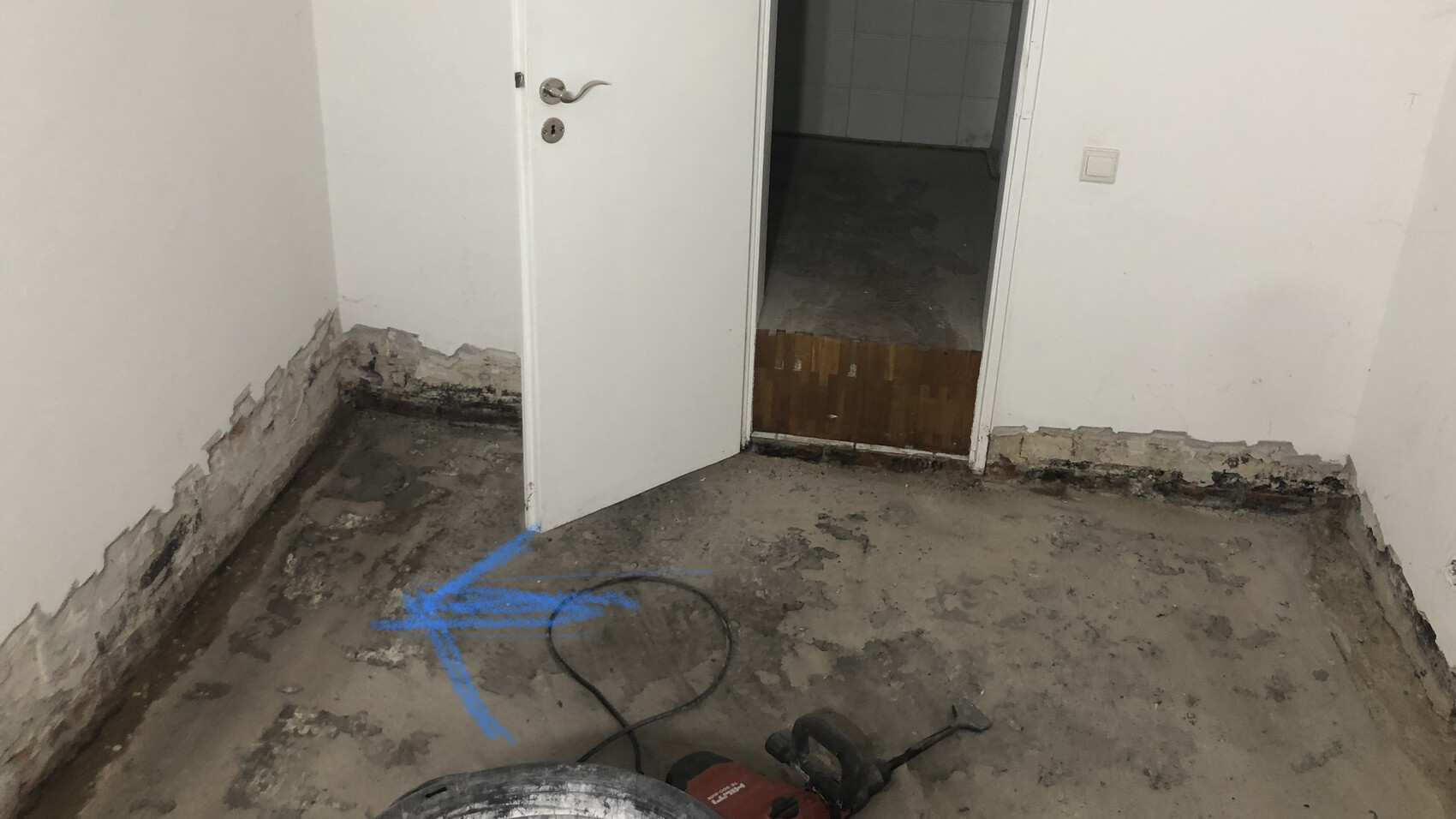
Background: Residential house built in 1935, with the relevant part of the building added in 1962. The room is used as a hobby and guest room, so it should remain habitable. So far, no significant moisture has been detected in the walls. Due to a flooding in the basement, I had to remove the screed. Underneath the screed there were 2 cm (1 inch) of polystyrene insulation and a damaged (porous) horizontal damp-proof membrane (bitumen sheet).
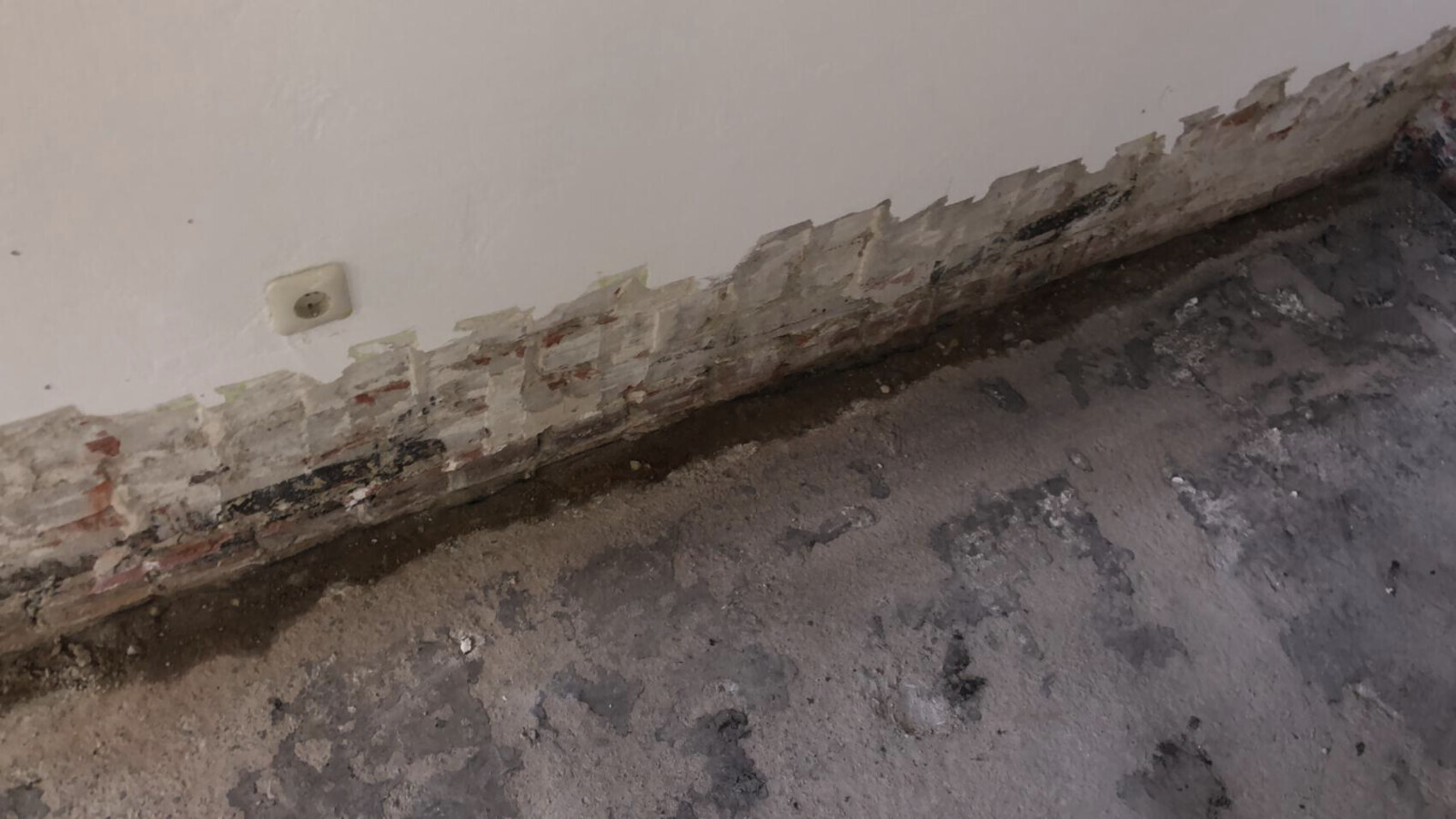
After 2 days, once the exposed floor was well dried, a strip of water about 1 meter (3.3 feet) long can be seen on the floor slab along one wall, and it has remained like this for 10 days. So water appears to be seeping in.
What is the best way to investigate this issue? Would we have any success with a crack injection (chemical injection) — or with a fillet (cove) detail? The new screed will, of course, also include a bitumen membrane, but I doubt that will be sufficient...
Exterior renovation would naturally be best, but unfortunately due to the location, this is only possible if I excavate the neighbor’s garden, which borders directly.
We purchased the house in May. The water damage has completely disrupted our modernization schedule. And now there is also a leaking basement wall junction. I am very grateful for any tips!
The water level was about 30 cm (12 inches) high. It is theoretically possible that there are materials at that spot that absorb water and release it slowly. However, the rest of the basement floor is dry. I suspect that the connection between the floor slab and the wall is not fully sealed. Can such an issue be addressed with a crack injection? How would you proceed here?
I am asking for your advice on how to proceed with the unexpected renovation of my basement.
Background: Residential house built in 1935, with the relevant part of the building added in 1962. The room is used as a hobby and guest room, so it should remain habitable. So far, no significant moisture has been detected in the walls. Due to a flooding in the basement, I had to remove the screed. Underneath the screed there were 2 cm (1 inch) of polystyrene insulation and a damaged (porous) horizontal damp-proof membrane (bitumen sheet).
After 2 days, once the exposed floor was well dried, a strip of water about 1 meter (3.3 feet) long can be seen on the floor slab along one wall, and it has remained like this for 10 days. So water appears to be seeping in.
What is the best way to investigate this issue? Would we have any success with a crack injection (chemical injection) — or with a fillet (cove) detail? The new screed will, of course, also include a bitumen membrane, but I doubt that will be sufficient...
Exterior renovation would naturally be best, but unfortunately due to the location, this is only possible if I excavate the neighbor’s garden, which borders directly.
We purchased the house in May. The water damage has completely disrupted our modernization schedule. And now there is also a leaking basement wall junction. I am very grateful for any tips!
The water level was about 30 cm (12 inches) high. It is theoretically possible that there are materials at that spot that absorb water and release it slowly. However, the rest of the basement floor is dry. I suspect that the connection between the floor slab and the wall is not fully sealed. Can such an issue be addressed with a crack injection? How would you proceed here?
Similar topics