
ᐅ Lowering of Groundwater According to Geotechnical Report – Your Experiences?
Created on: 8 Apr 2022 14:42
A
Allthewayup
Hello everyone,
according to the soil report, groundwater lowering is necessary during the basement construction, and it can only be discharged into the sewer system. During the boreholes, groundwater was encountered at a depth of 2.5m (8 feet). The Danube River flows approximately 500m (1,640 feet) away in a straight line, so we had already anticipated this. Over the past few months, we have contacted numerous companies regarding water management. Despite follow-ups, we have never received a response. Either there is no interest in such small projects, or we were told to get in touch again just before the start of construction in autumn. Based on the soil report and the neighbor’s references, we have fairly reliable estimates of the volume of water to be pumped. We have set aside €30,000 for this scope of work but remain uncertain about reliable estimates from the company to be hired. The neighbor had to handle this independently because they did not commission a soil report, and the water only emerged after they had already begun the foundation slab. So it was a chaotic situation that ended after 5 days.
My question to users here with experience on this topic:
What costs did you incur for your water management, and how was it carried out? (open, closed, vacuum systems)
What difficulties did you encounter during implementation?
What would you do differently if you were in the same situation again?
To avoid discussions about “omitting the basement,” it must be said that we absolutely need the space, and on a 300sqm (3,230 sq ft) lot, it would not be possible to build it close to ground level.
according to the soil report, groundwater lowering is necessary during the basement construction, and it can only be discharged into the sewer system. During the boreholes, groundwater was encountered at a depth of 2.5m (8 feet). The Danube River flows approximately 500m (1,640 feet) away in a straight line, so we had already anticipated this. Over the past few months, we have contacted numerous companies regarding water management. Despite follow-ups, we have never received a response. Either there is no interest in such small projects, or we were told to get in touch again just before the start of construction in autumn. Based on the soil report and the neighbor’s references, we have fairly reliable estimates of the volume of water to be pumped. We have set aside €30,000 for this scope of work but remain uncertain about reliable estimates from the company to be hired. The neighbor had to handle this independently because they did not commission a soil report, and the water only emerged after they had already begun the foundation slab. So it was a chaotic situation that ended after 5 days.
My question to users here with experience on this topic:
What costs did you incur for your water management, and how was it carried out? (open, closed, vacuum systems)
What difficulties did you encounter during implementation?
What would you do differently if you were in the same situation again?
To avoid discussions about “omitting the basement,” it must be said that we absolutely need the space, and on a 300sqm (3,230 sq ft) lot, it would not be possible to build it close to ground level.
A
Allthewayup2 Jun 2022 20:11Here is the promised list. Of course, every project is different, and this list does not claim to be complete. It provides an insight into the scope, which should not be underestimated. Certain aspects will likely still change during construction due to local conditions,
| Quantity | Requirement | Description | Amount |
| 1 | Wastewater pump | Grundfos AP50.12 | €360.00 |
| 2 | Wastewater pump | Güde Pro 2200 | €300.00 |
| 1 | Wastewater pump | HOMA HBP503 WA | €130.00 |
| 15 | Slotted drainage pipe | DN100 solid pipe, 2.5m (8 ft 2 in) each | €150.00 |
| 2 | Riser pipe DN400 | 1.9m (6 ft 3 in) length | €130.00 |
| 2 | Riser pipe DN315 | 1.0m (3 ft 3 in) length | €60.00 |
| 2 | KG end cap + socket plug | DN400 | €60.00 |
| 1 | KG end cap | DN315 | €30.00 |
| 1 | Drainage cover | DN100 for 50m (164 ft) | €45.00 |
| 8 | B-/C-hoses with fixed coupling | 2" and 3" | €130.00 |
| tbd | KG bend DN125/DN110 | various angles | €30.00 |
| tbd | KG pipe DN125/DN110 | various lengths | €50.00 |
| 1 | Flexible rubber coupling | DN100 to DN125 | €15.00 |
| 1 | Storz B 3" male thread | Fixed coupling external thread | €5.00 |
| 2 | Reducer | Storz B to A | €35.00 |
| 2 | Storz check valve | 2” | €100.00 |
| 1 | Storz check valve | 3” | €100.00 |
| 2 | Coupling wrench | Storz B / C | €10.00 |
| 1 | PE construction foil | 300µm (microns) | €70.00 |
| 1 | Plastic water meter | DN100 flanged | €200.00 |
| 2 | Storz coupling 4” A | 4” male thread | €20.00 |
| 2 | Threaded flange | DN100 with 4” internal thread | €65.00 |
| 16 | Bolted connection | M16x70 | €25.00 |
| 2 | Traffic sign | Traffic sign 123 / Traffic sign 239 + Traffic sign 1022-10 | €70.00 |
| 4 | Warning light | Rotating beacon, red | €80.00 |
| 4 | Drainage gravel 765kg (1,686 lbs) big bag | 16/32 | €240.00 |
| Various small materials | Adapters / screws / accessories | €200.00 | |
| Rental equipment | |||
| 1 | Trenching machine VTX300 | incl. trailer | €400.00 |
| 1 | Roll-off container | 7m³ (247 ft³) incl. delivery/pickup | €900.00 |
| 1 | Traffic safety | Fence barriers, feet, etc. | €300.00 |
| Electricity | 4500kWh | €2,025.00 | |
| Wastewater fees | 29,500m³ (1,041,348 ft³) | €19,175.00 | |
| City of Ingolstadt fees | Environmental office | €320.00 | |
| City of Ingolstadt fees | Traffic office | €200.00 | |
| Traffic safety seminar | MVAS / RAS | €180.00 | |
| 3 | Additional earthworks | Excavating shafts up to 1.7m (5 ft 7 in) | €800.00 |
| TOTAL | €27,010.00 |
A
Allthewayup15 Aug 2022 12:47Update from 15.08.2022
The city’s approval regarding the closure of the bike path has finally arrived, even though the “specialist company” claimed that it would be impossible to get permission and therefore advised me to reroute the sewer line onto the property. 🙄
With this, all necessary approvals have now been obtained. I have to admit, this has been quite a bit of work so far, but if you consider that the trade would cost almost a year’s net salary, anyone can figure out how many hours could theoretically be “invested” in it.
What’s next?
The house demolition and, with it, the trial excavation for the actual groundwater level have been postponed by one week to 29.08. Current measurements from the city show a significantly lowered water level. This is definitely due to the unusually dry weather so far, which of course works in our favor regarding the depth that needs to be lowered and ultimately the amount of water that must be pumped out.
In mid-October, the civil engineering work on public land will be carried out, which we had to contract to a local civil engineering company. Since the work is quite manageable, we have agreed on billing based on time spent after receiving the price information.
That’s about all I can report at the moment. Updates will follow once we know the exact groundwater level, install the wells, and then set up the system in October. Installing the wells could be problematic since we did not want to hire a well driller (for many different reasons), and now we hope to reach sufficient depth by manual excavation. It must be considered that these works take place below the water table, so I anticipate some challenges (slope failure/slides, soil liquefaction, and risks to the stability of surrounding infrastructure). If the situation becomes too difficult to handle, the entire excavation will need to be backfilled and compacted so that a large well drilling rig can be brought in. If that becomes necessary, we are looking at approximately 25,000€ in additional costs for earthworks and civil engineering.
The city’s approval regarding the closure of the bike path has finally arrived, even though the “specialist company” claimed that it would be impossible to get permission and therefore advised me to reroute the sewer line onto the property. 🙄
With this, all necessary approvals have now been obtained. I have to admit, this has been quite a bit of work so far, but if you consider that the trade would cost almost a year’s net salary, anyone can figure out how many hours could theoretically be “invested” in it.
What’s next?
The house demolition and, with it, the trial excavation for the actual groundwater level have been postponed by one week to 29.08. Current measurements from the city show a significantly lowered water level. This is definitely due to the unusually dry weather so far, which of course works in our favor regarding the depth that needs to be lowered and ultimately the amount of water that must be pumped out.
In mid-October, the civil engineering work on public land will be carried out, which we had to contract to a local civil engineering company. Since the work is quite manageable, we have agreed on billing based on time spent after receiving the price information.
That’s about all I can report at the moment. Updates will follow once we know the exact groundwater level, install the wells, and then set up the system in October. Installing the wells could be problematic since we did not want to hire a well driller (for many different reasons), and now we hope to reach sufficient depth by manual excavation. It must be considered that these works take place below the water table, so I anticipate some challenges (slope failure/slides, soil liquefaction, and risks to the stability of surrounding infrastructure). If the situation becomes too difficult to handle, the entire excavation will need to be backfilled and compacted so that a large well drilling rig can be brought in. If that becomes necessary, we are looking at approximately 25,000€ in additional costs for earthworks and civil engineering.
A
Allthewayup22 Oct 2022 22:42Update from 22.10.2022:
The existing building has now been completely demolished, and the excavation pit is partially prepared. Partially because the groundwater is currently about 2.4 meters (7.9 feet) below the ground surface, so we cannot dig any deeper yet. In the end, we decided against using 400mm (16 inch) KG pipes and instead had two DN1000 (1000mm / 39 inch) concrete shafts installed at a depth of 5 meters (16 feet). This ultimately created a larger surface area for water to collect in the shafts. Today, the system was installed. Everything went according to plan, but unfortunately, the hoses were not in very good condition, so I had to do quite a bit of patchwork. As a test, the system ran for 30 minutes today to check if it was as watertight as possible and if enough water could drain by gravity. Here, I made a small careless mistake and used a DN110 (110mm / 4.3 inch) pipe instead of a DN125 (125mm / 5 inch) pipe. Unfortunately, I cannot fix this error anymore because the pipe is laid under the sidewalk. This means I have to connect the second channel with 3 hoses instead of one as originally planned. Not a big deal, but it does tie up resources in the form of hoses. There are alternative solutions, but I just wanted to use what I already had. Currently, two pumps are in operation. I am also considering replacing one of them with a more powerful pump (increasing from 30 to 42 cubic meters per hour). The groundwater flows back really fast, you wouldn’t believe it. As soon as the pump is switched off, the well fills up again very quickly. I expect that the pumps will actually run almost 24 hours a day for about 16 days, until the basement is backfilled. Enough talking, I’ll let a few pictures do the talking.
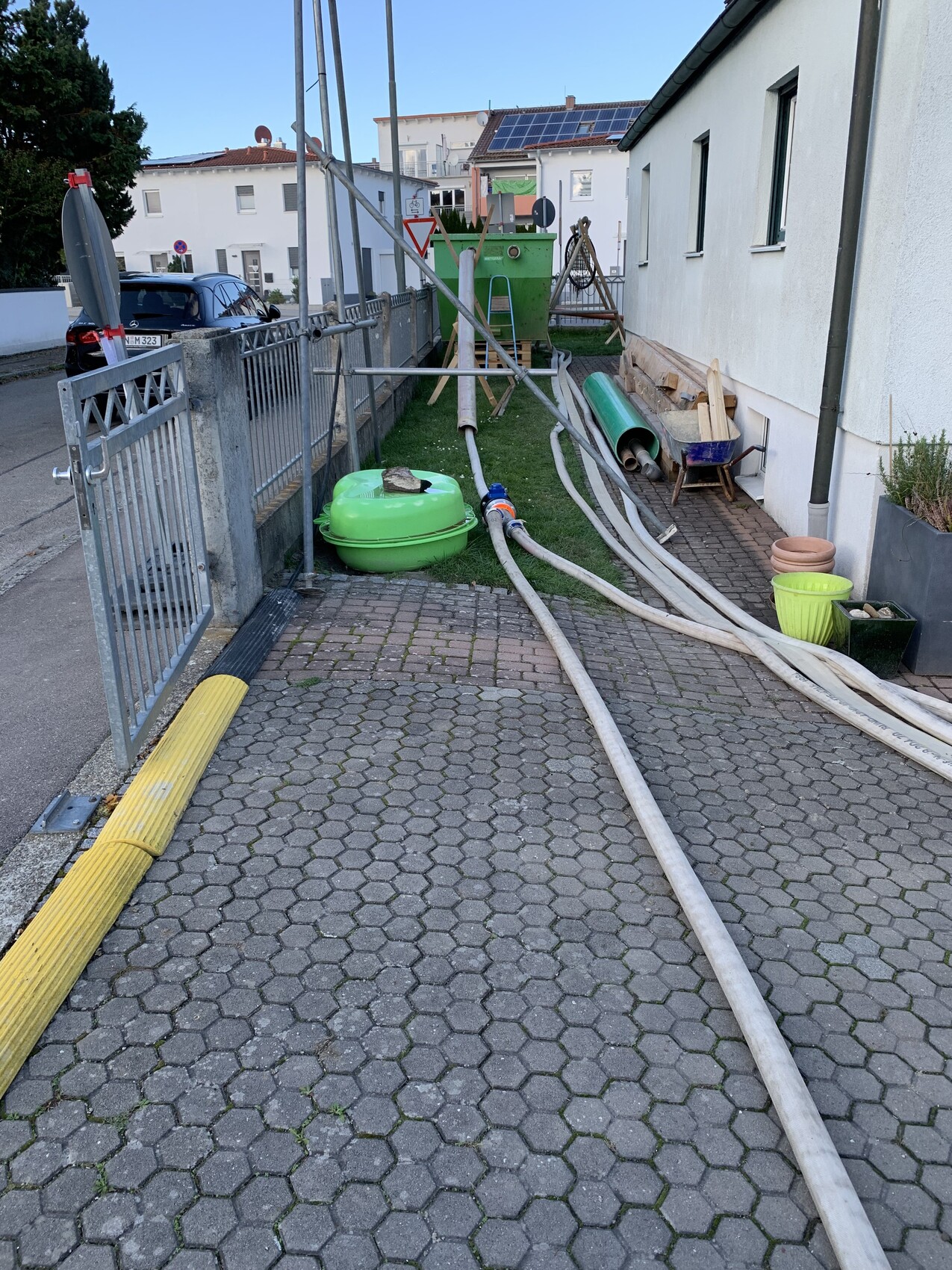
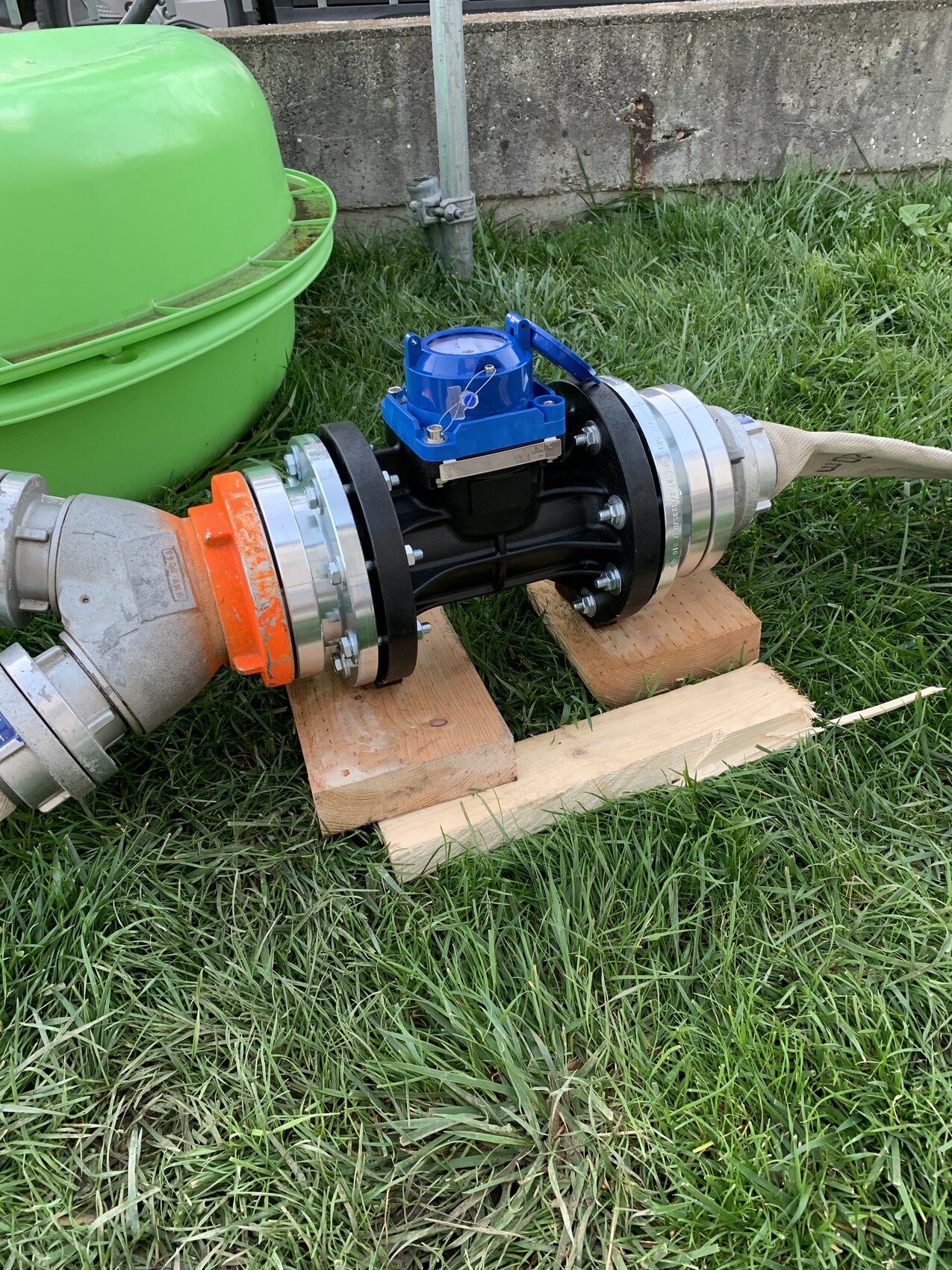
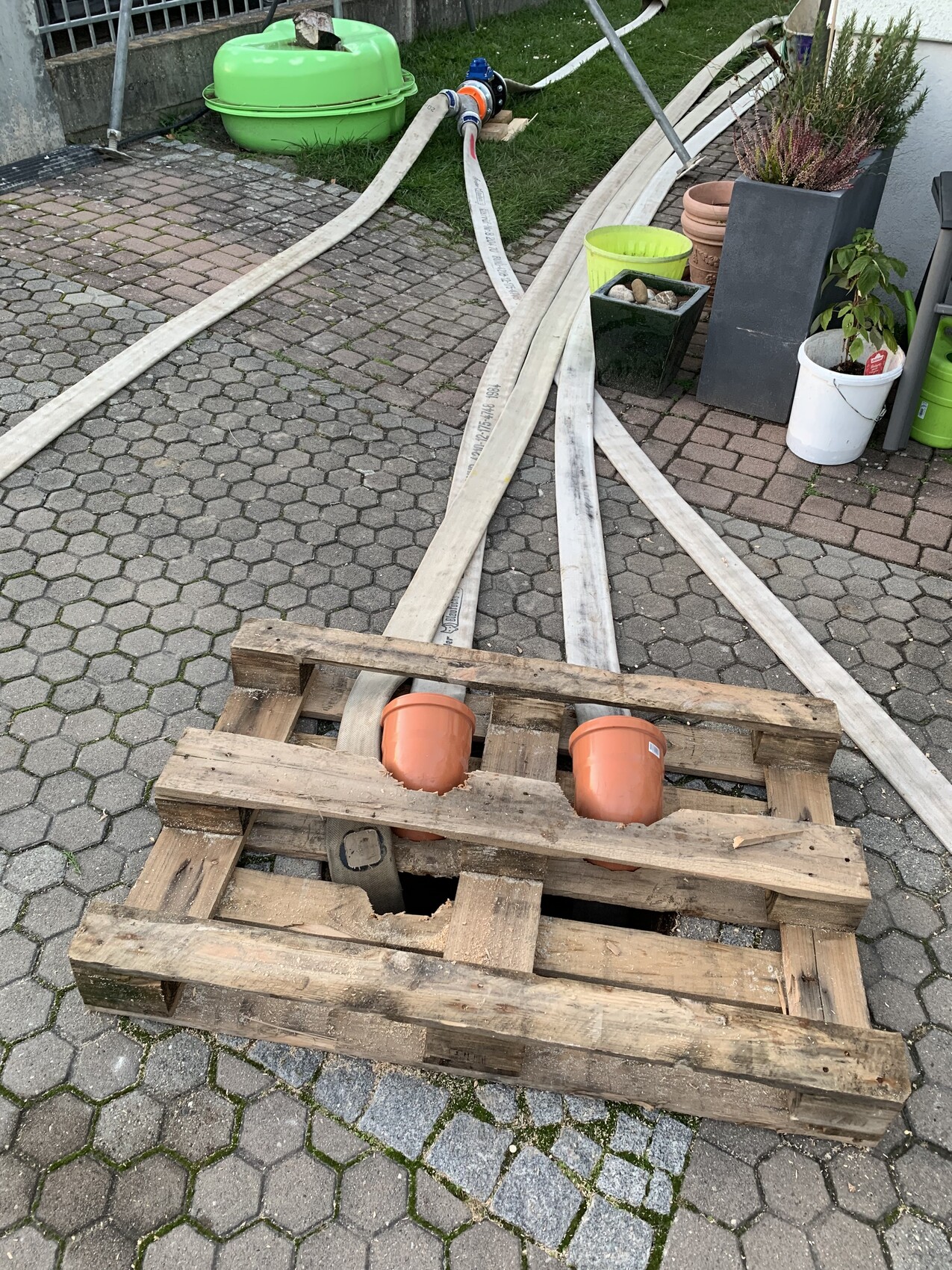
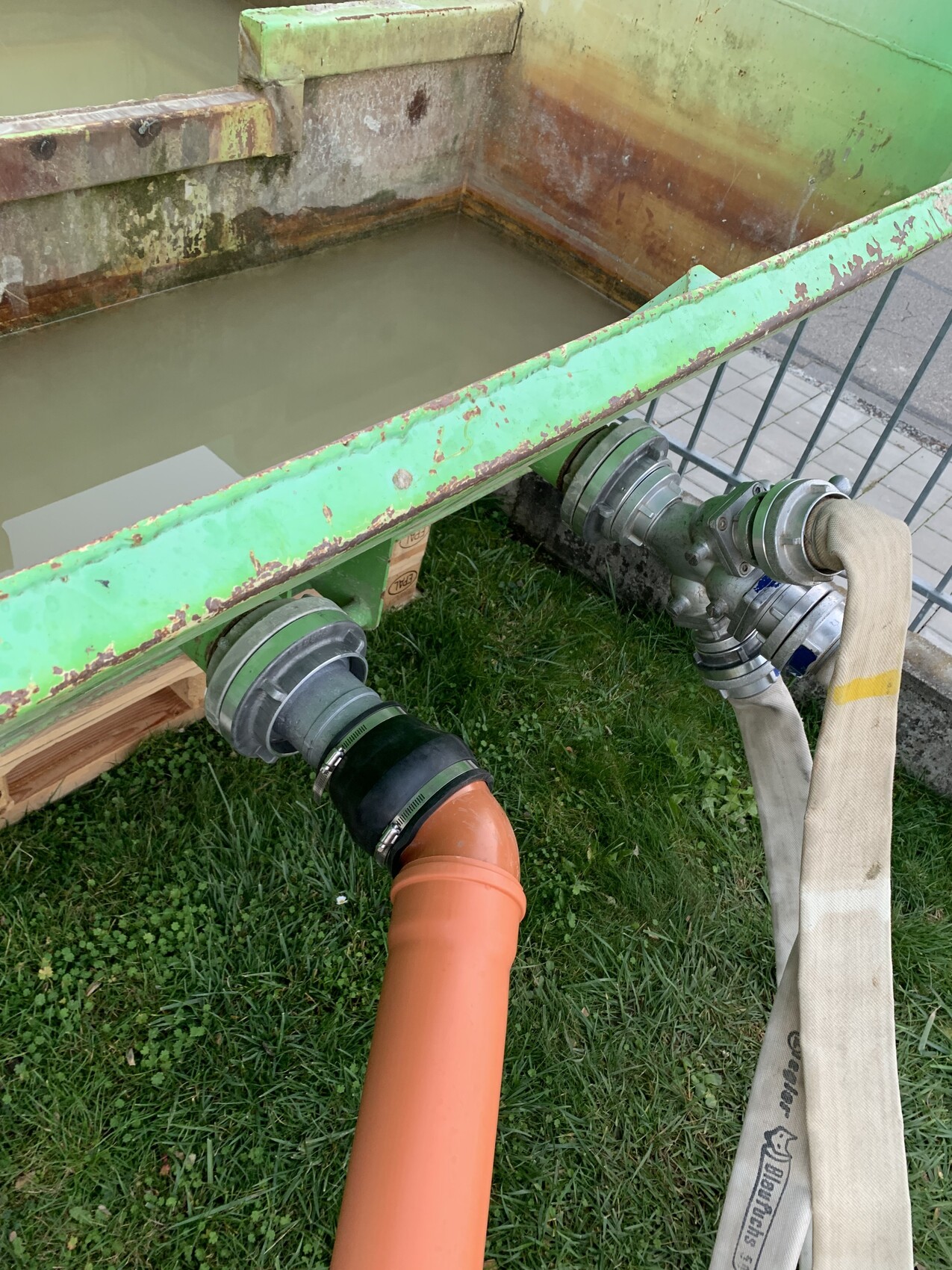
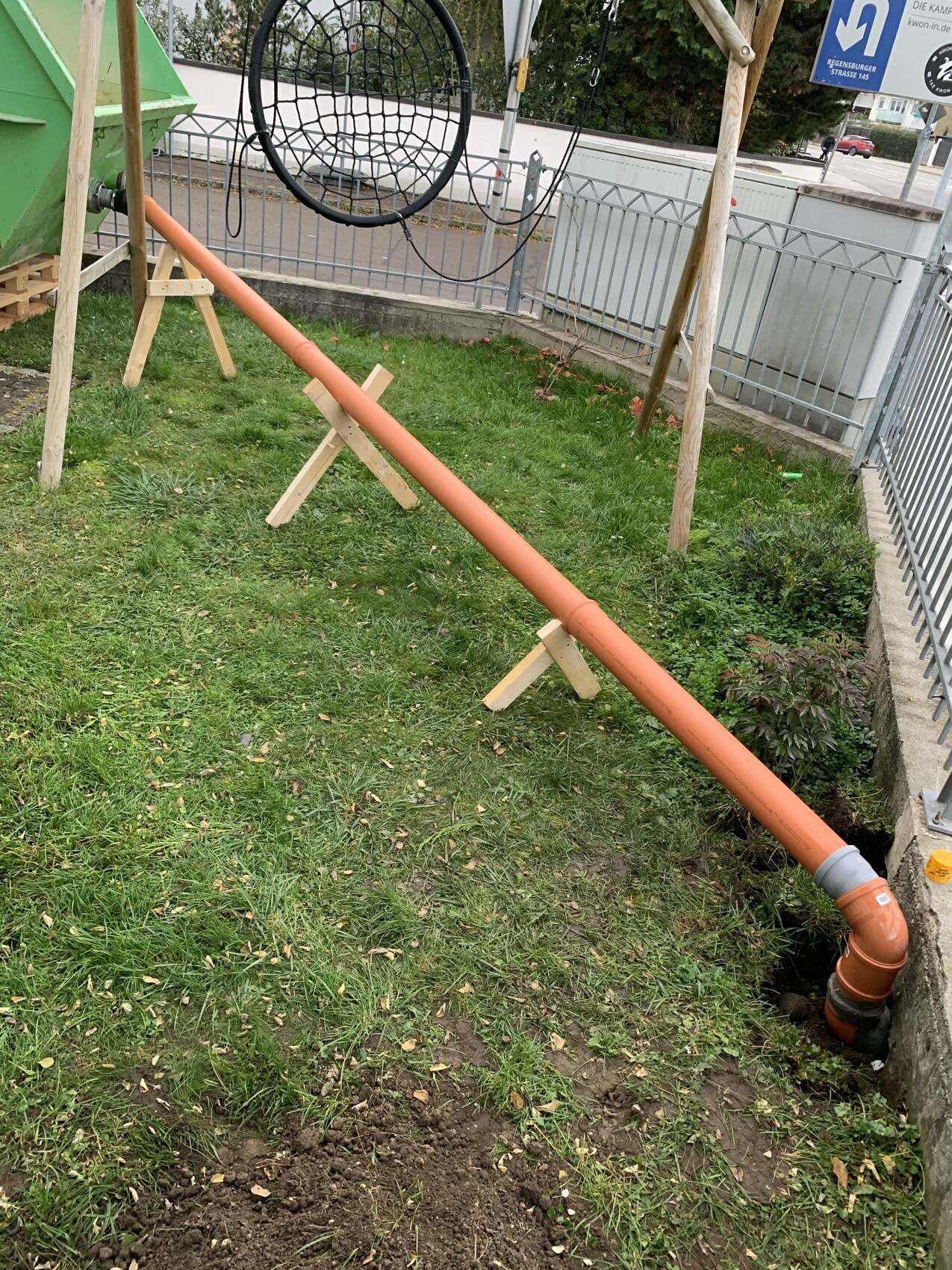
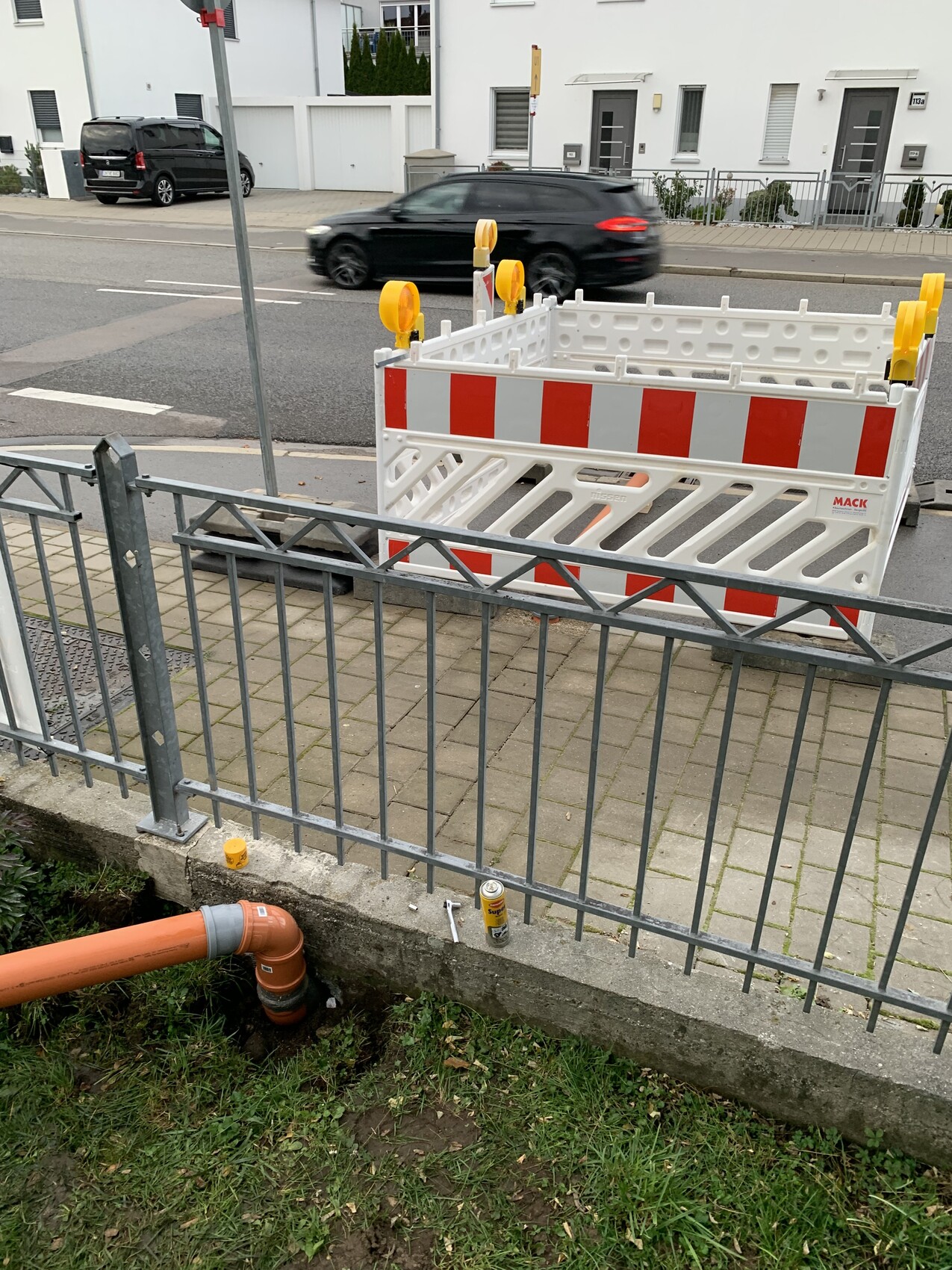
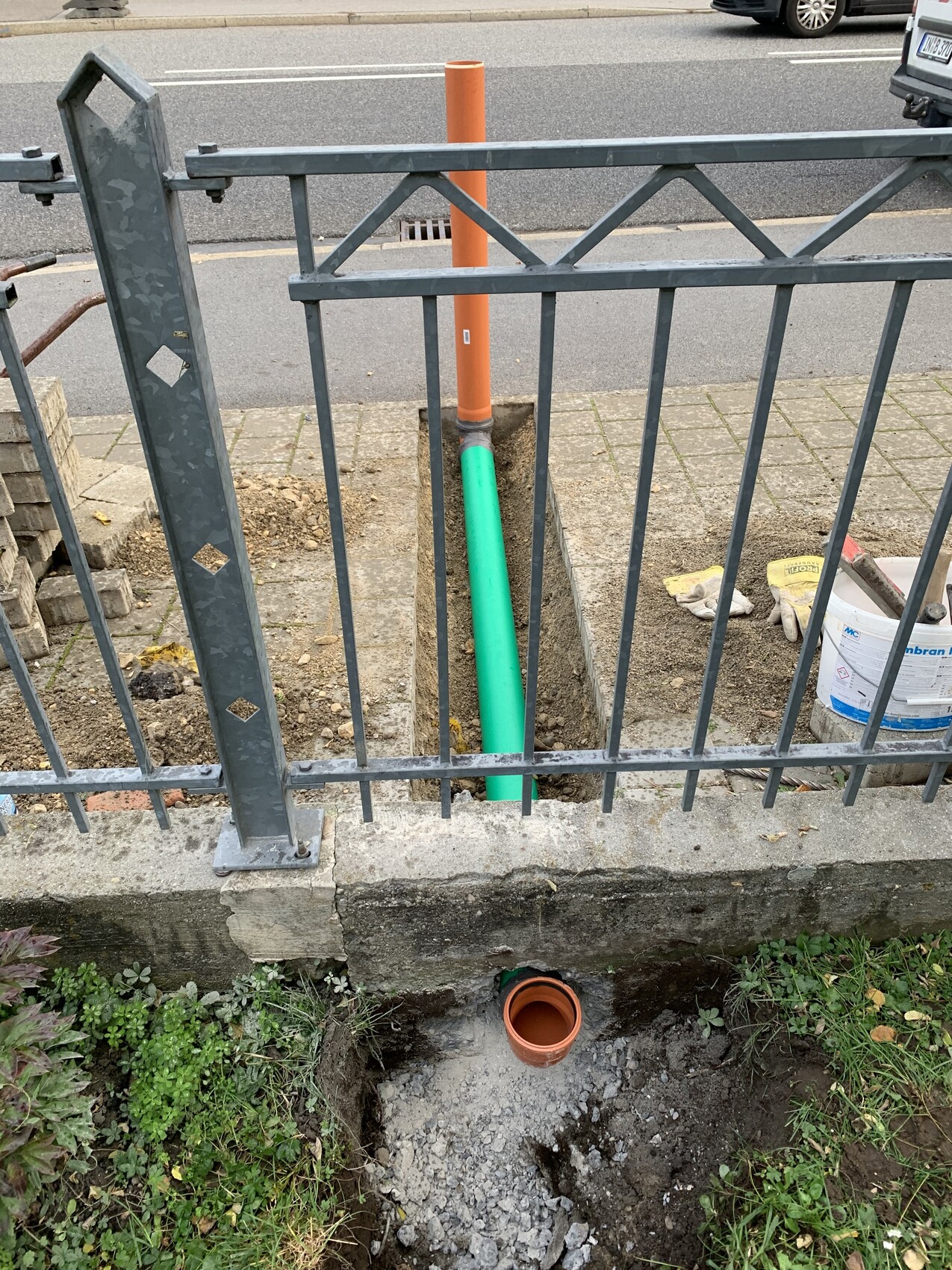
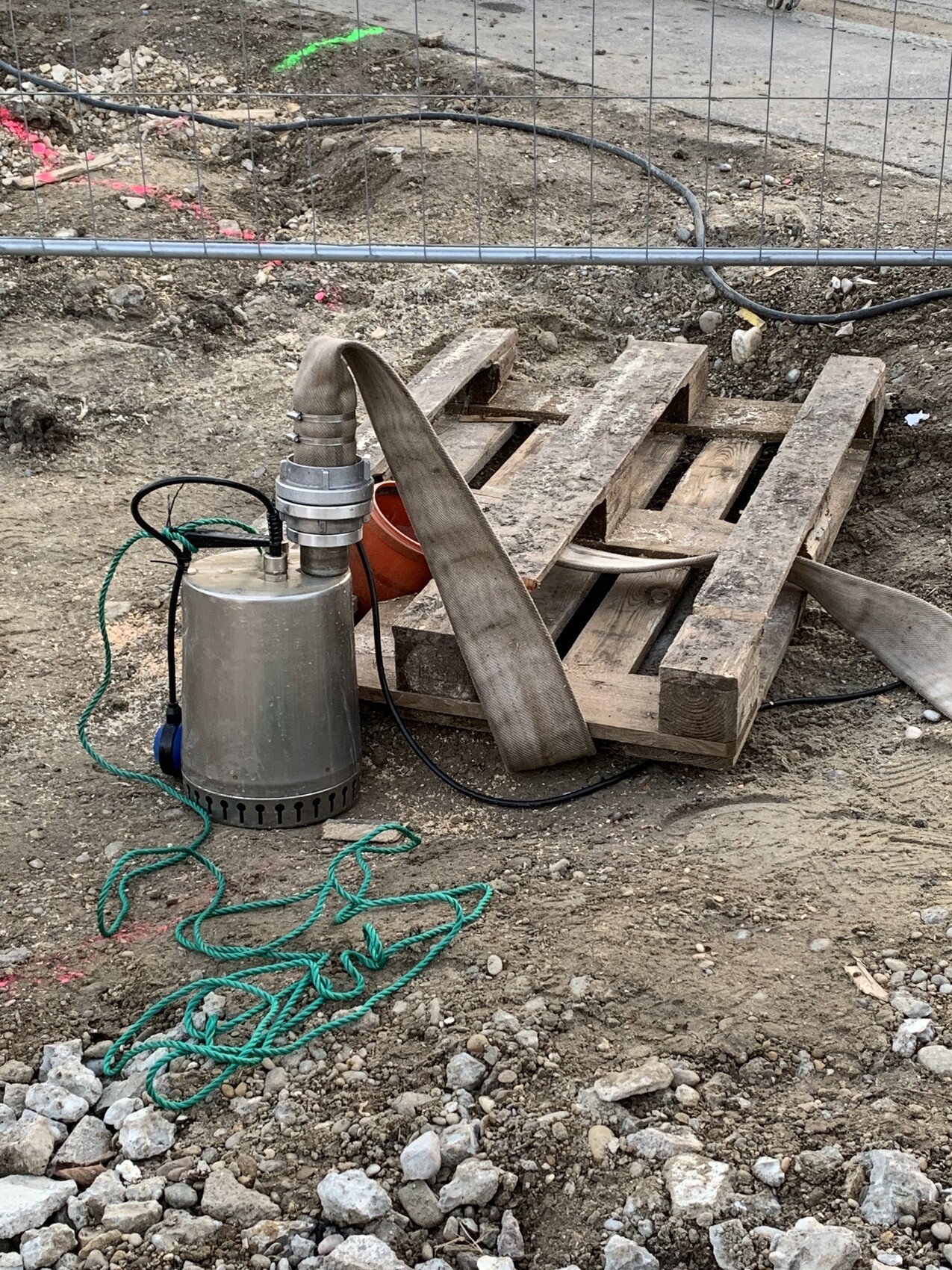
The existing building has now been completely demolished, and the excavation pit is partially prepared. Partially because the groundwater is currently about 2.4 meters (7.9 feet) below the ground surface, so we cannot dig any deeper yet. In the end, we decided against using 400mm (16 inch) KG pipes and instead had two DN1000 (1000mm / 39 inch) concrete shafts installed at a depth of 5 meters (16 feet). This ultimately created a larger surface area for water to collect in the shafts. Today, the system was installed. Everything went according to plan, but unfortunately, the hoses were not in very good condition, so I had to do quite a bit of patchwork. As a test, the system ran for 30 minutes today to check if it was as watertight as possible and if enough water could drain by gravity. Here, I made a small careless mistake and used a DN110 (110mm / 4.3 inch) pipe instead of a DN125 (125mm / 5 inch) pipe. Unfortunately, I cannot fix this error anymore because the pipe is laid under the sidewalk. This means I have to connect the second channel with 3 hoses instead of one as originally planned. Not a big deal, but it does tie up resources in the form of hoses. There are alternative solutions, but I just wanted to use what I already had. Currently, two pumps are in operation. I am also considering replacing one of them with a more powerful pump (increasing from 30 to 42 cubic meters per hour). The groundwater flows back really fast, you wouldn’t believe it. As soon as the pump is switched off, the well fills up again very quickly. I expect that the pumps will actually run almost 24 hours a day for about 16 days, until the basement is backfilled. Enough talking, I’ll let a few pictures do the talking.
A
Allthewayup18 Dec 2022 17:55To wrap up the topic here:
We completed the basement construction as scheduled in about 2 weeks and were able to turn off the pumps promptly. The actual volume of water pumped was, to our great relief, significantly lower than my calculations predicted, but there are too many factors involved to explain this generally. In any case, we are happy about it. About 90% of the equipment we procured has already been resold, and the expenses for it could be almost fully offset. Not all items have been settled yet, but we can already say that the total groundwater lowering cost will be around 10,000 (excluding the equipment bought and then resold). We are extremely proud to have accomplished this and essentially saved the equivalent of a small car. Just as a reminder, the offered price with some additional on-site services was around 40,000. Of course, I was under intense pressure for 2 weeks, as I was responsible for ensuring the pumps ran 24/7. Sometimes I went to the construction site at 1:00 a.m. because a hole discovered in the pressure hose that afternoon wouldn’t let me sleep. Once, a pump failed because the suspension rope had wrapped around the pressure hose along with the power cable, and when the pump started, the torque caused it to rotate and repeatedly shut off. Problem identified, resolved, and we carried on. The first 3 days, the pumps actually ran continuously. Starting on day 4, they operated in intermittent mode every few hours, and over the last 4–5 days, the pump-on and pump-off times balanced out. Frequently turning the pumps on and off puts a lot of stress on them, so it was important to ensure the cycling did not exceed the switching operations specified by the manufacturer. Good "tools" really pay off here; otherwise, the risk of failure would have been much higher. Fortunately, I never had to switch to a backup pump since the pumps performed reliably.
Overall, we were also lucky with the soil. If it had been clayey, very sandy, or peat-containing soil, this would not have been possible for us due to the significantly more complex system technology involved.
We completed the basement construction as scheduled in about 2 weeks and were able to turn off the pumps promptly. The actual volume of water pumped was, to our great relief, significantly lower than my calculations predicted, but there are too many factors involved to explain this generally. In any case, we are happy about it. About 90% of the equipment we procured has already been resold, and the expenses for it could be almost fully offset. Not all items have been settled yet, but we can already say that the total groundwater lowering cost will be around 10,000 (excluding the equipment bought and then resold). We are extremely proud to have accomplished this and essentially saved the equivalent of a small car. Just as a reminder, the offered price with some additional on-site services was around 40,000. Of course, I was under intense pressure for 2 weeks, as I was responsible for ensuring the pumps ran 24/7. Sometimes I went to the construction site at 1:00 a.m. because a hole discovered in the pressure hose that afternoon wouldn’t let me sleep. Once, a pump failed because the suspension rope had wrapped around the pressure hose along with the power cable, and when the pump started, the torque caused it to rotate and repeatedly shut off. Problem identified, resolved, and we carried on. The first 3 days, the pumps actually ran continuously. Starting on day 4, they operated in intermittent mode every few hours, and over the last 4–5 days, the pump-on and pump-off times balanced out. Frequently turning the pumps on and off puts a lot of stress on them, so it was important to ensure the cycling did not exceed the switching operations specified by the manufacturer. Good "tools" really pay off here; otherwise, the risk of failure would have been much higher. Fortunately, I never had to switch to a backup pump since the pumps performed reliably.
Overall, we were also lucky with the soil. If it had been clayey, very sandy, or peat-containing soil, this would not have been possible for us due to the significantly more complex system technology involved.

Hello,
that was definitely worth the effort. One question: how much water has accumulated in total? The initial estimate was 20 liters per second (about 5.3 gallons per second), which equals around 5 swimming pools per day! Is that really how much water comes through?
Best regards,
Andreas
that was definitely worth the effort. One question: how much water has accumulated in total? The initial estimate was 20 liters per second (about 5.3 gallons per second), which equals around 5 swimming pools per day! Is that really how much water comes through?
Best regards,
Andreas
Similar topics