
Hello everyone,
I have an appointment with my site manager next week. Before that, I wanted to gather some opinions and maybe someone has already experienced the same issue or at least seen it before.
The problem is as follows:
Last week, when it was raining very heavily and the wind was quite strong, our facade suddenly looked like this (see photo). You could clearly see the joints of the blocks through the render and there were slight cracks in the base area. Does anyone have any idea what this could be? Could this indicate a construction defect? For example, an insufficient base coat thickness?
Details about the house:
Year built: 2016
Masonry: 30 cm (12 inch) Ytong blocks, glued
Render: according to the building plan, 15 mm (0.6 inch) base coat and 3 mm (0.1 inch) top coat
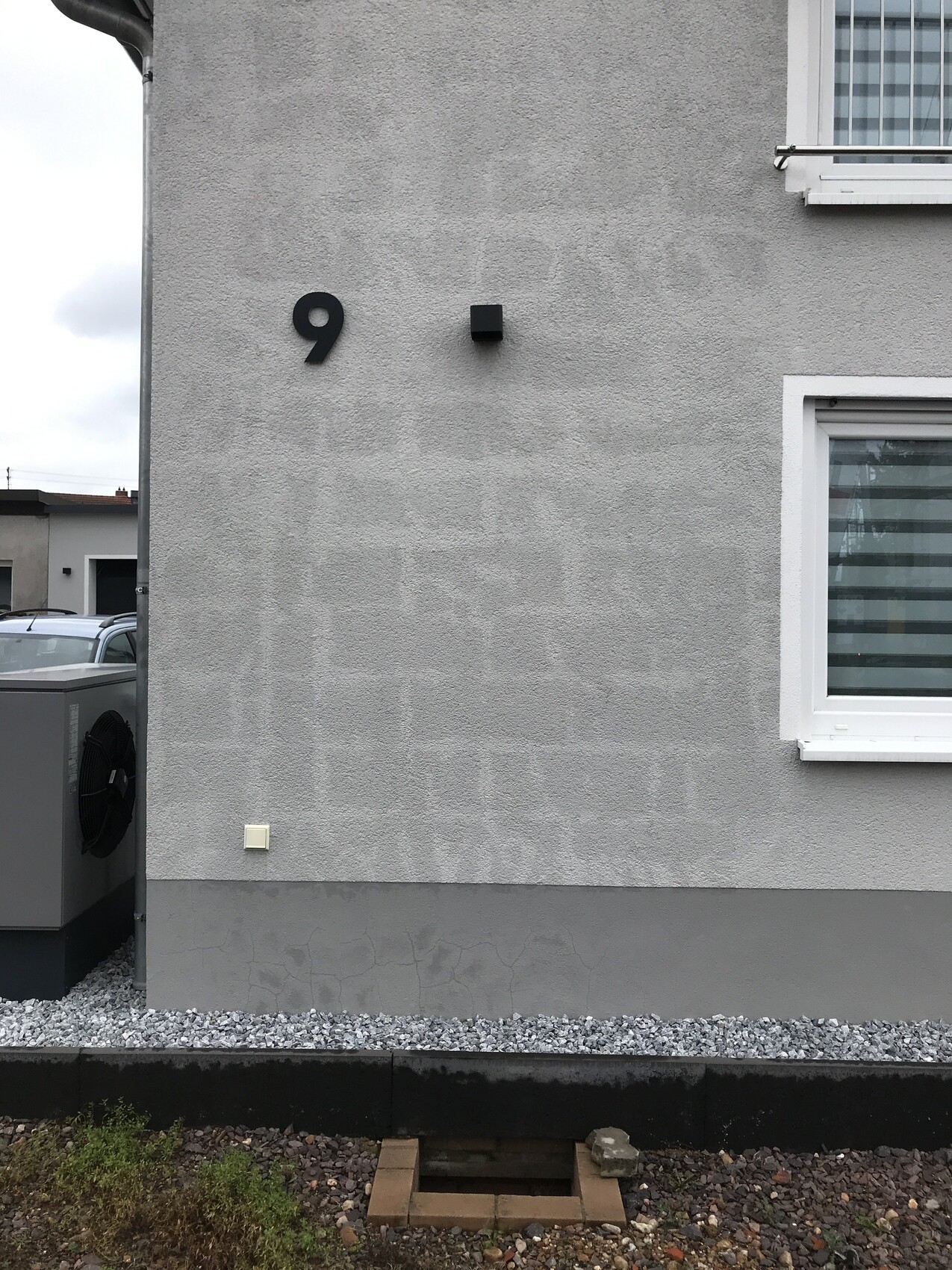
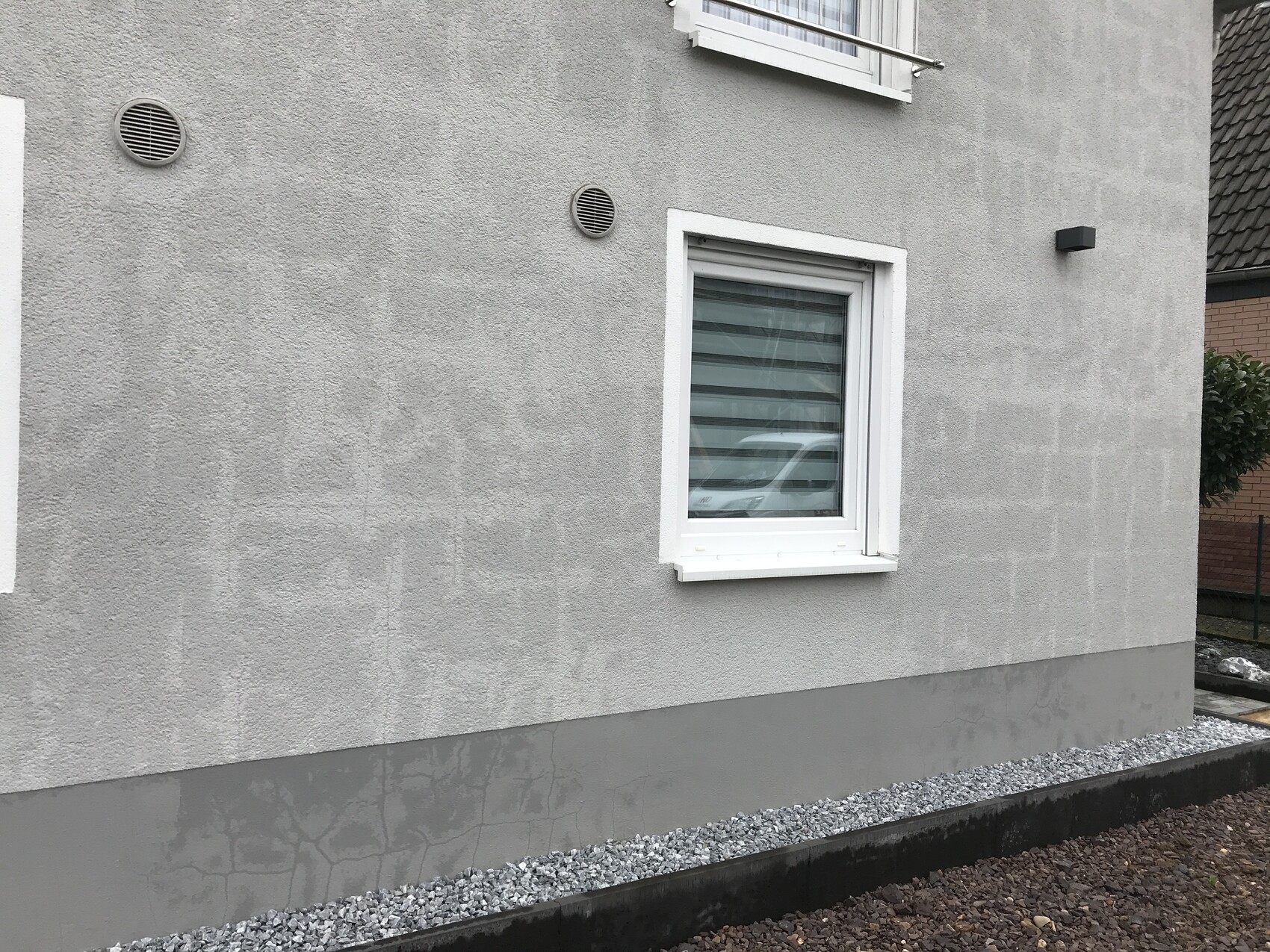
I have an appointment with my site manager next week. Before that, I wanted to gather some opinions and maybe someone has already experienced the same issue or at least seen it before.
The problem is as follows:
Last week, when it was raining very heavily and the wind was quite strong, our facade suddenly looked like this (see photo). You could clearly see the joints of the blocks through the render and there were slight cracks in the base area. Does anyone have any idea what this could be? Could this indicate a construction defect? For example, an insufficient base coat thickness?
Details about the house:
Year built: 2016
Masonry: 30 cm (12 inch) Ytong blocks, glued
Render: according to the building plan, 15 mm (0.6 inch) base coat and 3 mm (0.1 inch) top coat
We experienced this effect with our previous townhouse as well, and it was about the same intensity. The architect of the new housing development explained back then (20 years ago) that it was due to the plaster. It was specially chosen to allow moisture to enter but also to dry out quickly. Maybe I’m not recalling it exactly right, it was a long time ago. But something along those lines. The plaster was not damaged by it at all. By the way, we had KLB blocks. Eventually, it didn’t bother me anymore since you only notice it when it’s raining.
30 cm (12 inches) Ytong monolithic walls with plaster, but none of this is used here or by any of the other five houses in the neighborhood built this way so far. How was it plastered? Twice in this case: first a base coat with mesh reinforcement, then a colored top coat, and finally a silicone resin paint as the finish. You can’t see anything at all of the Ytong.

I find it really shocking as well. At first, when I saw the picture, I thought it was a shell construction. I figured it might be due to rain and residual moisture in the masonry. But when I saw it was built in 2016, I was completely stunned. That would be a total disaster for us if our house ever looked like that. Investing several hundred thousand euros into a house and then seeing a picture like this is terrible. I need to discuss this with our architect. The shell construction phase is not far off for us anymore.
It looks really shabby. I've only seen this to a lesser extent before, and even then very rarely. This is definitely not normal.
But this clearly shows the disadvantages of a monolithic wall construction... Thermal bridges everywhere. Even if you can't see them, they are always there and increase the likelihood of facade problems later on. That's why it's always better to go with a two-layer wall or an insulation system, even though, of course, conspiracy theorists and insulation opponents will come out again.
But this clearly shows the disadvantages of a monolithic wall construction... Thermal bridges everywhere. Even if you can't see them, they are always there and increase the likelihood of facade problems later on. That's why it's always better to go with a two-layer wall or an insulation system, even though, of course, conspiracy theorists and insulation opponents will come out again.
Similar topics